What Viewers Are Really Hooked On Isn't "Getting Together" — It's "Not Yet"
A campus drama made entirely with AI has reached episode 14, and the hottest comment under it is one line: "me waiting another whole week to see Fanqie Mi Xian be like" — over 2,600 likes. Chasing a show hard enough to get antsy, all to see when two fictional characters will finally get together.
But scroll a bit further and the second most-liked comment says the opposite: "Actually, I'd rather they don't get together too fast — this kind of ambiguous push-and-pull is what hits hardest" — over 1,300 people agreed. One group is urging the next episode; the other is saying don't rush them. Contradictory on the surface, but both groups want the same thing: not the outcome of "together," but the stretch of "not yet."
That's the most interesting thing about AI drama right now.
The visuals have already been pushed past the point where you can tell it's AI
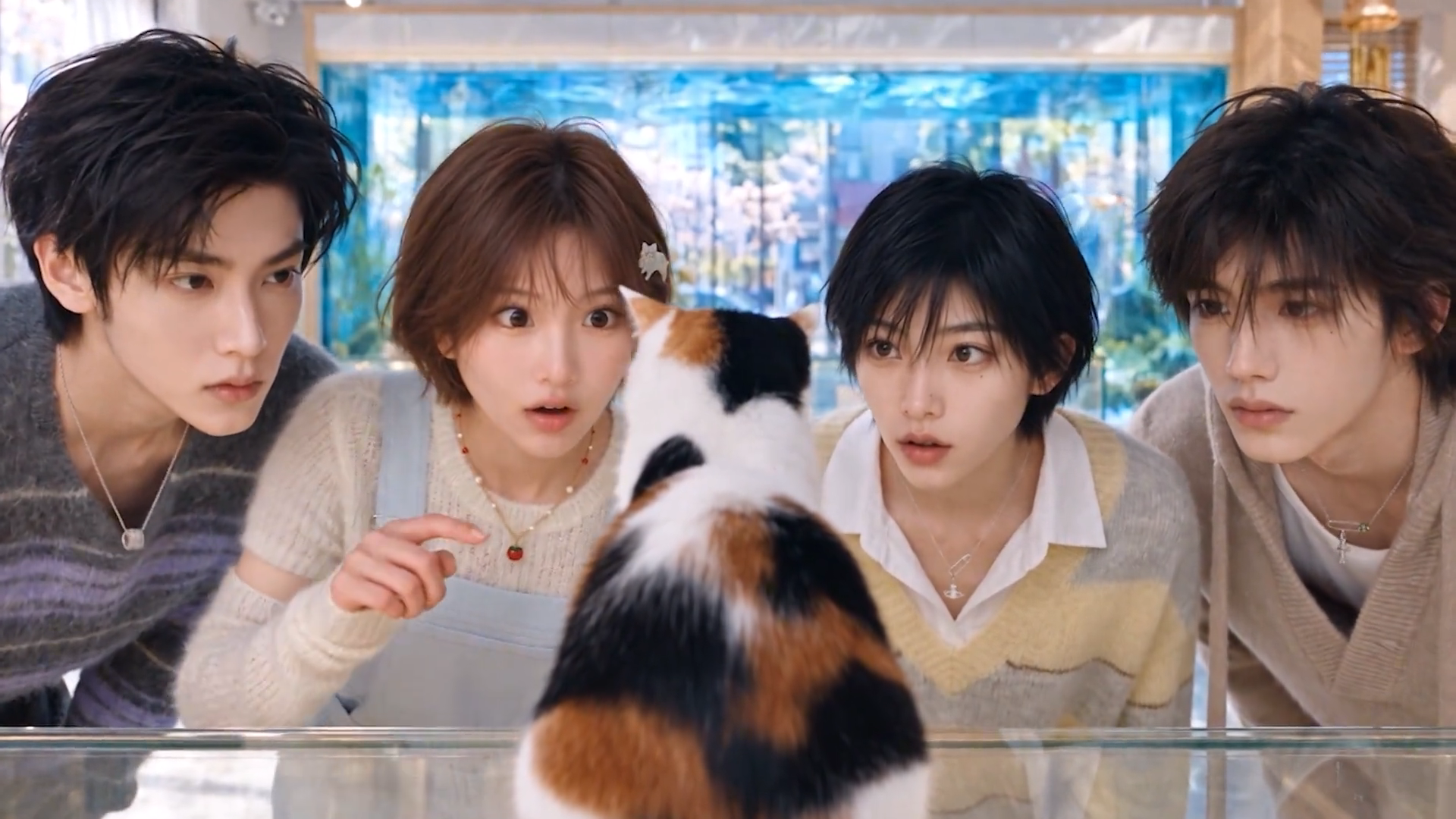
《Trapped in a Book with My Best Friend》 is made entirely with Jimeng AI and has 280,000 likes. Two years ago, the moment an AI-generated character walked on screen, the comments were counting fingers. These frames — the light in the aquarium, the fuzz of the sweaters, the backlit strands of hair — draw discussion about plot and character, and almost nobody asks "is this AI" anymore.
On the tool side, the arms race is still accelerating. According to a Wallstreetcn (华尔街见闻) report on November 10, ByteDance released its image creation model Seedream 5.5 on November 9, wired into Doubao and Jimeng at the same time, with generation speed nearly 40% faster than the previous generation, plus a demo of 100 consecutive edits; five days earlier OpenAI pushed Images 2.6 into ChatGPT and the API, and Photoshop's generative fill already supports Google's Nano Banana and FLUX alongside Adobe's own models. What the big players are competing on is speed, consistency, and "no distortion no matter how many rounds you edit."
But here's the interesting part: the moments that hit hardest in the comments are all things pixels can't solve: "I feel like Song Xian licked Xiao Fanqie from head to toe with his eyes" — 1,900 likes. What the audience praises is "eye acting" — the half-second of restraint a character holds when the other hasn't caught on yet.
Ten rounds of edits used to "age" an image like a patina
Anyone who's been online long enough knows the term: 电子包浆 (diànzǐ bāojiāng, "digital patina"). An image gets forwarded and compressed over and over until it turns green and mushy, like the patina on an old walnut — design work used to be the same: by the tenth round of poster revisions, faces warp and edges go dirty, and the image has "grown a patina." So what this round of tool upgrades is really competing on with "100 rounds without degradation" isn't showing off — it's driving the cost of "try again" down to nearly zero: you can revise boldly and iterate slowly until the frame is right.
But "the frame is right" and "the story is right" are two different things. No matter how fast generation gets, it can't outrun one bad decision — you can generate 100 images of "two people looking at each other" in a minute, and you can make every one of them awkward with one click. When to let the characters step closer and when to let them step back is a judgment no model makes for you.
The audience is telling you the answer with likes
Look back at this video's comments: people urging the next episode, people arguing against getting together too fast, people analyzing eye contact frame by frame — not one of them is praising "good image quality." Good image quality is the ticket in, not the score. It earns you the right to be discussed; what makes people stay is that carefully controlled sense of distance.
So stop asking "how real can AI images get" — the answer is, real enough that you can't tell anymore. The question worth asking is: does your story dare to make the audience wait one more episode?
AI dropped the barrier to a single sentence and left the ceiling to people who understand restraint. Everyone has the tools; the touch varies. This round isn't a contest of AI at all.


- Jensen Huang Resigns: 33 Years Gone in One Afternoon
- 黃仁勳辭職:三十三年功勞,一夜清零
- Jensen Huang: Mistress No. 4?
- 黃仁勳有外遇嗎:現在輪到第幾個了
- Reeleasy 本週上新與 4 部熱門短劇推薦
- Reeleasy Weekly Releases and 4 Short Drama Picks
- 別人騎掃帚他走路:反套路的笑點,是給熟練觀眾的
- The Scariest Thing in This Zombie Short Drama Isn't the Zombies — It's "Still Commuting After the Apocalypse"
- 末日短劇最嚇人的不是喪屍,是「末日了還要上班」
- An AI Short Drama Recreated the 1990s Santana — and Viewers Are Arguing About "Face"

全部评论