Subway Stairs and Sleepless Nights: The Gritty Reality of Beijing’s Commuter Class
The Hook
A mundane video of subway stairs has ignited a firestorm of recognition among Beijing workers. Far from mere transit footage, it captures the collective exhaustion of a generation balancing grueling commutes, disrupted sleep cycles, and the quiet resilience required to survive modern urban labor.
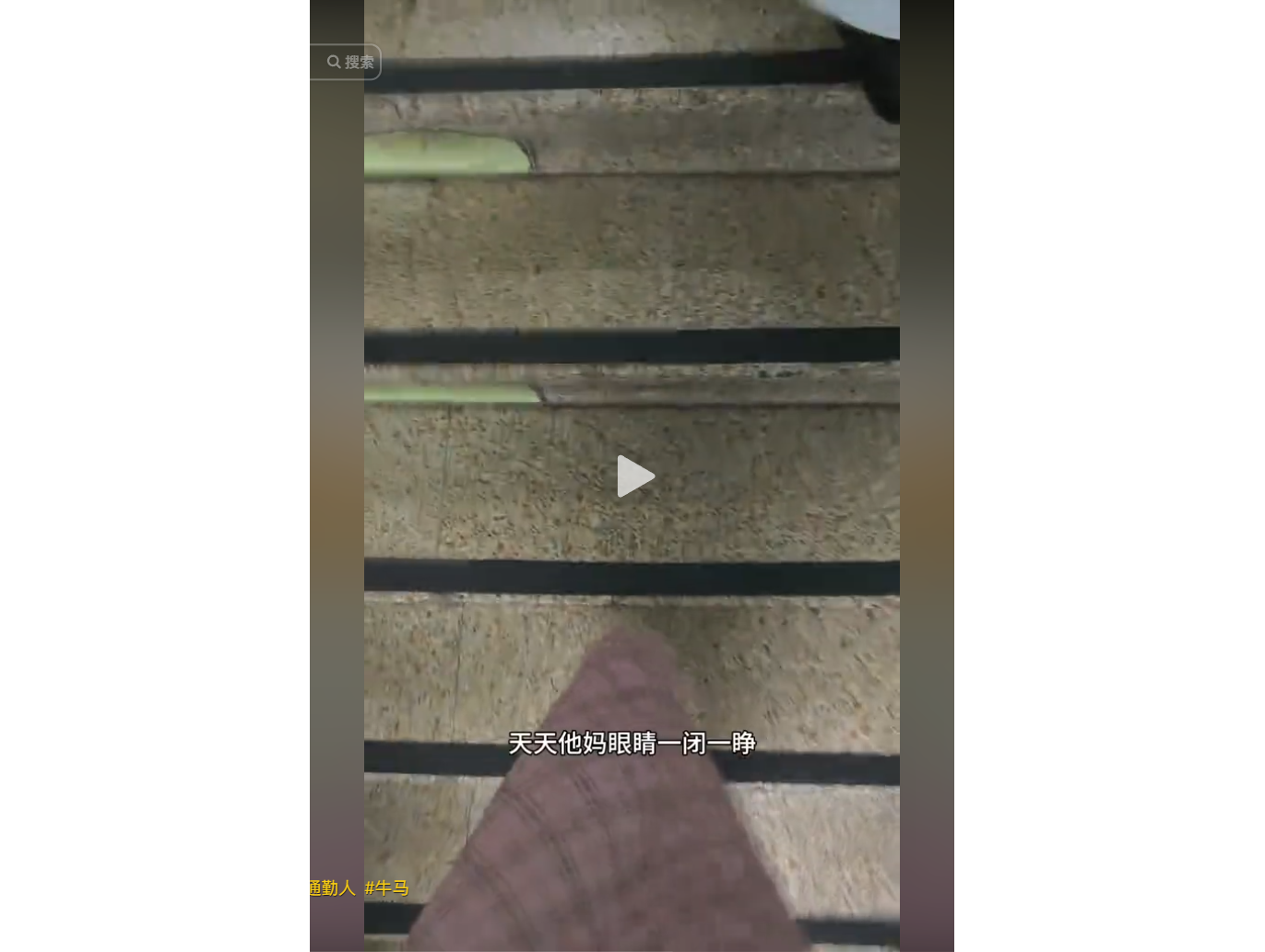
The Story
The viral clip depicts the quintessential Thursday morning rush on Beijing’s Line 4, colloquially dubbed the "Cattle and Horse Express." Through the self-deprecating lens of the "cattle and horse" archetype, the video transforms a simple staircase into a monument of endurance. It visualizes the stark duality of the Beijing drifter: a daytime automaton enduring hour-long cross-provincial commutes and crowded carriages, morphing into a nocturnal philosopher grappling with existential meaning. The footage captures raw, unfiltered moments—conflicts over seats, chaotic energy from children, and the silent determination of faces illuminated by phone screens. Yet, beneath the自嘲 (self-mockery) lies a profound affirmation. The punctual arrival at work is not just compliance; it is an act of adult fortitude. Amidst background details like plainclothes enforcement during summer campaigns, the narrative asserts that ordinary survival possesses its own dignity, turning the daily grind into a shared, bittersweet testament to human persistence.
The Voices
01. The Chemical Cycle of Exhaustion
"Coffee by day, melatonin by night"
"Morning stimulants only kick in at night; night sedatives only kick in at morning"
Think Tank Insight: This theme highlights a pathological decoupling of biological rhythms from social schedules. Workers are no longer resting naturally but chemically managing their consciousness to fit industrial demands. The reliance on substances signals a systemic failure where sleep is treated as a logistical problem rather than a biological necessity, reflecting deep physiological alienation.
02. Economic Stagnation vs. Inflationary Pressure
"My salary is the same as eight years ago, but my commute is longer"
"I haven't worked any less, but at least I haven't been beaten"
Think Tank Insight: Comments reveal a crisis of perceived value where effort no longer correlates with reward. The comparison to past wages or physical safety suggests a recalibration of expectations downward. When financial mobility stalls, workers redefine success merely as avoiding catastrophe, indicating a shift from aspiration-based labor to survival-based endurance.
03. Digital Empathy and Institutional Recognition
"The reviewer let this work pass because they empathized"
"On the commute to work, not a single step is taken willingly"
Think Tank Insight: The acknowledgment of content moderators’ empathy transforms digital platforms into unexpected spaces of solidarity. When institutional gatekeepers validate expressions of suffering, it legitimizes collective fatigue. This suggests that in high-pressure environments, even algorithmic or bureaucratic leniency is interpreted as a rare, comforting form of emotional recognition.
Word Cloud
| Sentiment Dimension / Observation Lens | Group Consensus Share |
|---|---|
| The Chemical Cycle of Exhaustion | 45% |
| Economic Stagnation vs. Inflationary Pressure | 35% |
| Digital Empathy and Institutional Recognition | 20% |
The Truth
Data Summary: Comment sentiment is overwhelmingly dominated by themes of physiological disruption and economic frustration, accounting for nearly 80% of engagement, while institutional empathy serves as a minor but significant counterweight.
Observer's Takeaway: The comment section functions as a digital support group where shared misery validates individual experience. The overwhelming focus on sleep disorders and wage stagnation reveals a workforce operating in chronic deficit, yet the resonance with the video proves that visibility matters. Audiences are not seeking solutions but acknowledgement; the collective mood is one of exhausted solidarity. This phenomenon underscores a critical social psychology: when structural mobility fails, cultural expression becomes the primary vessel for processing trauma. The viral success of mundane suffering indicates that for Beijing’s commuters, being seen in their fatigue is currently more valuable than being told how to fix it.
- Reborn to Regret: Why a High School Time-Travel Drama Sparked a Cultural Debate
- 重生2008卻只顧撩妹?網民怒嗆:別忘了汶川,更別侮辱智商
- Don’t Slap, Just Blow: The Quiet Panic Over Rove Beetles
- 河北現蹤「飛行硫酸」!隱翅蟲千萬別拍,網驚:一巴掌爛8公分
- The Rise of the Unapologetic Daughter-in-Law: Why “Satisfying” Retaliation Is Trending
- 拒絕隱忍!短劇掀起「反擊惡婆婆」熱潮,網友高呼:這才是爽文現實版
- The AI Illusion: When Digital Drama Meets Real-World Workplace Anxiety
- AI短劇引發職場共鳴:上廁所被管控?網友痛陳「社死」背後的真實困境
- 你见过美国白蛾吗?
- 商品贴边不能上架?原图不变,从中心向四周补全场景留白
全部评论