Cervical Kyphosis: What a Reversed Neck Curve Means
An actress woke in the middle of the night with a sudden jolt — one twitch, and then her whole body locked. She couldn't move. A film was nearly wrapped, so her first thought wasn't fear for her spine; it was fear for the schedule. The hospital gave her condition a name: cervical kyphosis.
You don't need a film set to recognize the feeling. An hour or two hunched over a phone and your neck is stiff and sore. Late nights at a desk and the back of your neck feels like a rock is sitting on it. Morning comes, your neck won't turn, so you rub it and blame the pillow.
Most people call it a stiff neck and let it go. But a reversed neck curve is worth taking seriously.
Your neck is built with a forward C-curve, and screen time quietly flattens it.
The cervical spine — the seven vertebrae stacked between your skull and shoulders — is not a straight rod. It carries a gentle forward bend called the cervical lordosis, a curve that absorbs shock and keeps your head balanced over your shoulders.
Keep your head down long enough, and that curve starts to straighten. Push further and the segment can bend the other way — backward. In medicine this is cervical kyphosis, also described as a reversed or straightened cervical lordosis. It counts as a form of cervical spine disease, and it develops silently, year after year.
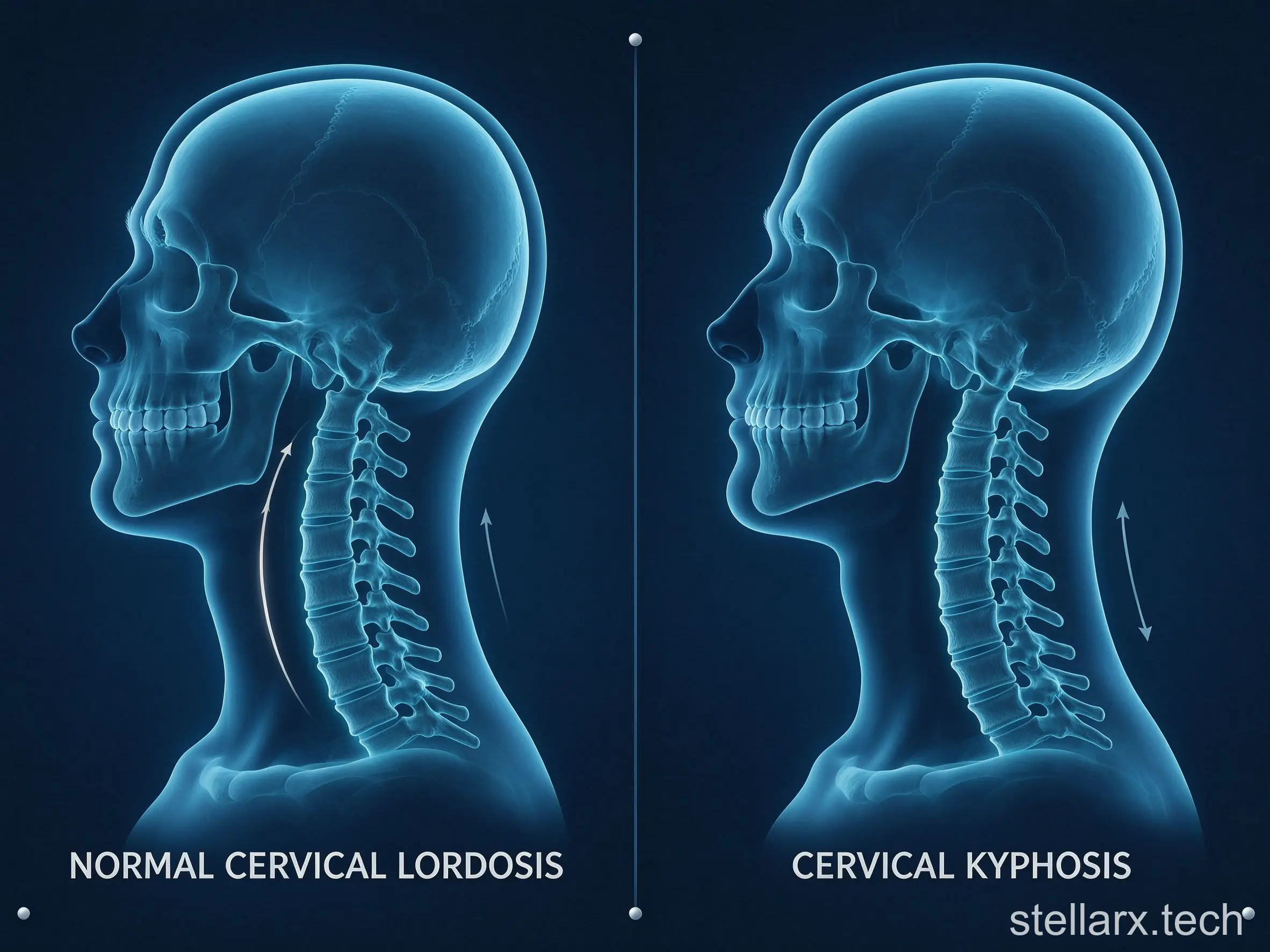
Why a backward curve is dangerous: it squeezes the traffic running through your neck.
A reversed curve is not just an aesthetic problem. The neck is a crowded corridor, and every structure in it reacts to the squeeze.
The vertebral artery runs upward through small canals in the cervical vertebrae, on its way to feed the back of the brain. A compressed artery means reduced blood supply to the brain — and that shows up as dizziness, headaches, insomnia and forgetfulness.
The joints and bones respond to the abnormal pressure too. Tissues that are pressed and strained age early: bone spurs grow, ligaments thicken, and discs bulge or herniate. These changes press on the spinal cord, nerve roots and vertebral artery, producing the classic symptom list of cervical spine disease — neck pain, shoulder and arm pain, numbness in the limbs, nausea and vomiting, dizziness and headache, insomnia and memory problems.
In severe cases, the damage can go as far as paralysis.
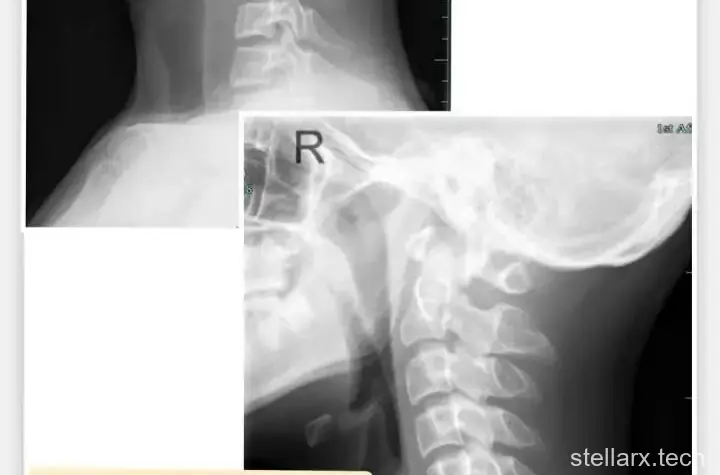
Cervical kyphosis rarely announces itself once.
The disease usually builds in stages: from one or two flare-ups a year, to attacks every month, to pain that no longer settles at all. Each stage quietly worse than the last.
Most patients with a reversed neck curve have "plain" cervical spondylosis, but a minority face much more serious outcomes — paralysis, or in rare cases a condition called Hirayama disease, a progressive weakness of the hands and arms linked to the cervical spinal cord.
That is why experts repeat the warning: if you have symptoms, do not self-diagnose by searching online and buying your own medication. Go to a hospital and let a doctor look at the actual curve.
The people being hit are getting younger — and your sleep posture can be the trigger.
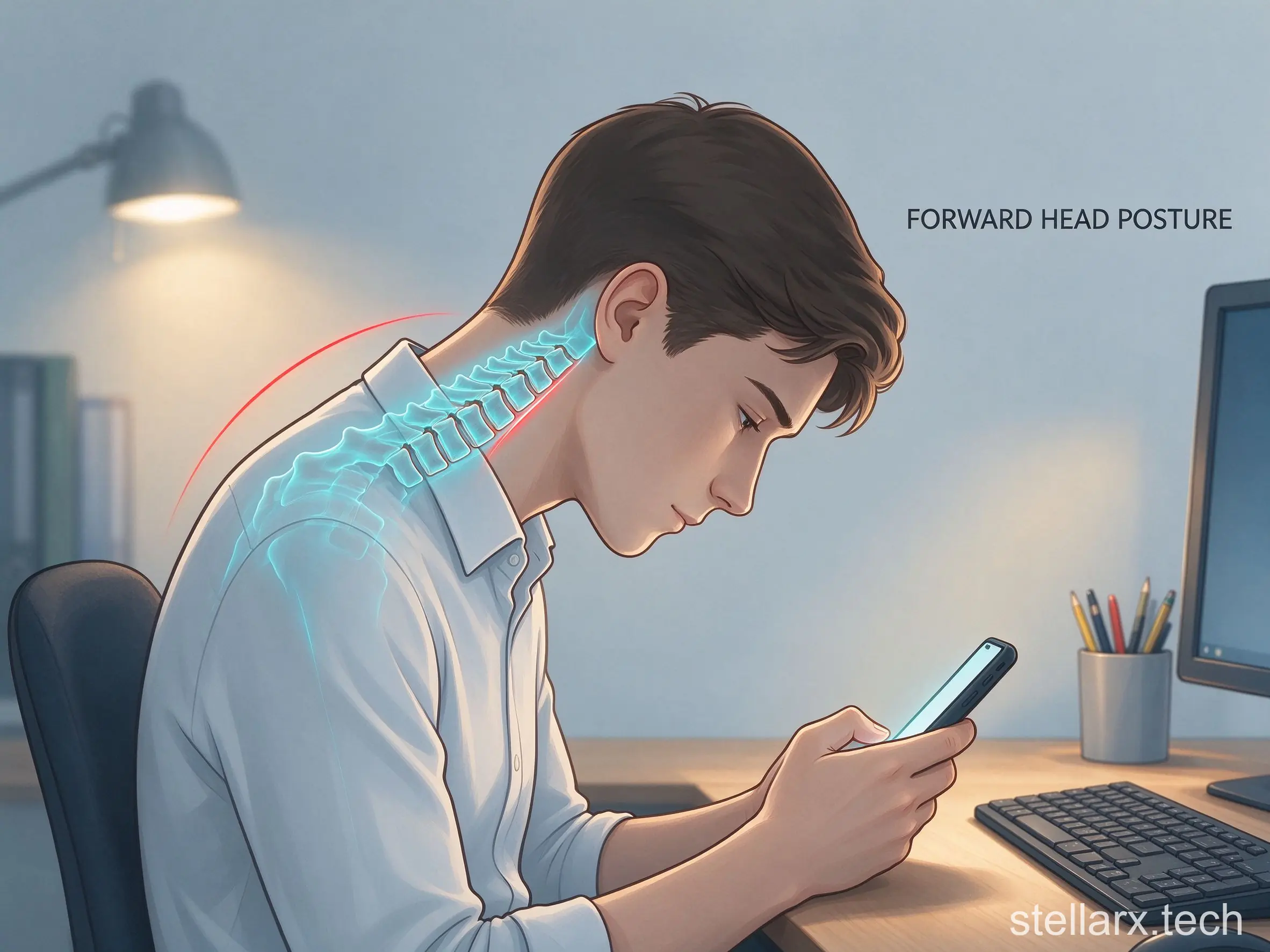
Clinic caseloads show cervical spine disease moving into younger and younger age groups. The common driver is a lowered head: playing on a phone or tablet, day after day, is one of the most frequent triggers of a reversed curve.
Sleeping on your desk can do it in one afternoon. When you rest your head on your arm or a tabletop, your neck is twisted and tilted forward — the cervical spine is held in rotation, and the nerves and blood vessels passing through it get compressed.
The cheap fix: build up the muscles that hold your neck.
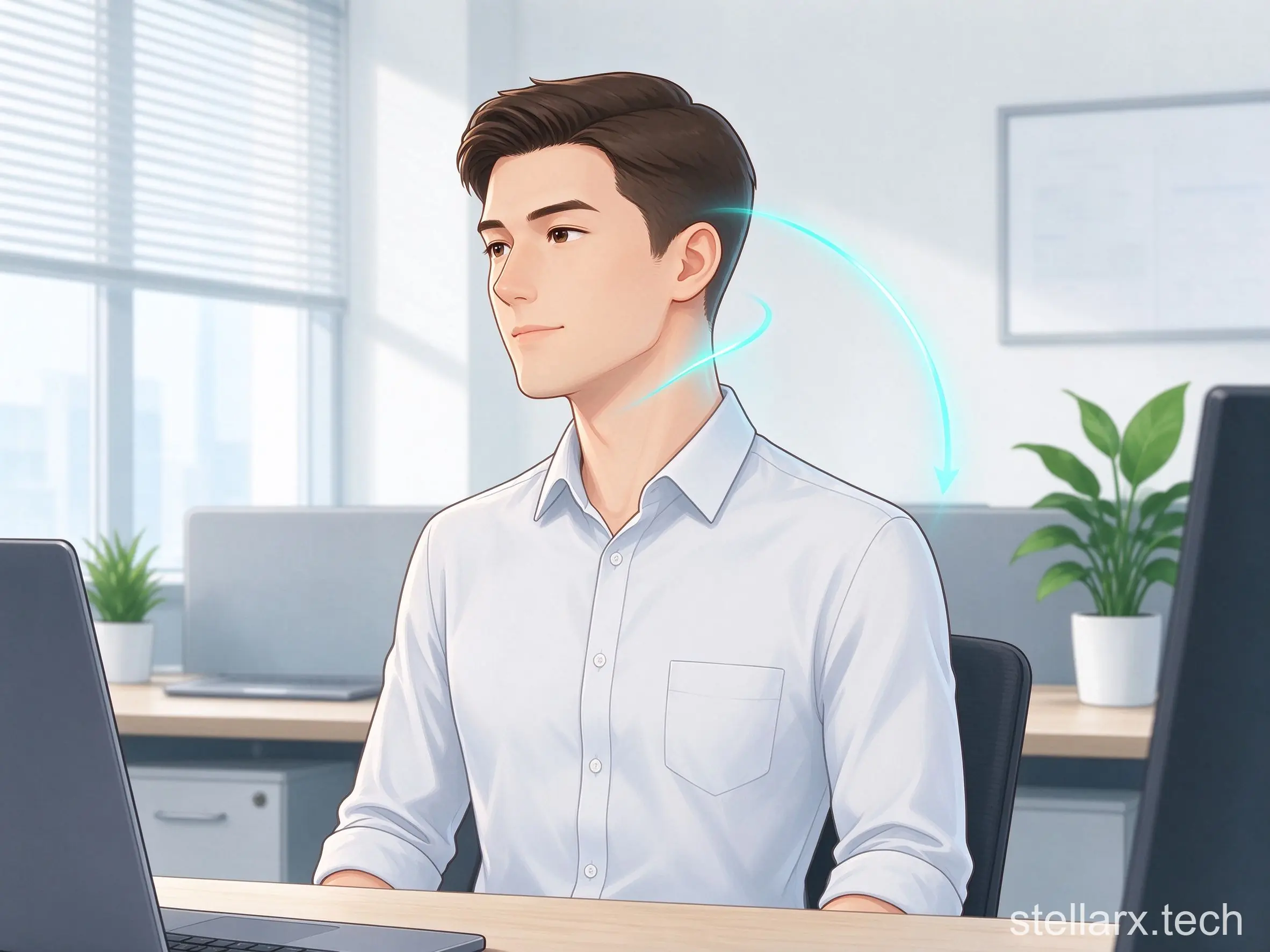
The opposite of a fixed forward slump is movement. Keep the neck and shoulder muscles trained: in work breaks, slowly move the head forward, backward, and rotate it side to side — what Chinese physiotherapy clinics call the "mi character" exercise, named after the eight strokes of the character 米.
Regular neck movement relieves fatigue, strengthens the muscles, and makes the cervical spine more stable against sudden changes in position.
If your neck hurts or stiffens often, pay attention to the pattern: how many times a year it flares, whether it is getting closer together, and whether rest still settles it. When it stops settling, that is the moment to stop waiting.
And if a sleep twitch ever leaves you unable to move, take it to a doctor — don't wait for the film schedule.
The cervical spine — the vertebrae, discs, nerves and blood vessels that fit inside a corridor narrower than your wrist — is a world of its own under a virtual microscope. Want to see the tissue a herniated disc presses against, up close? Just search "WWAI" in your app store and observe the biological specimen online — ask its AI anything while you look. Including a rabbit spinal cord specimen where the butterfly-shaped gray matter and the white matter fiber bundles are clearly visible — the nervous tissue at the center of cervical spine disease.

Related reading

Phone in Bed: Scrolling Hurts Your Eyes

Deep Vein Thrombosis: Sitting Too Long Can Kill

A Daily Bubble Tea Turned This Teen's Neck Black
References
1. Rao R. Neck pain, cervical radiculopathy, and cervical myelopathy: pathophysiology, natural history, and clinical evaluation. J Bone Joint Surg Am. 2002;84-A(10):1872–1881.
2. American Academy of Orthopaedic Surgeons. Cervical Spondylosis (Arthritis of the Neck).
3. Hirayama K. Juvenile muscular atrophy of distal upper extremity (Hirayama disease). Folia Psychiatr Neurol Jpn. 1959;13:336–342.
4. National Health Service. Neck Pain: Exercises.
- Pacific Oyster Invasion: The Edible Ecosystem Engineer
- 牡蠣:入侵歐洲的海洋工程師,也是桌上美食
- Incomplete Blink: The Hidden Cause of Screen Dry Eyes
- Silence Speaks Volumes: The Rise of Immersive “Cool Girl” Makeup Tutorials
- 無聲勝有聲:沉浸式「冷感御姐妝」引發全網仿效與容貌焦慮辯證
- 不完全眨眼:螢幕前眼睛乾澀的真正原因
- Winter Wardrobe Rebellion: The Rise of 'Disgusting' Comfort
- 冬日「噁心穿搭」成職場新常態?打工人用舒適對抗精緻人設
- The Doll-Like Illusion: Why “No-Filter” Makeup Tutorials Spark Debate on Effort vs. Reality
- 無濾鏡下的「古董洋娃娃」幻覺:一場關於美貌焦慮與技術崇拜的視覺風暴
全部评论