How Do Deep-Sea Creatures Survive Crushing Pressure?
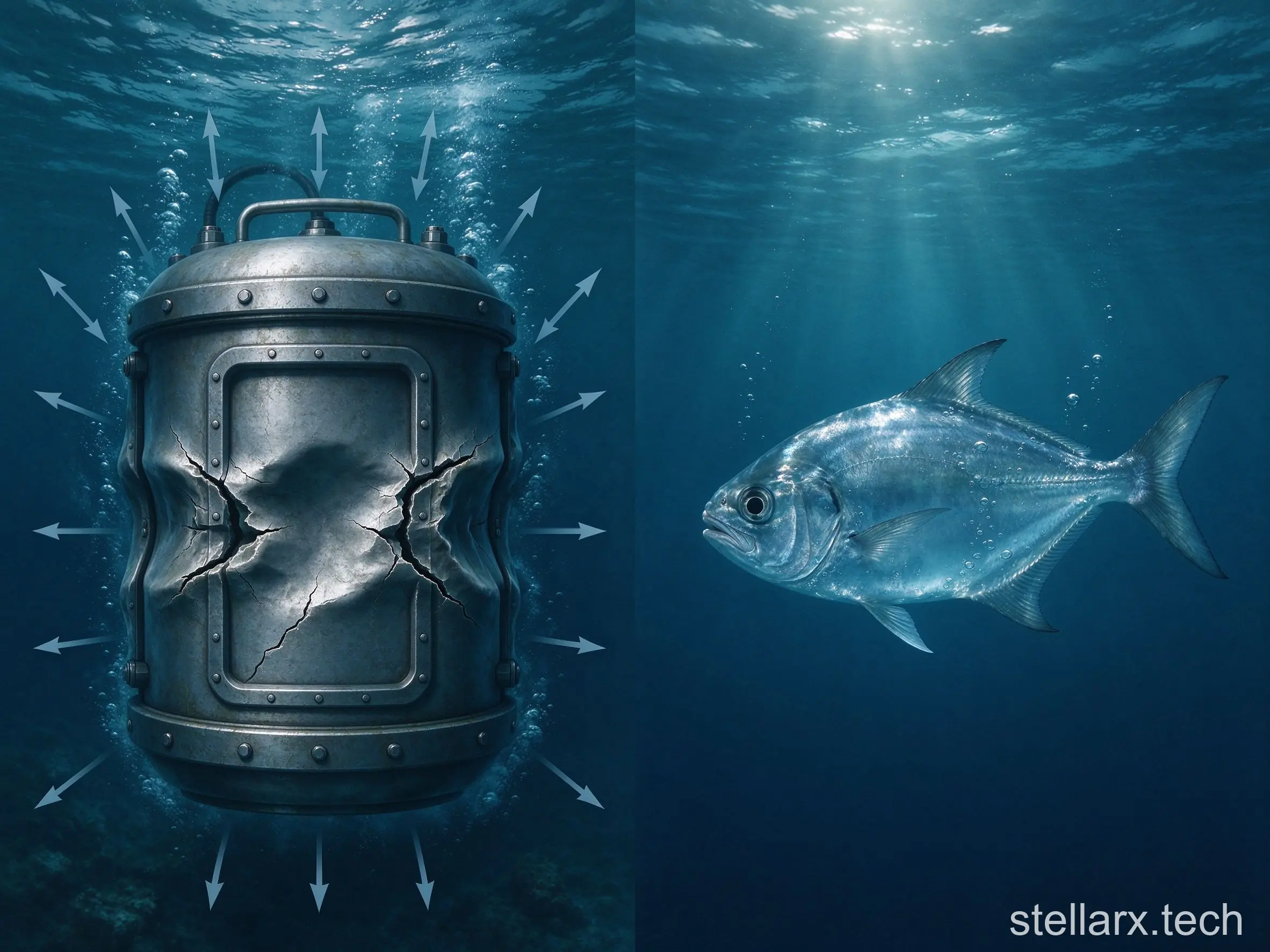
A steel research submersible has to be built like a fortress before it dives. Every ten meters of seawater piles on another atmosphere of pressure, and by 8,000 meters down the weight of the water reaches about 80 megapascals — roughly 800 atmospheres. A submarine hull that cannot hold the difference gets crumpled like a soda can.
And yet, at those same depths, fish swim past the wreckage of lost equipment as if the pressure were nothing. The surprise is that they are not built like fortresses at all.
The secret is not resistance — it is balance.
Pressure in the ocean does not push down from one direction. It acts on a body from every side at once, and the real question is not how much pressure exists but whether the pressure inside a creature matches the pressure outside. Consider two objects dropped into the abyss together: a sealed container filled with ordinary air, and a soft piece of tissue filled with water. The sealed air container builds a huge pressure difference against the outside, and it buckles or ruptures. The watery tissue, by contrast, barely changes volume, because water — unlike gas — is almost incompressible.
This is why deep-sea animals do not hold one atmosphere inside while muscles and bones fight off a thousand from outside. Their internal pressure sits close to the surrounding water, so there is no pressure difference left to crush them.
But balance does not mean the pressure leaves them alone.
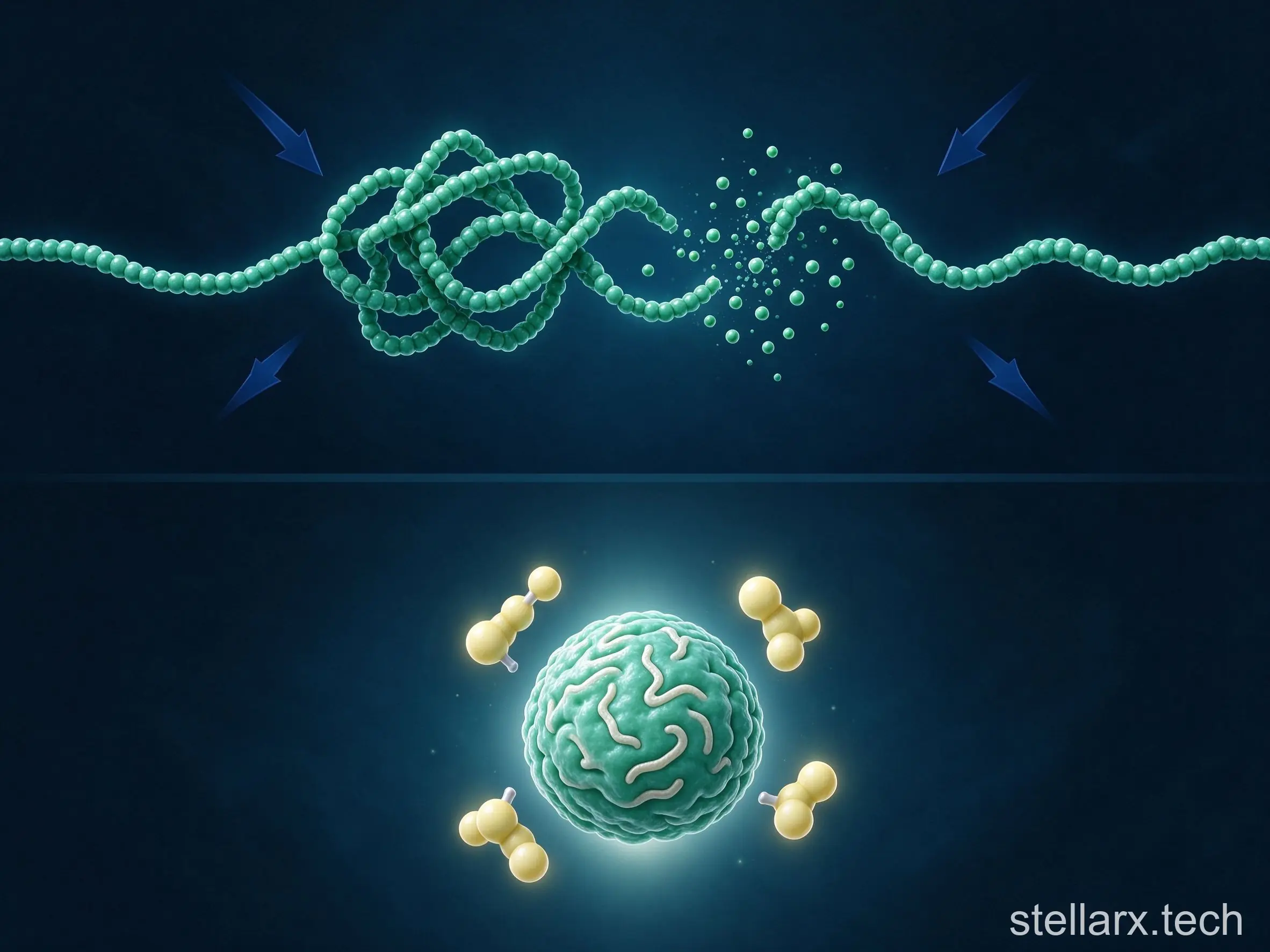
High pressure still attacks the chemistry of life, starting with proteins. A protein does its job through its three-dimensional shape, constantly flexing through tiny conformational changes. At constant temperature, pressure shifts the free energy between those conformations — and for many proteins, one state becomes unstable. Water squeezed into internal cavities, altered molecular interactions: folding and movement get disturbed.
Take actin, the protein that builds muscle contraction and the cell skeleton. Researchers comparing deep-sea and shallow-water fish found that certain amino-acid replacements in deep-sea actin reduce how much pressure inhibits the assembly of actin filaments. Interfere with actin polymerization and cells can no longer carry out even basic activities.
Protection number one: a small molecule called TMAO.
Deep-sea species carry a special protective solute: TMAO (trimethylamine N-oxide), an organic osmolyte that also acts as a protein stabilizer. It does not physically push back against the water pressure. Instead it changes how proteins interact with the surrounding water, shifting the thermodynamic balance so that proteins keep their functional folded state. Scientists call such pressure-protecting solutes piezolytes.
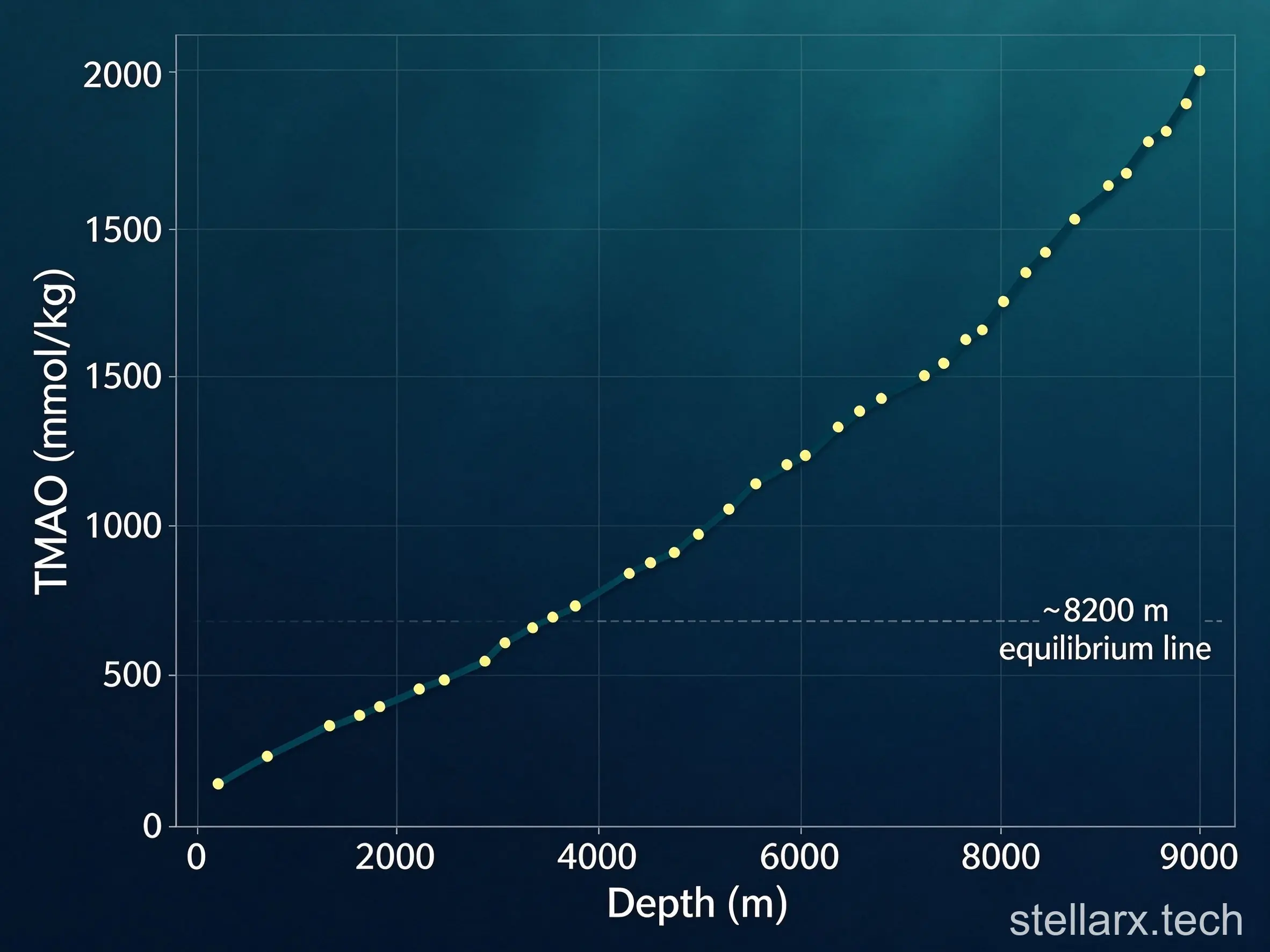
And the deeper the water, the more TMAO a fish carries. A 2014 study in Proceedings of the National Academy of Sciences compared TMAO levels across fish from different depths and found that, among the bony fish surveyed, TMAO concentration rose with habitat depth.
Protection number two: keeping the cell membrane fluid.
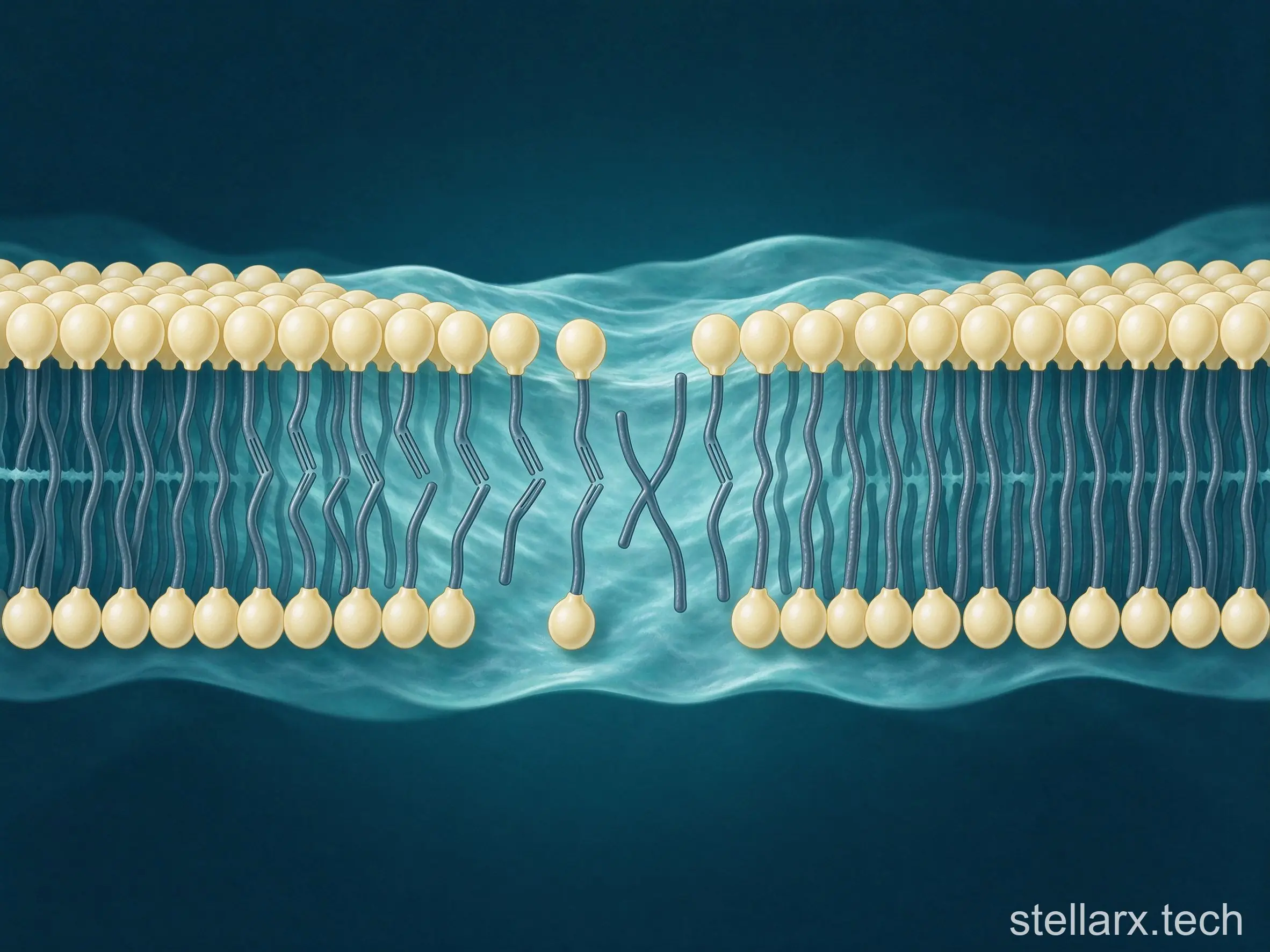
High pressure also packs lipid molecules in cell membranes more tightly, lowering membrane fluidity — and the deep sea is usually cold, which lowers fluidity further. Deep-sea animals solve both problems at once with membrane lipids rich in unsaturated fatty acids, especially polyunsaturated ones. The cis double bonds in their carbon chains kink the molecules and block tight packing, so the membrane stays fluid enough to work. This is called homeoviscous adaptation.
Ctenophores — comb jellies — are a key research group for this. A study in Science found that deep-sea comb jellies carry phospholipids with unusual spontaneous curvature, including certain plasmalogens. These lipids do more than tune fluidity: they help the membrane keep its normal bilayer structure under pressure. Researchers even engineered E. coli to change its membrane lipid composition and showed that the change altered the bacterium's tolerance for high pressure.
Where the limit sits: an 8,336-meter fish and an invisible line.
In 2023, researchers filmed a snailfish species at 8,336 meters deep in the Izu-Ogasawara Trench off Japan — among the deepest reliable fish observations on record.
But fish may not go much deeper. As TMAO accumulates to protect proteins, it also raises the osmotic concentration of the fish's body fluids. Using TMAO and osmolyte data across species, the 2014 study calculated that at about 8,200 meters, a fish's body fluids would approach equilibrium with seawater. Pushing more TMAO in would create new costs for normal osmoregulation. This helps explain why fish seem to have a depth limit around 8,000 meters — not yet a proven absolute ceiling for every species, but a remarkably consistent boundary.
Deep-sea life does not defeat pressure. It took evolution's long route: balance the pressures, fortify the proteins, loosen the membranes — and let the crushing weight simply flow around a body that no longer feels it.
The tissues that survive 800 atmospheres — fish skeleton, muscle fibers, blood vessels and nerves — sit quietly in a fish tail cross-section, and under a virtual microscope they are a world of their own. Want to see the muscle fibers that keep deep-sea fish swimming, up close? Just search "WWAI" in your app store and observe the biological specimen online — ask its AI anything while you look. Including a fish tail (cross section) specimen where the skeleton, muscle, blood vessels, nerves and scale are clearly visible — the whole architecture of a fish that shrugs off the abyss.

Related reading

Woodpecker Concussion Myth: Real Brain Damage

Dinoflagellate Genome: Largest on Earth
Dolphin Makes Fish Vomit to Steal Food

References
1. Yancey P H. Cellular responses in marine animals to hydrostatic pressure. J Exp Zool A Ecol Integr Physiol. 2020;333(6):398–420.
2. Winnikoff J R, Haddock S H D, Budin I. Homeocurvature adaptation of phospholipids to pressure in deep-sea invertebrates. Science. 2024;384(6703):1482–1488.
3. Yancey P H, Gerringer M E, Drazen J C, Rowden A A, Jamieson A. Marine fish may be biochemically constrained from inhabiting the deepest ocean depths. Proc Natl Acad Sci USA. 2014;111(12):4461–4465.
4. Jamieson A J, et al. New maximum depth record for bony fish: Teleostei, Scorpaeniformes, Liparidae (8336 m, Izu-Ogasawara Trench). Deep Sea Res Part I. 2023;199:104132.
- 牡蠣:入侵歐洲的海洋工程師,也是桌上美食
- Incomplete Blink: The Hidden Cause of Screen Dry Eyes
- Silence Speaks Volumes: The Rise of Immersive “Cool Girl” Makeup Tutorials
- 無聲勝有聲:沉浸式「冷感御姐妝」引發全網仿效與容貌焦慮辯證
- 不完全眨眼:螢幕前眼睛乾澀的真正原因
- Winter Wardrobe Rebellion: The Rise of 'Disgusting' Comfort
- 冬日「噁心穿搭」成職場新常態?打工人用舒適對抗精緻人設
- The Doll-Like Illusion: Why “No-Filter” Makeup Tutorials Spark Debate on Effort vs. Reality
- 無濾鏡下的「古董洋娃娃」幻覺:一場關於美貌焦慮與技術崇拜的視覺風暴
- The 36-Hour Marathon: A Raw Look at Pet Birth and the Ethics of Breeding

全部评论