He Never Got Bitten. Rabies Still Killed Him
The dog bit the son, not the father.
But one month later, it was the father who was dying — while the son, who was actually bitten, stayed healthy.
In 2013, a 41-year-old man was carried into a hospital in Nanjing with two days of strange symptoms: whole-body discomfort, sleeplessness, cold sweats, and an eerie sensitivity to air and sound. His throat muscles twitched on their own. Drinking and eating made him cough violently. He was agitated, delirious, hallucinating. A PCR test on his saliva came back positive: rabies virus.
He died the next day, despite every supportive treatment the hospital could give.
The Bite That Wasn't
Here is what made this case remarkable: the man was never bitten. The dog bite belonged to his 17-year-old son.
A month earlier, the two were walking in their village when a stray dog bit the boy's left leg. The wound was bleeding. Worried about rabies, the father knelt down and sucked the "poisoned blood" out of the wound, spitting it out again and again, before taking his son to the local hospital.
The boy received proper care within an hour: the wound was cleaned, and he got immune globulin plus the first dose of rabies vaccine — followed by four more doses on days 3, 7, 14, and 28.
Doctors urged the father to receive the same post-exposure prophylaxis, since he had just had the virus in his mouth. He refused. The treatment was costly, and he had spat out every drop of "bad blood." He told himself he would not be that unlucky.
A month later, rabies took him. The boy is healthy to this day.
Why a Bite Is the Classic Door
Rabies is caused by the rabies virus, and its case-fatality rate is close to 100% once symptoms appear.
The classic route is a bite: virus-laden saliva from a rabid dog or other animal enters through the wound. From there, the virus travels along peripheral nerves, migrating step by step toward the central nervous system. When it reaches the brain, it replicates inside neurons and begins to disturb their function — without killing the cells outright.
Then it spreads back outward along the nervous system. Infected saliva, in turn, can carry the virus to a new host: aggression increases, and the animal bites again. The virus has hijacked behavior itself.
Rabies virus has been isolated from the saliva, respiratory secretions, tears, cerebrospinal fluid, and urine of human patients. Any of these fluids, touching broken skin or mucous membranes, can start the same deadly journey.
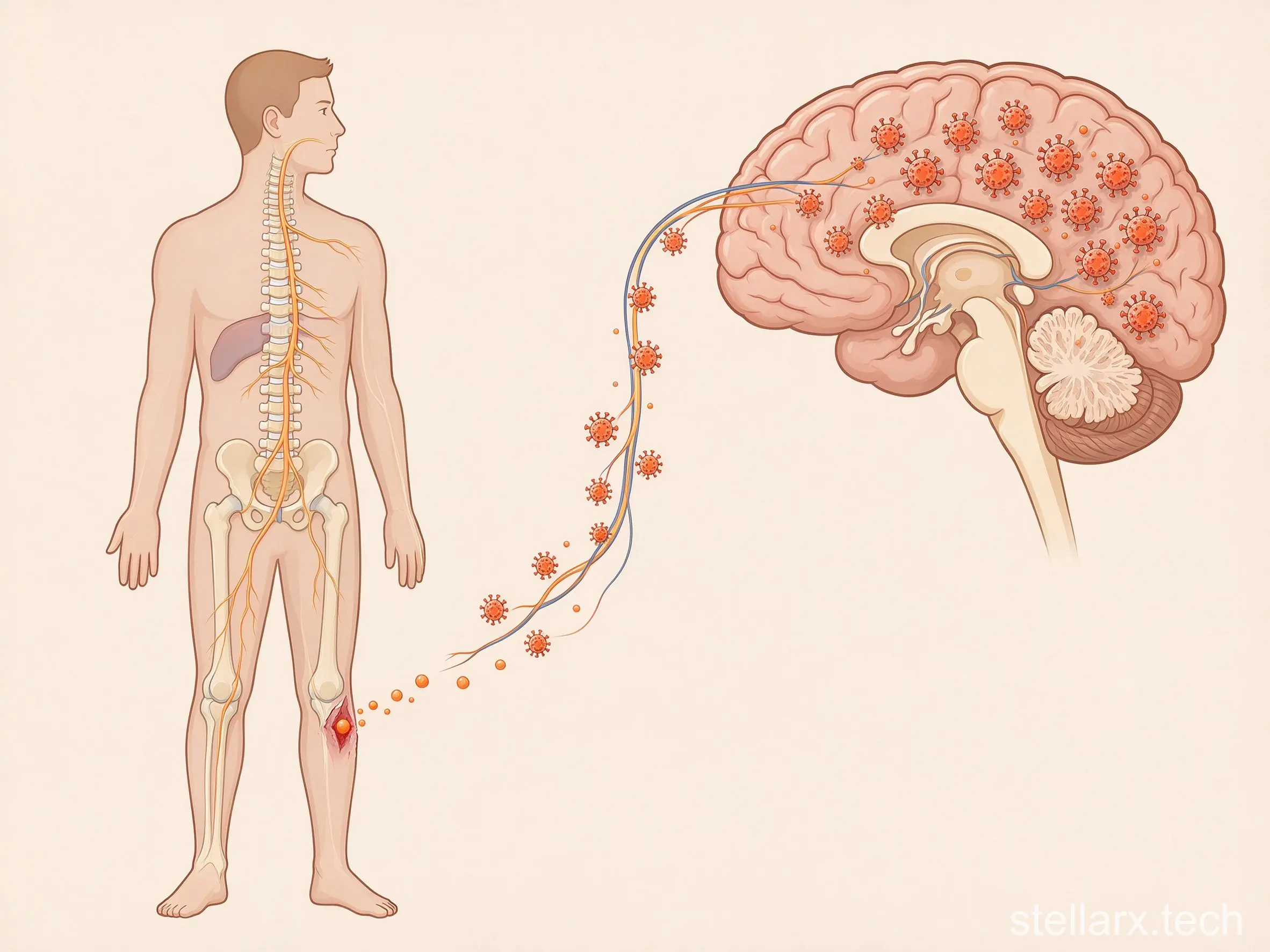
The Mouth Was the Door
Ordinarily, intact mucosa with no wound and no bleeding is considered safe. But rare cases warn otherwise: rabies can enter through mucosa.
In the Nanjing case, the father's mouth was the door. Rabies-tainted saliva sat on his son's wound, and his sucking pressed the virus against his own oral mucosa — a non-bite exposure with the same ending.
The same mechanism is suspected in a reported case of a mother with rabies infecting her nursing infant: the virus cannot cross the placenta, so the likely route was the infant's mouth contacting infectious maternal secretions.
Transplant, Aerosol: The Rarer Doors
Mucosa is not the only non-bite route.
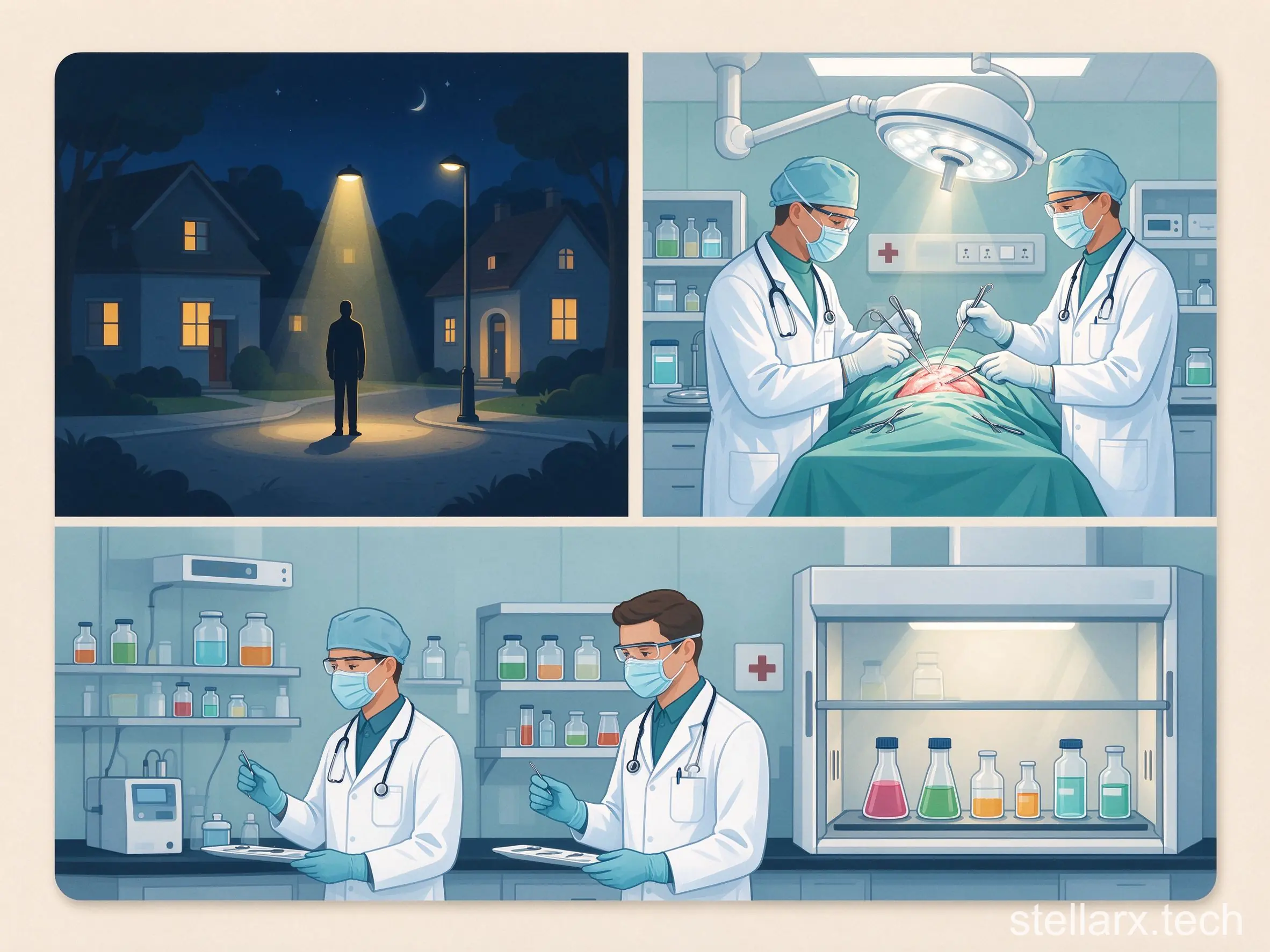
Organ transplant. In 2005, an organ donor died of rabies three days before donation, without the diagnosis being caught. His liver, kidneys, and corneas went to four recipients — who developed fever, headache, nausea, stiff neck, muscle spasms within weeks. Three died; one survived after intensive treatment.
In 2015, two Beijing patients who received kidneys from the same donor — a man who died of undiagnosed acute encephalitis — developed rabies with incubation periods of 42 and 48 days. Both deteriorated into deep coma and died within 80 days of surgery.
In 2016, a healthy boy in Changsha died of a rapidly progressive brain inflammation with repeatedly negative rabies antibody tests. His kidneys went to two women, who developed hydrophobia, photophobia, and fatigue — and died on days 40 and 43 after transplant.
Aerosol. In 1956, an entomologist who studied in caves housing millions of bats inhaled cave air and contracted rabies. Two laboratory workers were infected by aerosolized virus; one recovered after intensive care, one died.
Eating meat from an infected animal is theoretically possible but extremely rare. Far more realistic is the risk during slaughter and processing: virus entering through broken skin or mucosa while handling rabid animals.
What Actually Saves You
Against a disease this unforgiving, the difference between life and death is measured in hours.
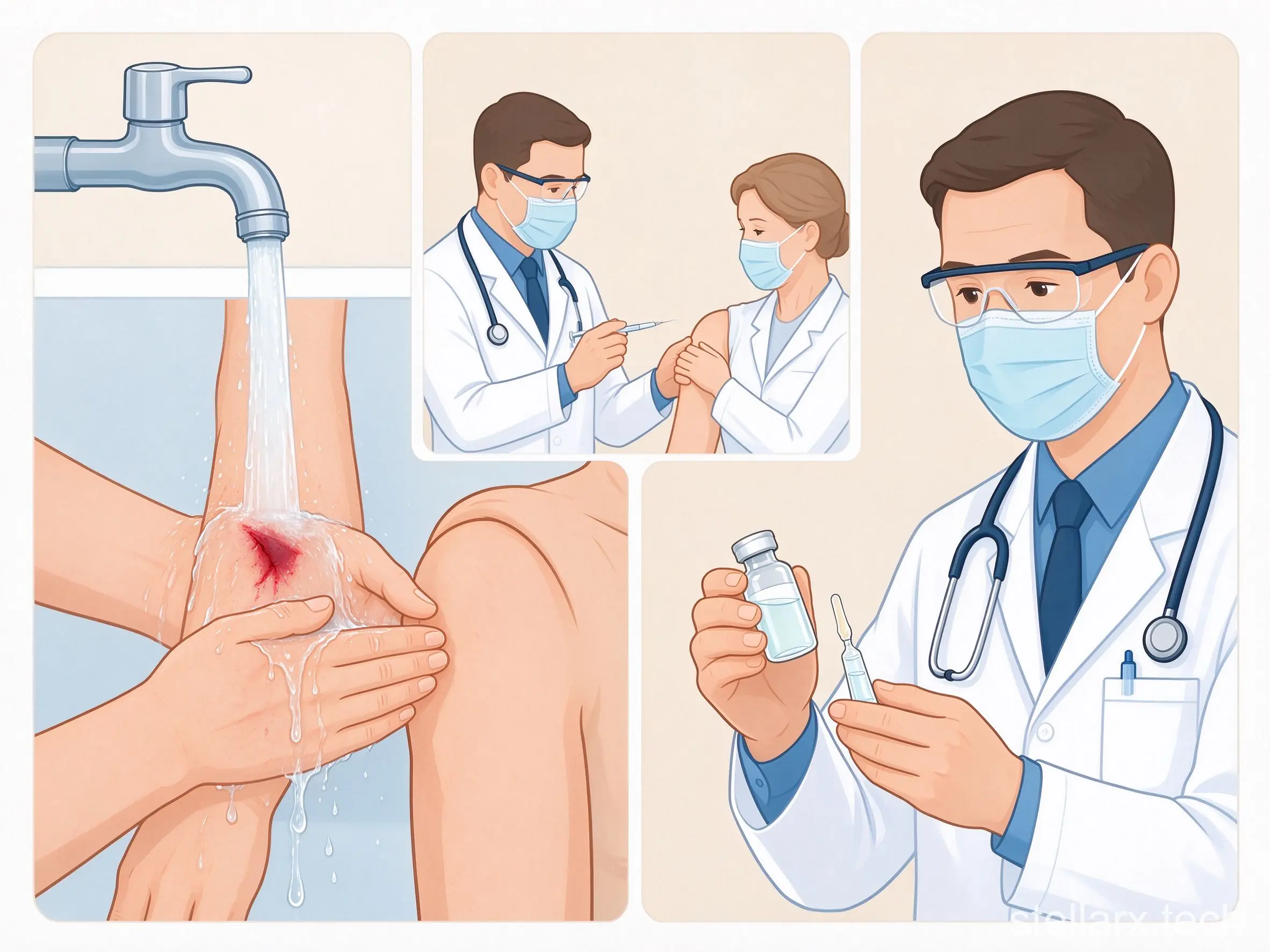
For any bite or suspicious exposure: wash the wound immediately and thoroughly with soap and water, seek medical care, and complete post-exposure prophylaxis (PEP) — vaccine, plus immune globulin when indicated, on the doctor's schedule. The son in the Nanjing case did exactly this, and he survived. The father skipped it on a gamble, and he did not.
Rabies is not a disease you can reason your way around. The virus is patient, the incubation is silent, and the outcome, once symptoms start, is almost always fatal.
The Lesson Hidden in Nerve Cells
Here is what the whole story comes down to: the rabies virus spends its fatal journey inside neurons — the same cells that carry every signal in your nervous system. Watching it on a microscope slide makes the danger concrete in a way a news story cannot.
Want to see the tissue rabies travels through? WWAI is an AI-powered biology encyclopedia that answers your biology questions instantly and lets you observe real microscope slide specimens online — including a rabbit spinal cord specimen where the butterfly-shaped gray matter and surrounding white matter of the central nervous system are clearly visible. Search "WWAI" in your app store and download it today.

References:
[1] Zhao H, Zhang J, Cheng C, Zhou Y-H. Rabies Acquired through Mucosal Exposure, China, 2013. Emerg Infect Dis. 2019;25(5):1028–1029. doi:10.3201/eid2505.181413.
[2] Srinivasan A, et al. Transmission of rabies virus from an organ donor to four transplant recipients. N Engl J Med. 2005;352:1103–1111.
[3] Zhou H, et al. Probable rabies virus transmission through organ transplantation, China, 2015. Emerg Infect Dis. 2016;22:1348–1352.
[4] Shen T, et al. Rabies virus transmission in solid organ transplantation, China, 2015–2016. Emerg Infect Dis. 2017;23:1600–1602.
[5] Dutta JK. Rabies transmission by oral and other non-bite routes. J Indian Med Assoc. 1998;96:359.
[6] Kan VL, et al. Risk assessment for healthcare workers after a sentinel case of rabies. Clin Infect Dis. 2015;60:341–348.
[7] All illustrations are AI-generated.
- MiMo V2.6: The Open-Source Model That Beat Grok
- AI 港风胶片写真:不改骨相五官,一张自拍拥有 90 年代复古氛围感
- 你还在等女生主动?难怪大学四年都没谈上恋爱
- He Never Got Bitten. Rabies Still Killed Him
- AI’s Perfect Love Triangle: When Digital Fantasy Outshines Reality
- AI重塑青春幻想:當「五男追一女」成為新世代爽劇模板
- The Noodle Paradox: Why Shanxi’s Culinary Identity Sparks Debate
- 山西菜「上不了檯面」?一場關於麵食、午睡與碳水的輿論風暴
- AI-Generated American High School Drama Sparks Global Debate on Authenticity and Charm
- AI美高短劇爆紅:當虛擬帥哥成為「英語教材」,誰在定義新世代青春?

全部评论