Do Apples Have to Be Crisp to Taste Good? Why Are Some Apples Naturally Soft?
Why Are Some Apples Very Crisp While Others Are Softer?
When you bite into an apple and hear a satisfying “crunch,” it often makes the apple feel especially fresh and delicious.
That’s why many people care a lot about one thing when choosing apples:
Is it crisp enough?
But in fact, crispness alone does not determine whether an apple is good.
There are many different apple varieties, and they naturally differ in flesh firmness, juiciness, sweetness, aroma, and texture.
Some apples have firm, crisp flesh by nature, while other varieties may remain softer and more delicate even when fully ripe.
Crispness Is Related to the Structure of the Apple Flesh
Apple flesh is made up of a large number of plant cells.
When the cells and tissues are tightly packed and firm, biting into the apple is more likely to create that distinct crisp sensation.
That is why some apples make a very noticeable “crunch” when you bite into them.
Other apples have softer flesh structures, so they may not feel as crisp when chewed. Instead, their texture may be softer, smoother, or more tender.
So, to a large extent, the texture of an apple is closely related to the natural characteristics of its variety.
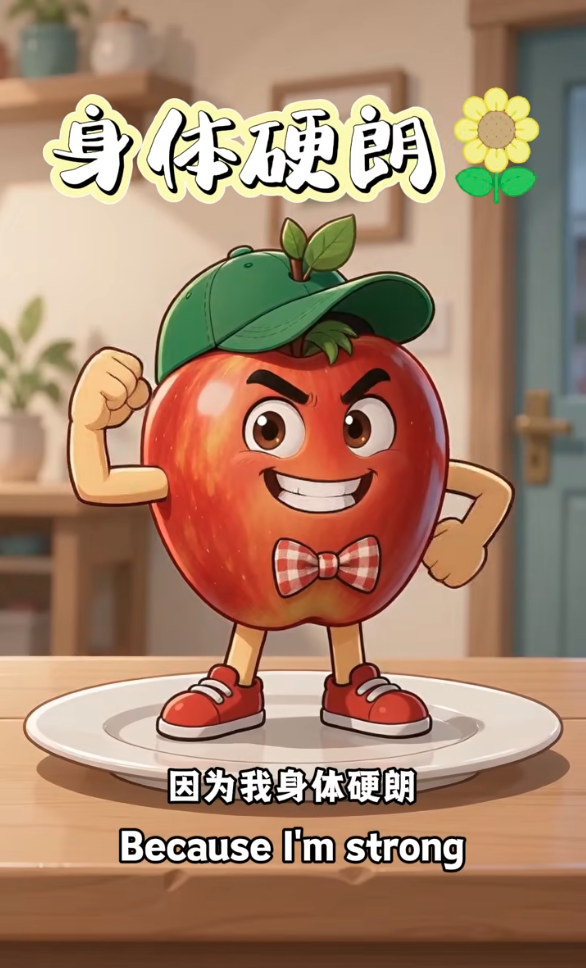
If an Apple Is Soft, Does That Mean It Has Gone Bad?
Not necessarily.
This is one of the key misunderstandings the video tries to correct.
When people notice that an apple is no longer as crisp as it was when they first bought it, they may immediately think:
“Has this apple gone bad?”
But as apples mature, their flesh naturally changes. Some varieties may also become noticeably softer when fully ripe.
So, softness does not automatically mean spoilage.
To judge whether an apple is still suitable to eat, you should not rely on firmness alone. It is better to also check the smell, appearance, and whether there are signs of rot, mold, or other abnormalities.

Why Do Apples Get Softer Over Time?
Even apples that are originally very crisp may gradually lose some of their firmness during storage.
As ripening and storage continue, the internal structure of the apple flesh changes, and the connections between cells gradually weaken.
As a result, flesh that was once firm and crisp becomes softer over time.
So, if an apple is no longer as “crunchy” as before, it may simply be more mature or have been stored for longer.
Of course, if softness is accompanied by obvious decay, unpleasant odors, or mold, then that should be evaluated separately.
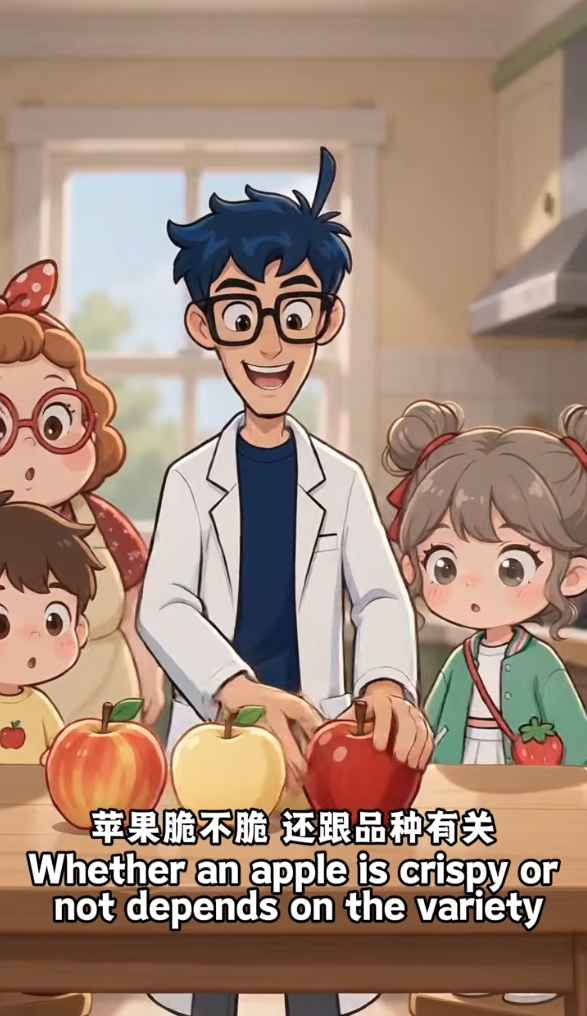
Different Apples Have Different “Personalities”
Just as some people prefer crisp apples while others enjoy softer, sweeter ones, different apple varieties naturally have their own characteristics.
Some varieties are known for being crisp and juicy, while others may be softer and more aromatic or sweet.
That means there is no need to judge every apple by a single rule like “the crisper, the better.”
Instead of looking for one supposedly “perfect apple,” it may be more useful to first decide what kind of texture you enjoy and then choose a variety that matches your preference.
Crisp Apples vs. Soft Apples — Which Is Better?
There is no absolute answer.
If you enjoy a fresh, crunchy bite, you can choose apple varieties known for their crispness. If you prefer a softer, smoother, and sweeter texture, softer apples can be just as enjoyable.
The key point is:
Apple firmness is often a difference caused by variety and ripeness, not simply a sign of “good” or “bad.”
So, the next time you bite into a softer apple, don’t be too quick to dismiss it.
It may not be “unfresh” at all — it may simply be a variety that was never meant to be extremely crisp.


- Wwai 1.0.3 Is Here: A Smoother UI and Better Exploration Experience
- Do Apples Have to Be Crisp to Taste Good? Why Are Some Apples Naturally Soft?
- The Day My Silver Wolf Awakened, My Fated Alpha Took Another Woman’s Hand: Ten Years of Waiting Ended in Rejection
- 蘋果一定要脆才好吃嗎?為什麼有的蘋果天生就是軟的?
- From Sewage to Medicine: The Shocking Origin of Cephalosporins and the AI Backlash
- 污水裡撿到的「神藥」?头孢前身竟是先鋒,網友卻只盯著 AI 崩壞
- 中秋住酒店警惕床虱!
- 美颜过后的硫磺熏笋,看完沉默了……到底该怎么挑笋???
- When Manicures Become Masterpieces: The 8,000 Yuan Debate
- 8000元「非遺級」美甲引熱議:藝術極致還是實用災難?
全部评论