Why Mosquitoes Haven't Evolved to Bite Silently
It was 2 a.m. The high-pitched whine circled her left ear, then vanished. She slapped empty air. Again.
Across the room, a different mosquito landed on her arm. She never heard it. By the time she felt the itch, it was already gone.
Two mosquitoes. Two completely different strategies. One question that nags every summer: if a silent bite means a full meal and a clean getaway, why hasn't every mosquito evolved that way?
The Native Mosquito: Slow, Noisy, Honest
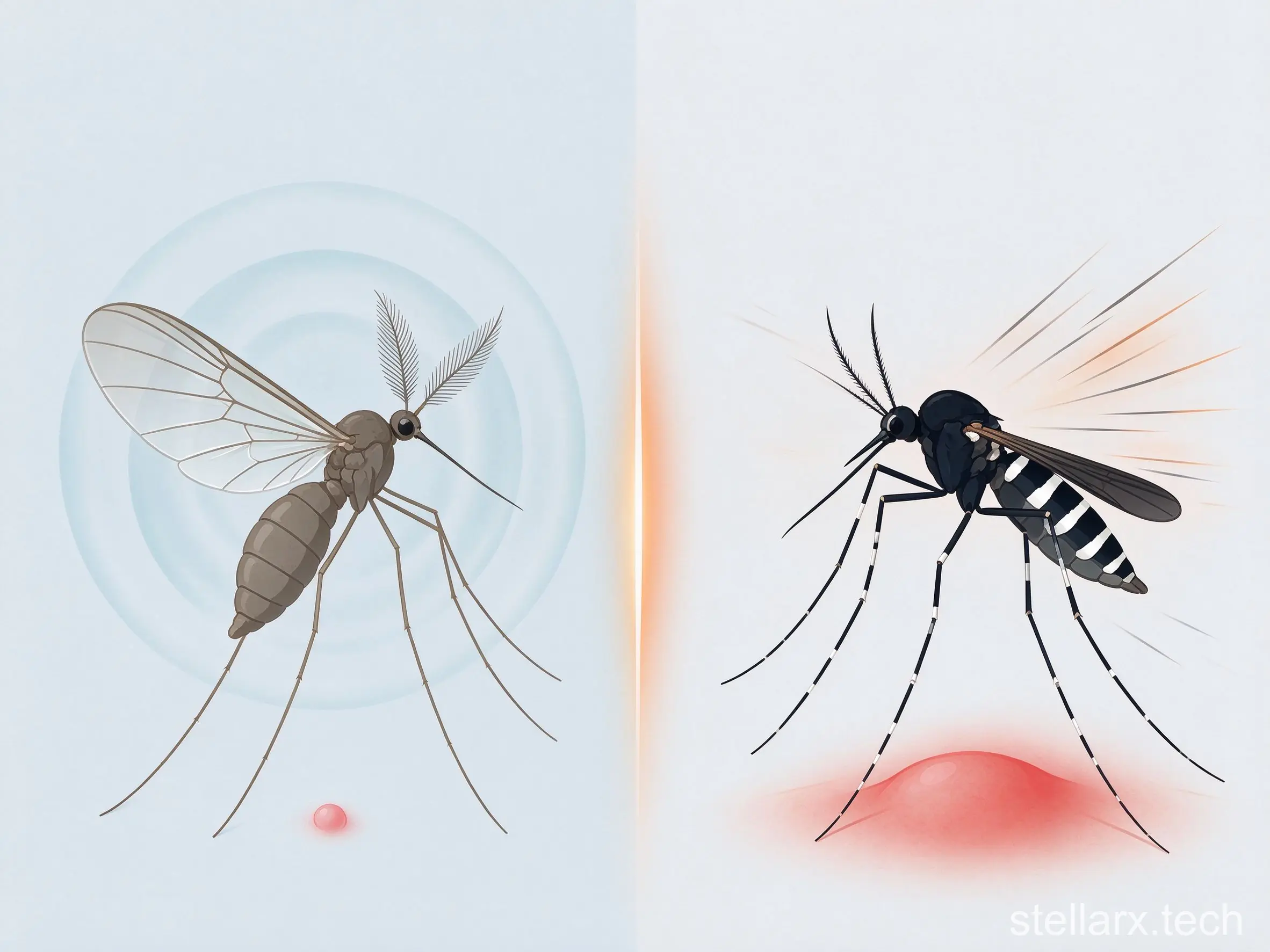
The local Culex and Anopheles mosquitoes are, by mosquito standards, polite.
They land on your skin and wait a full five seconds before piercing. They inject their saliva, drink their fill, and leave. The bump is small. It fades fast.
They fly slowly. You can catch one mid-air with a bare hand if you're patient. They rarely come out during daylight.
Their only flaw? Their wings are too large relative to their body, and the resulting buzz is loud enough to wake a sleeping person. You hear them coming, and they die for it.
It's almost as if they don't care. In temperate regions where food is abundant and diverse, these native mosquitoes have evolved at a leisurely pace — eat whatever comes along, don't rush, accept the occasional swat.
The Invasive Tiger Mosquito: A Biological Bug
Then there's the other kind. The invader.
The Asian tiger mosquito (Aedes albopictus) arrived from regions where every animal is perpetually hungry and every meal is a fight. In those ecosystems, hesitation means starvation.
The result is a mosquito that behaves like a glitch in the system.
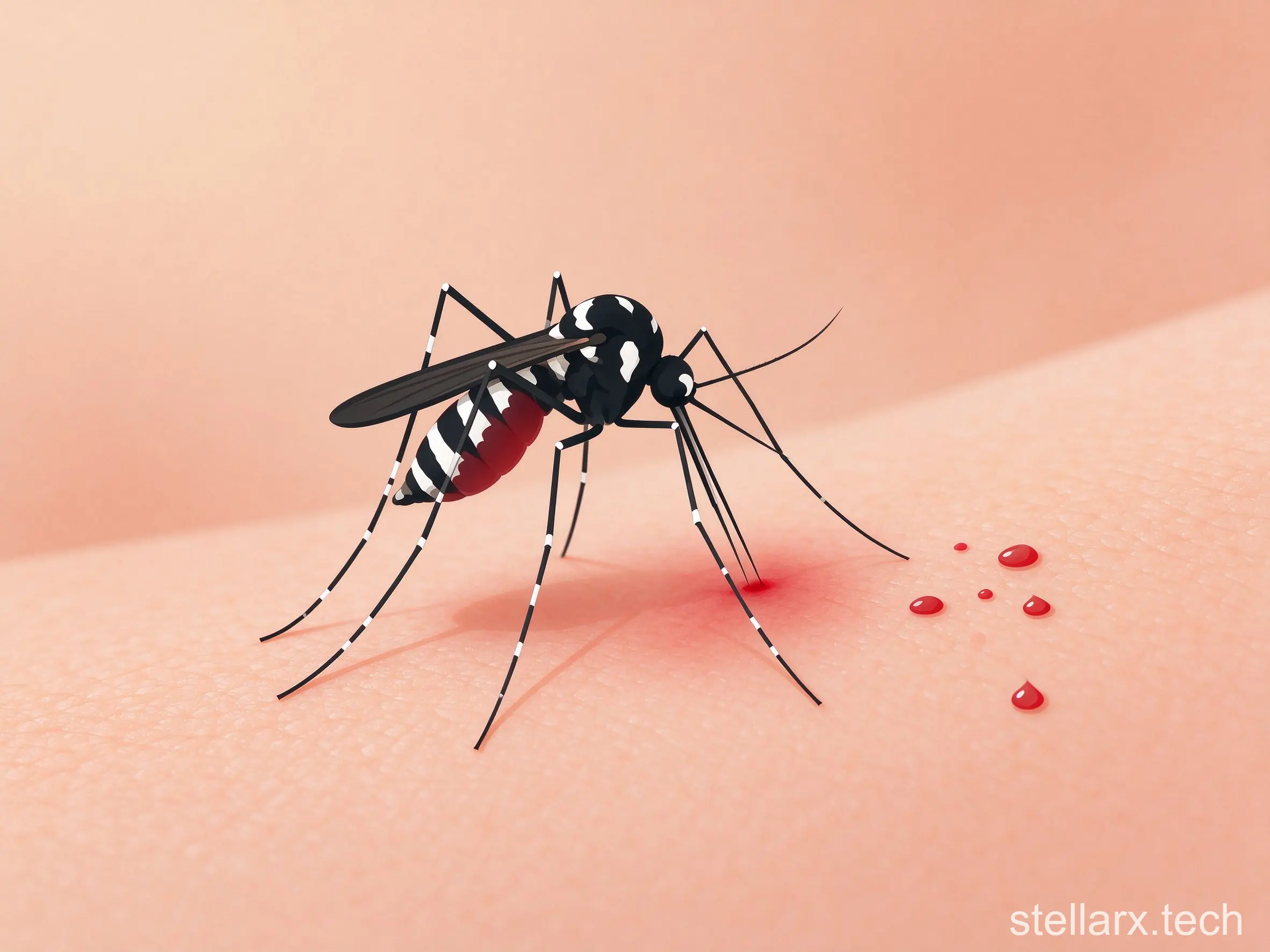
It lands and bites within half a second — no warning, no five-second courtesy. It pierces, injects, and feeds before your nerves even register the contact. Then it bites again. And again. It is relentlessly greedy, defecating while it feeds, locked onto you with single-minded determination.
The saliva is potent. The welt isn't a small bump — it's a flat, spreading patch that burns for days.
It flies during the day. Its wingbeat is nearly silent. It targets the backs of your hands, the backs of your legs, the crooks of your elbows — places you can't easily see or swat.
Within a few years of arriving, it has pushed native mosquito populations to the brink. It is, by every measure, a more effective parasite.
So Why Hasn't Every Mosquito Gone Silent?
If the silent, aggressive strategy works so well, why do native mosquitoes still buzz loudly and announce themselves?
Evolution doesn't optimize for a single trait in isolation. It optimizes for survival across an entire ecosystem.
The native mosquito's strategy is calibrated for a world with many hosts, mild climates, and abundant shelter. Its loud buzz is a trade-off for larger wings that enable stable, energy-efficient flight. Its slow feeding is a trade-off for lower metabolic demand. Its mild bite is a trade-off for gentler saliva that doesn't provoke intense immune responses — meaning hosts don't develop heightened avoidance.
The tiger mosquito's strategy is calibrated for scarcity and competition. Its speed comes at a metabolic cost. Its potent saliva provokes stronger immune reactions — hosts learn to avoid it more aggressively. Its daytime feeding exposes it to predators that native mosquitoes never encounter.
Neither strategy is universally "better." Each is a bet placed on a different environmental table.
And the table is shifting. As global trade carries invasive species across borders and climate change expands their range, the slow, polite native mosquito is losing ground. The bug is winning.

What You Can Do
The tiger mosquito didn't ask for permission to move in. It arrived in used tires, in plant shipments, in the stagnant water that collects in forgotten containers.
You can't evolve faster than a mosquito. But you can remove its breeding grounds. Empty standing water. Clean gutters. Cover rain barrels. The invasive mosquito breeds in tiny amounts of water — a bottle cap, a plant saucer, a clogged gutter.
And when you hear that familiar high-pitched whine at 2 a.m.? That's the native one, announcing itself. The one you should really worry about is the one you never hear.
Want to see insect wing structure up close — the very veins and membranes that determine whether a mosquito buzzes or flies silent? WWAI lets you examine a real insect wing specimen (Insect Tegmen) under a digital microscope right now, no lab equipment needed. View the specimen and ask WWAI anything about wing venation, flight mechanics, or mosquito anatomy: https://yun-hub.chat/link/?app=wwai&clickid=stellarx&dplink=specimenid%3D1167 — Search "WWAI" in your app store to download.

References
All illustrations are AI-generated. Locally adapted for this site's science-communication positioning.
- Why Mosquitoes Haven't Evolved to Bite Silently
- Why Is Hong Kong Milk Tea So Bitter? How Is “Silk Stocking” Milk Tea Different from Bubble Tea?
- 港式奶茶為什麼這麼苦?「絲襪奶茶」和珍珠奶茶到底有什麼不同?
- When the Fiancée Is a Snake: AI Anime Sparks Debate on Gender Roles and Absurd Romance
- AI漫劇《末世靈蛇》爆紅:跨物種甜寵引發性別雙標與倫理熱議
- AI Auctions Spark Debate: Is 'Doubao' the Ultimate Schemer?
- AI末世競拍現「心機豆」?人性測試揭開演算法背後的生存博弈
- The Rise of the AI "Evil Cultivator": A New Era of Digital Content Creation
- AI短劇「邪修」教程爆紅?網民質疑:真有人免費教賺錢秘訣?
- Can AI-Designed Supercars Outshine Legacy Brands?

全部评论