Capsaicin in the Air: Why a Chili Fire Made a City Cough
A City That Started Coughing
In the early hours of October 25, a fire broke out in a factory that dries industrial chili peppers in Tengchong, Yunnan. The smoke from the burning chilies drifted over the city, and before long people across town were coughing, with a sharp chili smell hanging in the air. The fire was put out quickly and no one was hurt — but the coughing told a more interesting story. To understand why a capsaicin cloud made a whole city cough, you follow one molecule from the inside of a chili to the inside of the human lung.
Where the Heat Hides in a Chili
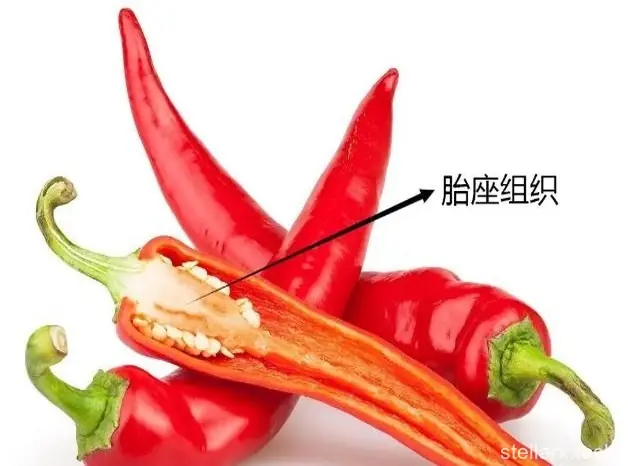
Cut a chili open and you will see a pale, ridged strip running along the inside wall — the placenta. This white inner ridge is where capsaicin is most concentrated. The flesh and the seeds contain some too, but far less. The capsaicin starts in the epidermal cells of the placenta, then moves out into small vesicles and the spaces between cells, where it waits to be released [1] [2].
A Molecule That Turns Into Gas at Fire Temperatures
Chemically, capsaicin is trans-8-methyl-N-vanillyl-6-nonenamide — formula C₁₈H₂₇NO₃, molar mass about 305.41 g/mol (NIST Chemistry WebBook, compound 404-86-4). Its melting point is roughly 62–65 °C, so at room temperature it is a solid: a white crystalline powder, or a waxy mass. Heat it past the melting point and it becomes liquid. Heat it past the boiling point — around 210–220 °C — and it becomes a gas. A fire in a chili-processing plant easily reaches past that boiling point, so the capsaicin in the burning peppers vaporized and was released into the air [8].
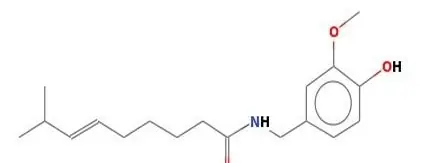
| Property | Capsaicin (C₁₈H₂₇NO₃) |
|---|---|
| Chemical formula | C₁₈H₂₇NO₃ |
| Molar mass | 305.418 g mol⁻¹ |
| Appearance | Crystalline white powder |
| Odor | Highly volatile and pungent |
| Melting point | 62–65 °C (144–149 °F; 335–338 K) |
| Boiling point | 210–220 °C (410–428 °F; 483–493 K) 0.01 Torr |
| Solubility in water | 0.0013 g/100 mL |
The Receptor That Fakes Heat and Pain
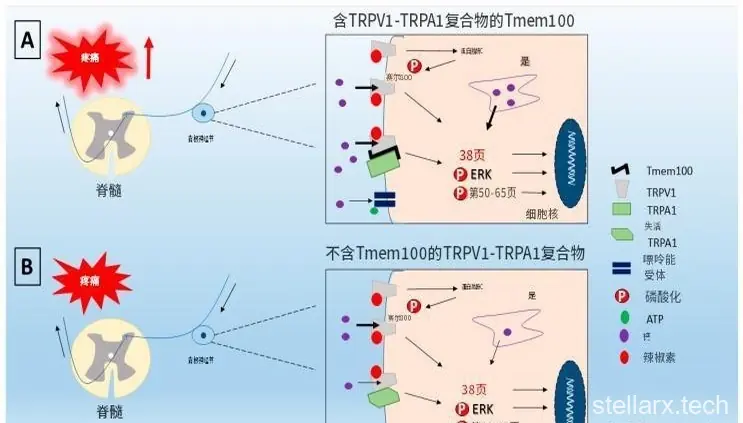
People near the fire inhaled that vaporized capsaicin, and their airways felt a burning, stinging sensation. But the "burn" is partly a trick of the nervous system. Capsaicin binds to TRPV1, an ion-channel receptor on sensory nerve endings that normally detects real heat above about 43 °C and aching soreness. Capsaicin itself is neither hot nor painful, yet when it docks onto TRPV1 it forces the channel open anyway. Sodium and calcium ions rush into the nerve cell, and the brain receives a signal that reads: very hot, very painful. The heat you feel from chili is a counterfeit — a fake high-temperature and pain signal manufactured by one molecule [3].
Why the Cough Spread Beyond the Factory
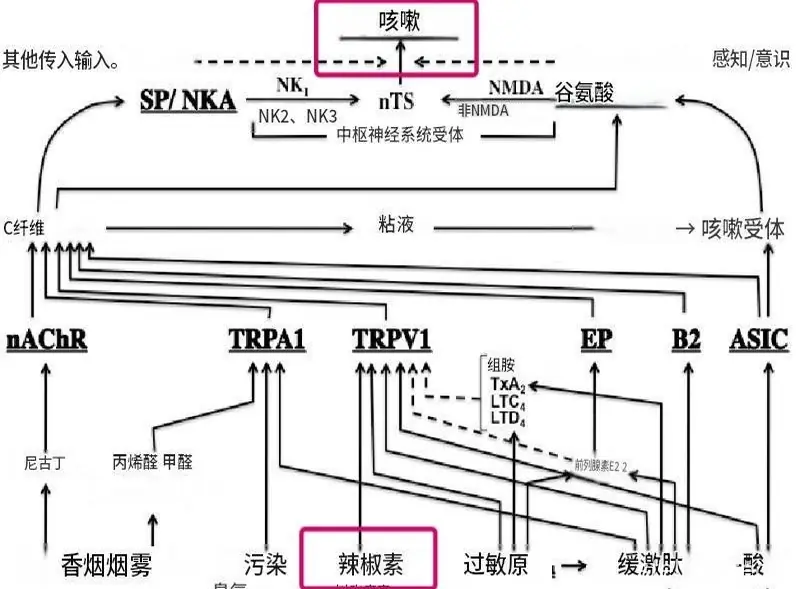
The effect did not stay inside the factory walls. High temperatures do not last, so the gaseous capsaicin that rose with the heat cooled, condensed, and turned back into solid form — or stuck to dust particles already floating in the smoke. Some of those solid particles are tiny. At 10 micrometres or smaller, they become suspended dust that can stay in the air for a long time and drift with the wind — this is the fraction that can be inhaled. At 2.5 micrometres or smaller, they become fine particulate matter: small enough to pass through the nasal passages and reach the bronchi and the alveoli. At that depth, the airways do more than sting — they fire a strong cough reflex. For most people, that is how the "whole city coughing" happened [4] [5].
How Much Should You Worry
Unpleasant as that coughing fit is, research shows that for most people the risk is limited to short-lived irritation of the airways — it usually does not cause serious harm [6]. In extreme exposure — large amounts of high-concentration capsaicin inhaled over a long period — or in sensitive groups such as people with asthma or chronic idiopathic cough, it can trigger severe coughing, chest tightness, and in some cases acute lung injury [7].
What the Air Over the City Was Actually Like
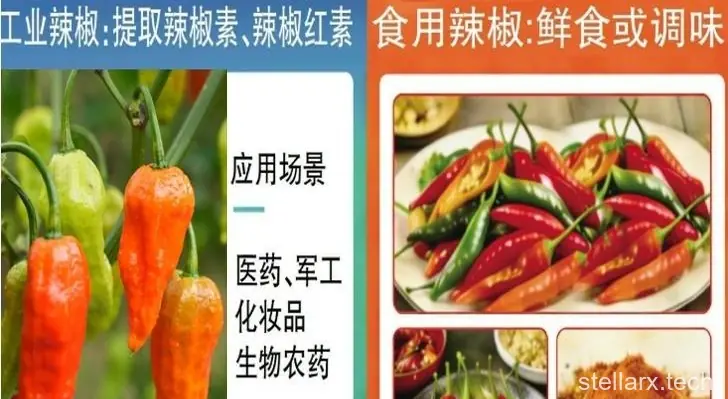
One detail matters: the fire burned industrial chilies, not table chilies, so the capsaicin concentration was far higher than in food-grade peppers. Even so, the capsaicin released into the atmosphere was heavily diluted, the fire was extinguished quickly, and capsaicin exposed to air gradually breaks down through oxidation by light, free radicals and ozone. In theory, the worst impact stayed near the factory site; residents farther away were far less affected, and a widespread respiratory emergency was unlikely. What many people did feel — stinging, irritation, coughing — was real but temporary, and that unpleasant bodily feeling tends to feed panic.
What the Air Monitors Showed
The most direct environmental signal would be a short spike in local air-station readings: PM₁₀, PM₂.₅, nitrogen dioxide (NO₂) and carbon monoxide (CO) can all rise briefly, with higher hourly and daily averages. But the numbers should stay far below alert, warning or notification thresholds. Local AQI data around the event was graded "excellent".
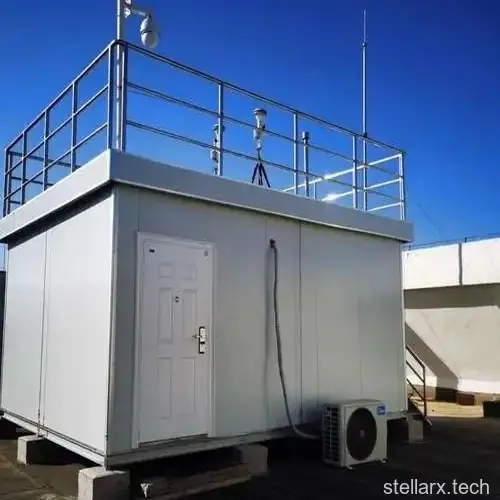
| Date | Temperature | Weather | Air quality (AQI) |
|---|---|---|---|
| Oct 25 | 14–27 °C | Sunny | 37 — excellent |
| Oct 26 | 14–19 °C | Cloudy | 23 — excellent |
| Dressing tips in the source forecast: Oct 25 — light cotton-linen sets, T-shirts, denim or casual wear; Oct 26 — suits, windbreakers, jackets and light sweaters. | |||
What Happens Next Legally
With the information available, the final scale of the impact and the allocation of responsibility are hard to judge, and follow-up reports may change the picture. Still, under the Civil Code, the factory may face compensation claims for environmental pollution tort. If the case is confirmed as an air-pollution accident, the Air Pollution Prevention and Control Law also allows penalties. But since no casualties have been reported, criminal liability for arson is unlikely.
See the Molecule's Home for Yourself
All of this began with a structure most people never actually look at: the placenta of a chili, a few millimetres of tissue packed with the molecule that fools your pain receptors. Under a virtual microscope, that white ridge becomes a landscape of cells and vesicles — including a Chili Pepper specimen where the epidermis, fleshy pulp and internal seeds are clearly visible. Curious what the inside of a chili really looks like? Ask the AI assistant in WWAI and observe the specimen online — no microscope delivery, no slide preparation, just the curiosity. Search for WWAI in the app store to download it.

Related reading

Blue Inhaler: Why Asthma Guidelines Dropped SABA

House Mold: Why Your Child Keeps Getting Sick

Why Open-Air Car Carbon Monoxide Kills
References
Tyler BJ, Peterson RE, Lee TG, Draude F, Pelster A, Arlinghaus HF. ToF-SIMS imaging of capsaicinoids in Scotch Bonnet peppers (Capsicum chinense). Biointerphases. 2016;11(2):02A327. doi:10.1116/1.4945326.
Suzuki T, Fujiwake H, Iwai K. Intracellular localization of capsaicin and its analogues, capsaicinoid, in Capsicum fruit. Plant Cell Physiol. 1980;21:839–853. doi:10.1093/oxfordjournals.pcp.a076058.
Molecules (PMC6273101). Figure: capsaicin-induced pain mechanism (TRPV1). https://pmc.ncbi.nlm.nih.gov/articles/PMC6273101/
Jia Y, McLeod RL, Hey JA. TRPV1 receptor: a target for the treatment of pain, cough, airway disease and urinary incontinence. Drug News Perspect. 2005;18(3):165-171. doi:10.1358/dnp.2005.18.3.892761.
Morice A. ATP cough challenge. Pulm Pharmacol Ther. 2019;58:101835. doi:10.1016/j.pupt.2019.101835.
Dicpinigaitis PV, Alva RV. Safety of capsaicin cough challenge testing. Chest. 2005;128(1):196-202. doi:10.1378/chest.128.1.196.
Johansson EL, Gustafsson P, Millqvist E, Ternesten-Hasséus E. Small and large airways' reactions to inhaled capsaicin in patients with chronic idiopathic cough, or asthma and in healthy control subjects. Exp Lung Res. 2019;45(3-4):55-64. doi:10.1080/01902148.2019.1611971.
Scientific Reports. Promising photocatalytic and antimicrobial activity of novel capsaicin coated cobalt ferrite nanocatalyst. 2023;13. doi:10.1038/s41598-023-32323-y.
NIST Chemistry WebBook: capsaicin (compound 404-86-4). https://webbook.nist.gov/cgi/cbook.cgi?Name=404-86-4&Units=SI
PMC2695989. Figure: cough reflex circuitry. https://pmc.ncbi.nlm.nih.gov/articles/PMC2695989/
- Lettuce Is 96.7% Water — What That Means for Nutrition
- 辣椒素入肺:一場辣椒廠大火為何讓全城咳嗽
- Capsaicin in the Air: Why a Chili Fire Made a City Cough
- Do Sodas Weaken Your Bones? The 3 Bone-Breaking Drinks
- 碳酸飲料會傷骨嗎?三種傷骨水要少喝
- 欖仁葉掉滿地,黑水缸裡藏著什麼?
- 鱷魚餓十個月不瘦,孩子問為什麼時別急著給答案
- Myth Meets Reality: Can the Kraken Rule Modern Oceans?
- 克拉肯穿越現代海洋?網友:兩腳獸一鍋燉,虎鯨才是真正話事人
- The Ant Colony Experiment: A Mirror for Humanity and a Battlefield for Digital Ethics
全部评论