Do Sodas Weaken Your Bones? The 3 Bone-Breaking Drinks
The drinks you sip without thinking may be slowly turning your skeleton into something else: a loofah. Every mouthful of cola, sweet drink, or small glass of wine is a vote you cast today for the bone mass you will lean on decades from now — and the evidence says some of those votes quietly count against you.
Bone mass peaks around age 30. After that it declines year by year, and in women the loss accelerates sharply after menopause. Then the gap opens between people who stay mobile into old age and people who fracture a hip or a wrist after a light fall — or crush a vertebra just from a hug or a cough.
| Life stage | What happens to bone mass |
|---|---|
| Under 20 | Bone mass grows quickly as the skeleton builds its framework |
| 20–30 | Gains slow; mass rises toward its peak around age 30 |
| 30–40 | Levels off near the peak, then the slow annual decline starts |
| Women 40–49, first ~10 years after menopause | Loss accelerates sharply |
| Over 65 | Decline continues year by year in both men and women |
So the question is not whether you eat enough calcium or get enough sun. It is whether the drinks you reach for every day are quietly loading the dice.
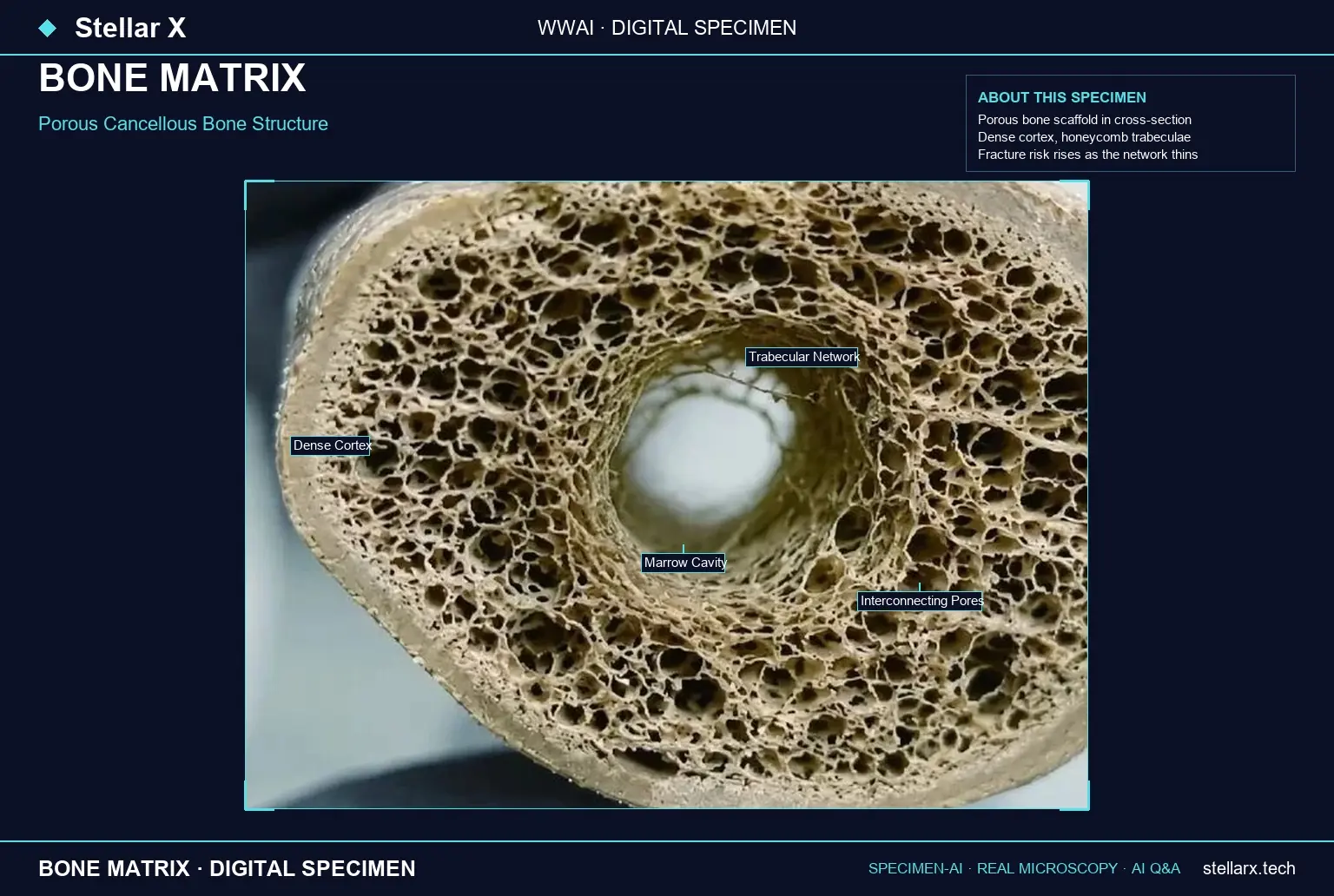
Drink 1: Carbonated Beverages
Cola and other carbonated drinks do more than add weight. They have been linked to weaker bones.
In a long-running prospective cohort study, women who drank cola daily had bone mineral density an average of 3.7%–5.4% lower than women who drank less than one can a month [1].
A meta-analysis of 10 studies that specifically examined carbonated beverages and bone mass found: heavy consumption raised the risk of low bone density by 28% and the risk of fracture by 53%. For cola specifically, the fracture risk more than doubled — up 100% [3].
| Outcome | OR (95% CI) | P | I² | n |
|---|---|---|---|---|
| Carbonated drinks — low bone density | 1.28 (1.02–1.60) | 0.000 | 94.8% | 4,233 |
| Carbonated drinks — fracture | 1.53 (1.04–2.26) | 0.014 | 71.7% | 74,571 |
| Cola — low bone density | 0.99 (0.95–1.03) | 0.061 | 64.2% | 3,748 |
| Cola — fracture | 2.00 (1.24–3.24) | 0.040 | 63.8% | 1,199 |
| Source: meta-analysis of 10 studies on carbonated beverages and bone loss (Zou Y, et al. Preventive Medicine. 2017;29(3):221-225). OR = odds ratio. | ||||
What does cola do to bone? Four mechanisms stand out:
Calcium–phosphorus ratio. Cola lowers the ratio and interferes with calcium bone metabolism.
Caffeine and sugar. Both increase calcium loss in urine.
Displacing milk. Soda pushes out milk and other calcium-rich foods, cutting calcium intake.
Acidity. The acidic load works against calcium absorption.
These drinks are fine as an occasional treat. The problem is making them a daily water substitute.
Drink 2: Sugary and Diet Drinks
Sugar is not just extra calories. It affects bone at any age — and women are hit harder than men.
A systematic review and meta-analysis found that people with high intake of sugar-sweetened beverages had bone mineral density about 0.66 standard deviations lower than people with low intake [2].
And switching to diet drinks is not an automatic escape. In a large 2026 analysis of the UK Biobank — 170,000 people followed for more than 13 years — high consumption of artificially sweetened drinks was linked to a 29% higher risk of osteoporosis and an 11% higher risk of fracture [4].
Sugar hurts bone through its own set of routes: sweet drinks suppress the osteoblasts that build new bone; many contain phosphoric acid that scrambles calcium absorption; high-fructose syrup interferes with mineral metabolism; and a stomach full of sweet liquid leaves no room for milk.
Drink 3: Alcohol
Even light drinking does not get a pass. A meta-analysis of 44 studies with more than 6 million participants found that any alcohol intake raises fracture risk [5].
People who drank the most had a 26% higher risk of any fracture, a 24% higher risk of osteoporotic fracture, and a 20% higher risk of hip fracture. For every additional 14 g of alcohol per day — roughly one drink — fracture risk rose another 6%.
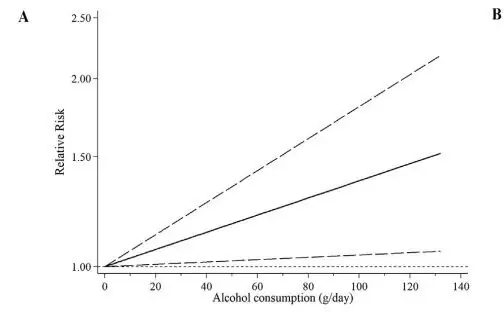
Another analysis compared drinkers with non-drinkers: people who had 1–2 drinks a day had 1.34 times the risk of osteoporosis, and those with more than 2 drinks a day saw the risk jump to 1.63 times [6].
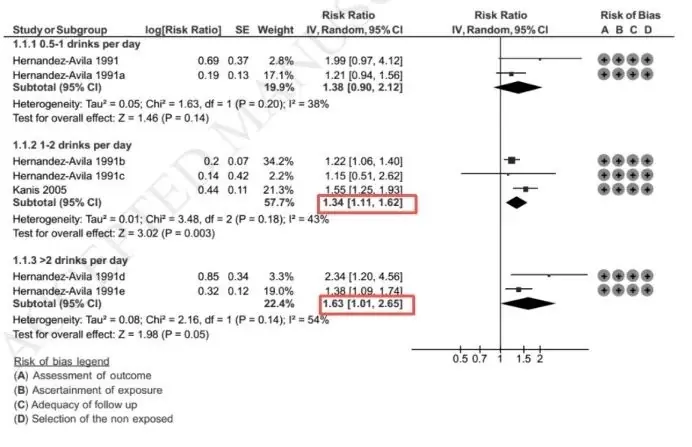
Alcohol attacks bone from several directions at once: it suppresses the osteoblasts that build new bone; it triggers oxidative stress that blocks bone formation; it lets lipids pile up inside bone cells until they die; and it interferes with calcium and vitamin D absorption, starving the skeleton of the nutrients meant for it.
For alcohol, the safe dose is zero. One glass is one glass too many for your bones.
A Bone-Protection Plan: Four Levers You Can Pull
You do not need to give up every treat. An occasional bubble tea, juice, or cola is not the problem — the habit is. Here is a four-part plan that costs almost nothing.
Swap the drinks. Aim for about 1700 mL of water a day for men and 1500 mL for women. Good substitutes: unsweetened sparkling water, light tea, diluted lemon water, chrysanthemum tea, mung bean soup, corn water, and alcohol-free drinks.
Feed the skeleton. Get 300–500 g of milk and dairy products daily; coffee drinkers should add milk, which helps calcium balance. Prioritize protein (eggs, milk, lean meat, fish, soy), vitamin D (fatty fish, sun-dried mushrooms, or supplements when food is not enough), magnesium (leafy greens, whole grains, nuts), and vitamin K2 (fermented soy, dairy, meat) to help calcium settle into bone.
Train the bones. The right exercise is not just walking.
| Type | Examples | Focus |
|---|---|---|
| Resistance training | Squats, resistance bands, dumbbells | Younger adults: at least twice a week, covering major muscle groups |
| Weight-bearing & moderate impact | Brisk walking, stair climbing, dancing, jumping rope, ball sports | As long as the body allows; add gradually |
| Balance training | Single-leg standing, tai chi | Older adults: strength and balance first, when their bodies allow |
Younger adults need resistance training covering major muscle groups at least twice a week. Older adults should focus on strength and balance training when their bodies allow it.
Protect the people who fall. Many older adults drink sweet beverages and alcohol, start with weaker bone mass, and face higher fall risk. Watch steps and wet floors; install grab bars in bathrooms and kitchens; keep a shower stool ready.
We spend money on skincare and anti-aging routines while ignoring our bones. Bone mass starts declining in your thirties, and you will not feel the first 30% of loss. But every sip you take today is a vote for the skeleton you will carry tomorrow. Less bone-breaking drinks, more of everything that feeds bone — that is how you bank bone mass while it is still cheap.
If you want to see what actually holds you up, look at the supporting tissue itself: an Elastic Cartilage specimen under magnification shows the cartilage cells and the elastic fiber network that give the skeleton its quiet shock absorption. On a virtual microscope you can observe it right now — no lab, no slides. Just search "WWAI" in your app store and ask what your bones are made of.
References
[1] Tucker KL, Morita K, Qiao N, Hannan MT, Cupples LA, Kiel DP. Colas, but not other carbonated beverages, are associated with low bone mineral density in older women: The Framingham Osteoporosis Study. Am J Clin Nutr. 2006;84(4):936-942.
[2] Ahn H, Park YK. Sugar-sweetened beverage consumption and bone health: a systematic review and meta-analysis. Nutr J. 2021;20(1):41.
[3] Zou Y, Li D, Meng J, et al. Carbonated beverages and bone loss: a meta-analysis. Preventive Medicine. 2017;29(3):221-225.
[4] Youn JE, et al. Association of Sweetened Beverages with Risk of Osteoporosis and First Fractures: Evidence from the United Kingdom Biobank. Calcif Tissue Int. 2026;117(1):59.
[5] Ke Y, et al. Alcohol Consumption and Risk of Fractures: A Systematic Review and Dose-Response Meta-Analysis of Prospective Cohort Studies. Adv Nutr. 2023;14(4):599-611.
[6] Cheraghi Z, et al. The effect of alcohol on osteoporosis: A systematic review and meta-analysis. Drug Alcohol Depend. 2019;197:197-202.
- Lettuce Is 96.7% Water — What That Means for Nutrition
- 辣椒素入肺:一場辣椒廠大火為何讓全城咳嗽
- Capsaicin in the Air: Why a Chili Fire Made a City Cough
- Do Sodas Weaken Your Bones? The 3 Bone-Breaking Drinks
- 碳酸飲料會傷骨嗎?三種傷骨水要少喝
- 欖仁葉掉滿地,黑水缸裡藏著什麼?
- 鱷魚餓十個月不瘦,孩子問為什麼時別急著給答案
- Myth Meets Reality: Can the Kraken Rule Modern Oceans?
- 克拉肯穿越現代海洋?網友:兩腳獸一鍋燉,虎鯨才是真正話事人
- The Ant Colony Experiment: A Mirror for Humanity and a Battlefield for Digital Ethics
全部评论