Crab and Persimmon Poison Myth: Real Chemistry
The crab-and-persimmon warning has a birthday: 1984, in a chicken laboratory.
Every autumn it comes back — don't eat crab with persimmon, or the vitamin C will turn arsenic into rat poison. The story is specific enough to sound scientific. It is also a textbook example of how one animal experiment became a food myth, one retelling at a time.
Where the arsenic story actually came from
In 1984, researchers at the University of Illinois injected chicks with roxarsone — an organic arsenic compound used as a feed additive — together with vitamin C. The injection went straight into the abdominal cavity, not through the digestive tract. Chick mortality reached 60 percent.
A year later, the Chicago Tribune ran the finding under the headline "Don't mix vitamin C, shellfish." Two substitutions happened inside that headline: an intraperitoneal injection became eating, and a concentrated feed additive became the trace arsenic naturally present in seafood.
| Year | What happened | What it became |
|---|---|---|
| 1984 | Illinois researchers injected chicks with roxarsone (organic arsenic feed additive) plus vitamin C, into the abdomen, not the gut | 60% chick mortality — but an injection, not a meal |
| 1985 | The Chicago Tribune: "Don't mix vitamin C, shellfish" | Injection became eating; feed additive became seafood's natural arsenic |
| 1986 | A medical journal claimed shellfish plus heavy vitamin C could form arsenic trioxide | The pair settled on persimmon (vitamin C) + crab |
| 2018 | A CCTV consumer show ran a simulated-digestion test on crab and persimmon | No rise in toxic trivalent arsenic — the official debunk |
By 1986, a Chinese traditional-medicine journal had repackaged the story as "eating shellfish while taking large doses of vitamin C can be fatal." The final retelling picked the most familiar pairing available: persimmon, a fruit rich in vitamin C, against the season's crab. The myth had found its permanent form.
Why the dose never reaches your plate
Arsenic exists in several oxidation states. The toxic form is trivalent arsenic — arsenic trioxide, the "arsenic" of rat poison. What seafood actually contains is mostly organic arsenic compounds, which are far less toxic and are quickly excreted.
Turning harmless arsenic into the toxic form requires both the right chemistry and enough starting material. Chinese regulators measure inorganic arsenic in seafood at a limit of 0.5 milligrams per kilogram. Work the arithmetic and you need to eat well over a hundred kilograms of crab in one sitting, together with a large amount of persimmon, to approach a toxic dose of converted arsenic.
That is why the 2018 consumer-program test mattered: crab and persimmon were mixed in simulated stomach fluid and the arsenic forms were measured. No increase in toxic trivalent arsenic was found. The chemistry that works in a syringe does not happen in a digestive tract.
What persimmons actually do in the stomach
The myth carries a grain of truth — but the real mechanism has nothing to do with arsenic.
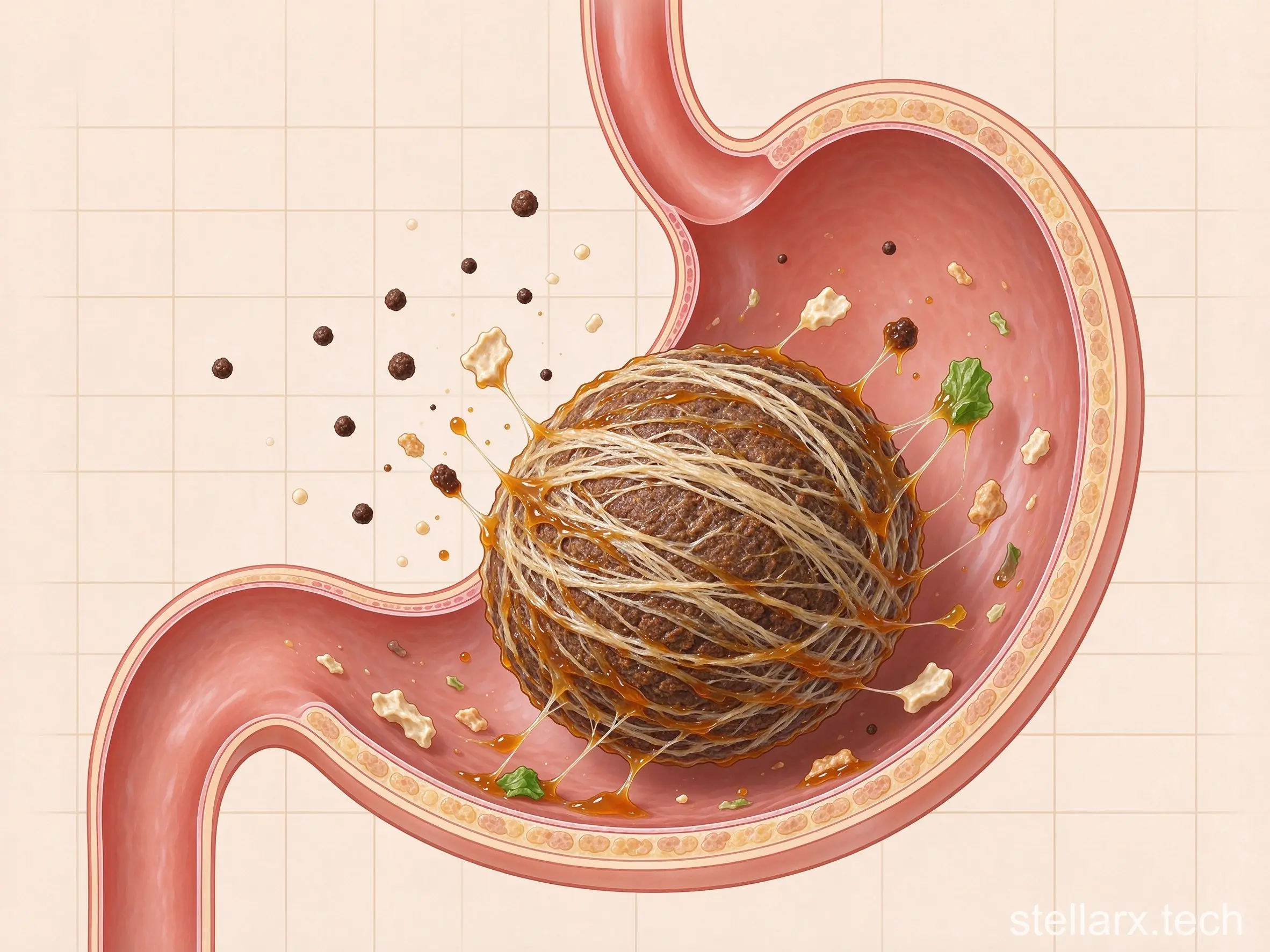
Unripe persimmons, especially the skin and the astringent parts, are rich in soluble tannins. In stomach acid, tannins bind with protein into an insoluble precipitate. Pectin in the fruit acts like glue, wrapping food debris around the precipitate in layers. Eat enough of it, and the mass hardens into a gastric bezoar — a stomach stone.
The key detail: you do not need crab for this. Eating a large amount of unripe, astringent persimmons on an empty stomach is enough. Hawthorn and black dates are high-tannin fruits with the same risk. The stone is made by the persimmon, not by the pairing.
The spinach-and-tofu rumor that gets it backwards
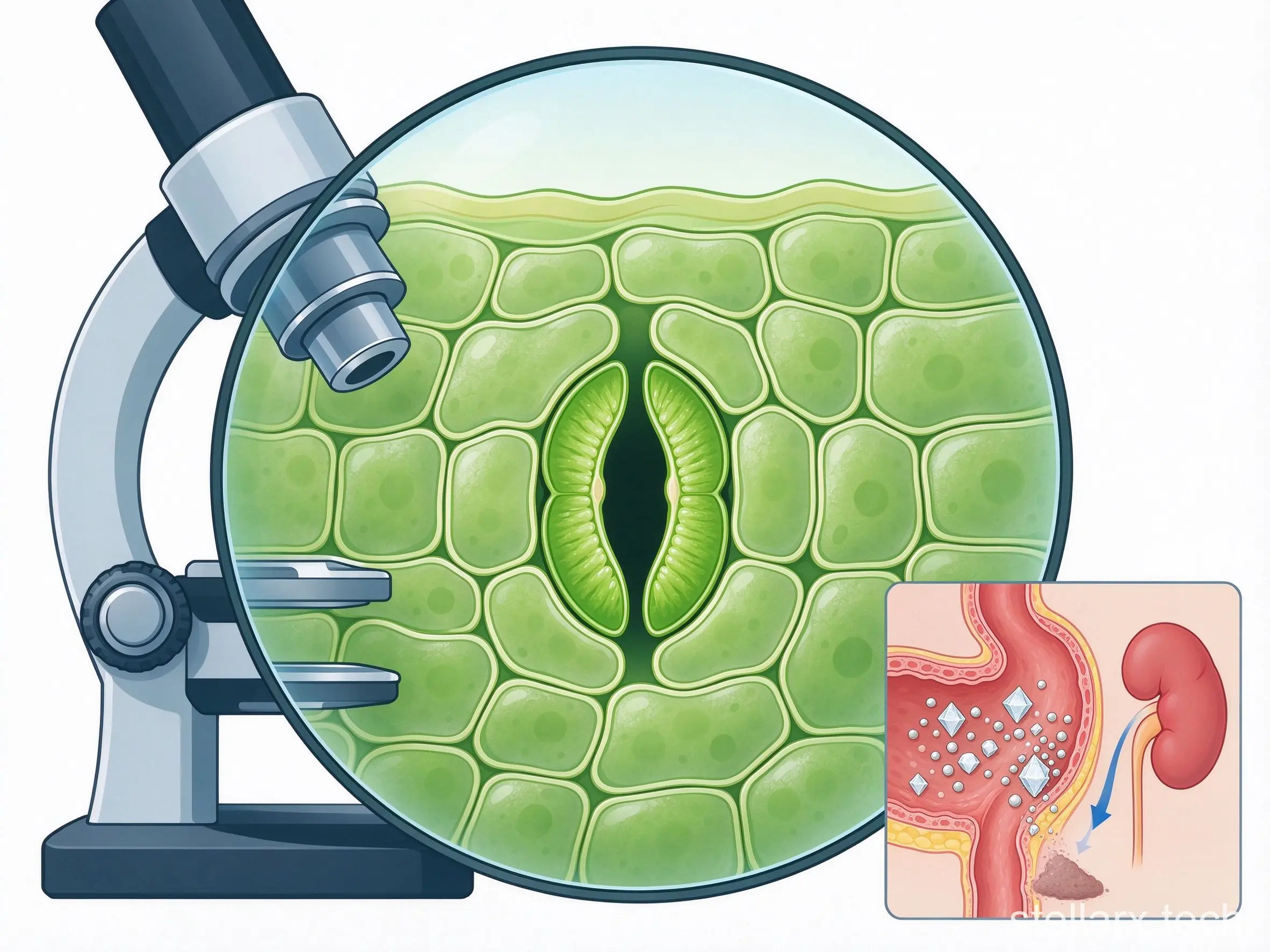
The same myth family claims spinach and tofu together form kidney stones, because oxalate meets calcium. What actually happens: in the intestine, oxalate and calcium bind early and pass out with the stool. Less oxalate reaches the kidneys, which is protective, not harmful.
The real risk is the opposite direction — eating a large amount of high-oxalate food alone, so oxalate is absorbed into the blood and meets calcium in the urine. If a pairing protects you from that, it is doing you a favor.
What "food incompatibility" actually means
Modern testing has not found poisoning from traditional "incompatible" pairings, but two real dangers deserve the attention the myth took away.
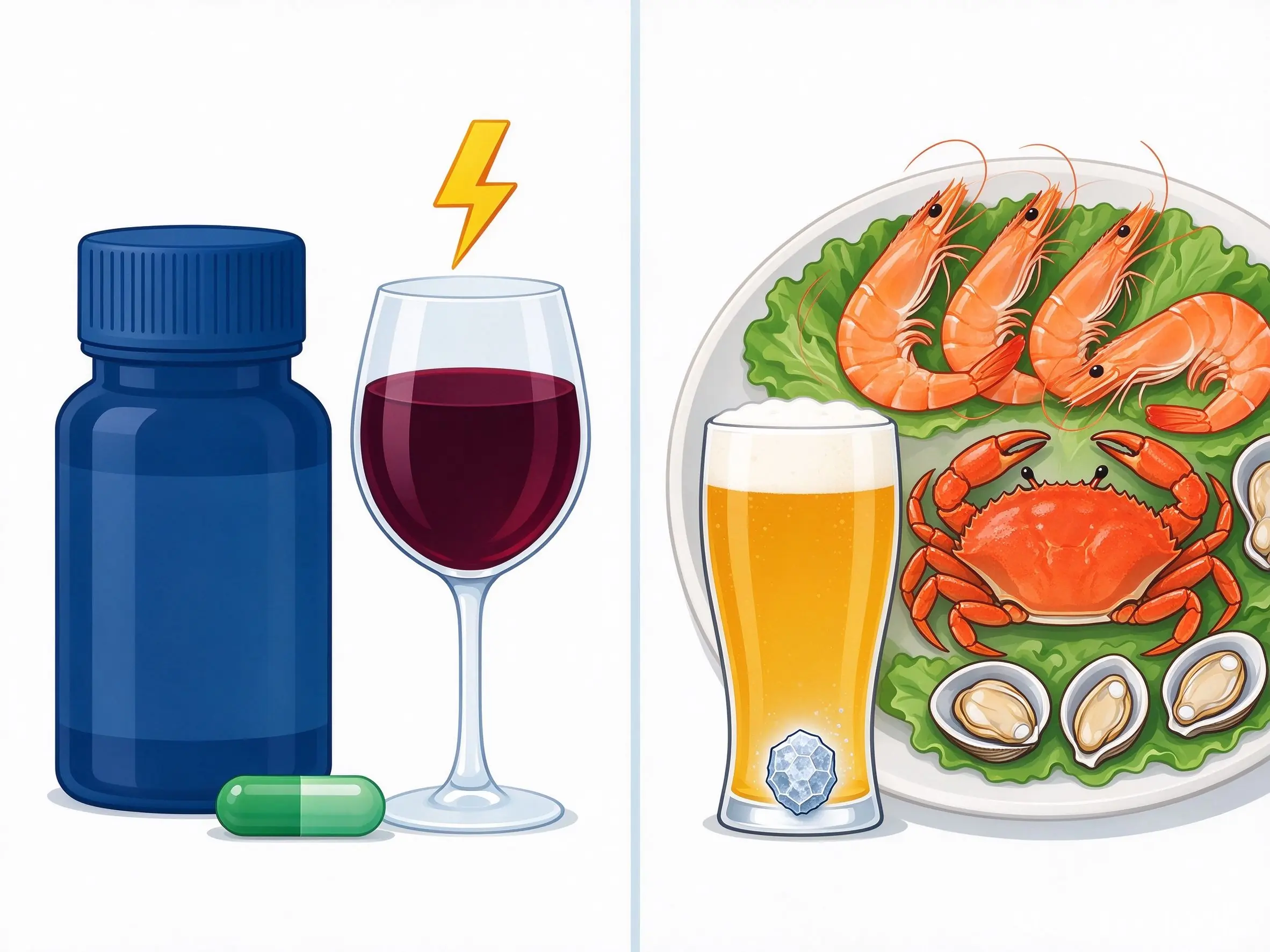
The first is food with drugs: cephalosporin antibiotics with alcohol can trigger a disulfiram-like reaction, flushing, palpitations, even collapse. That is a genuine, documented interaction.
The second is gout-prone eating: seafood with beer stacks purines, alcohol-driven uric acid production, and reduced uric acid excretion in one meal. For people with high uric acid, that is the pairing to actually fear.
The bottom line
The poison was never in the crab, and it was never in the persimmon. It lived in the retelling — one injection study, two headline substitutions, and a rumor that now returns every single autumn.
Eat the crab. Eat the persimmon. Just do not eat a kilogram of unripe persimmons on an empty stomach.
Want to see what a real food plant looks like under the microscope? A spinach leaf epidermis specimen shows crescent-shaped guard cells forming stomata — the pores where the leaf breathes. Open WWAI, ask about the oxalate crystals in spinach leaves, and watch the guard cells open and close in real time. Find WWAI in your app store and take a look for yourself.
Related reading

The White Solid on Steamed Crab Is Blood

Stomach Burst Risk: A 2-Hour Buffet Emergency

Sacculina: The Crab-Castrating Parasite
References
[1] Czarnecki G L, Baker D H, Garst J E. Arsenic-sulfur amino acid interactions in the chick. Journal of Animal Science, 1984, 59(6): 1573-1581.
[2] Expert consensus on endoscopic management of upper gastrointestinal foreign bodies. Chinese Journal of Digestive Endoscopy, 2015, 32(12): 793-801.
- 女生真的会在意男生的长相吗?
- How to Choose a Good Pomelo: Don’t Judge by Appearance Alone
- 挑柚子還在只看外表?學會這幾招,更容易挑到多汁好吃的柚子
- Back at Work, but Your Mind Is Still on Vacation? What Is Post-Holiday Syndrome?
- 假期結束,人到公司了,魂還沒回來?「假期綜合征」到底怎麼回事
- GLP-1小鼠延壽:司美格魯肽12%壽命增幅的真相
- GLP-1 Mouse Longevity: The 12% Semaglutide Lifespan Gain
- 比肥肉更可怕的长胖元凶,很多人天天都在吃
- Crab and Persimmon Poison Myth: Real Chemistry
- Are These Beetles Valuable? Discovering Rhinoceros Beetles, Flower Chafers, and Beetle Collecting
全部评论