Back at Work, but Your Mind Is Still on Vacation? What Is Post-Holiday Syndrome?
Why Do You Feel Like You Haven’t “Booted Up” After a Holiday?
During a long holiday, many people completely change their daily routines.
They go to bed later, wake up later, eat at irregular times, stay up watching shows or scrolling on their phones, and may even sleep until noon.
These habits can feel relaxing during the holiday, but there is one catch:
Your body gradually gets used to a schedule with no early alarms and no fixed work hours.
Then the holiday ends.
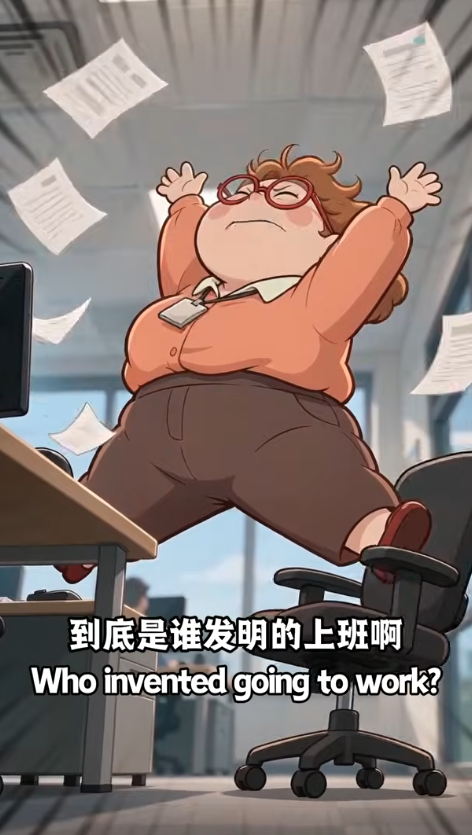
Suddenly, the alarm is back at 7 a.m., and your body is expected to switch immediately into work mode.
That is exactly what happens to the main character in the video—one moment they are enjoying lazy holiday mornings, and the next they are sitting at their desk looking completely exhausted.
What Exactly Is “Post-Holiday Syndrome”?
“Post-holiday syndrome” is not the name of a specific medical disease. It is more of an informal term used to describe a group of common physical and mental experiences after a holiday.
These may include:
sleepiness, fatigue, difficulty concentrating, reduced productivity, irritability, disrupted sleep patterns, and trouble getting back into work mode.
The longer the holiday and the greater the change in routine, the more noticeable these feelings may become.
So, staring blankly at your computer on the first day back does not always mean you simply “don’t want to work.”
Sometimes, your body and brain are still adjusting to a sudden change in rhythm.
Why Do Staying Up Late and Sleeping In Make the First Day Back So Difficult?
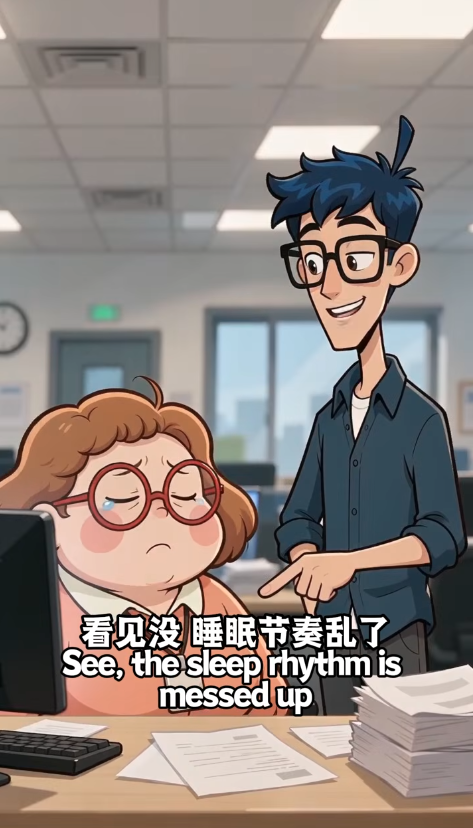
One of the easiest habits to develop during a holiday is shifting your entire sleep schedule later.
Going to bed at 11 p.m. may turn into 2 or 3 a.m.
Waking up at 7 a.m. may turn into 11 a.m. or even noon.
If this only happens once, the effect may be limited.
But after several days of the same pattern, suddenly forcing yourself to sleep early and wake up early again can be difficult.
Your body needs time to readjust.
That is why many people feel:
“I slept, but I’m still exhausted.”
Or:
“I’m sitting at my desk, but my brain just won’t start working.”
Why Is Your Body at Work but Your Attention Still Somewhere Else?
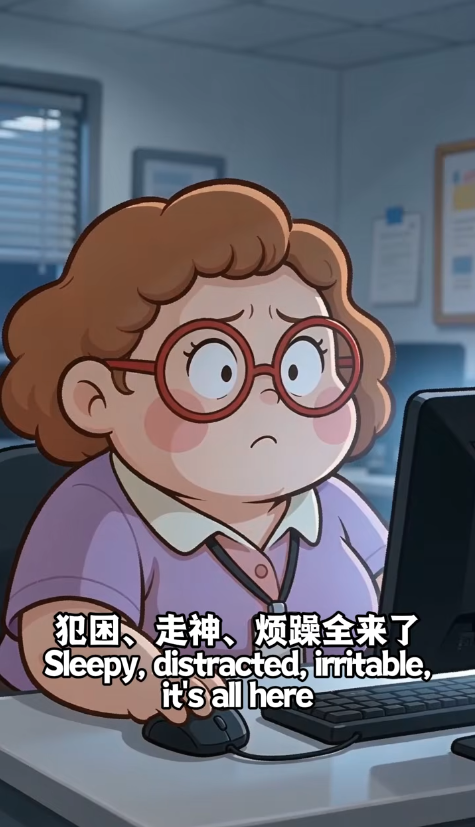
In the video, the main character clearly struggles to focus after returning to the office.
They stare at the computer, react slowly, and seem to be mentally stuck in holiday mode.
This is a very common experience.
During a holiday, the brain often spends more time in a relaxed, entertainment-focused, and self-directed state.
Work, on the other hand, requires a rapid return to:
focus, structure, deadlines, information processing, and sustained attention.
The more sudden the switch between these two modes, the more obvious the sense of “mental lag” can feel.
That is why after a holiday, people often say:
The work hasn’t become harder—my brain just hasn’t fully switched back yet.
Why Can a Pile of Work Make You Feel Even More Anxious?
You may already feel tired and unfocused on your first day back.
Then you look at your desk and see emails, documents, unfinished tasks, and a long to-do list waiting for you.
That can quickly turn tiredness into stress.
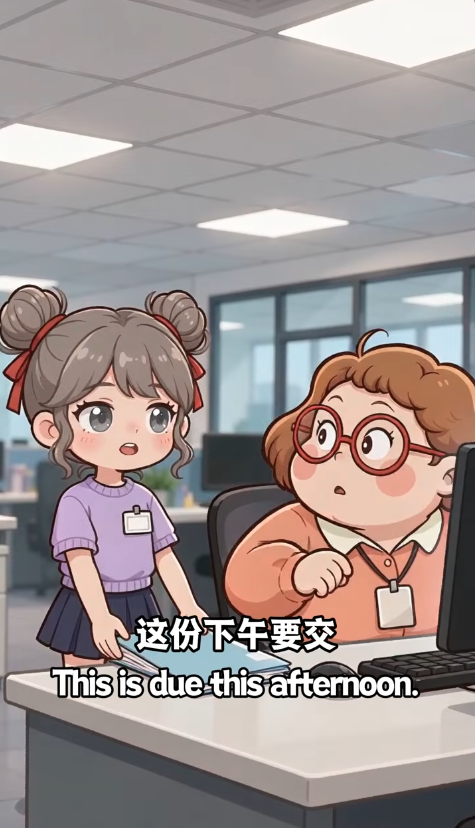
A similar moment appears in the video.
The main character is already low on energy, and once the workload starts piling up, their mood quickly shifts from sleepy to overwhelmed.
At this point, one of the easiest mistakes is trying to finish everything at once.
But the more pressure you put on yourself to “catch up immediately,” the harder it may become to concentrate.
A more practical approach is to reorganize your tasks and decide what actually needs to be handled first.

How Can You Get Back Into Work Mode After a Holiday?
A smoother transition often starts with your sleep schedule.
For example:
Avoid staying up extremely late during the final one or two days of the holiday.
Gradually move your bedtime and wake-up time closer to your normal work schedule.
Get some light movement after waking up to help your body become more alert.
Once you return to work, organize your tasks first and then handle them in order of priority.
There is no need to expect yourself to return to maximum productivity on the first morning.
Instead of forcing yourself into “100% work mode” immediately, gradually restoring your normal daily rhythm may make the transition easier.

Don’t Overload Yourself the Moment You Return
After a long break, many people think:
“I’ve rested for so long. I need to make up for everything today.”
But that mindset can make the first day back even more exhausting.
If your focus has not fully recovered, start with tasks that are clear and relatively easy to complete.
Finishing a few manageable tasks can help your brain rebuild its work rhythm before moving on to more complicated assignments.
At the end of the video, the main character finally sits back down and begins working through tasks one by one.
It highlights a simple idea:
Holiday mode does not need to disappear in one second. Work mode can come back gradually.
“Post-Holiday Syndrome” May Simply Mean Your Rhythm Hasn’t Reset Yet
Holidays are meant for rest.
Sleeping in, traveling, watching shows, staying up late, and enjoying a slower pace are not problems by themselves.
What often feels uncomfortable is the sudden contrast:
Yesterday, your schedule was completely flexible. Today, every hour is structured again.
So if you feel tired, sleepy, unfocused, or unmotivated after a holiday, there is no need to immediately label yourself as lazy or unproductive.
Give your body some time to readjust.
Restore a regular sleep schedule, break your workload into smaller tasks, and move through them one at a time.
Before long, the version of you that feels fully back in work mode will gradually return.



- 女生真的会在意男生的长相吗?
- How to Choose a Good Pomelo: Don’t Judge by Appearance Alone
- 挑柚子還在只看外表?學會這幾招,更容易挑到多汁好吃的柚子
- Back at Work, but Your Mind Is Still on Vacation? What Is Post-Holiday Syndrome?
- 假期結束,人到公司了,魂還沒回來?「假期綜合征」到底怎麼回事
- GLP-1小鼠延壽:司美格魯肽12%壽命增幅的真相
- GLP-1 Mouse Longevity: The 12% Semaglutide Lifespan Gain
- 比肥肉更可怕的长胖元凶,很多人天天都在吃
- Crab and Persimmon Poison Myth: Real Chemistry
- Are These Beetles Valuable? Discovering Rhinoceros Beetles, Flower Chafers, and Beetle Collecting
全部评论