GLP-1 Mouse Longevity: The 12% Semaglutide Lifespan Gain
Most conversations about semaglutide start and end with the same three questions: how many kilos, how fast, and will it come back when you stop. The discussion almost never reaches the question that a September 2026 Nature study actually asked: what happens when an old mouse receives semaglutide every day until it dies?
The answer, in one number: the treated mice lived about 12.4 percent longer than their untreated peers.
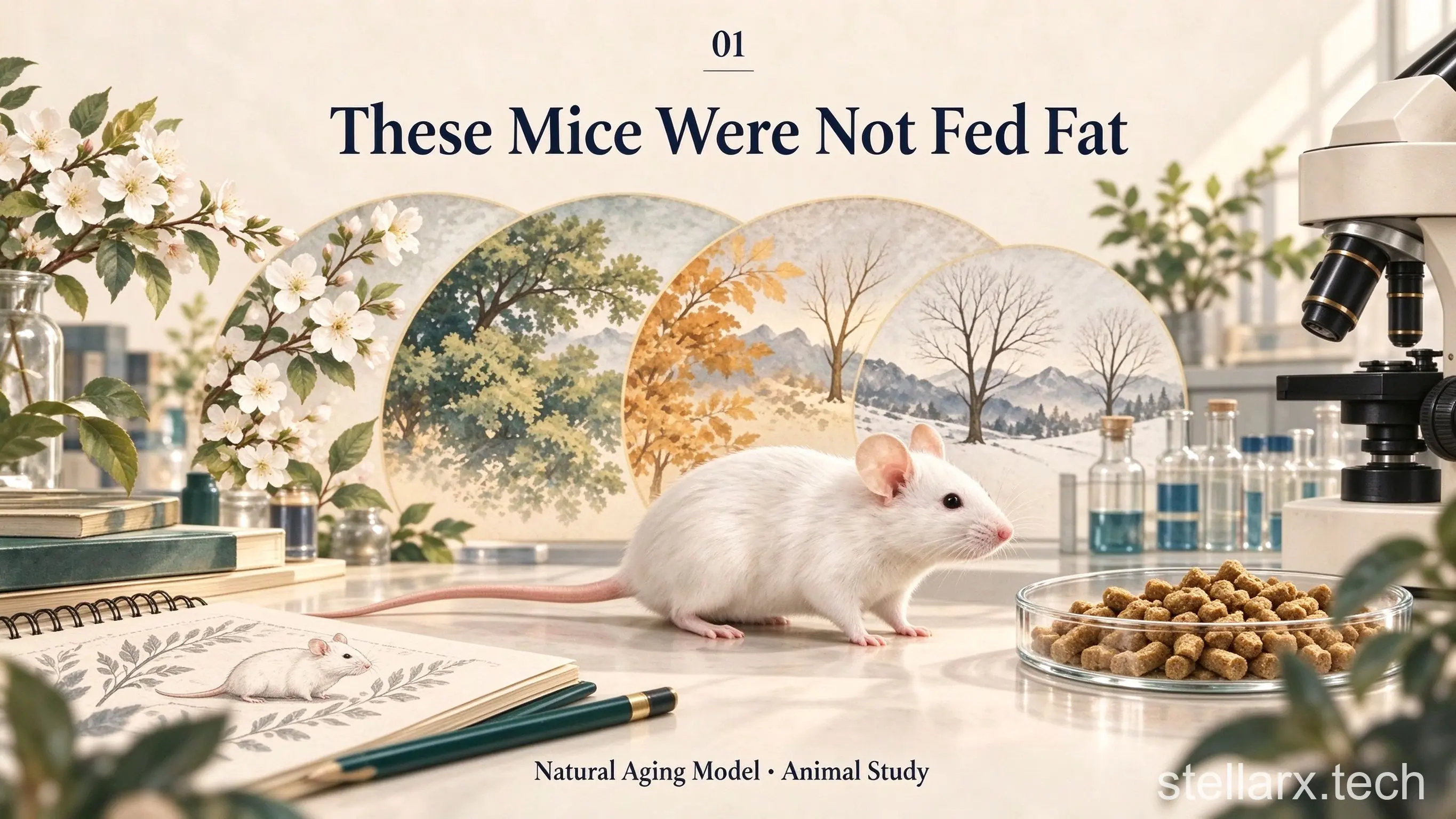
The Mice Were Not Fed Fat
On September 2, 2026, researchers led by Danica Chen at the University of California, Berkeley published a study in Nature. They started daily subcutaneous semaglutide injections in 20-month-old female C57BL/6 mice — roughly the mouse equivalent of a 60-year-old human — and continued treatment until the end of life. The control group had 39 mice; the drug group had 40.
Median lifespan: 742 days in controls, 834 days in the treated group. That is 92 extra days, or about 12.4 percent, measured from birth to death.
The details of how these mice lived matter more than the headline. They ate standard laboratory chow. This was a natural-aging model, not a group of animals made obese by a high-fat diet first. If the experiment had fattened the mice, produced severe metabolic damage, and then shown that the drug reversed it, the most direct explanation would be correction of an artificially created problem. That is not what this experiment did. It observed whether the drug changed the decline that accompanies aging in ordinary old mice — which is a different, and arguably more interesting, claim.
Standard chow does not mean every aged mouse had ideal body fat or metabolism. But the longevity result was not built on a premise of induced obesity or diabetes. That makes the conversation about what happens after weight loss genuinely worth having: if a drug's only value were removing excess fat, reaching a normal weight would end its useful life. If it also acts on other processes of natural aging, the assumption that "weight is normal, so the drug no longer matters" loses one of its important foundations.
More Than a Survival Curve
The study did not only draw one survival curve. It ran separate cohorts: a lifespan group treated until death, a group treated for three months to measure physical function and cellular changes, and a five-month experiment comparing semaglutide against matched calorie restriction. Those results come from different groups of animals.
In functional tests, treated mice showed better motor coordination, muscle performance, and cognitive measures. Some differences in motor tests persisted after correcting for body weight, so "lighter body, therefore easier movements" cannot explain the whole result.
Aging erodes the ability of cells to maintain and regenerate tissue, and the study observed changes in exactly that territory. Hematopoietic stem cells, which continuously replenish blood cells, tend to increase in number with age while their regenerative capacity drops and their differentiation shifts toward the myeloid line — more cells, not necessarily better work. In the semaglutide group, this myeloid bias was reduced, and related cell-culture results pointed to improved single-cell regenerative capacity. The study also touched on neurogenesis, inflammation, cellular senescence, mitochondrial function, and protein homeostasis.
The molecular layer added further clues. Semaglutide raised NAD⁺ levels in some tissues, increased expression of several sirtuins, lowered circulating IGF-1, and produced transcriptional changes linked to SIRT1 and FOXO regulation, including higher expression of Oser1.
One gene deserves a spotlight. A 2024 study in Nature Communications found that increasing expression of Oser1 — a FOXO-regulated, evolutionarily conserved gene — extended lifespan in silkworms, nematodes, and fruit flies, while reducing it did the opposite, and linked it to antioxidant stress response and mitochondrial maintenance. The Oser1 change in the semaglutide study therefore is not an isolated readout; it connects to an existing body of longevity research. Which of these changes are causally central remains for follow-up experiments with blockers and knockouts to decide. But for now, lifespan, function, and cellular regulation results are beginning to point in the same direction.
Even If Part of the Gain Is "Eating Less," the Value Does Not Disappear
"Semaglutide just makes mice eat less" is the first explanation most people reach for — and it deserves to be taken seriously. The drug reduced food intake by about 24 percent, and body weight dropped, with the loss coming mostly from fat. So the researchers set up a matched-calorie control. In the five-month comparison, both semaglutide and calorie restriction slowed some functional declines, and the drug group showed more favorable changes in exploratory behavior, spatial memory, and blood-sugar control.
One detail is worth keeping: consuming the same total calories is not the same physiological experience. Calorie-restricted mice tended to finish their allotted food quickly and then endure a long fast; semaglutide-treated mice ate more spread out while appetite was suppressed. Feeding rhythm, behavior, and metabolic responses differed between the two groups. Total daily calories cannot summarize the whole state.
But for personal health management, there is a layer that gets missed: even if a large share of the benefit eventually turns out to come from eating less and losing fat, that would not make the drug valueless. Knowing that a goal is good for you and being able to sustain it long-term are two different problems. Eating less for a day or two, and maintaining appropriate appetite, weight, and metabolic state for ten or twenty years, are very different degrees of difficulty. If a drug makes the second state more likely to persist, it is already solving a real problem. There is no need to declare that only effects fully independent of diet and weight count as long-term health gains. Mechanistic research should keep separating pathways; for a concrete person, how much benefit can be sustained matters just as much.
Other Drugs Have Shown Bigger Numbers — That Is Not the Whole Story
Semaglutide was not the first drug to extend mouse lifespan, and 12.4 percent is not the highest figure in the field. Rapamycin, acarbose, and some combinations have reported larger gains under their own experimental conditions. But for someone considering long-term health management, the comparison cannot stop at the survival number. The questions are what risks accompany those gains, whether they are achievable in humans, and whether they can be used long-term.
The rapamycin and acarbose results below come from the National Institute on Aging Interventions Testing Program (ITP), which uses genetically diverse UM-HET3 mice, both sexes, and shared protocols across three sites.
Rapamycin has shown lifespan extension in ITP mice since 2009, including when started at 20 months of age. Its target is clear — inhibition of mTORC1, a hub of nutrient sensing, growth, and cell maintenance. But in clinical use it is an immunosuppressant with a documented list of adverse effects: stomatitis, elevated lipids, impaired wound healing. Anti-aging dosing would need its own human evidence.
Dasatinib plus quercetin (D+Q) targets senescent cells. Dasatinib is a cancer drug with known bone-marrow suppression, bleeding, and fluid retention risks; trametinib inhibits MEK and carries cardiomyopathy warnings. Treating a tumor and taking a drug for decades for anti-aging are different risk-benefit calculations.
Acarbose is different: an approved diabetes drug that slows carbohydrate digestion. Its main issues are bloating, diarrhea, and abdominal discomfort. Its lifespan results are strongly sex-dependent — in one ITP study, +17 percent in males but only +5 percent in females, even though females lost more weight and fat.
SRN-901 is a 2026 compound that showed about 33 percent median remaining-lifespan gain in 18-month-old mice on a high-fat Western-style diet, but the study was funded by its developer, Seragon, with most authors as employees or shareholders. It is a lead worth following, not yet a human-safety answer.
Two more cautions belong here. Metformin: a 2013 study reported about 5.83 percent mean-lifespan increase in male C57BL/6 mice, but a later 2016 ITP study found no significant lifespan extension from metformin alone — the 5.83 percent cannot be cited as an ITP conclusion. NR (nicotinamide riboside) also failed to significantly extend lifespan in either sex under the ITP protocol; that negative result for NR cannot be transferred to NMN.
This is why the evaluation of GLP-1's long-term value in this article puts already-available human treatment benefit in a central position. For someone who already has an obesity treatment need and has benefited from the drug, continuing treatment is first of all about protecting a real-world improvement. The mouse number can inform judgment without being allowed to run the entire decision.
"Mice Are Not People" Needs a Second Sentence
"Mice are not people" is a true sentence, but it does not answer the central translation question: does the drug's target exist in humans, is it structurally similar, and can the pathway respond in people?
For the GLP-1 system, there is concrete evidence. A comparative study in the British Journal of Pharmacology reported that human and mouse GLP-1 receptor amino-acid sequences are about 93 percent identical, and human and rodent GIP receptors about 81 percent identical. Those are the receptors the drugs bind directly. That is a different level of information from "human and mouse genes are broadly similar." When the direct target is conserved and the physiological effects are already verified in humans, animal studies carry more specific weight. The remaining questions — which effects translate, in which populations, at which doses and ages — are far closer to what we actually want to know than repeating "animal, not human."

Tirzepatide: More Than Two Targets
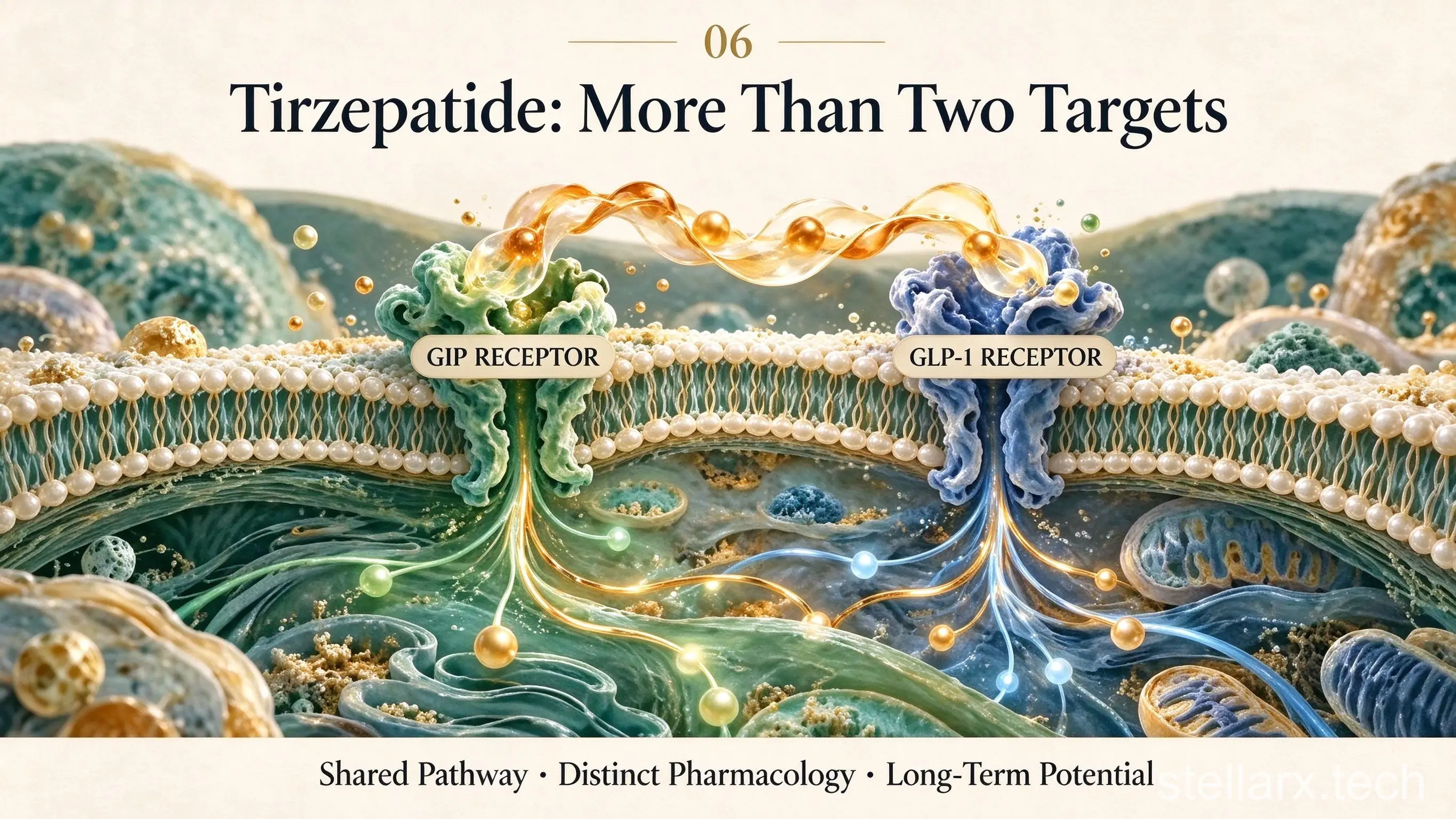
Semaglutide primarily activates the GLP-1 receptor; tirzepatide activates both GIP and GLP-1 receptors. The shared GLP-1 basis is a natural reason the semaglutide longevity results draw attention to tirzepatide, but the drug's distinct features go beyond "dual agonist."
Work in JCI Insight found biased signaling at the GLP-1 receptor: tirzepatide favors cAMP signaling, with different effects on β-arrestin recruitment and receptor internalization. Activating the same receptor does not mean every downstream response opens in the same proportion.
There is also a human-versus-mouse pharmacological difference. A 2023 Nature Metabolism study found that in mouse islets, tirzepatide's insulin secretion depends mainly on the GLP-1 receptor, partly because its potency at the mouse GIP receptor is low; in human islets, blocking the GIP receptor markedly weakens tirzepatide's insulinotropic effect. The same drug can rely on different receptors in the two species. That cuts against the assumption that "animal difference" automatically means "worse in humans" — for tirzepatide, mouse experiments may not fully capture its dual-receptor action in people.
Direct aging-related experiments exist too: a 2026 iScience study compared semaglutide, tirzepatide, and retatrutide in aged mice and a non-diabetic renal fibrosis model, observing improvements in kidney injury, inflammation, and fibrosis, with tirzepatide ahead of semaglutide on some renal-function and anti-fibrotic measures and retatrutide showing the largest effects. No head-to-head longevity answer exists yet for these two drugs; publication order is not a ranking of real effects.
Human Benefits Already Reach Well Beyond the Kilos
The most direct comparison: SURMOUNT-5 enrolled 751 adults with obesity but without diabetes, comparing maximum tolerated doses of tirzepatide (10 or 15 mg) with semaglutide (1.7 or 2.4 mg). At 72 weeks, mean weight reduction was 20.2 percent versus 13.7 percent, with waist circumference down 18.4 cm versus 13.0 cm. For people who need substantial fat reduction, that is an established advantage.
But the human value extends past weight. In SELECT, 17,604 adults with cardiovascular disease and overweight or obesity but no diabetes saw the primary composite endpoint — cardiovascular death, nonfatal myocardial infarction, or nonfatal stroke — occur in 6.5 percent of the semaglutide group versus 8.0 percent in placebo, a hazard ratio of 0.80. In FLOW, 3,533 people with type 2 diabetes and chronic kidney disease followed for a median 3.4 years had a 20 percent lower relative risk of all-cause death with semaglutide.
In SURMOUNT-1's three-year data, among people with obesity and prediabetes, 1.3 percent of the tirzepatide group progressed to type 2 diabetes over 176 weeks versus 13.3 percent in placebo. In SUMMIT, 731 patients with obesity and heart failure with preserved ejection fraction saw cardiovascular death or worsening heart-failure events in 9.9 percent versus 15.3 percent. Each trial covers a different patient group and a different endpoint; written with the populations and outcomes specified, they are already substantial. When one intervention affects weight, diabetes progression, cardiovascular events, kidney disease, and heart-failure burden, asking whether shared upstream mechanisms exist behind some of these benefits is a reasonable research question.

Stopping the Drug Needs a Reason
Many people imagine the natural arc of treatment: lose the weight with the drug, then stop the drug, and that is full success. The data ask this imagination to be checked.
In SURMOUNT-4, participants first received 36 weeks of tirzepatide, losing on average 20.9 percent of body weight, then were randomized to continue or switch to placebo for 52 weeks. Continuers lost a further 5.5 percent; the placebo group regained 14.0 percent. 89.5 percent of continuers retained at least 80 percent of their achieved loss; only 16.6 percent of the placebo group did.
That forces a distinction between two kinds of normal weight: a weight someone maintains without treatment, and a weight maintained with treatment support. The numbers on the scale may be identical; the conditions required to hold them are not. And calling post-stop regain a "rebound side effect" of the drug is a category error: the reappearance of the original problem after treatment stops is not the same as the treatment having caused new damage. A person who loses weight through diet and exercise and then returns to old habits may regain it too; that does not mean the diet damaged their metabolism. For someone with an obesity history who has clearly benefited, continuing treatment to protect results is a concrete, defensible reason. Losing the weight and keeping it off are two separate problems.
Lower-Dose Maintenance Now Has Direct Support
The weight-loss phase needs to drive weight down; the maintenance phase needs to keep results stable. The goals change, and so can the dose. The 2026 SURMOUNT-MAINTAIN trial tested exactly that choice. Participants received 60 weeks of tirzepatide, then 378 were randomized to continue at 10 or 15 mg weekly, step down to 5 mg, or switch to placebo for 52 more weeks. Model-estimated body-weight change relative to the start of the study at week 112:
| Maintenance regimen (after 60 weeks of tirzepatide) | Model-estimated weight change at week 112 |
|---|---|
| Continue 10 or 15 mg weekly | −21.9% |
| Step down to 5 mg weekly | −16.6% |
| Switch to placebo | −9.9% |
| Model-estimated body-weight change relative to the start of the study. Source: SURMOUNT-MAINTAIN, Lancet (2026). | |
The stepped-down dose kept less of the result than the full dose but clearly outperformed stopping. For some patients, 5 mg weekly is now a research-backed maintenance option. The US Zepbound label lists 5, 10, and 15 mg as recommended maintenance doses for weight management, with 2.5 mg for initiation. Whether any future anti-aging use needs a specific exposure level is a separate question that has not been answered; the maintenance evidence here is about weight management. And a question worth pursuing: whether a dose that maintains weight also preserves the other biological effects. Appetite suppression, glycemic regulation, and signaling in different tissues cannot be collapsed into one "stronger or weaker drug" slider — and tirzepatide's receptor-level differences make the question more pointed.
Maintenance also changes what to watch. In SURMOUNT-1 body-composition analyses, about 75 percent of tirzepatide-induced weight loss came from fat and 25 percent from lean mass, with placebo showing a broadly similar ratio. Lean mass is not all skeletal muscle, but the result still says: total weight is not enough. Nutrition, muscle strength, and daily activity deserve attention. Stable weight, normal eating, and retained strength are closer to what people actually want than an ever-lower number.
Waiting for the Complete Answer Has a Generation-Sized Cost
Here is the genuinely hard part: how long until the complete human longevity answer arrives?
For people who already have disease or high risk, shorter follow-up can answer whether the drug lowers death and major events over the next few years; FLOW already offers that kind of result. But how much healthspan a young, relatively healthy person gains by starting a regimen now, at what age, and with what net long-term benefit — that requires far longer observation, specially designed populations, controls, and outcomes. A full lifetime- benefit answer may live on a scale of decades.
Suppose it takes twenty years. A thirty-year-old today would be fifty. The institution gains twenty years of data; the person has lived twenty years. The new conclusion can adjust future choices; it cannot return the elapsed time. Research can wait for data to mature; a person's life does not pause.
This is exactly why animal lifespan experiments matter. A mouse's short life lets researchers observe intervention-to-endpoint outcomes in a fraction of a human lifetime, then compare doses, start ages, sexes, and genetic backgrounds and chase mechanisms. If every animal finding collapsed into "wait for full human data," the decision value of the research would effectively be canceled. An experiment can be insufficient to conclude and still sufficient to change judgment — receptor conservation, organ function, and human clinical results add weight on top.
The least defensible move is to treat evidence progress as an action command. "Whether healthy people benefit from long-term low-dose use is unconfirmed" describes where the science is. "Therefore we can only wait" is already an action conclusion — and it requires analyzing treatment need, current benefit, possible future benefit, and the cost of waiting. Aging continues while people wait. Waiting is itself a choice. If future evidence shows some benefits depend on earlier or continued intervention, the time missed may not be recoverable later — a possible opportunity cost that belongs in the decision. The mouse experiment started at old age and observed late-life benefit; it did not compare starting young versus late, so start age needs more research. And "starting twenty years later costs nothing" is just as much an unproven premise as its opposite.
For people with an existing obesity treatment need who have already benefited, the immediate question is concrete: whether to keep protecting an improvement achieved under treatment. An absent complete human longevity conclusion does not mean existing gains should stop being maintained. Realized benefits deserve protection; evidence-backed potential deserves to be counted; and as evidence accumulates, the plan can be revised. This kind of long-term judgment does not require signing a twenty-year contract for one drug and one dose today. The dose can be adjusted after weight loss; the plan can be reassessed as health changes; better drugs and clearer studies can update the toolbox. The long-term goal can be firm while the specific plan changes.
Information will not arrive only once, twenty years from now. Head-to-head lifespan comparisons, dose and start-age experiments, and studies of disease events and functional decline in humans can all shrink uncertainty step by step. What matters most are outcomes in physical function, disease burden, and independent living. A change in some "biological age" readout offers a research clue; what people ultimately want to know is whether the body can work better, fall ill less, and stay independently living longer. Individuals can keep adjusting as information arrives. Handing all initiative to a distant final answer is not necessary.
From semaglutide's mouse lifespan and function data, to clinical benefits already seen in humans, to tirzepatide's pharmacology, weight-loss advantage, and maintenance studies — the pieces connect into one coherent path: improve existing obesity first, then protect the result long-term, while seriously tracking and pursuing broader health value.
Reaching a healthy weight can be the end of the weight-loss phase, or it can be where long-term health management truly begins.
Medicine may take twenty years to answer one question.
A person cannot store twenty years of their life in a drawer, wait for the answer, and then decide how to use it.
including a Yeast specimen where oval yeast cells and the buds formed by budding reproduction are clearly visible. Search "WWAI" in your app store and download it today.

Related reading

Weekly Shot, 27.6 kg Off in Type-2 Diabetes

A Daily Bubble Tea Turned This Teen's Neck Black

Why Does China Have So Many Diabetics?

Potato as Staple: 25 Pounds Down, No Calorie Math
References
1. Feng Y, et al. Late-life semaglutide treatment slows ageing and extends lifespan in female mice. Nature 2026;657(8131):469. https://www.nature.com/articles/s41586-026-10940-7
2. NIH. GLP-1 treatment late in life extends lifespan in animal model. https://www.nih.gov/news-events/news-releases/glp-1-treatment-late-life-extends-lifespan-animal-model
3. FOXO-regulated OSER1 reduces oxidative stress and extends lifespan in multiple species. Nature Communications. https://www.nature.com/articles/s41467-024-51542-z
4. Species-specific action of (Pro3)GIP — a full agonist at human GIP receptors, but a partial agonist and competitive antagonist at rat and mouse GIP receptors. British Journal of Pharmacology. https://pmc.ncbi.nlm.nih.gov/articles/PMC4737396/
5. Tirzepatide is an imbalanced and biased dual GIP and GLP-1 receptor agonist. JCI Insight. https://insight.jci.org/articles/view/140532
6. The incretin co-agonist tirzepatide requires GIPR for hormone secretion from human islets. Nature Metabolism. https://www.nature.com/articles/s42255-023-00811-0
7. Comparative effects of semaglutide, tirzepatide and retatrutide on renal fibrosis in UUO and aged mice. iScience. https://pmc.ncbi.nlm.nih.gov/articles/PMC13495082/
8. Tirzepatide as Compared with Semaglutide for the Treatment of Obesity. NEJM. https://www.nejm.org/doi/10.1056/NEJMoa2416394
9. Semaglutide and Cardiovascular Outcomes in Obesity without Diabetes. NEJM. https://www.nejm.org/doi/10.1056/NEJMoa2307563
10. Effects of Semaglutide on Chronic Kidney Disease in Patients with Type 2 Diabetes. NEJM. https://pubmed.ncbi.nlm.nih.gov/38785209/
11. Tirzepatide for Obesity Treatment and Diabetes Prevention. NEJM. https://www.nejm.org/doi/10.1056/NEJMoa2410819
12. Tirzepatide for Heart Failure with Preserved Ejection Fraction and Obesity. NEJM. https://www.nejm.org/doi/full/10.1056/NEJMoa2410027
13. Continued Treatment With Tirzepatide for Maintenance of Weight Reduction in Adults With Obesity: The SURMOUNT-4 Randomized Clinical Trial. JAMA. https://pubmed.ncbi.nlm.nih.gov/38078870/
14. Tirzepatide for maintenance of bodyweight reduction in people with obesity in the USA (SURMOUNT-MAINTAIN). Lancet. https://pubmed.ncbi.nlm.nih.gov/42119587/
15. ZEPBOUND prescribing information. DailyMed. https://dailymed.nlm.nih.gov/dailymed/drugInfo.cfm?setid=487cd7e7-434c-4925-99fa-aa80b1cc776b
16. Body composition changes during weight reduction with tirzepatide in the SURMOUNT-1 study of adults with obesity or overweight. Diabetes, Obesity and Metabolism. https://pubmed.ncbi.nlm.nih.gov/39996356/
17. NIA. About the Interventions Testing Program. https://www.nia.nih.gov/research/dab/interventions-testing-program-itp/about-itp
18. Miller RA, et al. Rapamycin-mediated lifespan increase in mice is dose and sex dependent and metabolically distinct from dietary restriction. Aging Cell. 2014. https://pmc.ncbi.nlm.nih.gov/articles/PMC4032600/
19. Harrison DE, et al. Acarbose improves health and lifespan in aging HET3 mice. Aging Cell. 2019. https://pmc.ncbi.nlm.nih.gov/articles/PMC6413665/
20. Strong R, et al. Lifespan benefits for the combination of rapamycin plus acarbose and for captopril in genetically heterogeneous mice. Aging Cell. 2022. https://pmc.ncbi.nlm.nih.gov/articles/PMC9741502/
21. Gkioni L, et al. The geroprotectors trametinib and rapamycin combine additively to extend mouse healthspan and lifespan. Nature Aging. 2025. https://www.nature.com/articles/s43587-025-00876-4
22. Xu M, et al. Senolytics improve physical function and increase lifespan in old age. Nature Medicine. 2018. https://www.nature.com/articles/s41591-018-0092-9
23. Weiss B, et al. SRN-901, a Novel Longevity Drug, Extends Lifespan and Healthspan by Targeting Multiple Aging Pathways. Drug Design, Development and Therapy. 2026. https://pmc.ncbi.nlm.nih.gov/articles/PMC13092247/
24. Harrison DE, et al. Rapamycin fed late in life extends lifespan in genetically heterogeneous mice. Nature. 2009. https://www.nature.com/articles/nature08221
25. Martin-Montalvo A, et al. Metformin improves healthspan and lifespan in mice. Nature Communications. 2013. https://pmc.ncbi.nlm.nih.gov/articles/PMC3736576/
26. Strong R, et al. Longer lifespan in male mice treated with a weakly estrogenic agonist, an antioxidant, an α-glucosidase inhibitor or a Nrf2-inducer. Aging Cell. 2016. https://pmc.ncbi.nlm.nih.gov/articles/PMC5013015/
27. Harrison DE, et al. 17-α-estradiol late in life extends lifespan in aging UM-HET3 male mice; nicotinamide riboside and three other drugs do not affect lifespan in either sex. Aging Cell. 2021. https://pmc.ncbi.nlm.nih.gov/articles/PMC8135004/
28. Sirolimus prescribing information. DailyMed. https://www.dailymed.nlm.nih.gov/dailymed/drugInfo.cfm?setid=a71c205f-7acc-40e5-9eee-69daeb49a352
29. SPRYCEL prescribing information. DailyMed. https://dailymed.nlm.nih.gov/dailymed/drugInfo.cfm?setid=4764f37b-c9e6-4ede-bcc2-8a03b7c521df
30. MEKINIST prescribing information. DailyMed. https://dailymed.nlm.nih.gov/dailymed/drugInfo.cfm?setid=0002ad27-779d-42ab-83b5-bc65453412a1
31. Acarbose prescribing information. DailyMed. https://www.dailymed.nlm.nih.gov/dailymed/drugInfo.cfm?setid=d1b627e1-d78d-47dd-93f5-2bf4998466ba
- 女生真的会在意男生的长相吗?
- How to Choose a Good Pomelo: Don’t Judge by Appearance Alone
- 挑柚子還在只看外表?學會這幾招,更容易挑到多汁好吃的柚子
- Back at Work, but Your Mind Is Still on Vacation? What Is Post-Holiday Syndrome?
- 假期結束,人到公司了,魂還沒回來?「假期綜合征」到底怎麼回事
- GLP-1小鼠延壽:司美格魯肽12%壽命增幅的真相
- GLP-1 Mouse Longevity: The 12% Semaglutide Lifespan Gain
- 比肥肉更可怕的长胖元凶,很多人天天都在吃
- Crab and Persimmon Poison Myth: Real Chemistry
- Are These Beetles Valuable? Discovering Rhinoceros Beetles, Flower Chafers, and Beetle Collecting

全部评论