Why Do Persimmons Make Your Mouth Feel Dry and Puckery? Tannins Are the Reason
Why Can a Sweet-Looking Persimmon Make Your Mouth Feel So Dry?
When you see a bright orange-red, plump persimmon, your first thought may be:
“It looks so ripe — it must be sweet.”
But after taking a bite, you may suddenly feel your mouth becoming dry, rough, and tight.
The strange part is that the fruit may not taste sour at all.
So where does this uncomfortable sensation come from?
The answer is not acidity.
It is astringency.
And one of the main compounds responsible for this sensation is tannin.
Soluble Tannins Are What Create the Puckering Sensation
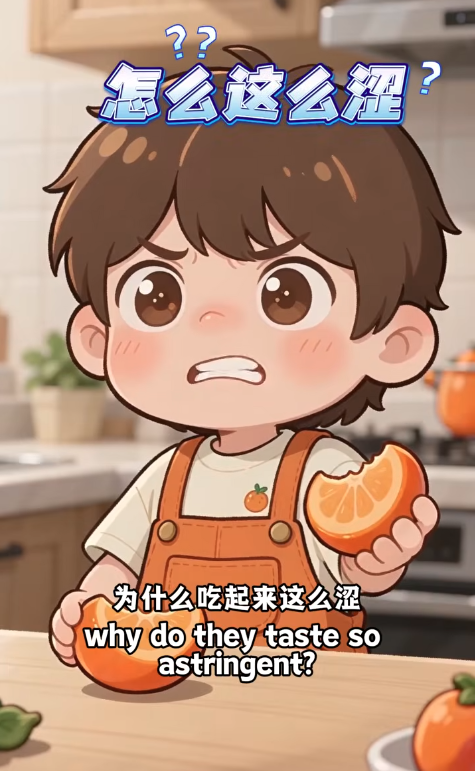
Persimmons naturally contain tannins.
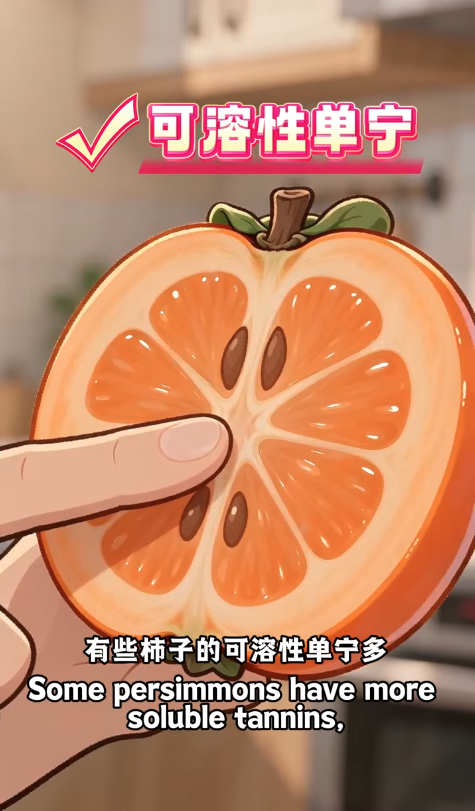
In some unripe persimmons, or in naturally astringent varieties, the amount of soluble tannins can be relatively high.
When you bite into the fruit, these soluble tannins interact with proteins in your saliva.
That interaction affects the smooth, lubricating feeling that saliva normally provides.
As a result, your mouth quickly begins to feel:
dry, rough, tight, and puckered.
That is the sensation people commonly describe as “astringent.”
So the unpleasant feeling is not the same as sourness.
It is a classic astringent sensation caused by tannins.
Why Are Some Persimmons Astringent While Others Can Be Eaten Firm?
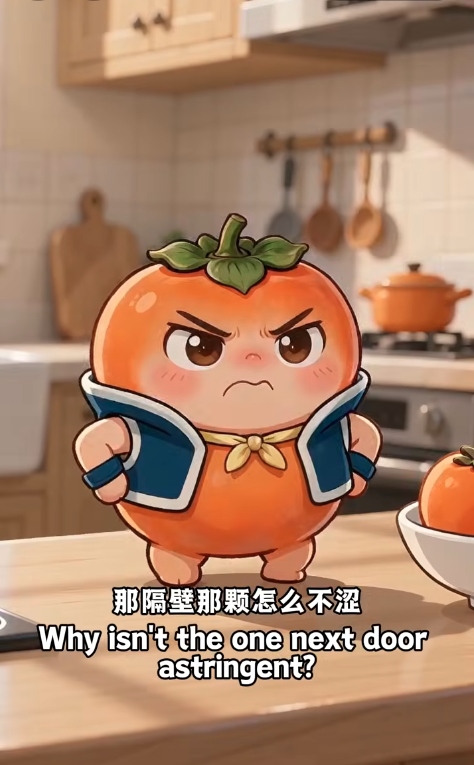
Not all persimmons are the same.
Different varieties naturally contain different amounts and forms of tannins, and they also change differently as they ripen.
In simple terms, persimmons are often grouped into two broad categories:
non-astringent persimmons and astringent persimmons.
Some non-astringent varieties can be eaten while still firm. They can be crisp, sweet, and low in noticeable astringency.
Astringent varieties, on the other hand, may still taste extremely puckering even when they look attractive on the outside.
These usually need to become fully ripe or undergo a de-astringency process before they are pleasant to eat.
So:
A firm persimmon is not automatically unripe or inedible.
The variety matters.
“Firm Persimmons Can’t Be Eaten” — Is That Really True?
Many people use a very simple rule when judging persimmons:
Firm means unripe. Soft means ripe.
But this does not apply to every persimmon.
Some non-astringent varieties are specifically enjoyed while still firm and crisp, almost like an apple.
Meanwhile, some astringent varieties need to soften significantly or be treated before the strong puckering sensation disappears.
That means firmness alone cannot tell you whether a persimmon is ready to eat.
The more important question is:
What type of persimmon is it?

Why Does Astringency Decrease as Persimmons Ripen?
In astringent persimmons, the tannins change as the fruit ripens.
The soluble tannins that can readily interact with saliva gradually become less soluble.
As the amount of active soluble tannin decreases, the fruit produces less of that drying, tightening sensation in the mouth.
That is why some astringent persimmons may taste extremely harsh when firm, but become much sweeter and more pleasant once fully ripe and soft.
For these varieties:
waiting really can make a big difference.
What Does “De-Astringency” Actually Mean?
You may sometimes see the term:
de-astringency.
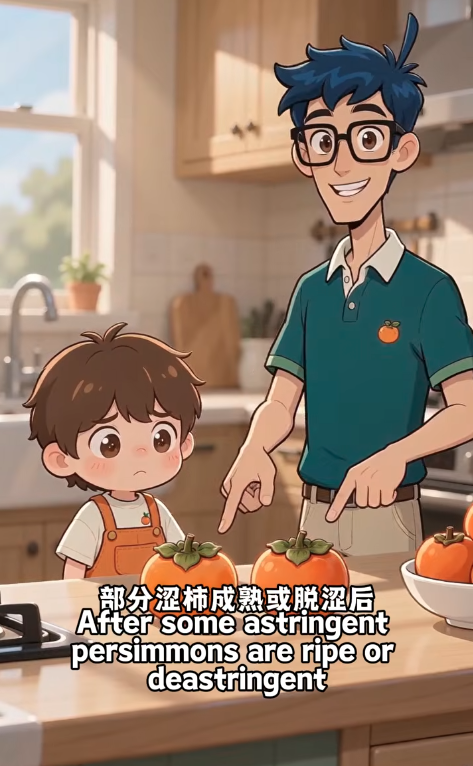
This does not mean that every tannin in the fruit has been completely removed.
More accurately, it means that the soluble tannins responsible for the strong puckering sensation have been reduced or converted into forms that do not interact as strongly with saliva.
After de-astringency treatment, the sweetness of the persimmon becomes much more noticeable and the unpleasant dry sensation is greatly reduced.
So when a seller says that an astringent persimmon has been “de-astringed,” it usually means the fruit has been treated or ripened in a way that makes it more suitable to eat.
How Should You Choose Persimmons?
First, do not judge by color alone.
Orange or red skin can provide some information about ripeness, but it does not guarantee that the fruit will be free of astringency.
Second, do not rely only on firmness.
If you are buying a non-astringent variety, a firm texture may be completely normal.
If you are buying an astringent variety, it is more important to know whether it has fully ripened or already gone through de-astringency treatment.
A simple way to remember it is:
Non-astringent persimmons: some varieties can be eaten while firm.
Astringent persimmons: they usually need to ripen fully or be treated before eating.
If you are unsure, asking about the variety and whether it has been de-astringed is often more useful than simply squeezing the fruit.
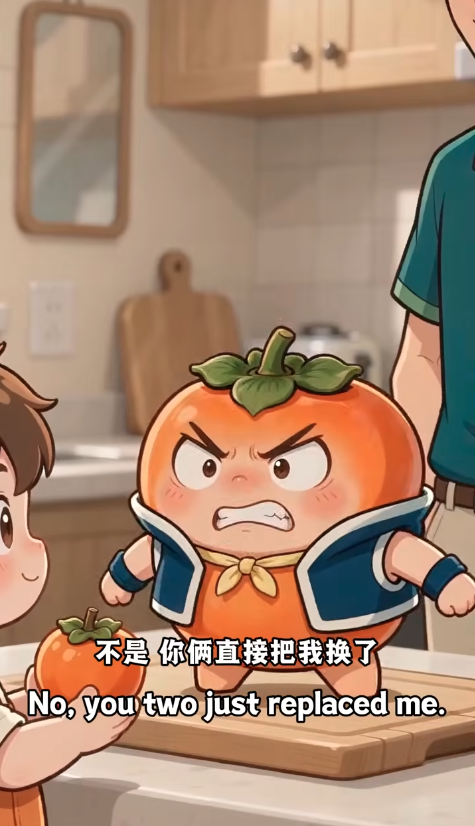
That Puckering Feeling Is Really a Tiny Reaction Happening in Your Mouth
One of the most interesting things about persimmons is that they turn an invisible food chemistry process into a very obvious physical sensation.
Soluble tannins meet salivary proteins.
Those proteins are affected.
Your mouth loses some of its normal smooth, lubricated feeling.
And suddenly you notice:
Astringency!
So the next time you bite into a persimmon and your whole face reacts, you no longer have to wonder:
“It isn’t sour, so why does my mouth feel like this?”
The answer is tannins.
And the next time you buy persimmons, do not judge only by whether they are hard or soft.
Knowing whether they are non-astringent or astringent can make it much easier to choose one that is sweet, pleasant, and ready to eat.


- Why Do Persimmons Make Your Mouth Feel Dry and Puckery? Tannins Are the Reason
- 柿子明明不酸,為什麼吃起來卻澀嘴?原來問題出在「單寧」
- Why Do Cut Apples Turn Brown? It’s Enzymatic Browning, Not Necessarily Spoilage
- 蘋果切開變褐色,就是壞掉了嗎?原來是「酵素性褐變」在作用
- The Invisible Bill
- 沉默的代價
- 凌晨三點的廚房
- The Weight of Small Things
- 推開那扇門
- The arithmetic of endurance
全部评论