Why Ancient City Well Water Turned Bitter
Drop into an ancient Chinese metropolis, and you might not even dare to taste the well water. It ran bitter. It ran salty. It could carry cholera, dysentery, typhoid.
You've been spoiled — by tap water. Modern piped water is arguably one of the greatest achievements in public health. Physical, chemical and biological processes push nearly every contaminant you can imagine down to very low levels, giving ordinary people steady, cheap, safe drinking water.
China's tap water follows the Standards for Drinking Water Quality (GB 5749-2022): 97 parameters are tested at the treatment plant, 43 of them routine — microbiology, toxicology, sensory indicators [1].
Residual risks exist: disinfection byproducts from the treatment itself, secondary contamination inside the distribution network, and some heavy metals, drug metabolites and fluoride that conventional plants struggle to remove. Overall, they are manageable. On almost every other water-quality measure, modern tap water beats ancient drinking water outright.
Ancient People Drank Well Water — and It Was Never "Clean"
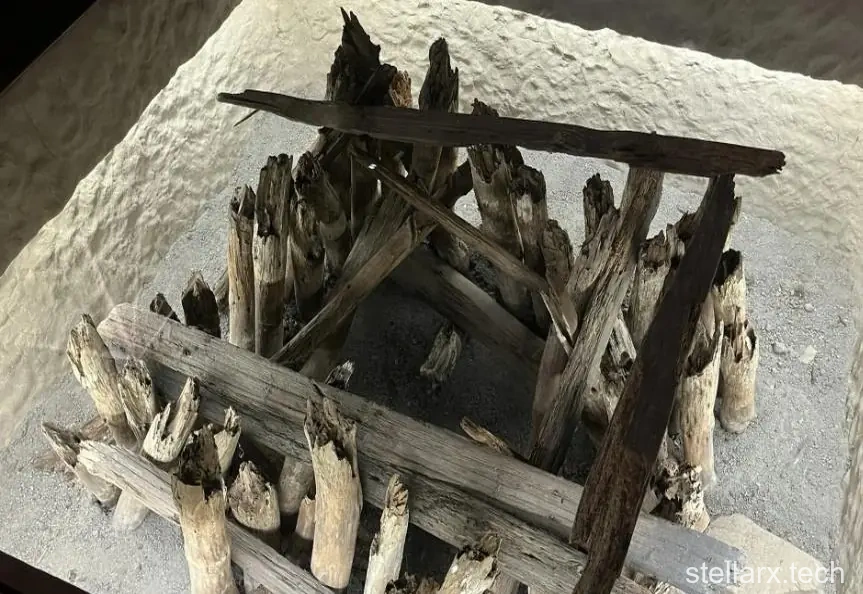
The ancients mostly drank well water, plus river, stream and lake water. The Hemudu site in the Yangtze delta preserves a wooden well structure among the earliest in the world — timbers and braces still standing in a museum case.
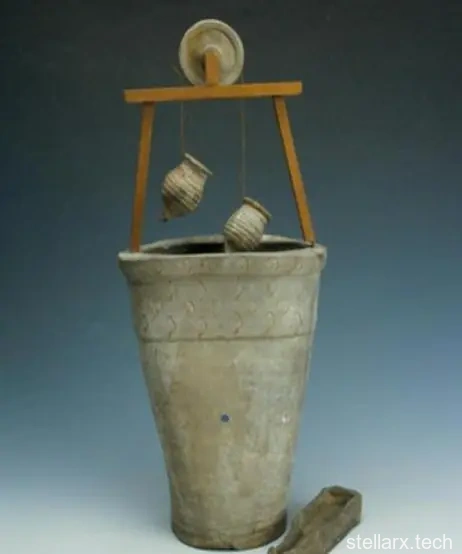
A Han-dynasty tomb model unearthed at Luoyang's Shaogou cemetery shows a clay well with a wooden windlass frame raising two small jars — the everyday machinery of drawing water.
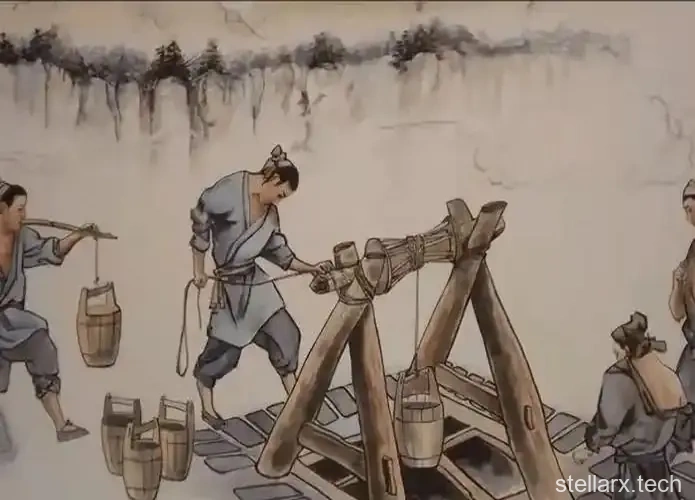
People drew water at wells — a lever windlass raised the bucket, then a shoulder pole carried it home.
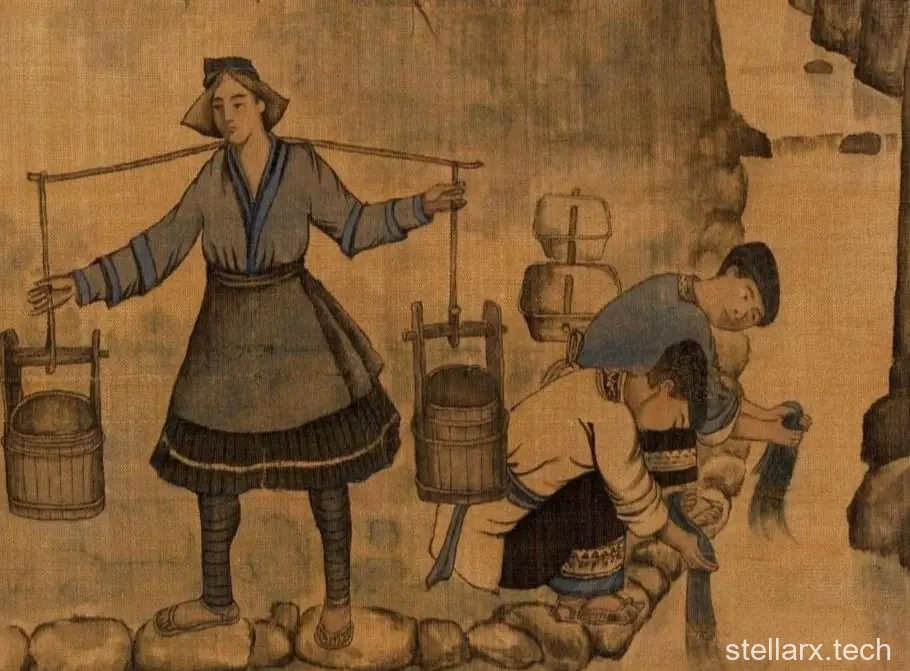
Along rivers and streams, the same daily labor: water drawn at the bank, clothes washed at the water's edge.
No industrial pollution — but plenty of microbes and parasites. Even rainwater wasn't safe: ancient skies were clean, but collected and stored openly, rainwater picked up dust and contact with microorganisms. Ancient storage was mostly open — a clay jar in the courtyard, nothing like a sealed modern tank.
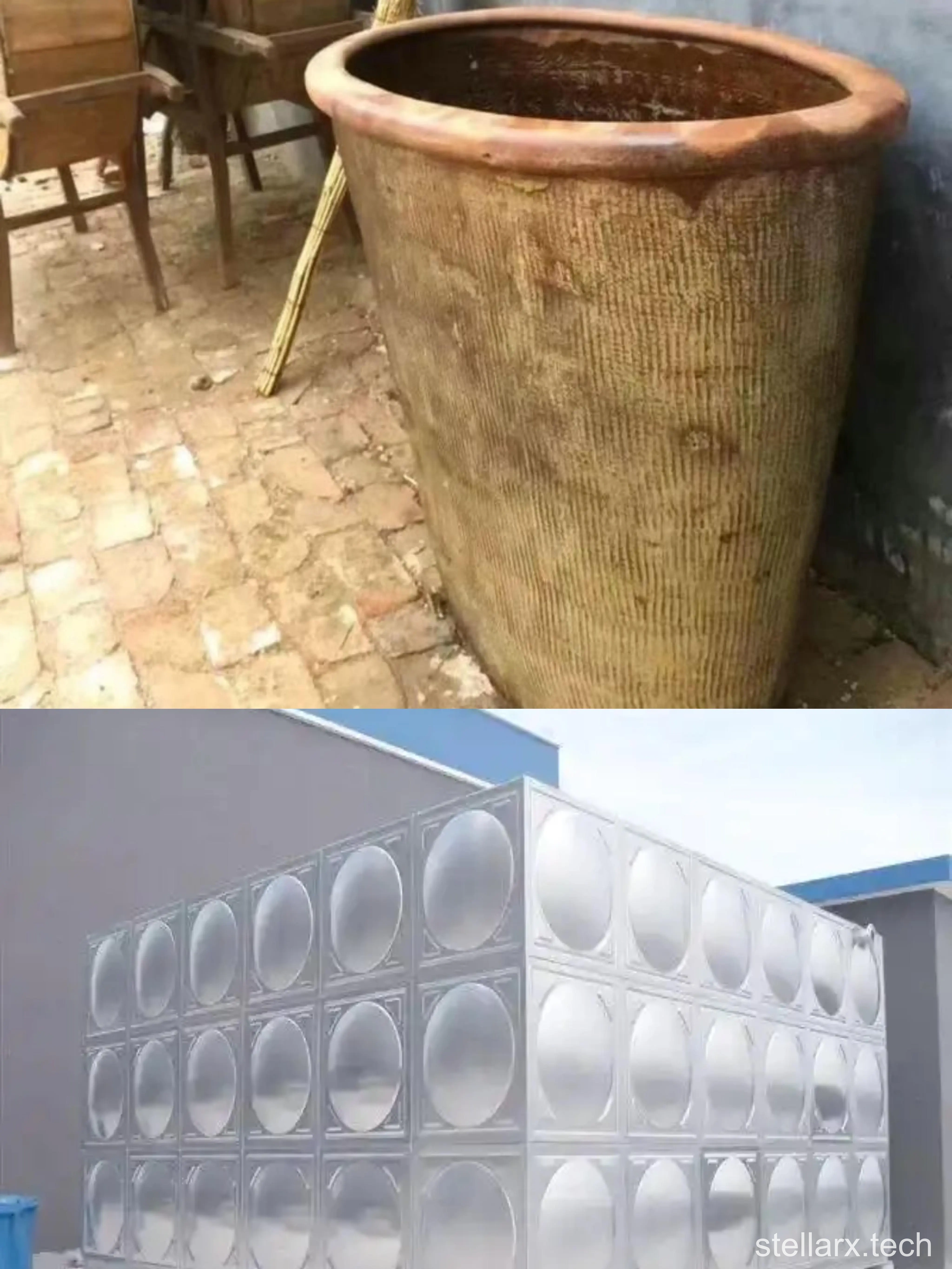
So when garbage and feces reached the water — during floods, waterlogging, overflow — the microbial and parasitic load jumped. Cholera, dysentery, typhoid spread. That was serious.
Ancient Cities Poisoned Their Own Wells
The biggest reason was drainage. Ancient drainage leaned on open ditches and moats — around city walls, along main roads, outside large buildings. Underground pipes existed — clay pipes, covered channels, culverts passing under gates and walls — but they were backup, not the main system.
The Pingliangtai site in Henan, 4,300 years old, already had clay drainage pipes connected to open channels [3].
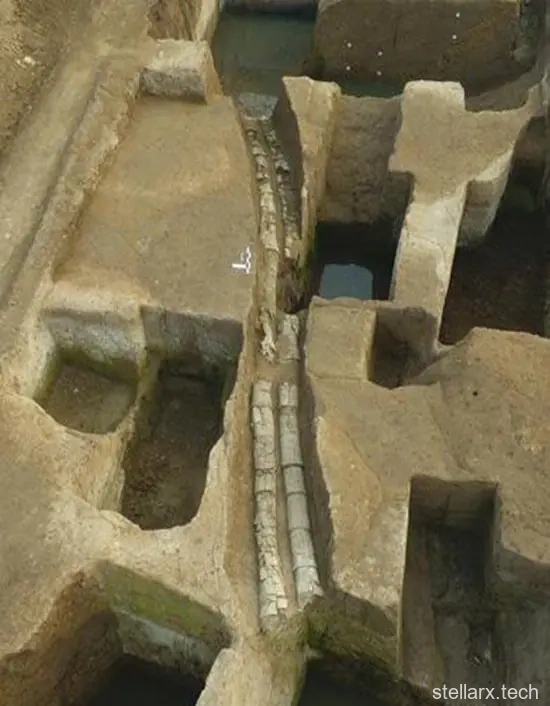
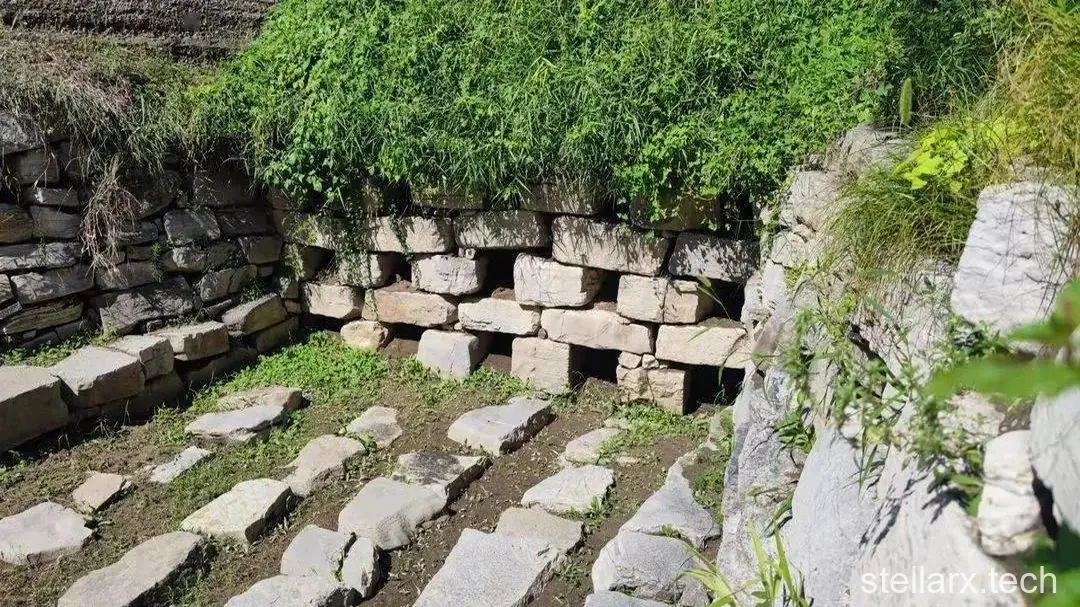
Linzi, capital of the ancient state of Qi, had three drainage systems with four outlets stretching more than 5,000 meters, linked to ditches and city moats and built from massive stone. Each outlet had three stacked layers, five square water holes per layer, stones staggered inside so water flowed through but people could not [4].
Qin-era Xianyang went further: clay drainage pipes with straight sections and elbow bends, water falling through clay funnels into pipes that carried it in different directions [1].
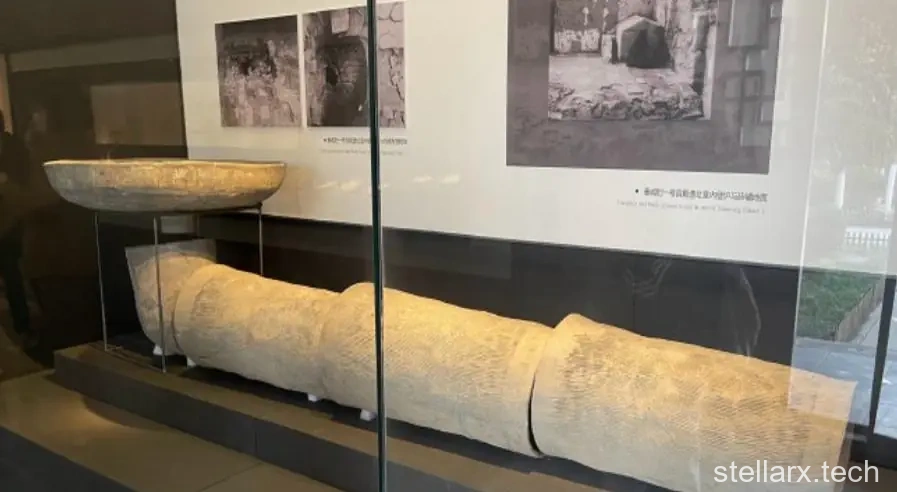
On the excavation site, the same pipes come out of the earth — cylindrical sections, worn and perforated by two millennia of water.
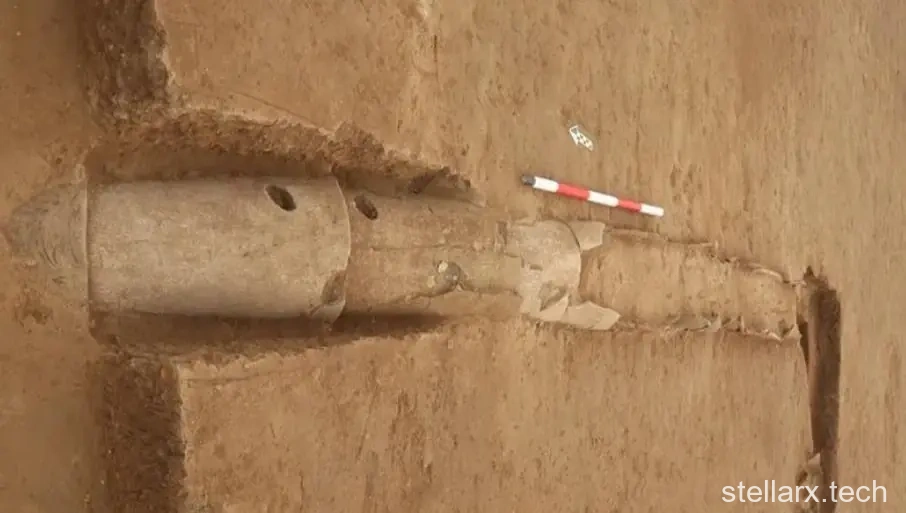
Han-era Chang'an drained mainly through surrounding moats and inner open channels, with round clay pipes and brick culverts connecting to them [1]. A brick culvert ran under the Straight Gate; in Changle Palace, archaeologists found a pentagonal drainage pipe with a settling tank.
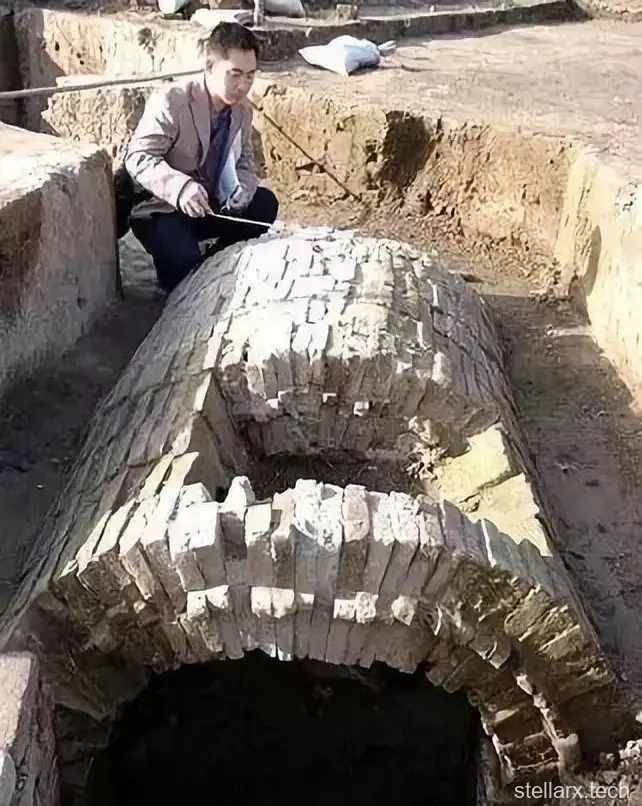
Excavated in the field, the brick arch survives intact — a drainage passage that once ran beneath the city's walls and streets.
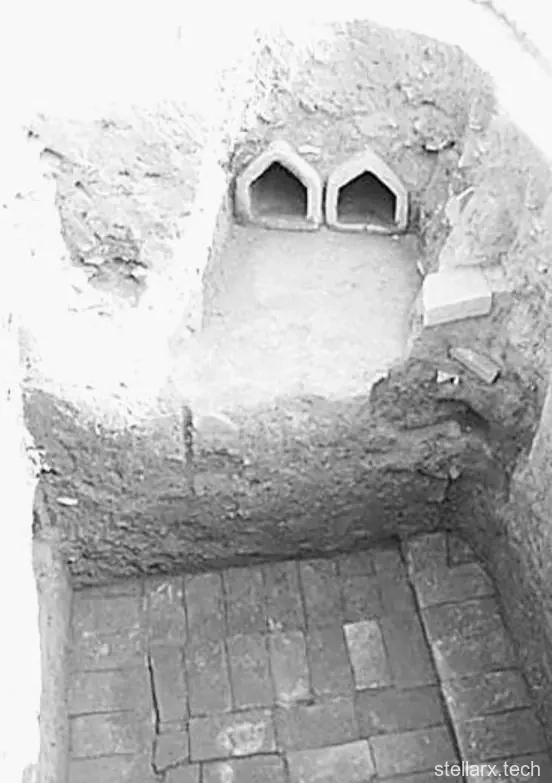
The fatal weakness: sewage sat exposed and stank — worse in summer. Rain and waterlogging pushed it out of the ditches and let it seep underground (ancient channel waterproofing was unreliable), polluting the wells.
Chang'an Got So Bad the Emperor Moved
After the Western Han, wars wore Chang'an down. Open ditches lost capacity. Households dumped garbage at their gates, buried waste in pits, dug seepage wells for excrement. Leachate reached the groundwater — and the wells ran "bitter and salty."
The Book of Sui, biography of Yu Jicai, records: "汉营此城,经今将八百岁,水皆咸卤,不甚宜人" — the city the Han built, now nearly eight hundred years old, its water all salty and bitter, hardly fit for people [5]. So Emperor Wen of Sui abandoned old Chang'an after barely a year and ordered a new capital built to the southeast — Daxing, which became the foundation of Tang Chang'an [6].
After that, big cities kept the same pattern: open channels, backup pipes, buried pits. Wells were often dug right next to garbage pits and seepage wells [7] — pollution was conveniently close. The more people, the faster the shallow groundwater went bad.
In 2015, at the eastern market site of Tang Chang'an, excavators found wells, covered wells, seepage wells, garbage pits and settling pits packed side by side: 4 water wells, 2 covered wells, 11 seepage wells, 12 garbage pits — all neighbors [7].
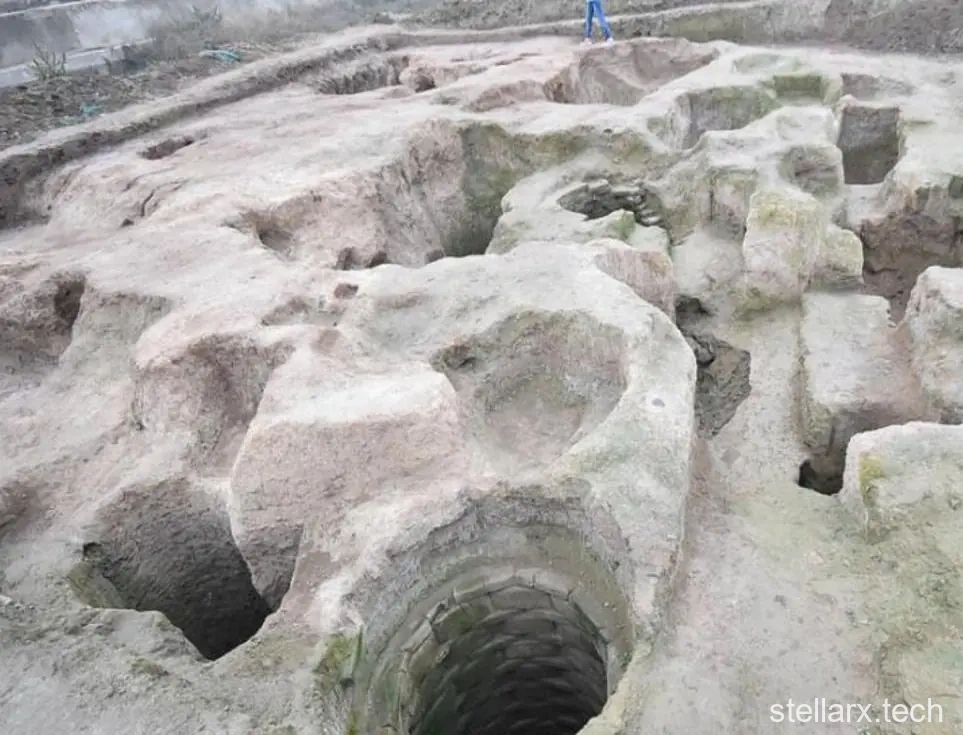
From the mid-Tang onward, Chang'an's well water turned increasingly bitter and salty [8].
Beijing went the same way. By the late Ming, records say: "京师井水多咸苦,不可饮" — the capital's well water, mostly salty and bitter, undrinkable [9]. In the Qing, palace water was hauled in from the Jade Spring hills west of the city; the palace wells were kept only as a backup. Ordinary people made do with a few public wells [7].
Before the founding of the People's Republic, Beijing had 27,195 seepage wells, each discharging more than a thousand tons of sewage a year [10]. That, probably, is the main reason Beijing's groundwater became so polluted.
London Had the Same Problem
Mid-19th-century London had no modern sewer system — like ancient Chinese cities, it relied on cesspits and crude septic pits. In 1854, the Broad Street cholera outbreak was traced to a mother who emptied a pail of baby-diaper washing water into the cesspit in front of her house; the pit leaked into the public pump well on Broad Street [11]. The outbreak killed more than 10,000 people.
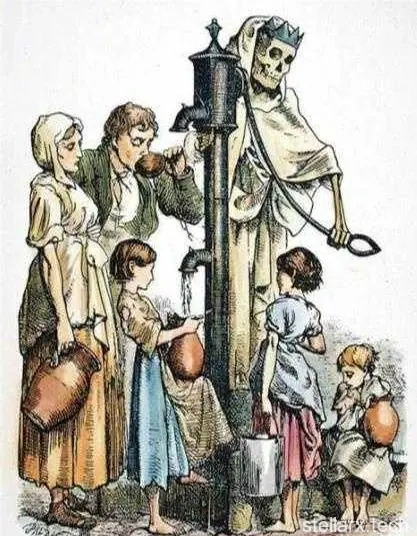
Around the Great Stink of the Thames, four cholera waves — 1831-32, 1848-49, 1853-54, 1865-66 — killed more than 40,000 people in total [12].
The Tap Water You Complain About Was a Dream for the Ancients
So no — the ancients, especially in big cities, did not drink sweet clean water easily. It wasn't laziness, and it wasn't bad water sources. It was sanitation technology that could not outrun population growth and urban sprawl.
What they drank was nowhere near the tap water you might be complaining about right now.
Wondering what actually lived in that bitter well water? Under a microscope, a single drop holds a hidden city — amoebae gliding, algae drifting, bacteria dividing. You can see it for yourself: open WWAI on your phone and observe a real specimen under the virtual microscope, including an amoeba specimen where the single nucleus and stained cytoplasm are clearly visible. No microscope to buy, no slides to wait for — just curiosity. Search "WWAI" in your app store to download.

Related reading

Miasma Theory: Wrong, but It Predicted Cholera

Raw Spring Water Almost Killed a 61-Year-Old

Vibrio vulnificus: Seafood Prick Danger
References
1. Du P., Qian Y. Urban Drainage in Ancient China. Studies in the History of Natural Sciences, 1999, (2): 41-51.
2. Wu Q. Flood Control in Ancient Chinese Cities. Beijing: China Architecture & Building Press, 1995.
3. Ceramic Drainage Pipes of the Pingliangtai Site (c. 4,300 BP). Available at: http://m.hnswwkgyjy.cn/NewsView.php?News_ID=744
4. Linzi Qi Ancient City Site Museum. The Drainage System of the Ancient Qi Capital Linzi. Archaeology, 1988, (9): 784-787.
5. Cheng Y. Distribution of Cemetery Areas Around Tang Chang'an. Collected Essays on Tang History, 2011, (1): 71-80.
6. Lu X., Wang X., Liu J. Ancient Chinese Waste Management: Lessons for Zero-Waste Cities. Chinese & Overseas Architecture, 2020, (6): 49-50.
7. Zhou H. Groundwater Pollution and Capital Relocations in Ancient China. Journal of Shaanxi Normal University (Philosophy and Social Sciences), 2024, 53(4): 37-52.
8. Li J. Groundwater Pollution in Han-Tang Chang'an and Ming-Qing Xi'an. Xi'an: Sanqin Publishing House, 2007.
9. Shuntian Prefecture Gazetteer (Guangxu Edition). Beijing: Beijing Classics Publishing House, 1987.
10. Han Y., et al. Investigation Report on Seepage-Well Pollution of Water Sources in Dongcheng District, Beijing. 1983.
11. The 1854 Broad Street Cholera Outbreak and the Pump Well. Available at: https://www.cdctj.com.cn/system/2021/12/19/030071963.shtml
12. Wang Y. From Sewage Disposal to Pollution Control: A Study of Thames Water Pollution Treatment. Journal of Qiqihar Normal College, 2014, (1): 105-107.
- 為什麼淡水沒有章魚?聰明如牠,也跨不過這道牆
- Can Octopus Live in Freshwater? Smart, Sea-Bound
- 狂犬病毒為何只攻擊神經?從皰疹病毒偷來的
- Why Rabies Virus Only Attacks Nerves
- 古代城市井水,為什麼又苦又鹹?
- Why Ancient City Well Water Turned Bitter
- 史上最忧郁的照片出现了……
- The Jinx Male Lead and the One-Episode Trap: Why AI Anime Reunions Are Breaking Hearts
- AI漫劇《酸梅陰天》引發追更焦慮:掃把星男主與斷章式推送成輿論焦點
- When AI Short Dramas Meet Campus Power: The Viral Rise of the 'Chaebol Classmate' Phenomenon
全部评论