Can Octopus Live in Freshwater? Smart, Sea-Bound
Everyone is asking how smart the octopus is right now. Nine brains, three hearts, jars unscrewed, tanks escaped — the internet has decided this animal is brilliant. But there is a quieter question people ask when they watch a river or a lake: why is there no octopus in there?
The honest answer is short: no octopus, squid, cuttlefish, or nautilus has ever managed to live in fresh water long-term. The entire group — cephalopods — is marine-only. All cephalopods are aquatic, and all of them live in the sea. There is no land species, and no species that truly survives in fresh water.
The wall is called osmoregulation
An octopus's body fluid carries about the same salt concentration as seawater. Put it in fresh water and osmosis goes to work: water floods in through the skin and gills, and the animal has none of the equipment a freshwater fish has — no chloride cells in the gills, no sodium pumps expelling excess water and holding onto salt.

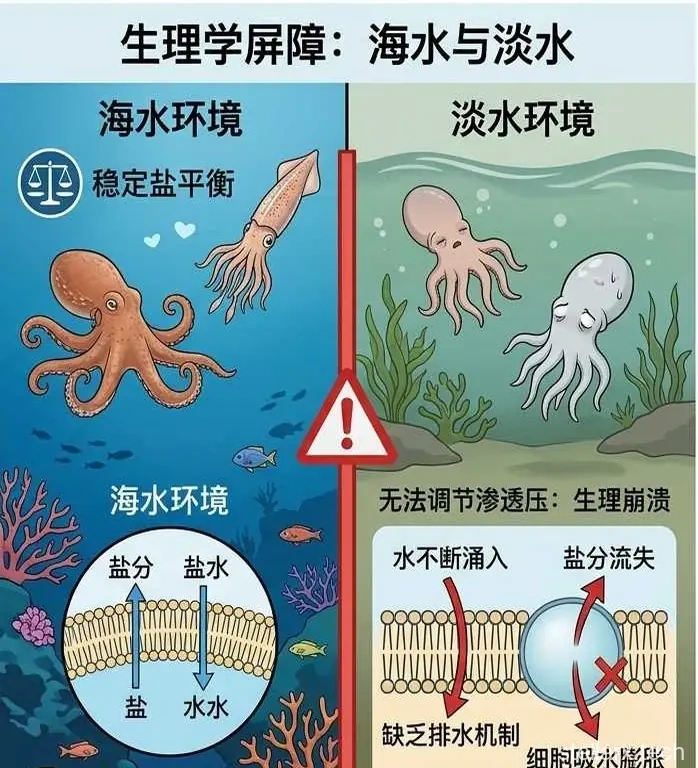
Cells swell. Salts drain. Nerve and muscle signals start to fail. That is why, out of every cephalopod alive today, only a handful can tolerate brief visits to brackish estuaries — and none can settle in fresh water.

Why evolution never gave them a way in
Cephalopods spent more than 400 million years in the sea being pushed by fish competitors toward one direction: faster, stronger, more precise. That lifestyle costs.
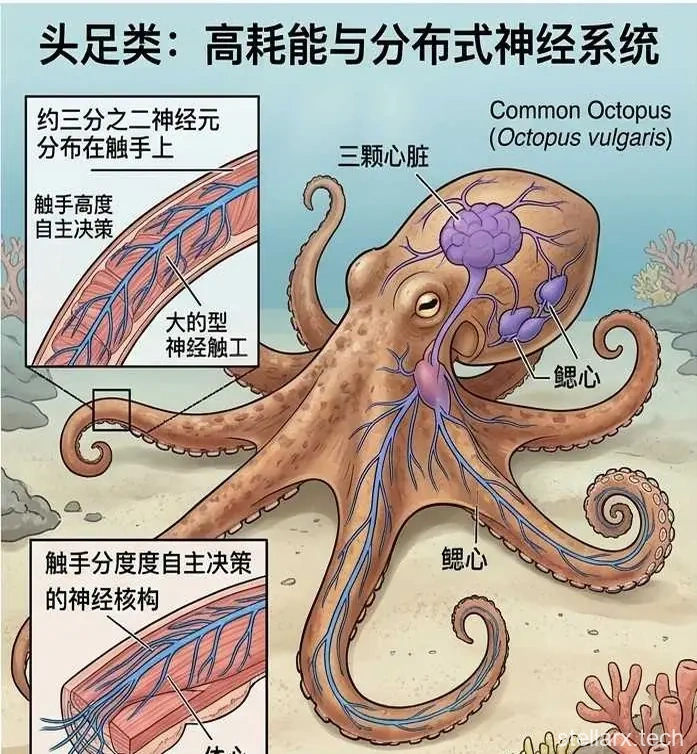
Octopuses and squid are high-output predators. They sprint, strike, and react at speed, powered by three hearts and giant nerve axons, burning oxygen at a rate that demands extreme dissolved-oxygen levels. High metabolism, high energy, zero slack.

Low tolerance for error is the second wall. That high-speed nervous system depends on a stable internal ion balance. In fresh water, adjusting body salts to fight osmosis would wreck signal conduction — in evolutionary terms, a dead end. Meanwhile snails and clams, with their low metabolism and modest movement needs, had the slack to slowly figure out fresh water over millions of years. Octopuses never did.

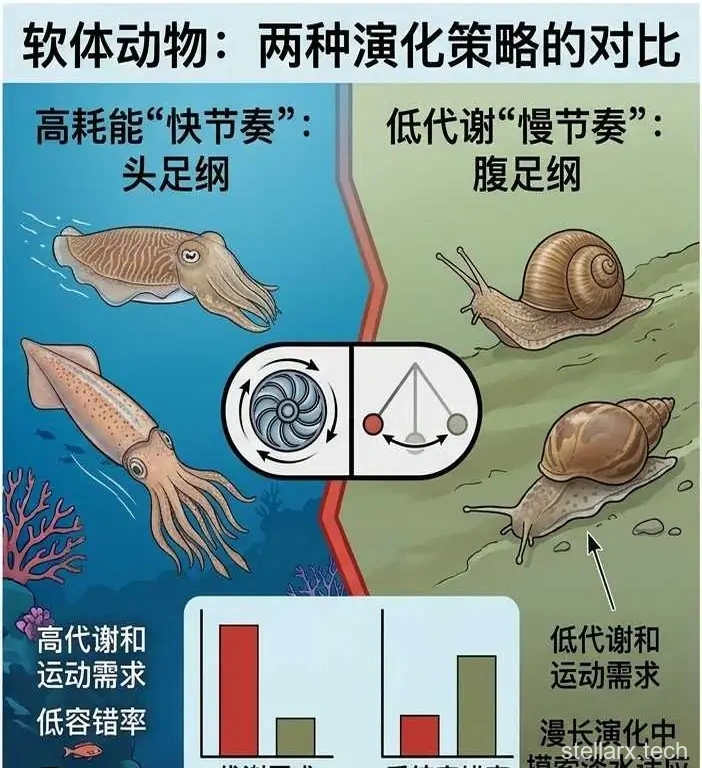
So the answer to the question is not "they didn't want to." It's that the same precision system that makes an octopus brilliant is exactly what locks it to the ocean. The smartest mollusk is sea-bound by design.

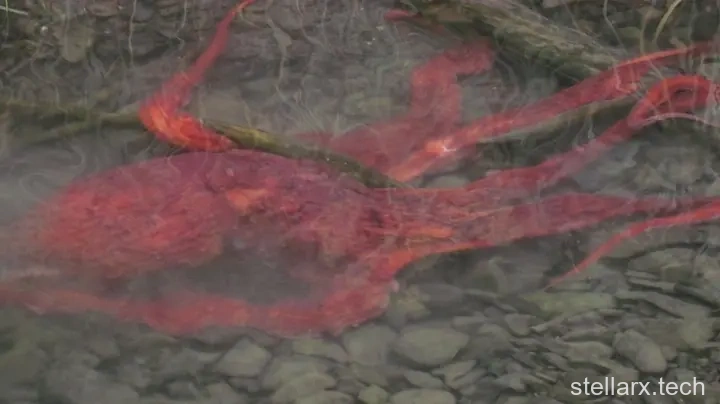
And that famous intelligence? It's stranger than the headlines
An octopus brain is large, but roughly two-thirds of its neurons live in the eight arms. The arms have a high degree of autonomous decision-making. Cut one off (please don't) and it will still crawl, grab food, and react to stimuli on its own for a while. Researchers have a saying: the octopus brain often doesn't know what its arms are doing.
The arms' neurons and the giant axons that drive an octopus's speed are invisible to the naked eye. So is the wiring in a rabbit spinal cord specimen — a cross-section where the butterfly-shaped gray matter and the white-matter fiber bundles are clearly visible. Want to see what a nervous system built for speed looks like? Just search "WWAI" in your app store and download it today.
Related reading

Dolphin Makes Fish Vomit to Steal Food

Vibrio vulnificus: Seafood Prick Danger

Sacculina: The Crab-Castrating Parasite

Woodpecker Concussion Myth: Real Brain Damage
References
Hill, R. W., Wyse, G. A., & Anderson, M. (2012). Animal Physiology (3rd ed.). Sinauer Associates.
Hanlon, R. T., & Messenger, J. B. (2018). Cephalopod Behaviour (2nd ed.). Cambridge University Press.
Hochner, B. (2013). How nervous systems evolve in relation to their embodiment: what we can learn from octopuses and other molluscs. Brain, Behavior and Evolution, 81(1), 3–13.
- 為什麼淡水沒有章魚?聰明如牠,也跨不過這道牆
- Can Octopus Live in Freshwater? Smart, Sea-Bound
- 狂犬病毒為何只攻擊神經?從皰疹病毒偷來的
- Why Rabies Virus Only Attacks Nerves
- 古代城市井水,為什麼又苦又鹹?
- Why Ancient City Well Water Turned Bitter
- 史上最忧郁的照片出现了……
- The Jinx Male Lead and the One-Episode Trap: Why AI Anime Reunions Are Breaking Hearts
- AI漫劇《酸梅陰天》引發追更焦慮:掃把星男主與斷章式推送成輿論焦點
- When AI Short Dramas Meet Campus Power: The Viral Rise of the 'Chaebol Classmate' Phenomenon

全部评论