Low-Sodium Salt and Blood Pressure: Who Should Switch
"Dad, this dish is way too salty!" "Is it? Tastes fine to me — maybe even a little bland."
Sound familiar? As parents get older, the food they cook gets saltier and saltier. It is not stubbornness: aging dulls the taste buds, so it takes more salt to taste anything at all. But the salt that restores their sense of flavor also pushes sodium intake past what a healthy body can handle — and excess sodium is one of the main dietary drivers of high blood pressure.
There is a fix that takes no willpower, no new diet, no bitter pills: switch the salt in their kitchen.
What low-sodium salt actually is
Low-sodium salt is also called potassium-enriched salt. The recipe is simple: replace part of the sodium chloride in ordinary salt with potassium chloride.
[TABLE: salt-swap-composition]
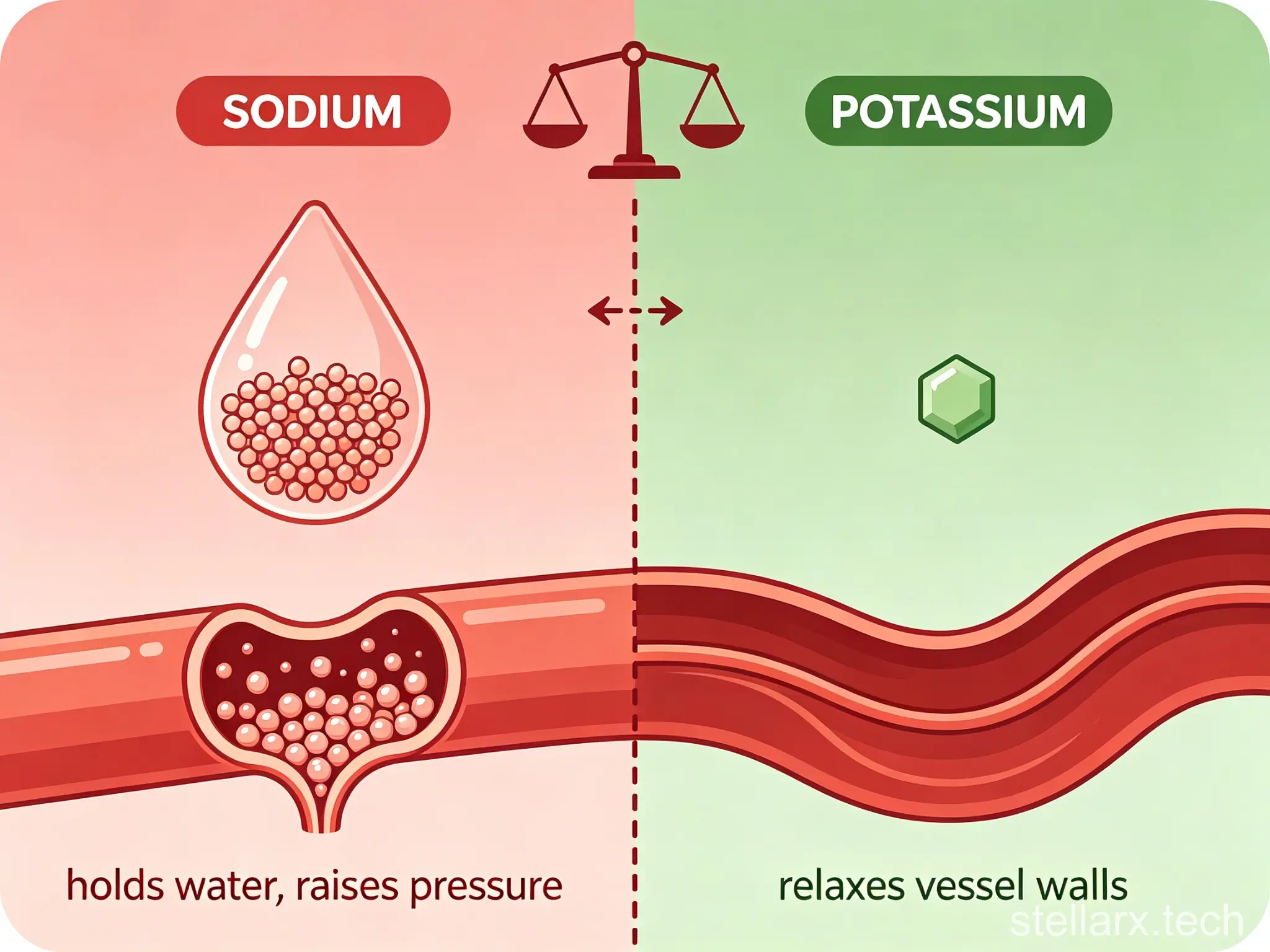
The swap does two things at once. You eat less sodium — the mineral that raises blood pressure. And you get more potassium — the mineral most people do not eat enough of, the one that helps keep blood pressure down.
The numbers from a 21,000-person trial
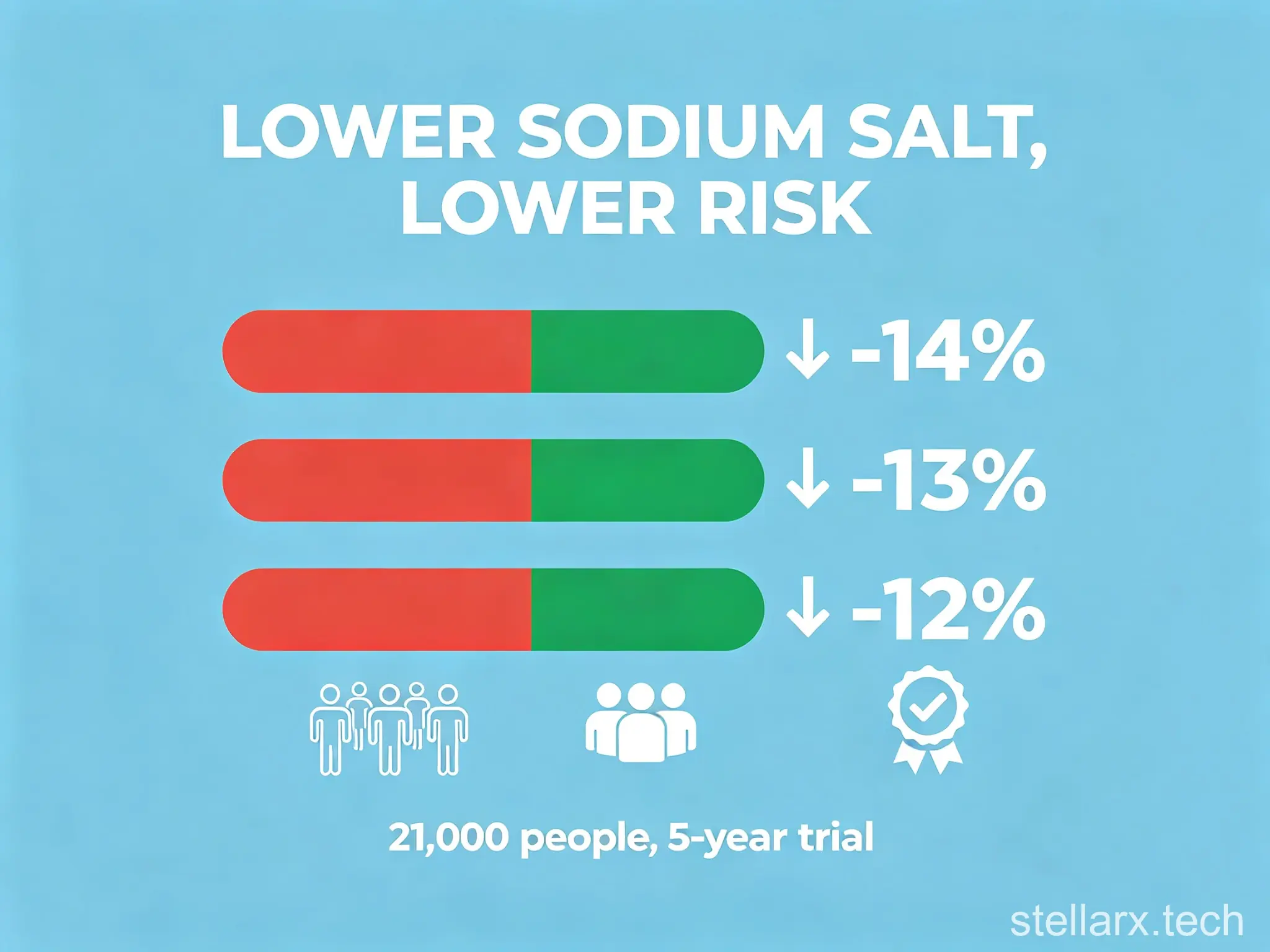
The strongest evidence comes from a large randomized trial. Researchers enrolled 21,000 people who either had a history of stroke, or were over 60 with high blood pressure that was not under control. Anyone taking medicines that affect potassium excretion, using potassium supplements, or with severe kidney disease was excluded.
Half the villages switched to low-sodium salt; the other half kept regular salt.
The results, compared with the regular-salt group:
Stroke risk dropped 14%
Major cardiovascular events (stroke plus heart attack combined) dropped 13%
Risk of premature death dropped 12%
Even the trial's design stacked the deck against the salt: participants were not told to limit how much they used, and were given an average of 20 grams a day — while the average Chinese adult uses only about 11 grams. Eat as salty as you like, and the benefit still held.
Is it safe? Yes — for most people
Low-sodium salt was invented precisely to lower blood pressure, and its safety record is part of why the swap works as a population strategy.
Hyperkalemia (too much potassium in the blood) occurred in about 2% of people — and the rate was nearly the same in both the low-sodium and regular-salt groups.
Deaths linked to hyperkalemia were not higher in the low-sodium group.
The trial used a formula with 25% potassium chloride. Current evidence says that as long as potassium chloride stays at or below 30%, most people can use it without trouble.
Who the guidelines recommend it for
The 2024 Chinese guidelines on low-sodium salt promotion (published in the Chinese Journal of Preventive Medicine) recommend replacing regular salt with low-sodium salt for:
People with high blood pressure — whether or not they take medication. Clear blood-pressure-lowering effect, plus fewer cardiovascular events and deaths.
People at high cardiovascular risk: a history of stroke, coronary heart disease, peripheral vascular disease, or a 10-year cardiovascular risk of 10% or higher.
Middle-aged and older adults.
Healthy people with normal blood pressure — it lowers blood pressure, cuts new-onset hypertension, and does not cause low blood pressure.
Who must ask a doctor first
Low-sodium salt is not for everyone. A small minority should check with a doctor before switching:
Kidney problems: an abnormal glomerular filtration rate or urine protein test, or diagnosed chronic kidney disease. Be especially careful if eGFR is below 60 mL/(min·1.73 m²) or urine protein is positive. The kidney is the organ that removes excess potassium — when it is impaired, the extra potassium has nowhere to go.
People on medicines that block potassium excretion — especially the RAAS inhibitors (ACE inhibitors like "pril" drugs, ARBs like "sartan" drugs, and aliskiren) commonly used for high blood pressure and heart failure. If you are not on a RAAS inhibitor, ordinary blood-pressure or heart-failure drugs are usually fine.
Unless you have severe kidney disease or take a drug that clearly blocks potassium excretion, low-sodium salt is safe for you — and it prevents hypertension.
Buying rule: keep potassium chloride at or below 30%
Low-sodium salt is sold in most supermarkets and online. When buying, check the ingredient list and choose a product whose potassium chloride content is no higher than 30%.
Small tools that make salt control automatic
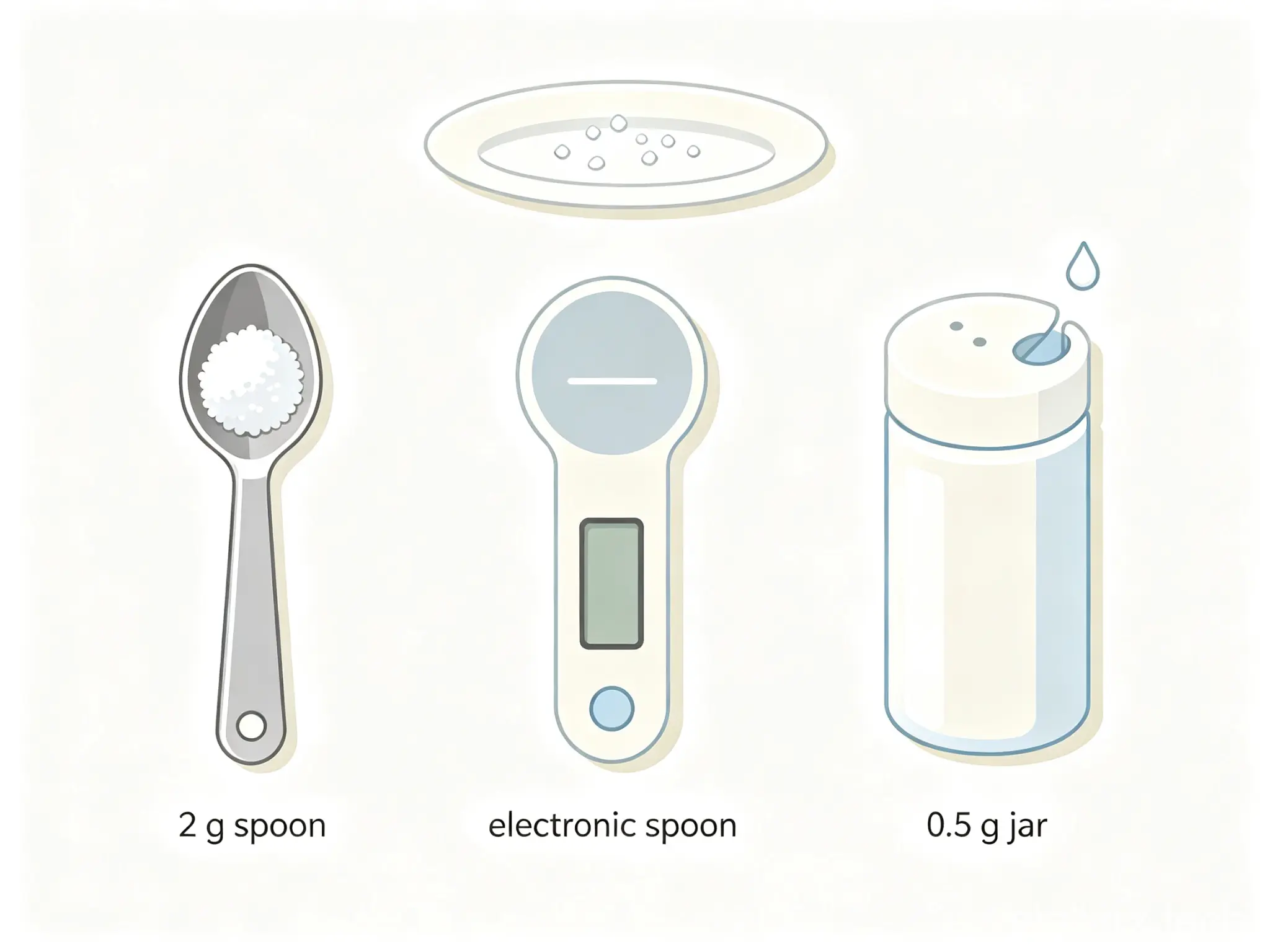
The current Chinese Dietary Guidelines cap salt at 5 grams a day. Most people have no idea how much they actually use. Three tools fix that:
2-gram salt spoon: one level spoon holds 2 grams. A healthy adult gets a daily budget of about three spoons. If ingredients already contain salt — soy sauce, MSG, chicken bouillon — deduct from the budget.
Electronic salt spoon: measures not just salt weight but soy sauce volume. One dish with 2 g salt, 15 ml soy sauce, and 2 g chicken bouillon adds up to roughly 6 g of salt equivalent.
Quantified salt jar: stores salt and dispenses a fixed amount — for example, 0.5 grams per press.
If you cannot convince your parents to use less salt, do not argue with them about salt at all.
Switch their salt for them.
If you have high blood pressure, or someone in your family does, the switch is one of the few interventions backed by a 21,000-person randomized trial — and it costs nothing more than a different bag of salt on the shelf.
Want to see the tissue that the whole story comes down to? The artery wall is the pressure vessel: a 2-mm tube whose muscle layer decides your blood pressure every minute of every day. Examine a real artery section under the virtual microscope — look at the blood vessel specimen.
Related reading

Why Restaurant Meals Leave You So Thirsty

Potato as Staple: 25 Pounds Down, No Calorie Math

Stroke & Brain Hemorrhage: First Step Saves Life
References
[1] Neal B, Wu Y, Feng X, et al. Effect of Salt Substitution on Cardiovascular Events and Death. N Engl J Med. 2021;385(12):1067-1077. (SSaSS trial, 20,995 participants)
[2] World Health Organization. Use of lower-sodium salt substitutes: WHO guideline. Geneva: WHO; 2025.
[3] Hypertension Australia & National Hypertension Taskforce of Australia. Potassium-enriched salt for patients with hypertension: position statement. J Hypertens. 2026.
[4] Chinese Society of Cardiology, et al. Clinical practice guideline for the management of hypertension in China. 2024.
- Low-Sodium Salt and Blood Pressure: Who Should Switch
- 女生真的会在意男生的长相吗?
- How to Choose a Good Pomelo: Don’t Judge by Appearance Alone
- 挑柚子還在只看外表?學會這幾招,更容易挑到多汁好吃的柚子
- Back at Work, but Your Mind Is Still on Vacation? What Is Post-Holiday Syndrome?
- 假期結束,人到公司了,魂還沒回來?「假期綜合征」到底怎麼回事
- GLP-1小鼠延壽:司美格魯肽12%壽命增幅的真相
- GLP-1 Mouse Longevity: The 12% Semaglutide Lifespan Gain
- 比肥肉更可怕的长胖元凶,很多人天天都在吃
- Crab and Persimmon Poison Myth: Real Chemistry
全部评论