Poisonous Plants: The Alkaloid Defense Nobody Sees
For a moment, nothing moved on the mountain path.
A field botanist snapped a stem in two, the way she had a hundred times before. Out came a bright orange sap, thick as honey, staining her fingers.
She had never seen a plant bleed like this.
The answer sat in the plant's full name: greater celandine, a perennial herb of the poppy family. Farmers know it by other names — native celandine, small celandine — and herbalists call one of its relatives "breakwort," a hint that this beauty is not harmless.
The whole plant is toxic. Snap the stalk and the orange latex runs. That juice carries the poison, and the poison is strongest where the color is.
Inside that sap sit alkaloids of the isoquinoline family. Scientists have isolated more than twenty active compounds, led by chelidonine, chelerythrine, protopine and sanguinarine.
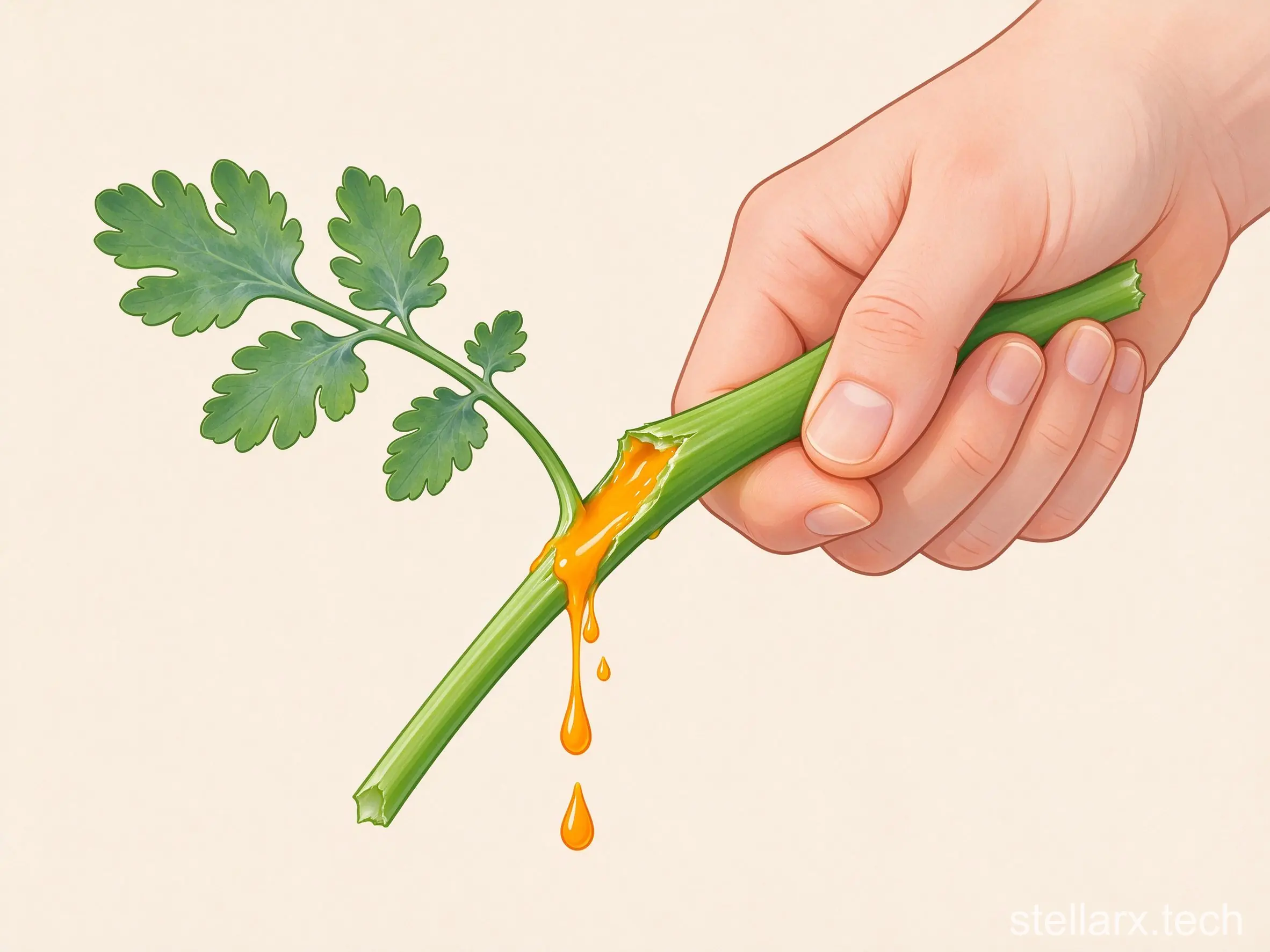
A remedy that is also a poison. In traditional medicine, greater celandine treats bronchitis, coughs, pain and skin disease. The cure is real — those alkaloids genuinely can ease pain. But the effective ingredient is the toxic one.
So the warning is simple: without a prescription, do not take it.
The numbers behind the warning. No one knows the exact lethal dose for a human. Animal studies offer a grim yardstick. In mice, a fresh whole-plant decoction injected into the abdomen showed an LD50 of roughly 9.5 g per kg of body weight. In plain words: for every kilogram of a mouse, about 9.5 grams of freshly boiled celandine liquid killed roughly half the test group. Liver damage appeared at an even lower dose.
Greater celandine is not rare. Across northern mountain regions — Hebei, Beijing, Shanxi, Shandong — it grows along forest edges, roadsides and ditches.
A plant that poisons at any dose. On a recent survey near Mentougou, the same botanist kept meeting another traditional herb with a much darker reputation: birthwort.
Its flower carries a slender, tongue-like structure at the front — an unmistakable marker.
Birthwort's poison is aristolochic acid. It has no safe intake threshold. Any amount can cause irreversible kidney damage; even small, repeated doses can lead to kidney shrinkage and uremia.
Greater celandine says "do not use without a prescription." Birthwort says something more blunt — if a prescription ever lists it, the writer wants you dead.
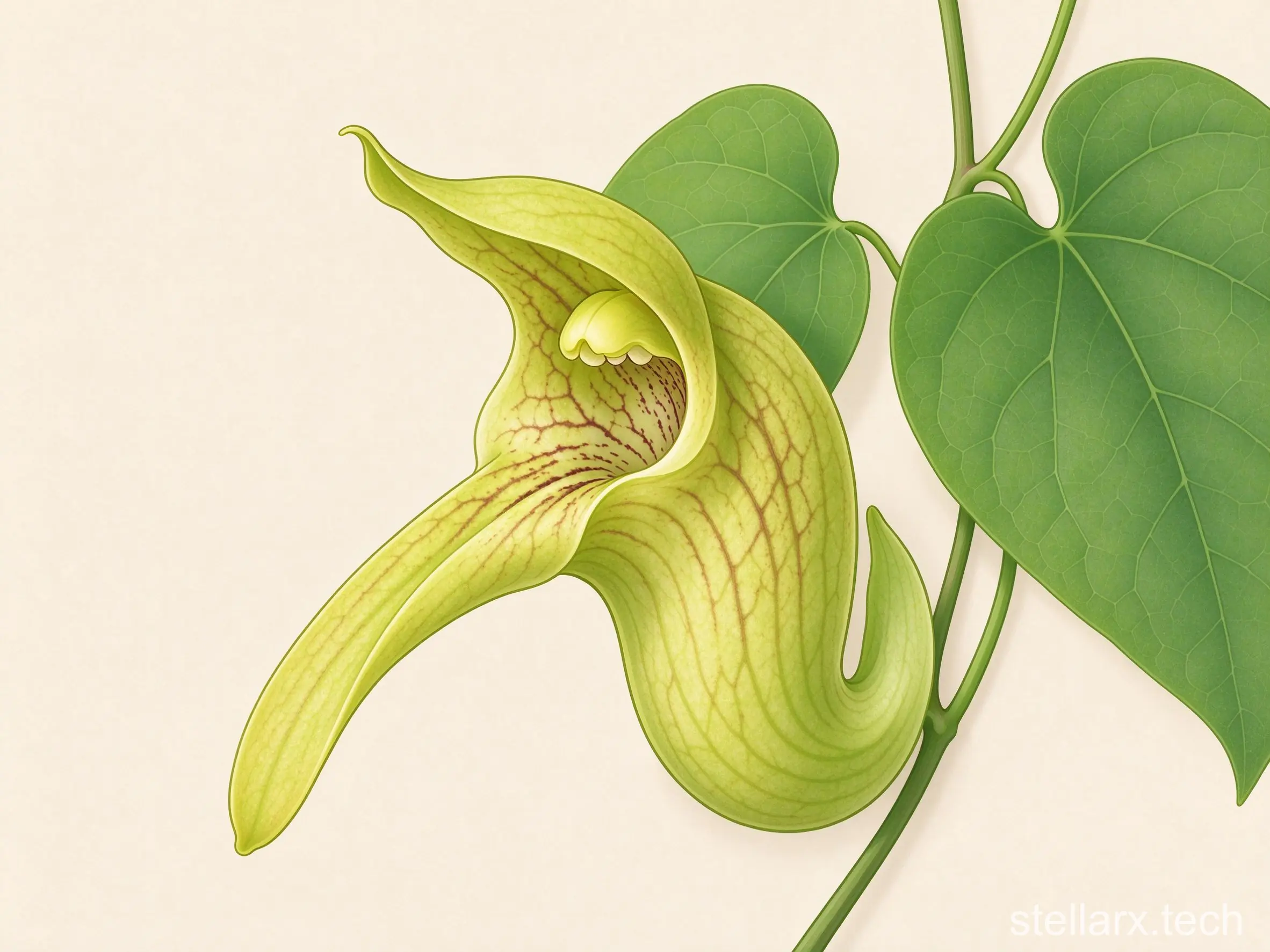
Why plants carry poison at all. These alkaloids are not accidents. Over millions of years of evolution, they became a chemical defense — a shield against grazing animals, leaf-eating insects, and invading bacteria and fungi.
Many alkaloids do hold medicinal value. But the rule cuts both ways: the part that heals is the part that harms.
The butterfly that laughs at poison. The magnificent birthwort swallowtail feeds on the plant's young leaves, vine tips and young fruit — yet never sickens. It is a product of a million-year partnership with birthwort. Humans, the surveyor concluded, should not try the same trick. No steel core, no porcelain work.
The flower behind an old legend. In the same ditch, an even more famous toxic plant grows: angel's trumpet, or Datura — the "thorn apple" of the nightshade family. Its scientific name is Brugmansia suaveolens, and it hails from Brazil.
Its common English nickname, "angel's trumpet," fits the drooping, trumpet-shaped blooms. The plant's name in Sanskrit, mandala, splits into "essence" (manda) and "achievement" (la) — together, "the essence of enlightenment," a term deep in Buddhist tradition.
Poison dressed as myth. Folk legend says the flowers that fell from heaven when the Buddha taught were mandala flowers. In the martial-arts novel The Return of the Condor Heroes, the hero is struck by a "love-flower" poison — widely read as mandala. The curse: every thought of the beloved brings unbearable pain.
The chemistry matches the myth. Mandala holds hyoscyamine, scopolamine and atropine — alkaloids that excite the central nervous system and block M-choline receptors. Poisoning brings dry mouth, flushed skin, racing heart, rising blood pressure, agitation, rambling speech, laughing or weeping, delirium and hallucinations.
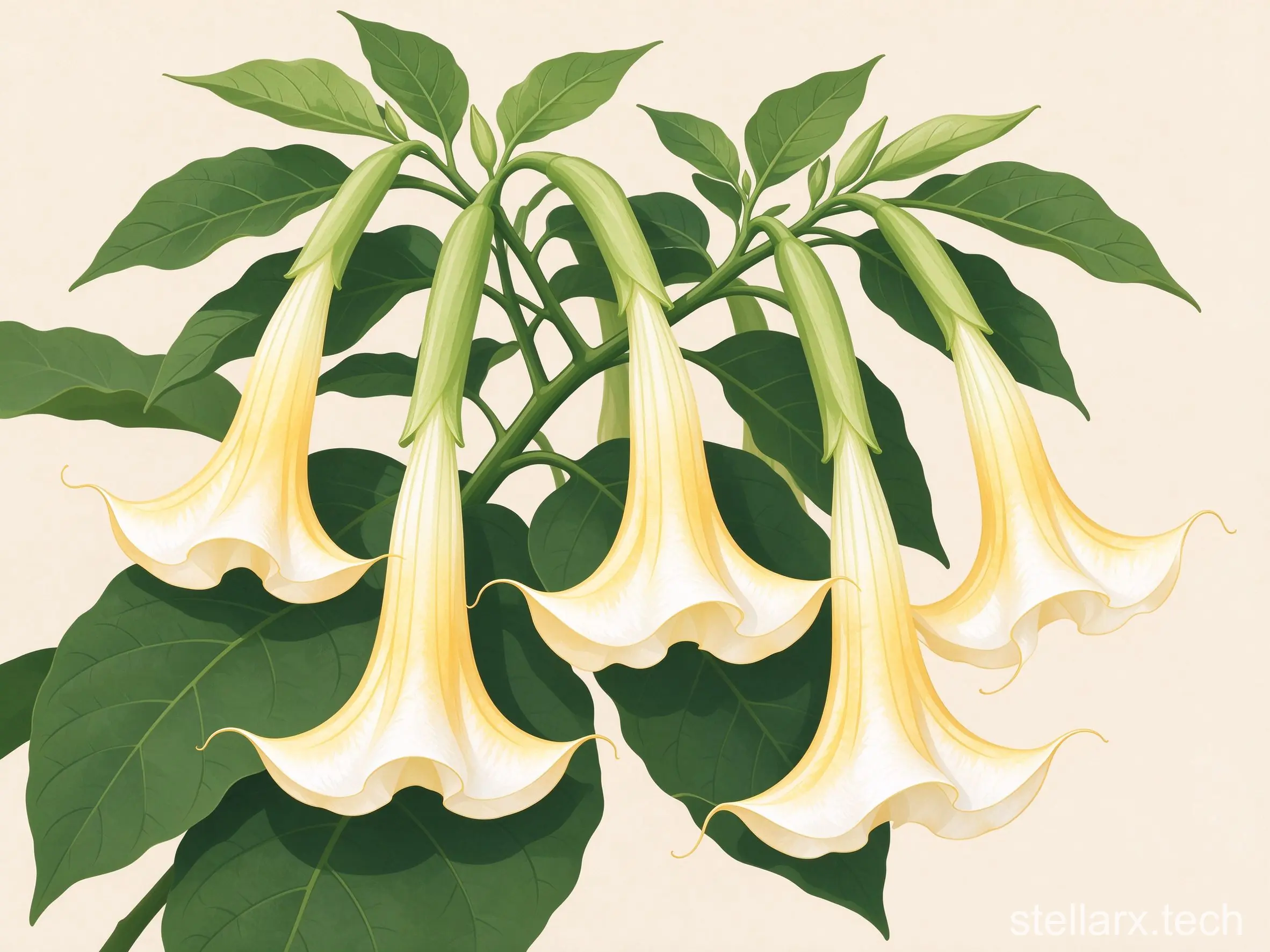
A drug with two faces. The same plant that terrorizes legends healed in history. Around the end of the Eastern Han dynasty, the physician Hua Tuo ground mandala flowers and fruit into "mafeisan," an anesthetic used for surgery. A thing has no inherent good or evil — it depends on who uses it and for what.
One parting reminder. If you hike the northern hills, you may pass a stem that bleeds orange, a flower with a tongue, a trumpet that sings poison. None of them wishes you harm. They are just doing what millions of years taught them.
Want to see how a plant's transport system works? Under a microscope, the tissue that carries water and dissolved substances through a plant is a hidden network of conducting tissue and vascular bundles — the "highways" that deliver both nutrients and, in a toxic plant, the alkaloids we have been talking about. You do not need to wait for a microscope to arrive or prepare a slide to see it. Open WWAI, tap the online microscope, and study the sunflower stem specimen with your own eyes — answer any question that sparks in the moment. Search "WWAI" in the app store to download it.
References
All illustrations are AI-generated.
Locally adapted for this site's science-communication positioning.
For primary scientific background on isoquinoline alkaloids (greater celandine), aristolochic acid toxicity (birthwort), and tropane alkaloids (angel's trumpet/Datura), peer-reviewed literature in pharmacognosy and toxicology provides the standard evidence base referenced above.
- 国庆写真新思路!不用跑郊外,AI 解锁森系森林精灵胶片人像
- Poisonous Plants: The Alkaloid Defense Nobody Sees
- 支持男生服美役:别再把邋遢当自然美了
- Five-Nut, Salted Egg Yolk Lotus Seed Paste, or Snow Skin: Which Mooncake Deserves the Spotlight?
- 五仁、蛋黃蓮蓉、冰皮誰才是月餅C位?原來月餅從來不只一種
- How Different Are Northern and Southern Chinese Dining Habits? From Bone Plates to Rice Bowls
- Why a Rice-and-Stir-Fry Meal Puts You to Sleep
- 南北方人吃饭到底有多不一样?从骨碟到饭碗,餐桌习惯差别真不少
- 西湖醋魚為什麼又酸又甜?這道杭州名菜背後竟藏著一段故事
- Is Your Gut Pain Actually a Genetic Gift? The Paradox of Lactose Intolerance
全部评论