Blue Inhaler: Why SABA Is No Longer Recommended for Asthma
The blue inhaler lives on nightstands. "I keep this drug by my pillow," patients write on social media, "I don't dare let it out of reach." One person describes waking at 1:45 in the morning unable to breathe and reaching for the inhaler three times in a single night. The little blue-green canister is salbutamol, a short-acting beta-2 agonist, or SABA. For decades it was sold as the fastest rescue medicine in asthma — the "gold standard" for acute attacks.
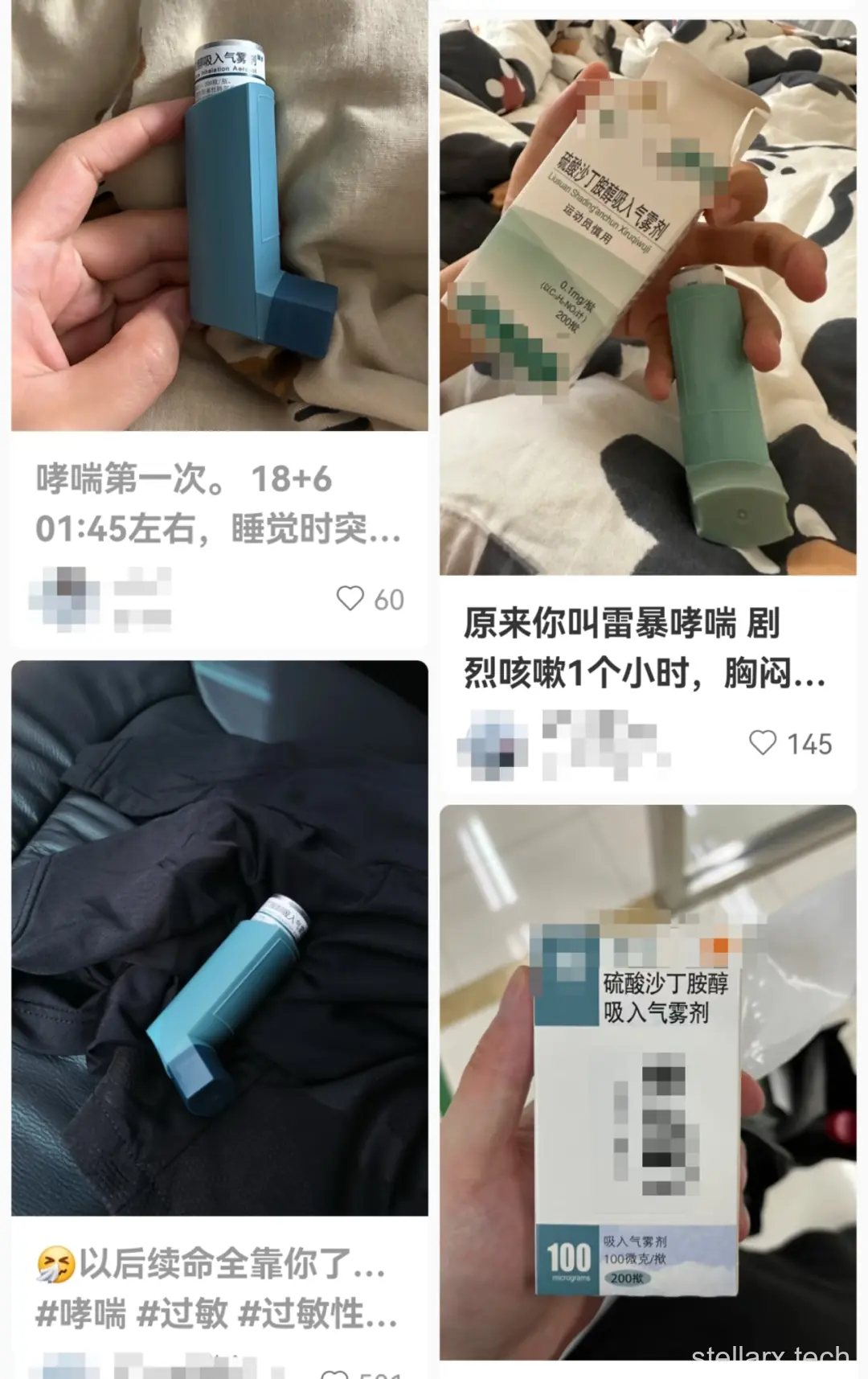
The gold standard has been demoted. In 2019, the Global Initiative for Asthma (GINA) stopped recommending SABA alone for adults and adolescents. The 2026 update goes further: in both the preferred and alternative paths, the reliever should now be an anti-inflammatory reliever (AIR) that contains an inhaled corticosteroid (ICS). Yet a global survey still finds 38% of asthma patients overusing SABA.
A Hospital Clinician's Waiting Room
In the outpatient clinic of Luo Yi, chief physician at the Respiratory and Critical Care Medicine department of Liaoning Provincial People's Hospital, two to three out of ten asthma patients overuse SABA — three or more canisters a year.
"It's a legacy problem," he says. "This drug was used far too widely before."
The old model of asthma was simple: a narrowed, spasming airway. Beta-agonists, which relax the airway, held the center of treatment for years. Then the field shifted. Asthma, researchers confirmed, is fundamentally a chronic inflammation of the airway — and a drug that only widens the bronchus, without treating inflammation, never really treated the disease.
One Breath Feels Better, the Airway Gets Worse
SABA works by relaxing airway smooth muscle. It does nothing against inflammation.
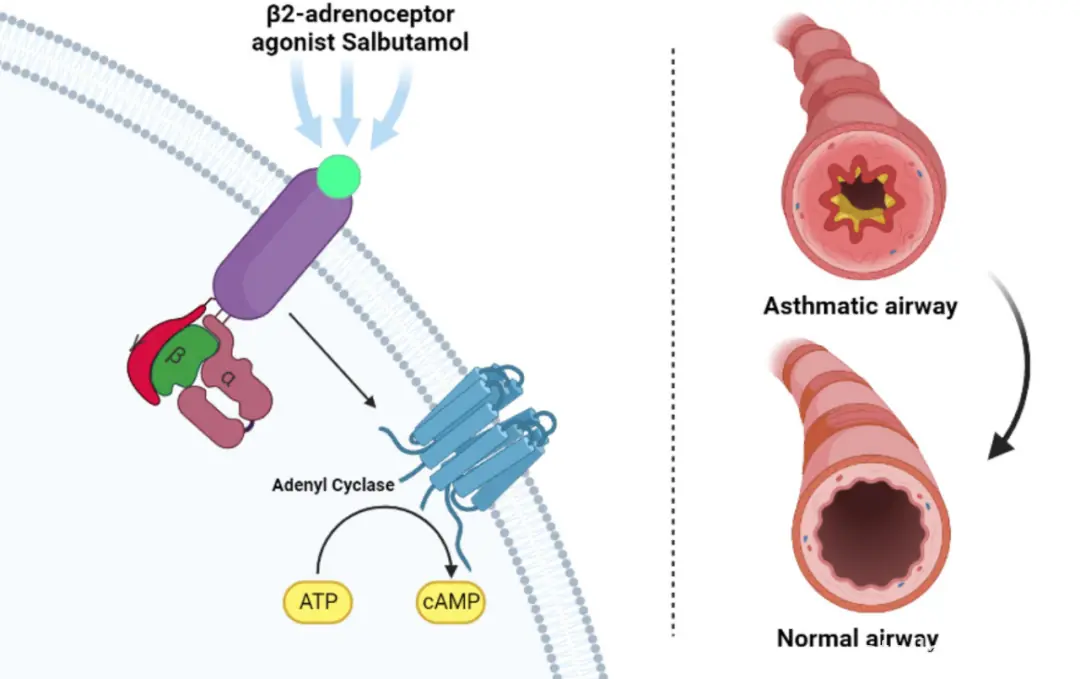
Studies show that even short-term, regular use of SABA down-regulates beta-2 receptors, blunting the airway's response to bronchodilators, and can trigger rebound airway hyper-responsiveness, stronger allergic responses, and worsening inflammation. It feels like instant relief. Underneath, the airway function is quietly degrading.
Luo Yi once treated a patient with asthma and COPD who had used SABA alone for decades. During one acute attack, the patient burned through a whole 200-puff canister in a few days. By the end, the drug did nothing. The patient reached the hospital and was rescued on a ventilator.
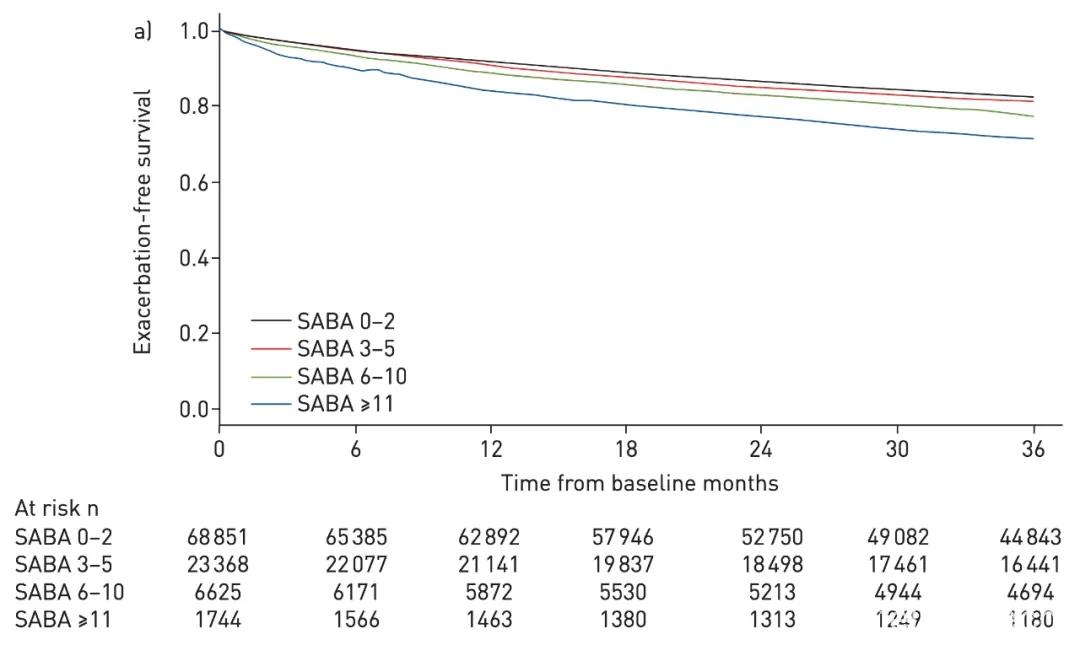
This is not an isolated case. Studies consistently find that SABA-only treatment raises the rate of asthma attacks and asthma-related death — regardless of symptom control — and that the more SABA a patient uses in a year, the more likely an attack becomes.
Anti-Inflammation Becomes the Core
If asthma is inflammation, treatment should be anti-inflammatory. Compared with SABA alone, ICS–SABA lowers the probability of an acute attack by 4.7%, and ICS–LABA by 10.3%.
A fast-acting ICS–LABA combination — ICS-formoterol — has become the centerpiece of both control and relief in asthma treatment. In the latest Chinese "Guidelines for the Prevention and Management of Bronchial Asthma (2024 Edition)", the preferred path no longer includes SABA at all.
A poll among clinicians asked what reliever they usually prescribe:
| Reliever doctors prescribe (poll of 70 clinicians) | Responses |
|---|---|
| ICS-formoterol only | 37 (52.9%) |
| Sometimes a SABA-containing plan | 25 (35.7%) |
| Other options | 8 (11.4%) |
| Source: community clinician poll, 70 participating doctors. | |
Why the Blue Inhaler Still Has So Many Fans
A survey across 24 countries found 45.8% of patients with mild asthma and 35.6% of those with moderate-to-severe asthma use more than three canisters of SABA a year.
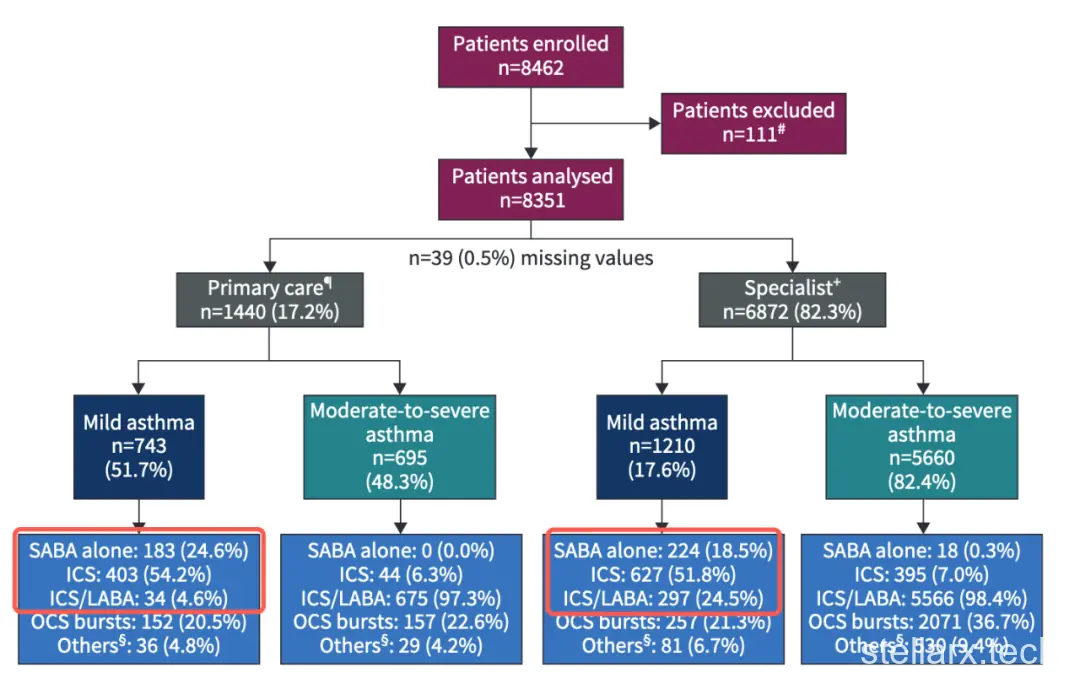
Part of the problem is diagnosis. A cross-sectional study found that only 28.8% of people with typical asthma symptoms had actually been diagnosed by a doctor. Many patients never reached proper care at all.
Online pharmacies make self-medication easy: even a prescription drug can be bought by self-selecting a disease, with a prescription issued in seconds. The price of salbutamol can drop to a few dozen yuan. Among people who buy SABA on their own, 48.8% purchase more than three canisters a year — already in the overuse zone.
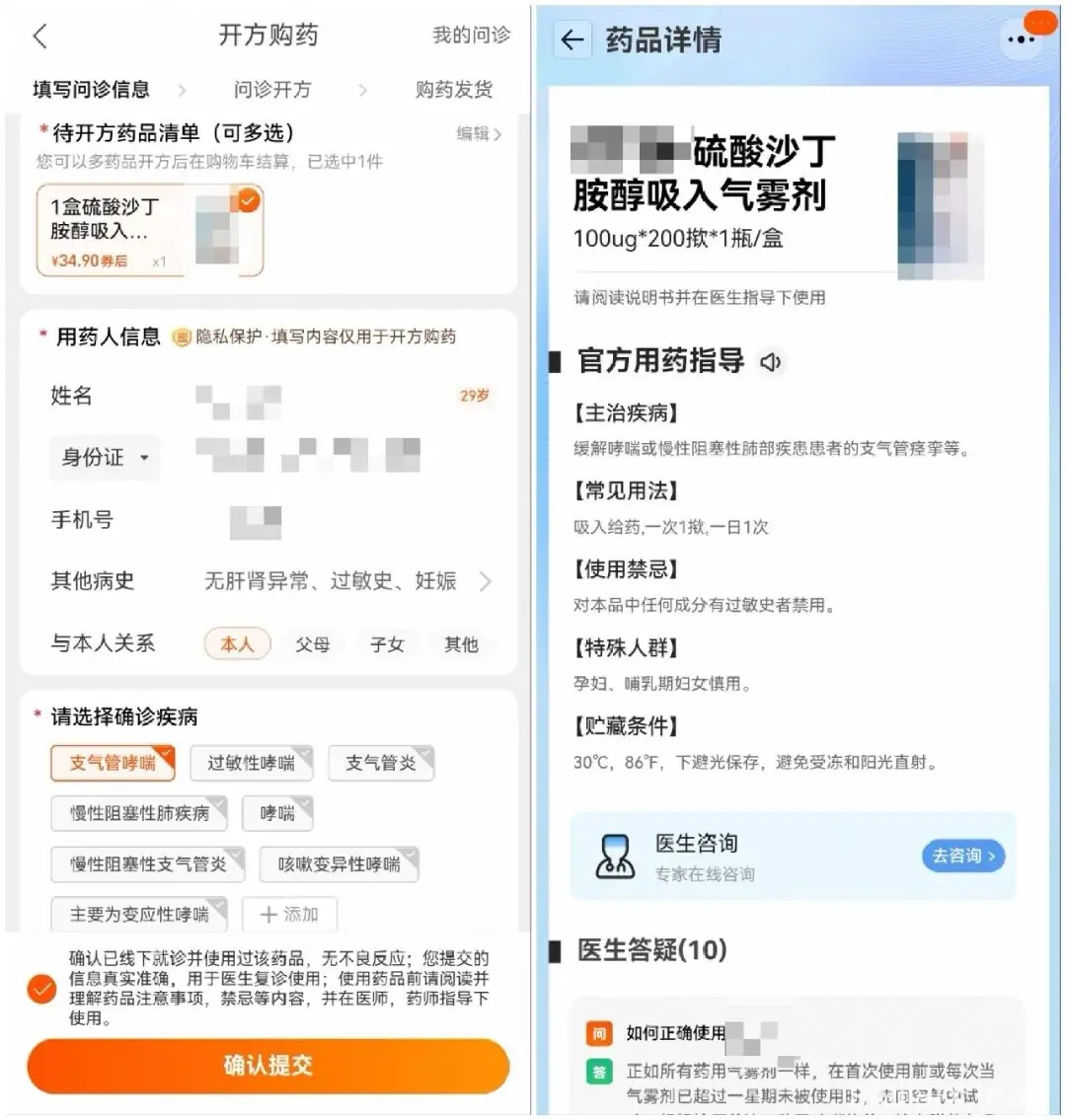
"Patients feel that if they use the drug and stop wheezing, they are 'better,'" one clinician explains. "The risk of acute attacks that comes with this pattern of use is something they have no concept of."
In clinics, doctors also meet patients who refuse ICS-LABA. Some fear the word "hormone." Others weigh the cost: SABA is cheap, covered by medical insurance as Category A. But the math changes when the higher risk of acute attacks is counted — studies in many countries show that SABA overuse and ICS underuse worsen disease and drive up overall healthcare costs.
The Information Gap Is the Real Gap
Non-respiratory specialists and primary-care doctors are often slow to absorb the shift. One primary-care doctor admitted he knew the "anti-inflammatory relief" concept but not the specific change in medication plans, and still advised ICS-LABA for control plus occasional SABA for attacks — an alternative GINA still permits, while preferring ICS-formoterol as the anti-inflammatory reliever.
Shen Ling, chief physician at the Respiratory and Critical Care Medicine department of Hangzhou First People's Hospital, says their department stopped giving mild cases SABA years ago and moved fully to ICS-LABA out of concern about attack risk.
Luo Yi has helped many patients switch to guideline-based treatment with good results. "If doctors' thinking catches up, putting the newest guidelines into practice is still very hopeful," he says.
The blue inhaler is not disappearing. But the story that it is the safest thing in your pocket is over — and the inflammation it never treated is exactly what the new guidelines are treating.
Curious what an inflamed airway looks like? You cannot see inflammation with the naked eye, but under a virtual microscope you can pull up a muscle cell specimen where spindle-shaped muscle fibers arranged in bundles are clearly visible — the same kind of smooth muscle that squeezes an airway shut during an attack. Search "WWAI" in your app store and download it today.

Related reading

House Mold: Why Your Child Keeps Getting Sick

Alpha-Gal Syndrome: The Tick-Borne Meat Allergy
References
1. Global Initiative for Asthma. Global Strategy for Asthma Management and Prevention (2026 update). GINA Summary Guide 2026. https://ginasthma.org/wp-content/uploads/2026/07/GINA-Summary-Guide-2026-WEB-WMS.pdf
2. Global Initiative for Asthma. World Asthma Day — May 5, 2026. https://ginasthma.org/world-asthma-day-may-5-2026/
3. Global Initiative for Asthma. Global Strategy for Asthma Management and Prevention (2021 update): Executive Summary. https://pmc.ncbi.nlm.nih.gov/articles/PMC8865583/
4. Bateman ED, Price DB, Wang H-C, et al. Short-Acting β2-Agonist Prescriptions Are Associated with Poor Clinical Outcomes of Asthma: The Multi-Country, Cross-Sectional SABINA III Study. European Respiratory Journal. 2022;59(5):2101402. https://doi.org/10.1183/13993003.01402-2021
5. Nwaru BI, Ekström M, Hasvold P, et al. Overuse of Short-Acting β2-Agonists in Asthma Is Associated with Increased Risk of Exacerbation and Mortality: A Nationwide Cohort Study of the Global SABINA Programme. European Respiratory Journal. 2020;55(4):1901872. https://doi.org/10.1183/13993003.01872-2019
6. Cottini M, Lombardi C, Comberiati P, et al. Small Airway Dysfunction in Asthmatic Patients Treated with As-Needed SABA Monotherapy: A Perfect Storm. Respiratory Medicine. 2023;209:107154. https://doi.org/10.1016/j.rmed.2023.107154
7. Rayner DG, Ferri DM, Guyatt GH, et al. Inhaled Reliever Therapies for Asthma: A Systematic Review and Meta-Analysis. JAMA. 2025;333(2):143. https://doi.org/10.1001/jama.2024.22700
8. Guidelines for the Prevention and Management of Bronchial Asthma (2024 Edition). Chinese Journal of Tuberculosis and Respiratory Diseases. 2025;48(3):208-248. https://doi.org/10.3760/cma.j.cn112147-20241013-00601
9. Medicines and Healthcare products Regulatory Agency (MHRA). Short-acting beta 2 agonists (SABA) (salbutamol and terbutaline): reminder of the risks from overuse in asthma and changes in SABA prescribing guidelines. 2025. https://www.gov.uk/government/news/patients-with-asthma-reminded-of-the-increased-risk-of-severe-asthma-attacks-from-overusing-blue-inhalers
10. Huang K, Yang T, Xu J, et al. Prevalence, Risk Factors, and Management of Asthma in China: A National Cross-Sectional Study. The Lancet. 2019;394(10196):407-418. https://doi.org/10.1016/S0140-6736(19)31147-X
- 眼中風盯上年輕人:90分鐘黃金救治期
- Eye Stroke: The 90-Minute Window That Saves Sight
- 植物毛刺入眼:為什麼越揉越糟
- Plant Bristles in Your Eye: Why Rubbing Makes It Worse
- 沙丁胺醇吸入劑:為什麼不再推薦單獨使用?
- Blue Inhaler: Why SABA Is No Longer Recommended for Asthma
- 甲藻基因組:地球上最大的基因組,藏在單細胞裡
- Why Dinoflagellates Carry the Largest Genomes
- 玉米為何成為全球三大主糧?
- Why Corn Became a Global Staple Crop

全部评论