Plant Bristles in Your Eye: Why Rubbing Makes It Worse
Autumn winds carry tiny plant bristles through the air — barbs built, quite literally, to hook onto fur and cloth. When one flew into a cyclist's left eye, rubbing it, the most natural reflex in the world, turned out to be the worst possible move.
A man surnamed Li rubbed his eye the moment the sting began. The pain sharpened and tears poured. At home he rinsed the eye with tap water over and over, still hurting, and went to bed hoping sleep would fix it. By night he was in the eye-emergency department at Shanghai Tongji Hospital — where doctors found his eye studded with tiny black barbs.
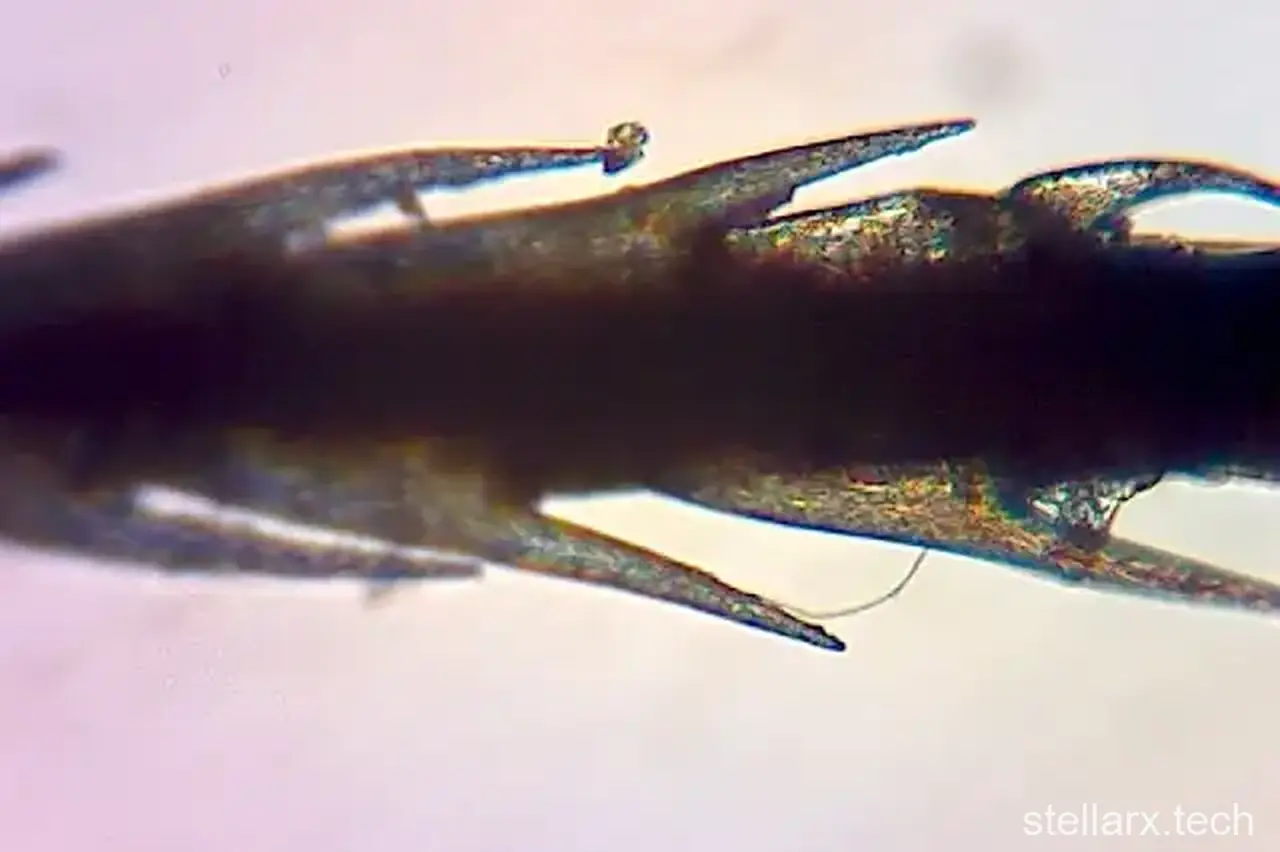
Nearly a Hundred Barbs, Hooked Like Fishhooks
The barbs had packed into his palpebral conjunctiva, bulbar conjunctiva, corneal limbus and lacrimal caruncle. Many had pierced deep into the tissue. The eyeball was congested, and a large area of corneal epithelium had come away. Outpatient forceps could not clear them all at once, so surgeons took him to the operating room — and counted nearly a hundred fine spines.
Under magnification each spine was worse than a splinter: a sharp head, and rows of backward-pointing barbs along the shaft. Like a fishhook.
A Barb Is Built to Dig In, Not Come Out
That shape is a one-way latch. Rub, and the backward hooks bite deeper; pull, and they tear tissue on the way out. The same geometry that lets a bristle hold fast to a sock is exactly what makes it dangerous inside an eye.
The treating doctors read the spines as almost certainly autumn plant fruit spines or seed trichomes carried on the wind — a case Shanghai's eye emergencies see every windy autumn. The exact species was still awaiting identification.
The Seeds That Ride on Your Sleeve
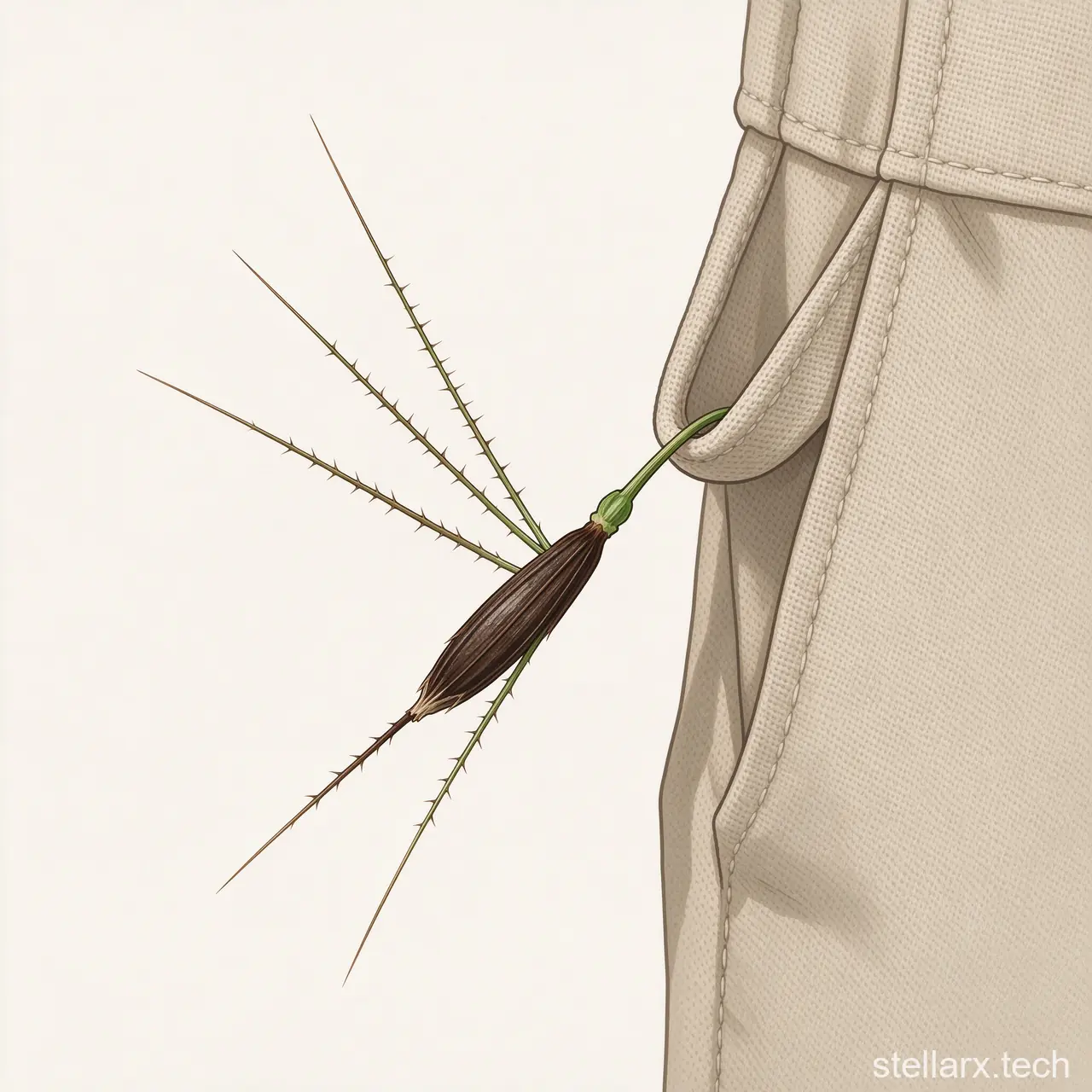
Take beggar-ticks, the genus Bidens. Its thin, dark fruit is tipped with barbed awns — the hooks that catch on socks and cuffs and are famously hard to pick off. That stickiness is a dispersal strategy: the seed hitches a ride on fur or clothing to reach a new field. A study of 326 Bidens pilosa fruits found that longer barbs and slimmer fruits cling best to cloth.
When you pull one off your clothes, keep it away from your face — and do not rub your eyes right after.
Caterpillars Arm Their Hairs, Too
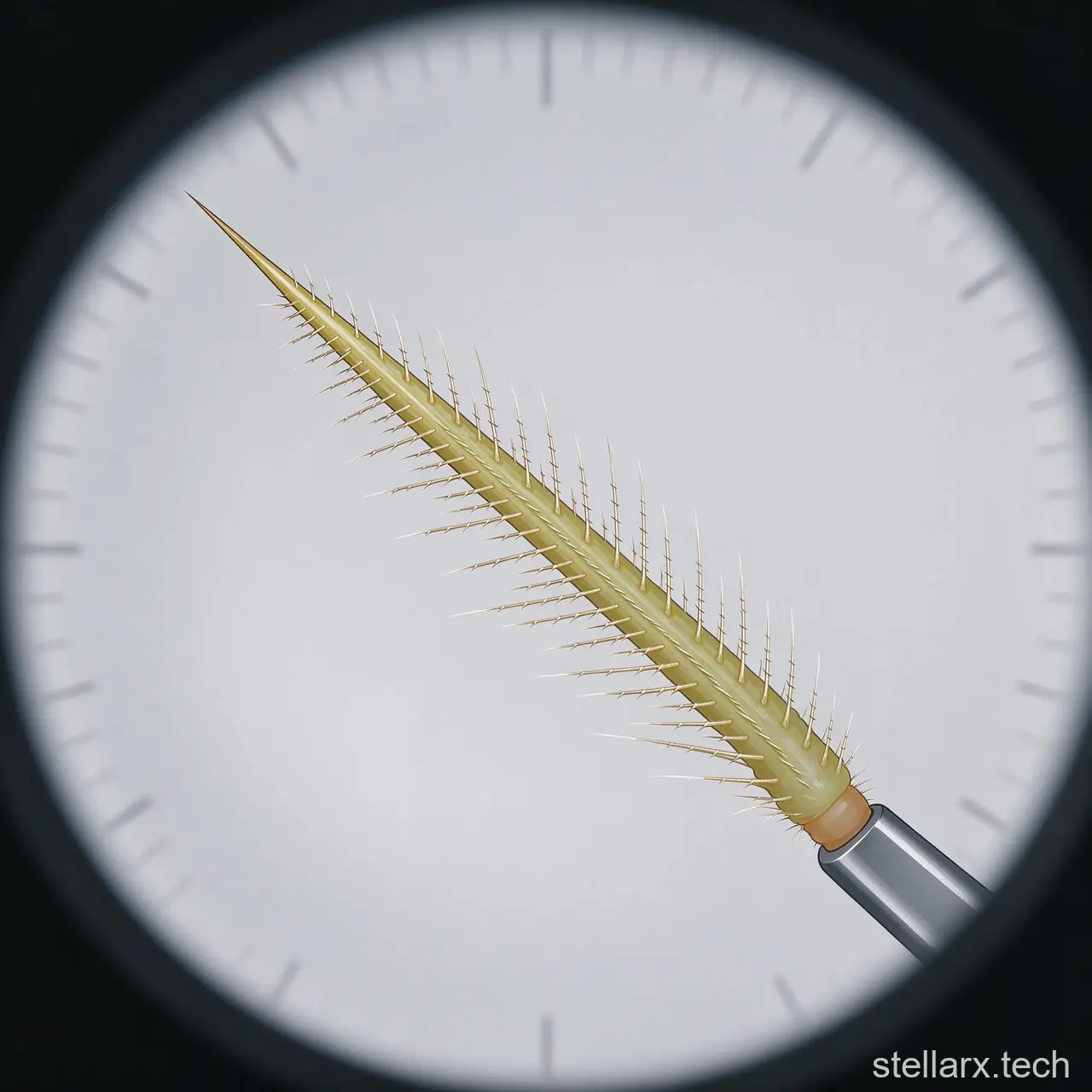
Plants are not the only ones. Some caterpillars' setae — their fine body hairs — are sharp and carry small barbs, able to pierce eye tissue. A 2024 case report from Guizhou tells of a woman who wiped her left eye with her arm while working in a field; a caterpillar happened to be on her arm. Pain, tearing and redness followed, and at follow-up doctors found inflammation inside the eye — ophthalmia nodosa.
What to Do Instead of Rubbing
The thing in your eye is not always a speck of dust. It can be a barbed hair. Blinking and a gentle rinse may wash out a loose speck; a barbed one only digs in as you rub. If the pain, the tearing, or the feeling of something in the eye will not settle, see an ophthalmologist.
The hooks that decide whether a seed travels — or a seta stays stuck — are far too small to see at arm's length. Under a virtual microscope they become a landscape of barbs. WWAI pairs instant AI answers with a virtual microscope, including a Platanus branched stellate hair specimen where the wind-borne, star-branched plant hairs are clearly visible. Search "WWAI" in your app store and download it today.
Related reading

Dry Eyes? The Problem Is Oil, Not Water

Phone in Bed: Scrolling Hurts Your Eyes
Phone in the Dark: How It Damages Your Eyes
References
1. Liu W, Jiang X. Case Report: Ophthalmia Nodosa Caused by Caterpillar Setae. Am J Trop Med Hyg. 2024;110(3):618–621.
2. Yeo H, Tan MK, Ong BJX, Chung OYX, Tan HTW. Heteromorphic characteristics of Bidens pilosa (Asteraceae) achenes influence adherence stability and dispersal capacity. Nature in Singapore. 2022;15:e2022015.
3. MedlinePlus. Eye — foreign object in. https://medlineplus.gov/ency/article/002084.htm
4. Institute for Quality and Efficiency in Health Care (IQWiG). Small objects in the eye. InformedHealth. https://www.ncbi.nlm.nih.gov/books/NBK279584/
- 眼中風盯上年輕人:90分鐘黃金救治期
- Eye Stroke: The 90-Minute Window That Saves Sight
- 植物毛刺入眼:為什麼越揉越糟
- Plant Bristles in Your Eye: Why Rubbing Makes It Worse
- 沙丁胺醇吸入劑:為什麼不再推薦單獨使用?
- Blue Inhaler: Why SABA Is No Longer Recommended for Asthma
- 甲藻基因組:地球上最大的基因組,藏在單細胞裡
- Why Dinoflagellates Carry the Largest Genomes
- 玉米為何成為全球三大主糧?
- Why Corn Became a Global Staple Crop

全部评论