Polyacrylamide Hydrogel: A Banned Filler That Never Leaves
A polymer made to hold water in farm soil ended up inside women's chests. China banned it in 2006. Twenty years later, surgeons still operate on the women who received it — and by the time they come in, the gel has often already moved.
The material that was supposed to stay put didn't.
One patient's injectable had drifted from her breasts to her groin and labia, disrupting her sex life. Another's breast swelled "like a big rubber ball" with infection. A third arrived with sepsis and shock, survived only after repeated surgery and dialysis, and carries scars across her chest, abdomen and legs.
The product is Amazingel — better known in China by its trade name, and clinically as injectable polyacrylamide hydrogel (PAAG).
From water-holding soil to the breast
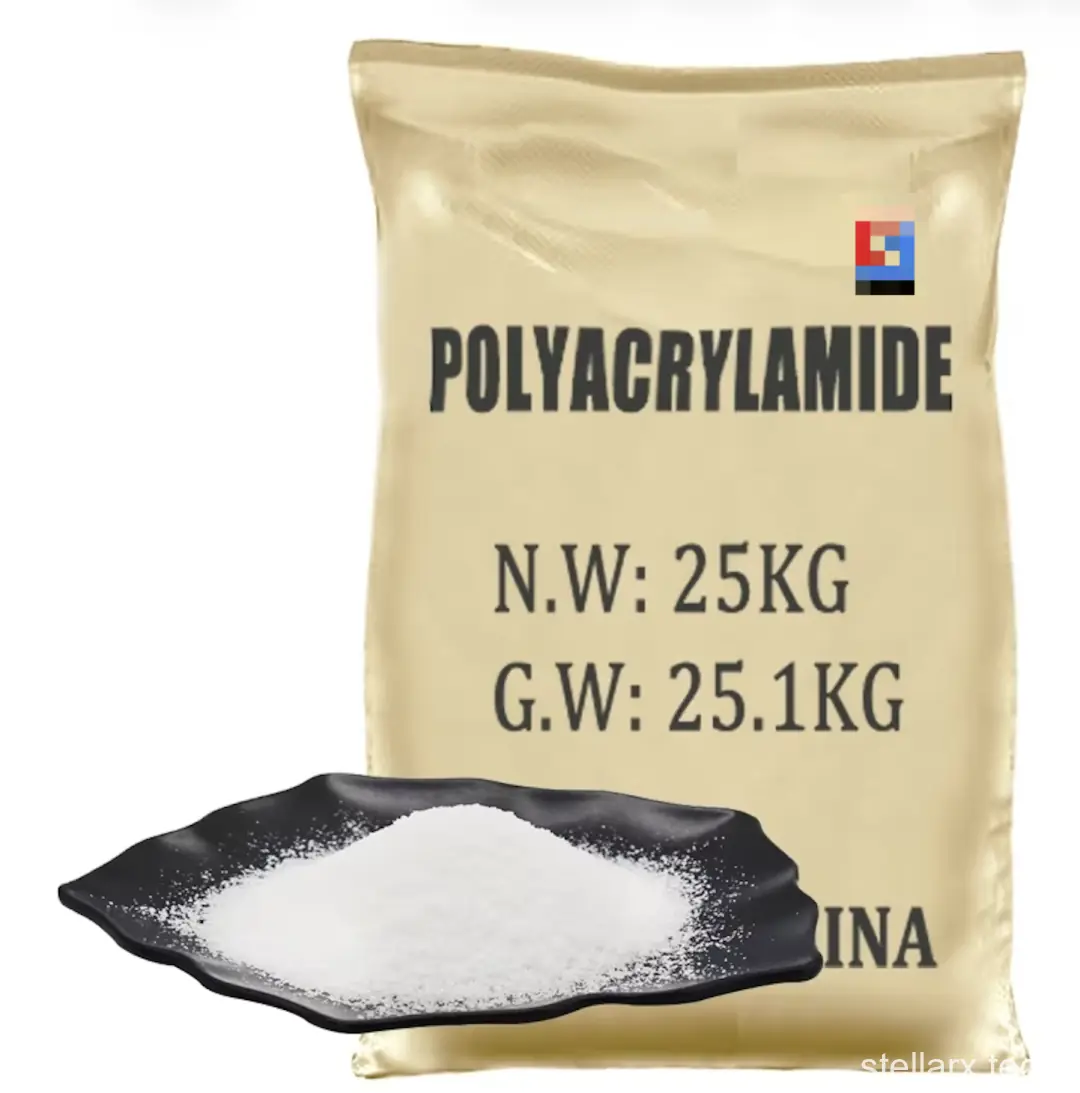
Polyacrylamide first became useful in the mid-20th century in agriculture and water treatment. Cross-linked into a hydrogel, its internal network "holds" water like a net — it can absorb huge amounts while keeping a soft, stable shape.
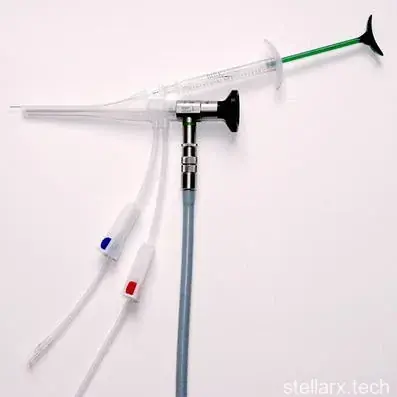
That softness looked like a medical opportunity. A specific formulation was used as a urethral bulking agent to treat female stress urinary incontinence. Then cosmetic surgeons noticed the same trick could fill a face or a breast without any incision.
Chinese plastic surgeons who lived through the craze remember the mood. Xu Feng, an attending surgeon at Shanghai Fourth People's Hospital, recalls: "Truly 'ignorance is fearless.' The women had no idea this material carried risk."
The boom was global — PAAG cosmetic injections were used in more than 30 countries, especially China, Russia and Ukraine. One widely cited estimate: about 200,000 women in China received PAAG breast injections; including other body sites, the total may exceed 300,000.
The risks were on the label from day one
When Amazingel was approved for clinical use, its own package insert already listed hardening, hematoma, infection and pain as common complications.
That classification created a monitoring blind spot: if these problems were "expected complications" of the product, patient symptoms were less likely to be reported as adverse events. Some safety signals were quietly absorbed.
The numbers eventually surfaced. By November 2005, China's adverse-event monitoring center had received 183 reports involving polyacrylamide hydrogel — 161 of them breast injections, with problems including inflammation, infection, hardening, lumps, breast deformity, and material migration. A review pooling 48 published studies from 2002 to 2006 counted 880 complications among 11,360 PAAG breast-augmentation patients — 7.75%.
Twenty years later, it keeps moving
Some complications don't announce themselves for a decade or more. Case reports describe them surfacing two decades after the injection.
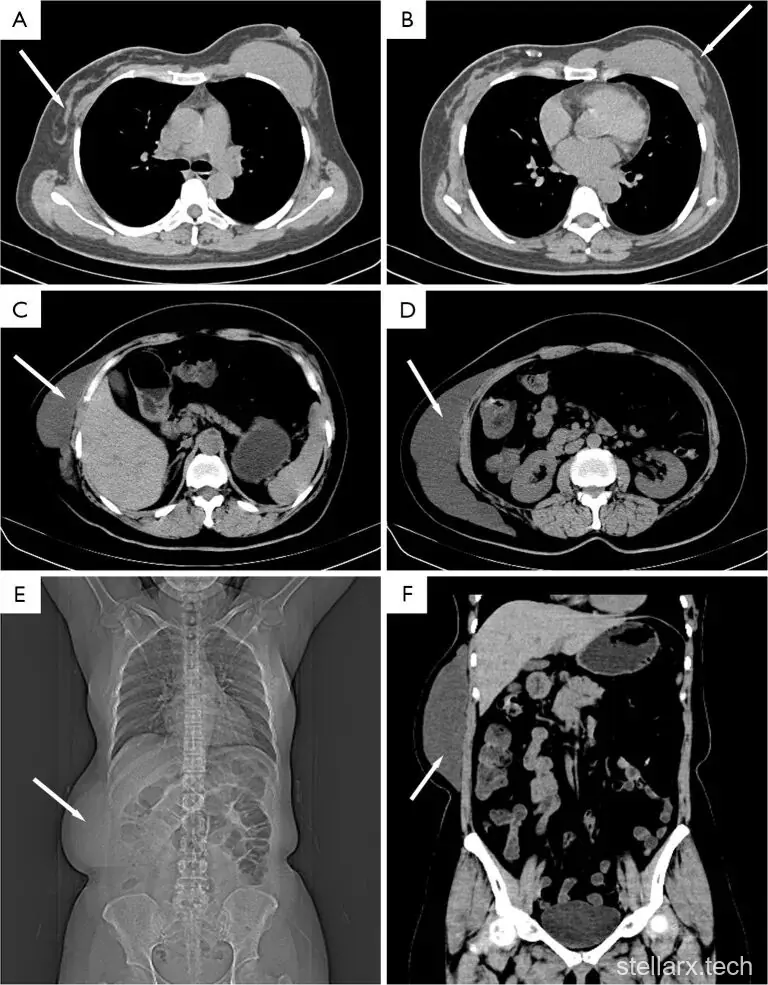
In one Chinese case report, a 51-year-old woman who had PAAG breast injections 18 years earlier presented with a huge mass that had migrated to her right flank and abdominal wall — roughly 35×20 cm. CT scans showed multiple areas of gel leakage under her chest wall. Surgeons removed the PAAG from her breasts and abdomen, cut out the capsule, and rebuilt the breast.
[
Zhou Xianyu, an attending surgeon at Shanghai Ninth People's Hospital, treated a woman in her 40s whose injected material had spread to both sides of her abdomen, the oblique abdominal muscles, her perineum — even her labia. "We were stunned," Zhou recalls. "The migration distance was astonishing." Treatment improved her daily life and sex life, but only after extensive surgery.
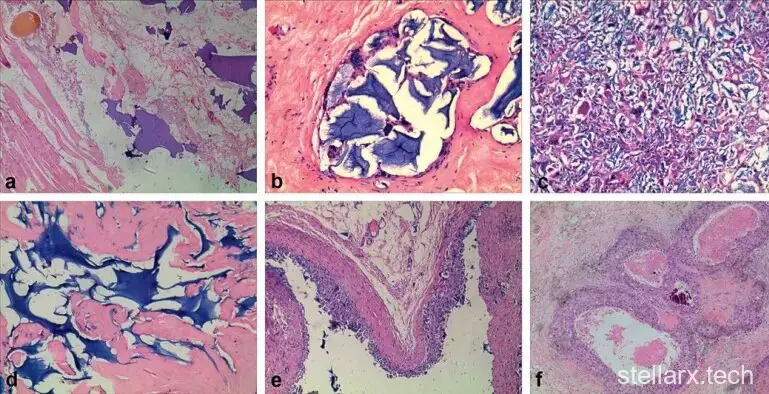
Even without obvious movement, the material provokes a chronic foreign-body response. In a clinicopathological study of PAAG breast-augmentation patients, every single patient showed a foreign-body reaction; 77.8% had chronic inflammation. Clinically, 75.6% had masses, 45.4% had pain, 22.1% had gel migration, and 16.3% had infection.
When removal stops being cosmetic and becomes rescue
The patients arriving today are harder cases than before. Ma Jianxun, an associate chief surgeon at Peking University Third Hospital, notes that while fewer women now come proactively to have Amazingel removed, those who do come tend to be symptomatic — pain, hardening, deformity.
Severe infection turns the operation into an emergency. Ma treated a patient whose inflammation spread through normal breast tissue, subcutaneous fat and superficial skin — one breast "swelled like a big rubber ball" — requiring emergency surgery, long-term drainage and wound care, ending in visible deformity.
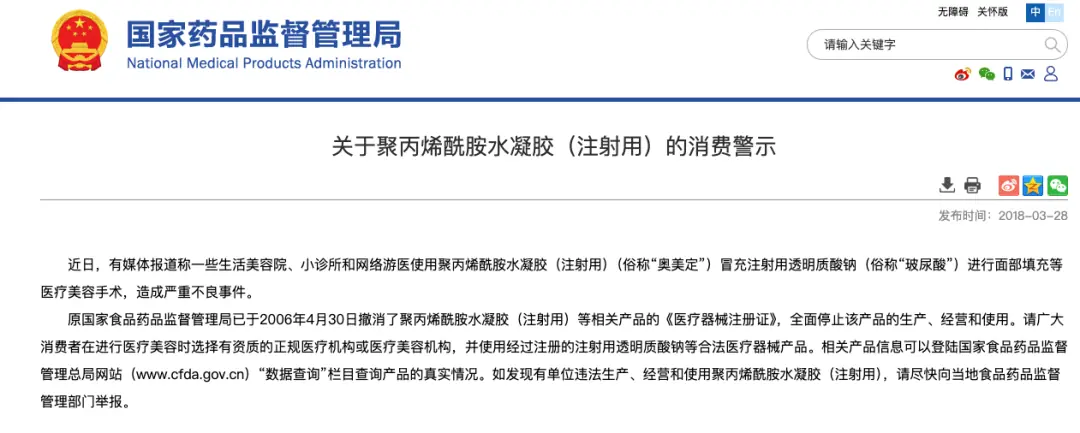
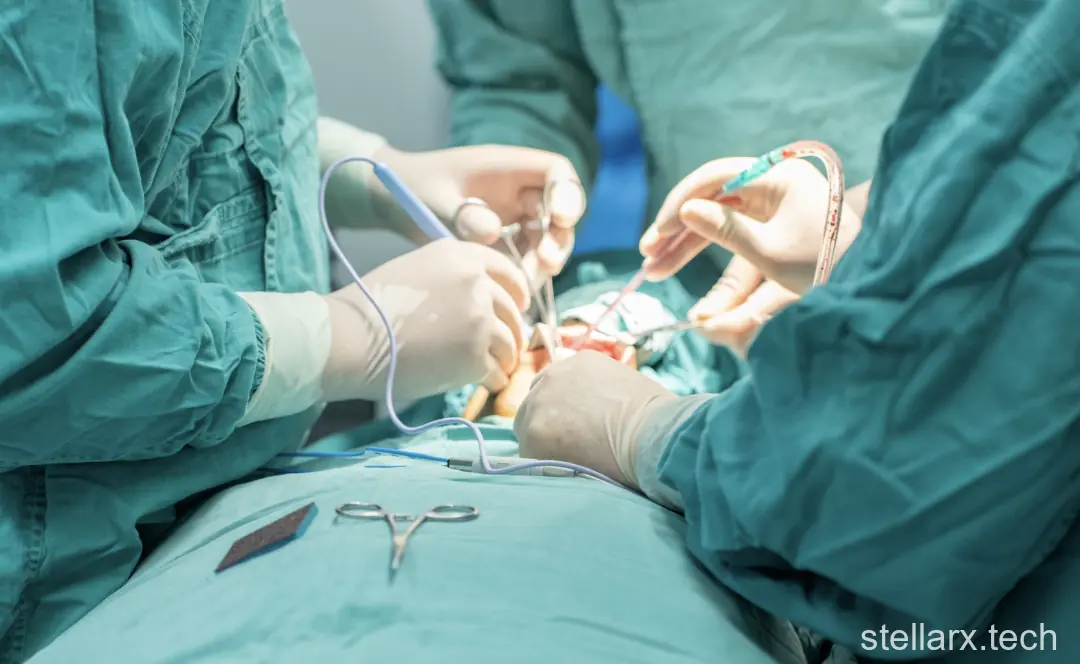
Xu Feng recalls patients rushed in with severe infection, sepsis and even shock. Whole-body MRI showed the material had spread from the chest to the back, abdomen, buttocks, thighs — down to the calves and ankles. One patient spent over six months in treatment, repeated debridement and surgery, and needed dialysis. She survived, but her chest, abdomen and legs are covered in scars.
"Like scattering flour into a sand pile"
The cruelest part: even surgery cannot clean it out.
"Once Amazingel is injected into a large soft-tissue space, it's like scattering flour into a sand pile," Ma says. "You cannot remove it completely. Forcing complete removal means damaging or cutting out normal tissue."
Data from a study of PAAG-removal patients bear this out: the material had been in the body for an average of 13.5 years. Among 52 patients with complete pre- and post-operative MRI data, the estimated volume before surgery averaged about 684.8 mL; after removal, an average of 53.7 mL remained. Average clearance: 92.1%.
And "removed once" isn't "removed forever." Xu Feng treated a patient who had received PAAG in her nose and needed five or six removal operations for repeated redness and pus. Years later, her condition seemed stable — she even became a grandmother. Then the redness returned, not at the original bridge of the nose but at the tip.
Breast cancer: the filler that hides the tumor
No evidence shows PAAG directly causes breast cancer. But residual gel can mask lesions and interfere with breast imaging, raising the risk of missed or delayed diagnosis. [TABLE:paag-breast-cancer-studies]
Long-term follow-up, and the patients who don't come back
Hospitals typically ask patients to return at 1 month, 3 months, 6 months and 1 year after removal, with breast MRI emphasized — MRI evaluates the amount and distribution of residual gel and inflammation better than ultrasound.
The harder problem is persistence. "We require long-term follow-up, but many patients stop coming once their symptoms improve," Zhou says. No symptoms doesn't mean no risk: even patients with no complaints and normal imaging can show fibrosis and severe foreign-body reactions on postoperative pathology.
How a filler went from approval to a nationwide ban
The regulatory story shows the trouble was baked in early. In December 1997, a similar imported PAAG product won approval in China, creating a precedent. Domestic Amazingel entered clinical trials in May 1999 — and obtained production registration about 7 months later, although regulations for long-term implantable products generally required at least 2 years of clinical trials. [TABLE:paag-regulatory-timeline]
After adverse events accumulated, regulators first tried restrictions: from 2003, use was limited to qualified top-tier hospitals. But evidence of migration, long-term retention and incomplete removal kept growing. In April 2006, a post-market review concluded that PAAG could "no longer guarantee safety in marketed use." On April 30, 2006, the original State Food and Drug Administration revoked its registration and stopped production, sales and use nationwide.
A banned material, wearing new names
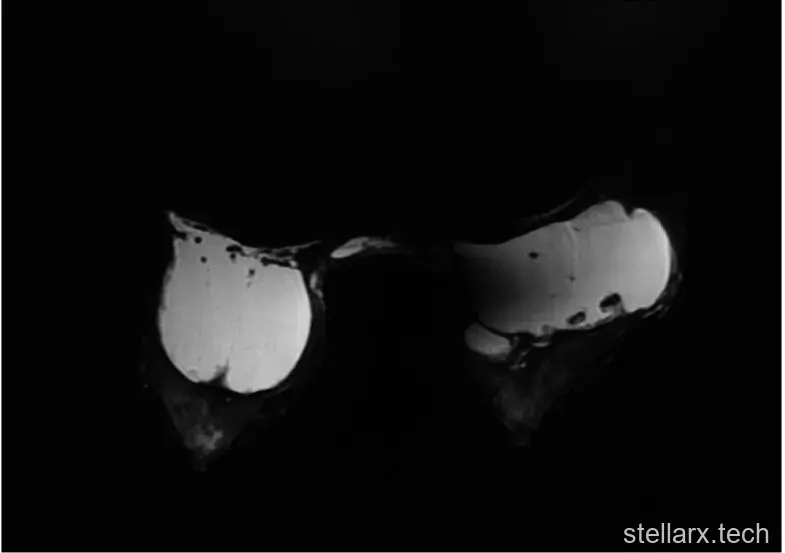
Banning the product didn't end the story. In 2018, China's National Medical Products Administration (NMPA) issued a consumer alert: some unqualified medical-aesthetic institutions were injecting polyacrylamide hydrogel while calling it sodium hyaluronate (hyaluronic acid filler) — causing serious adverse events.
Xu Feng says his department has recently seen suspected PAAG-type injections again, possibly even increasing — the material now sold under names like "Czech water molecules" and "artificial fat."
Twenty years after the ban, similar materials still flow into the market under new labels. And for the women already injected, the risk did not expire with the product.
No pain doesn't mean no problem
Ma Jianxun's warning: no pain, no redness — that doesn't mean all is well. Some patients with no symptoms and normal imaging still show fibrosis and severe foreign-body reactions in postoperative pathology.
If you ever received injectable polyacrylamide hydrogel — or think you may have — the advice from the surgeons is straightforward: get evaluated at a qualified hospital, understand how much material remains and how your tissue looks, before migration, infection or skin breakdown forces the issue.
Some things look completely different up close. The microscopic structure of a hydrogel, the foreign-body reaction around it, the fibrous capsule that slowly forms around it for years — none of it is visible to the naked eye. Want to see for yourself? WWAI lets you observe real biological specimens the moment curiosity strikes — no waiting for a device, no preparing slides. Search "WWAI" in your app store and take a closer look — including a connective tissue specimen where the dense intercellular matrix and supporting fiber network are clearly visible.

Related reading
Tattoos and Immune Health: What Science Says
Can Endometriosis Spread to Your Brain?
Colon Hydrotherapy Risks & Rectal Perforation
References
Jin R, et al. Complications and Treatment Strategy After Breast Augmentation by Polyacrylamide Hydrogel Injection: Summary of 10-Year Clinical Experience. Aesthetic Plastic Surgery, 2018;42(2):402–409.
Li T, et al. Lumboabdominal migration of injected polyacrylamide hydrogel following breast augmentation: a case report and literature review. Gland Surgery, 2024;13(10):1863–1872.
Yang Y, et al. Clinicopathological Analysis of 90 Cases of Polyacrylamide Hydrogel Injection for Breast Augmentation Including 2 Cases Followed by Breast Cancer. Breast Care, 2020;15(1):38–43.
Bu X, et al. Application of MRI with intraoperative color Doppler ultrasound in treatment of patients with polyacrylamide hydrogel injected for breast augmentation: a retrospective study of 204 cases for 12 years. Annals of Surgical Treatment and Research, 2024;106(1):31–37.
Ma X, Zhu Z. Breast cancer after polyacrylamide hydrogel augmentation: a clinicopathological analysis of 5 cases and literature review. Radiology Case Reports, 2026;21(10):5170–5177.
Li T, et al. Case Report: Ulcerative breast cancer occurring 20 years after breast augmentation with Amazingel injection. Frontiers in Oncology, 2026;16:1952422.
NMPA. Consumer alert on injectable polyacrylamide hydrogel. National Medical Products Administration, 2018.
Lin CH, et al. Delayed complications from polyacrylamide gel breast fillers: a case report. Journal of Surgical Case Reports, 2024(2):rjae095.
National Medical Products Administration. Medical device registration revocation notices on polyacrylamide hydrogel (injectable). 2006.
- Polyacrylamide Hydrogel: A Banned Filler That Never Leaves
- 奧美定(聚丙烯酰胺水凝膠):被禁20年仍無法完全取出的填充劑
- Slow Breathing Before Bed: The Underrated Sleep Habit
- 睡前把呼吸放慢:被低估的助眠習慣
- 一顆洗衣凝珠在她手裡炸開,腐蝕掉了一小塊角膜
- A Laundry Pod Burst in Her Hand — and Dissolved Her Cornea
- The Silent Kitchen
- 推開門的那一刻
- 五百歲的鯊魚,與被逼放棄長壽的哺乳動物
- The 500-Year Shark, and Why Mammals Gave Up Longevity

全部评论