Why Sweet Sorghum Could Replace Sugar Cane and Beet
Wild sugarcane isn't sweet. At all. The plant that now supplies most of the world's sugar was, in the wild, a stalk you could chew and mostly taste water. That is the strangest fact in sugar farming: the species with the most violent sugar-making ability on Earth came from a wild plant that was basically not sweet — and the plants that were naturally sweet hit a low ceiling. Here is how that paradox works, and why a stalk called sweet sorghum may be the next sugar king.
The Sugar Paradox: The Best Sugar Makers Start Out Not Sweet
Think about it the other way. Every crop that was naturally sweet from the start — the ones people noticed because chewing them tasted good — turned out to have a low ceiling. The plants that can throw sugar around in insane amounts were, in the wild, not sweet at all. The violent sugar producers earned their ability through mutation and human selection, not through an early sweet start.
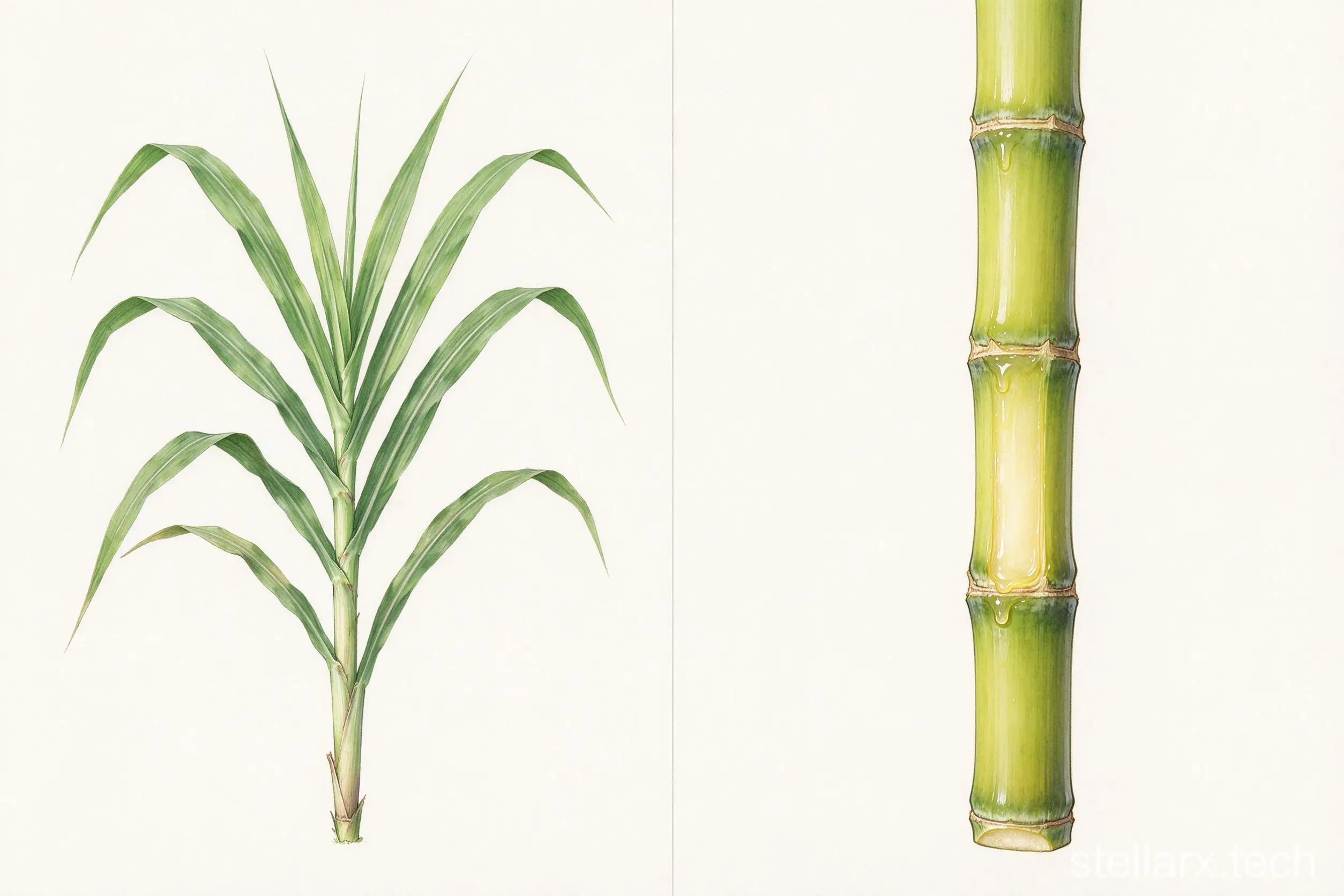
Six Organs, and Only Two Can Hold the Sugar
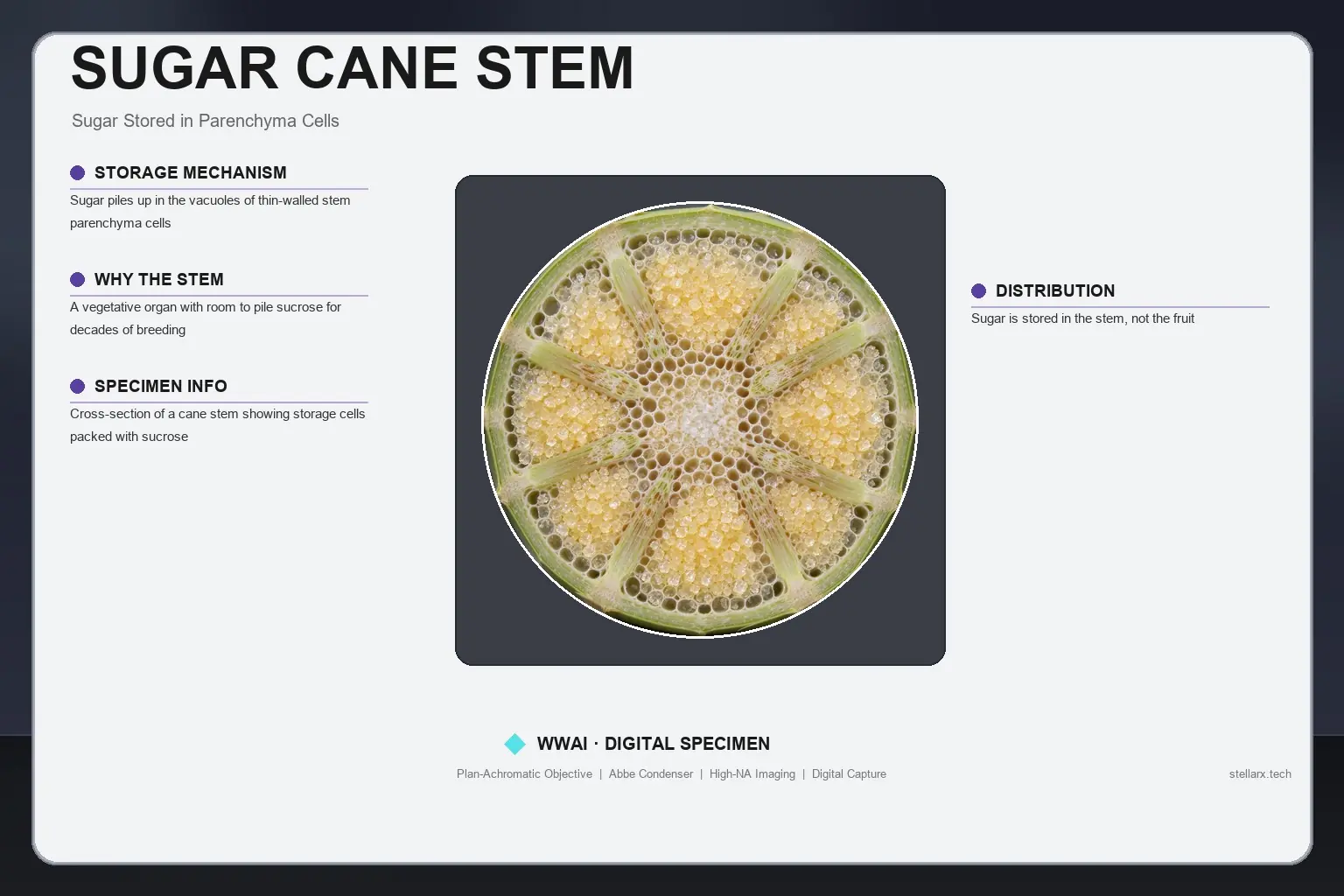
A flowering plant has six organs: roots, stems, leaves — the vegetative set — and flowers, fruits, seeds — the reproductive set. Sugarcane doesn't store sugar in its fruit. It uses its stem, a vegetative organ, the botanical equivalent of an arm or a leg. That matters. A fruit can only hold so much, and a seed has a job that isn't about sugar volume. If you want a plant to produce sugar in absurd quantities, you need it to stuff the sugar into vegetative organs — roots or stems — where there is room to pile it up for decades of breeding.
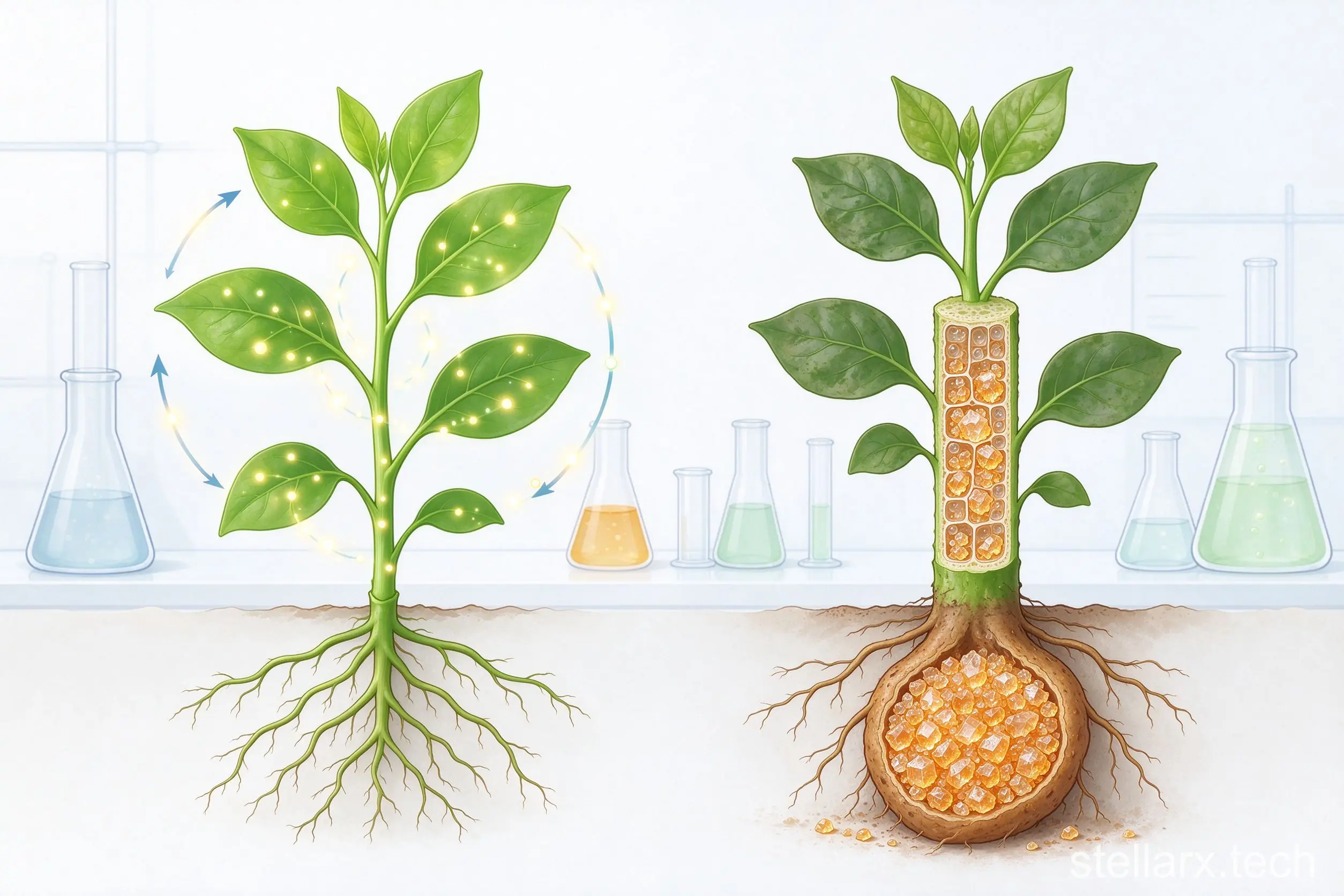
The Maple That Sweetened Itself Into a Dead End
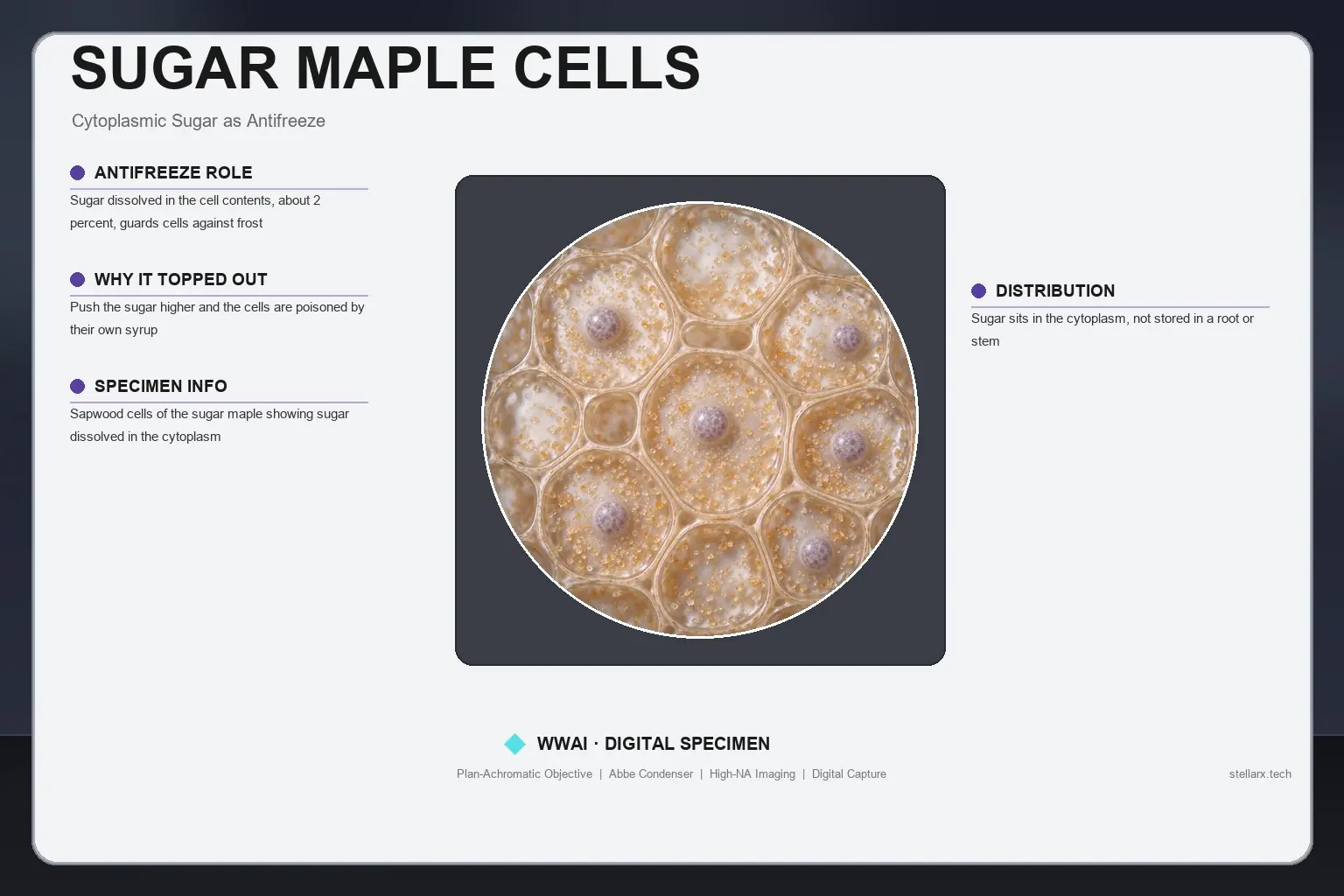
So why not just breed the naturally sweet ones? Look at the sugar maple. Its trunk sap really is sweet — the reason maple syrup exists. But the sugar sits dissolved in the cell contents, where it works as antifreeze, and it tops out around 2 percent. Push it higher and the cells get poisoned by their own syrup. A naturally sweet tree is at a dead end: there is almost no room left for improvement. The plants that hit the big numbers were the ones that could get "diabetes" — pile sugar into storage like waste — without dying.
Plants Get "Diabetes," and That's How Sugar Gets Made
Here is the honest way to describe what breeders did: they turned crops into plants with a severe metabolic disease. The sugar-making capacity went up, and the ability to use or move that sugar almost disappeared — so the sugar piled up like garbage in the wrong place. Sugarcane stores it in the parenchyma cells of its stem; sugar beet stores it in a fleshy taproot. That is why people ate beets as a vegetable for centuries without noticing they could make sugar: the beet hadn't had this particular "diabetes" yet, and the earliest sugarcane couldn't produce sugar either.
The Next Sugar King: Sweet Sorghum
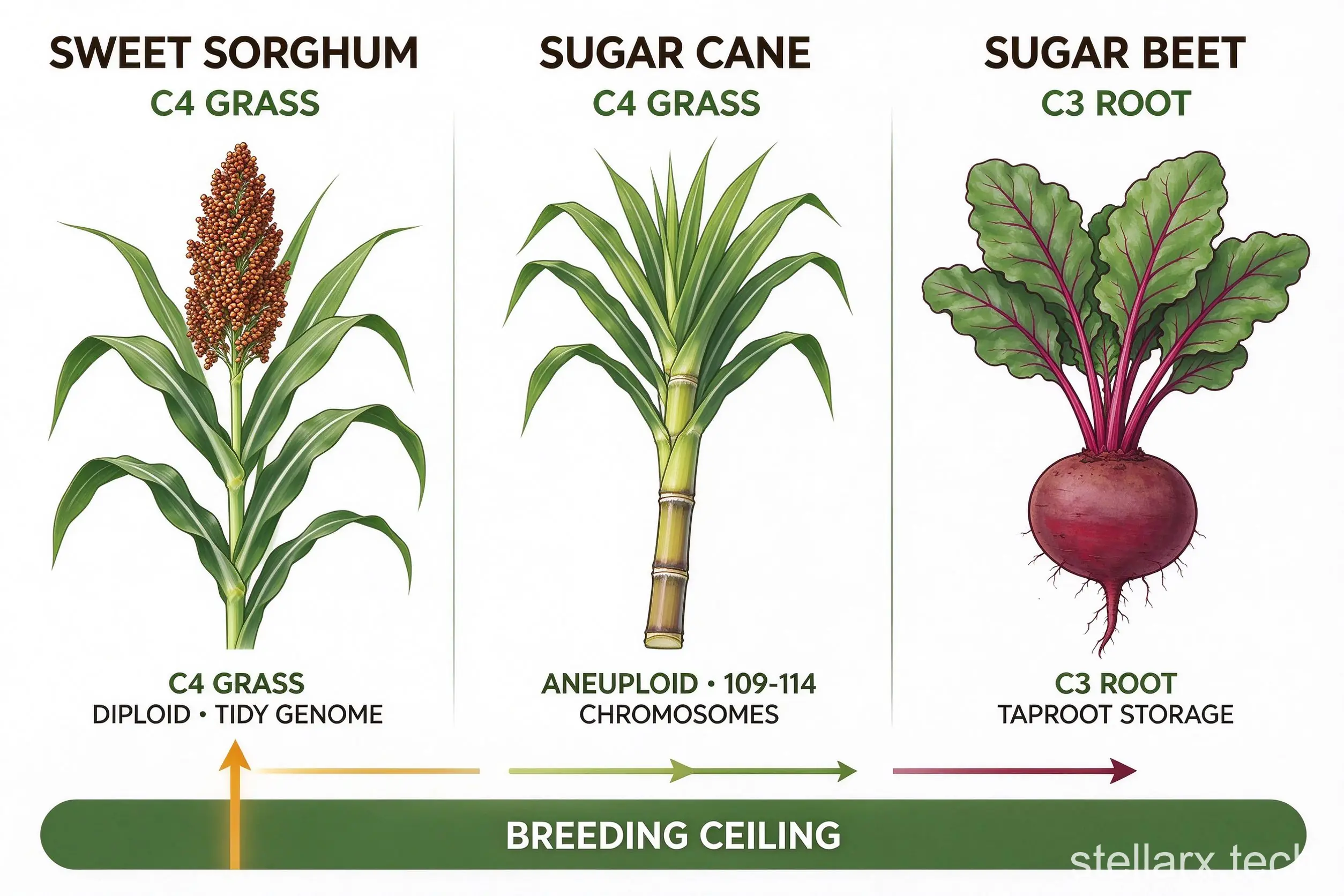
Now a new candidate is breaking through. Sweet sorghum — called 甜杆 (sweet stalk), 甜秫秸, 糖芦, or 芦粟 across northern China — is simply sorghum with a sugar-metabolism mutation, a cousin of grain sorghum. Three facts make it the heir:
Same C4 engine. Sorghum and sugarcane are both C4 plants, with the same theoretical ceiling for sugar production.
Messy sugars cracked. The old problem — mixed sugars that were hard to separate — has been cracked at the genetic level.
A clean diploid genome. Sugarcane is an aneuploid mess: modern hybrids carry roughly 109, 111, or 114 chromosomes of wildly uneven sets, so crossing it is extremely difficult and its breeding ceiling is welded shut. Sorghum is a clean diploid with a tidy genome and thousands of varieties, so the improvement ceiling is far higher.
Add a wider tolerance for temperature, soil, and water, and sweet sorghum lines up as the crop that could take over from cane and beet. The theory is fully worked out; it is only a matter of time before it becomes the sugar king.
The sugar in that stalk hides in cells you can't see by eye. Open a virtual microscope and look at a sorghum stem specimen: after maceration, the dissociated thin-walled storage cells, thickened cell walls, and the mechanical and conducting tissues of a grass stem are all clearly visible. Search "WWAI" in your app store and download it today.
Related reading

Why Porridge Spikes Blood Sugar Like Soda

Why Does China Have So Many Diabetics?

Why Corn Became a Global Staple Crop
References
FAO, "Breeding and cultivation of sweet sorghum" — sweet sorghum as a C4 crop with high photosynthetic efficiency and high sugar content in stalk juice. https://openknowledge.fao.org/server/api/core/bitstreams/fe3cb32b-9eac-493e-8831-5a8fd813fa21/content/t4470e05.htm
PMC11041754, "The complex polyploid genome architecture of sugarcane" — modern sugarcane hybrids are aneuploid, with yield improvements recently plateaued due to genome complexity. https://pmc.ncbi.nlm.nih.gov/articles/PMC11041754/
"Maple syrup mechanics: xylem, sap flow, and sugar content" — sugar maple sap averages around 2–3 percent sugar. https://botanistinthekitchen.blog/2013/03/18/maple-syrup-mechanics/
USDA ARS, "Sugarbeet roots accumulate sucrose" — sucrose is sequestered in the vacuole of root parenchyma cells for storage. https://www.ars.usda.gov/research/publications/publication/?seqNo115=101188
- Vegetable Nutrition: Why Lettuce Isn't the Healthiest Green
- 蔬菜營養排名:生菜墊底?真正的營養之王是這 5 種
- Metformin for Healthspan: Muscle, Bone, and a Tumor Switch
- 二甲雙胍延緩衰老?中年肌肉骨骼與膠質母細胞瘤的新證據
- 甜高粱會取代甘蔗與甜菜嗎?植物也會得「糖尿病」
- Why Sweet Sorghum Could Replace Sugar Cane and Beet
- Why You Shouldn't Wash Raw Chicken: Bacteria Splash
- 生雞肉不要洗?水龍頭沖洗讓細菌飛濺
- “大辞职时代”?双休?要松弛感?被忽悠了?
- 574集还在追更:皇帝想长生,臣子却只想让他当吉祥物
全部评论