Metformin for Healthspan: Muscle, Bone, and a Tumor Switch
The stairs used to be free exercise. Then one day they start charging rent — breath, knees, and grip, all at once. Most people blame age and start reading supplement labels. But the oldest diabetes drug on the shelf may be doing something nobody planned: holding the middle-aged body together — the muscles, the bones, and even the survival switch of a brain tumor.

The Middle-Aged Mouse That Stopped Falling Apart
In a 2026 study by Morales-Carrizales and colleagues, published in Biogerontology, middle-aged male mice — 30 to 53 weeks old, roughly human ages 32 to 42.5 — drank metformin dissolved in their water at 500 mg/kg/day for 23 weeks. Three groups ran side by side: young controls (20 weeks old), middle-aged controls (53 weeks), and the treated middle-aged group.
Body weight stayed near the young controls, not the heavier middle-aged ones.
Both clinical and performance frailty scores dropped to near-young levels.
In the open-field test they moved more; in grip and lifting tests they lifted more; on the inverted-screen test, the "hold on" latency stretched longer — the classic signature of stronger, less frail animals.
The details hold up. Gastrocnemius weight survived, and the muscle-to-body-weight ratio stayed near young levels. Their muscle kept its microvasculature: capillary density and vessel integrity stayed intact. And the bone — femur weight-to-body-weight ratio climbed back to young levels, trabeculae widened, osteoblasts rose significantly, and the osteocyte population that shrinks with age showed signs of recovery.
The mechanism reads like teamwork: in muscle, better microcirculation and less fibrosis; in bone, more osteoblasts rebalancing formation against resorption. Several tissues, one drug, one direction — healthspan.

The Tumor's Survival Protein Got Cut Off
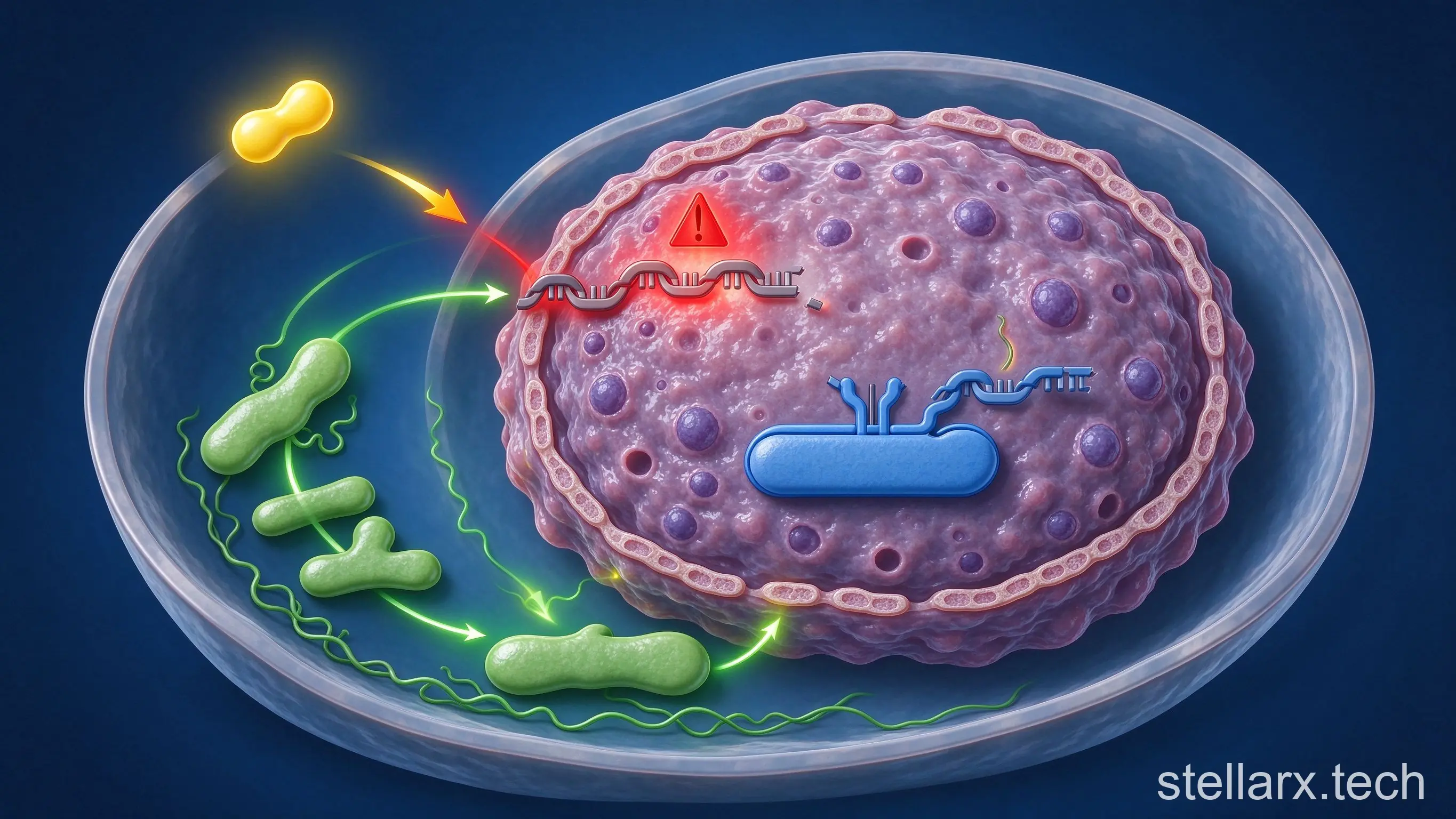
The second study, by Cavaliere and colleagues in Cells (2026), targets glioblastoma — the invasive brain tumor that shrugs off treatment. Its survival leans on a protein called survivin, which lets cancer cells dodge apoptosis, the cell's programmed death. Survivin is hard to attack directly. Metformin attacks the production line instead:
Metformin activates AMPK → AMPK sends FoxO3a into the nucleus → FoxO3a binds the survivin gene promoter → transcription stops → the cancer cell loses its survival protein → proliferation, migration, and invasion are suppressed.
One old diabetes drug, two very different claims: hold the middle-aged body together, and cut a tumor's lifeline at the transcript level.
Prescription Only
Both are animal and cell studies. Nothing here says "go buy metformin." Metformin is a prescription medicine for type 2 diabetes. Its effects on frailty, muscle, bone, or glioblastoma in humans are unproven. Don't self-medicate on the strength of mouse data.
See It Yourself
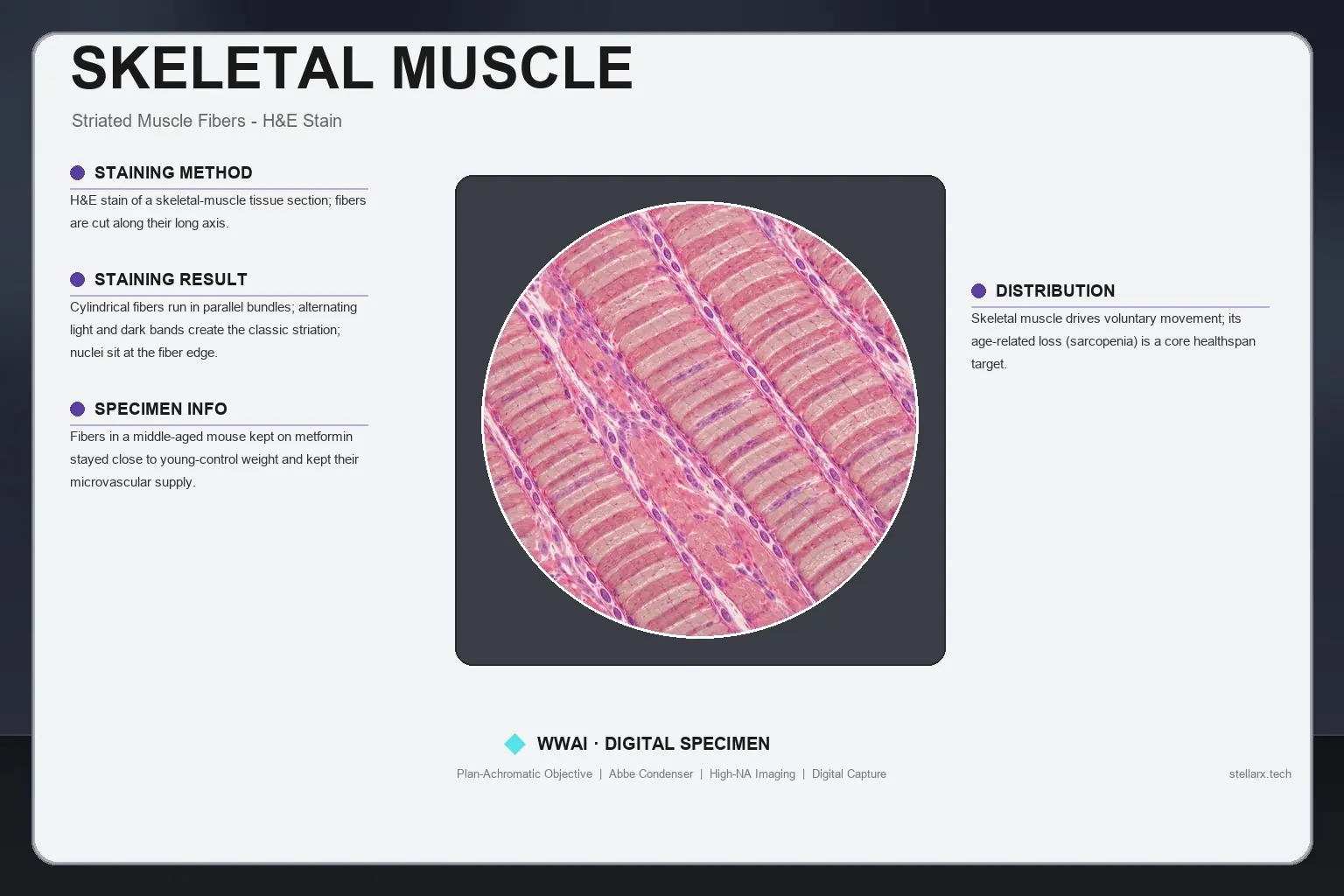
The muscle fibers those mice kept — striated, banded, nuclei sitting at the edge — are exactly what skeletal muscle looks like under a microscope. With the WWAI app, you can observe a Skeletal Muscle specimen where striated fibers and peripheral nuclei are clearly visible under magnification, and ask AI anything about sarcopenia, bone density, or the AMPK pathway. Search "WWAI" in your app store and download it today.

Related reading

Glutes and Aging: What 61,000 MRI Scans Show
GLP-1 Mouse Longevity: 12% Lifespan Gain

Cancer: Why a Body Without It Dies Young
References:
[1] Morales-Carrizales DA, et al. Metformin promotes healthspan by attenuating frailty and preserving musculoskeletal function–structure in middle-aged mice. Biogerontology. 2026;27:81.
[2] Cavaliere F, et al. Metformin Suppresses Glioblastoma Tumor Growth and Progression Through the AMPK/FoxO3a/Survivin Axis. Cells. 2026;15(3):310.
- Why Fish in a Plastic Bag Beat Fish in a Bucket
- 魚離開水能活多久?塑膠袋比水桶更保命
- Shamonda Virus: The First Human Case Ever Reported
- 沙蒙達病毒:全球首例人類感染病例
- Vegetable Nutrition: Why Lettuce Isn't the Healthiest Green
- 蔬菜營養排名:生菜墊底?真正的營養之王是這 5 種
- Metformin for Healthspan: Muscle, Bone, and a Tumor Switch
- 二甲雙胍延緩衰老?中年肌肉骨骼與膠質母細胞瘤的新證據
- 甜高粱會取代甘蔗與甜菜嗎?植物也會得「糖尿病」
- Why Sweet Sorghum Could Replace Sugar Cane and Beet
全部评论