Vegetable Nutrition: Why Lettuce Isn't the Healthiest Green
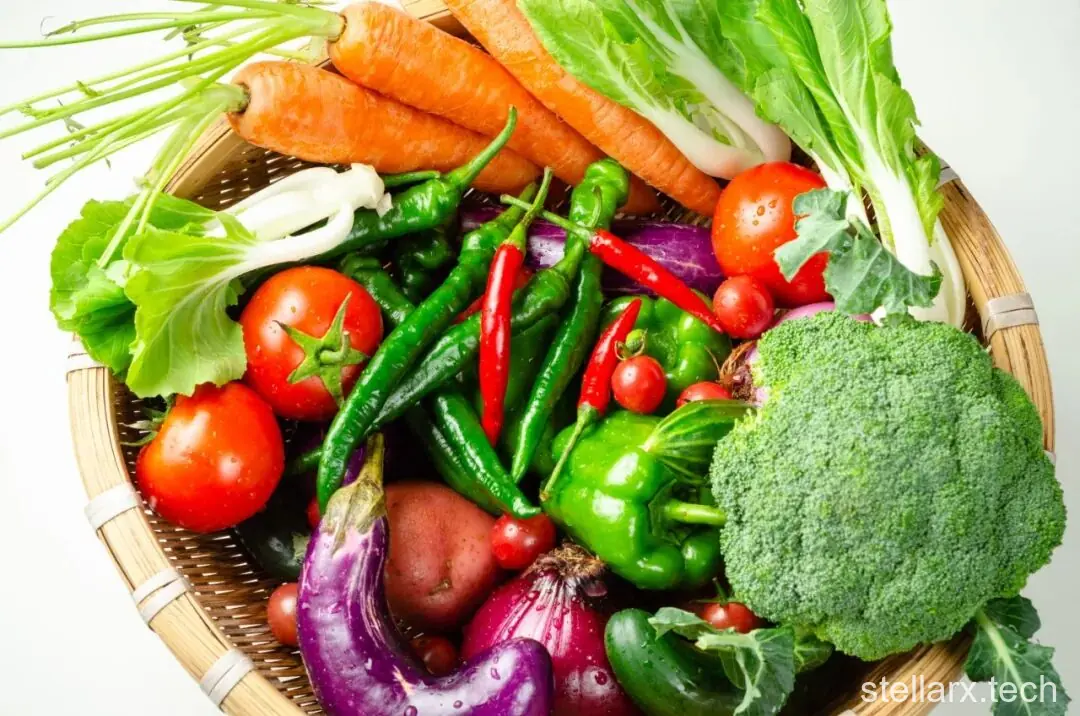
A green plate is supposed to mean a healthy plate. Leafy, glossy, water-fresh vegetables get trusted as the gold standard of nutrition — the fiber, the vitamins, the minerals, all packed into something you can chew. People order blanched lettuce without blinking, pile iceberg onto burgers, and pay thirty dollars for a salad without a second thought. But vegetable nutrition has rankings, and the leafy heroes everyone trusts are not the champions.
Chew on this: some vegetables that feel crunchy and fibrous have almost no fiber at all. And a few bites of another vegetable can equal a whole pound of a different one. You can spend half a meal eating grass — and take in nearly nothing.
The Greens Everyone Worships
Anything green feels nutritious, so three vegetables became daily staples: lettuce, cucumber and winter melon — jokingly called "the three hydration kings" of the vegetable world. Their claim to fame is water: all three are over 95% water. That's genuinely refreshing and genuinely low-calorie.
But that's nearly all they deliver. Fiber and nutrition are shockingly thin — thinner even than plain napa cabbage.
| Rank | Vegetable | Water content | Shape of water |
|---|---|---|---|
| 1 | Winter melon | 96.9% | Bucket-shaped |
| 2 | Lettuce | 96.7% | Sheet-shaped |
| 3 | Cucumber | 95.8% | Stick-shaped |
Take lettuce, the most overrated of the trio. Its insoluble fiber sits at just 0.7g per 100g. Chew your way through a whole 250-gram bowl of lettuce and you've eaten the fiber equivalent of three broccoli florets (67g) or half an apple (100g). To hit the recommended 25g of daily fiber with lettuce alone, you'd need 3,571g of it — about seven pounds. Seven pounds of lettuce. Even a buffalo would flinch.
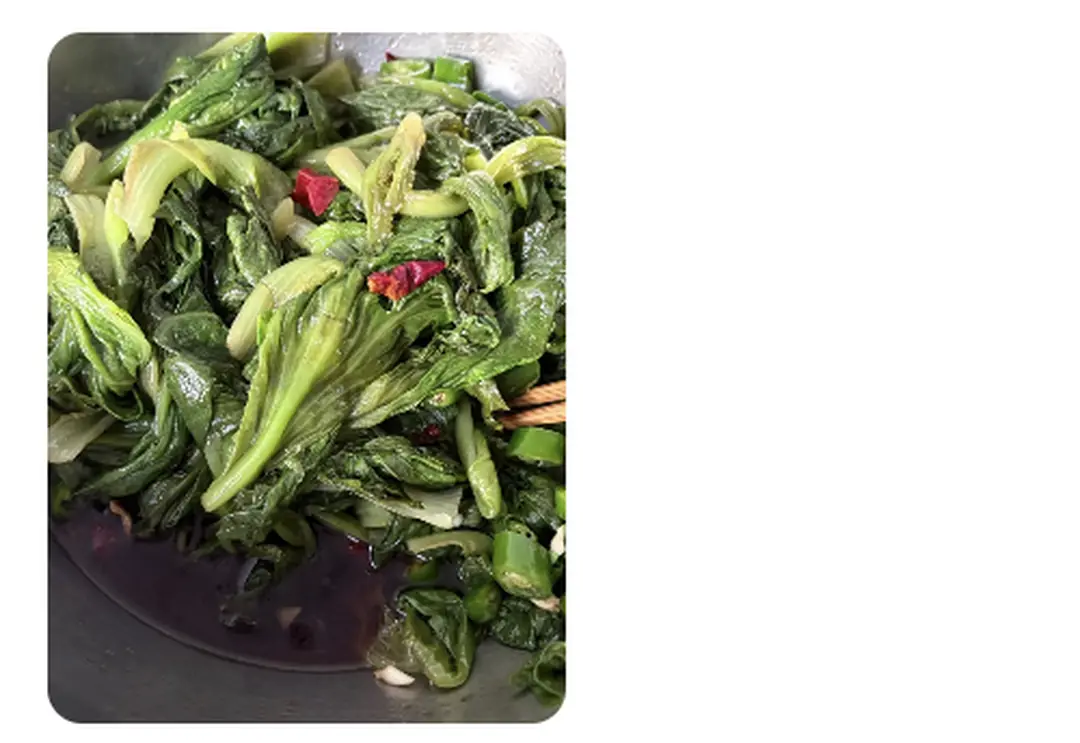
Seven pounds of lettuce. Even a water buffalo would flinch at the math.

Nutritionally, lettuce loses to napa cabbage and trails most greens by miles: pak choi (小白菜) has nearly 20 times its vitamin C, chives carry 2.6 times its potassium, and baby rape (小油菜) delivers over 8 times its calcium.
| Nutrient (per 100g) | Lettuce | Winter melon | Cucumber | Napa cabbage |
|---|---|---|---|---|
| Water (g) | 96.7 | 96.9 ★ | 95.8 | 94.6 |
| Energy (kcal) | 12 | 10 | 16 | 18 ★ |
| Dietary fiber (g) | 0.7 | — | 0.5 | 0.9 ★ |
| Vitamin C (mg) | 13 | 16 | 9 | 37.5 ★ |
| Beta-carotene (μg) | 26 | — | 90 | 120 ★ |
| Calcium (mg) | 14 | 12 | 24 | 57 ★ |
| Potassium (mg) | 91 | 57 | 102 | 134 ★ |
| Magnesium (mg) | 7 | 10 | 15 ★ | 12 |
| Iron (mg) | 0.2 | 0.1 | 0.5 | 0.8 ★ |
| Zinc (mg) | 0.12 | 0.10 | 0.18 | 0.46 ★ |
| Selenium (μg) | 0.04 | 0.02 | 0.40 | 0.57 ★ |
| Note | ★ = highest in row; fiber = insoluble fiber; lettuce vitamin C 13 mg is the 6th-edition revised figure; winter melon has no fiber/beta-carotene data in the 6th edition (—). | |||
Cucumber and winter melon are no better. The garlic cloves sitting beside your noodles beat both: garlic's fiber is more than double cucumber's, and its potassium is 5.3 times winter melon's.
Eggplant, zucchini and white radish also hang around the bottom of nutrition lists. Compared with broccoli — the reference green — you'd need three bites of them to match one bite of broccoli.
| Nutrient (per 100g) | Eggplant | White radish | Zucchini | Broccoli |
|---|---|---|---|---|
| Dietary fiber (g) | 1.3 | — | 0.6 | 2.6 ★ |
| Vitamin C (mg) | 5 | 19 | 6 | 56 ★ |
| Calcium (mg) | 24 | 47 | 15 | 56 ★ |
| Potassium (mg) | 142 | 167 | 92 | 179 ★ |
None of this means these vegetables are bad. Eggplant carries respectable anthocyanins, white radish is rich in sulfur compounds, and for cutting-phase low-calorie meals nothing beats their watery volume. Lettuce wrapped around grilled meat is a genuinely great plate. The rule is simply: don't eat them exclusively — rotate and mix.
The Underrated Champions
Some vegetables quietly outperform everything you'd expect. Pick right and one side dish can hand you a day's worth of a nutrient.
Edamame: The Fiber King of Everyday Meals
Want fiber? Leafy greens are not necessarily the first stop. Fresh edamame — soybean pods' beans — is one of the most underrated everyday vegetables. It doesn't need its shell to be high fiber; the bean itself is.
It also brings three standout advantages: high-quality plant protein (13.1g/100g), potassium at 478mg/100g — four times lettuce or cucumber — and calcium at 135mg/100g, more than milk's 104mg/100ml.
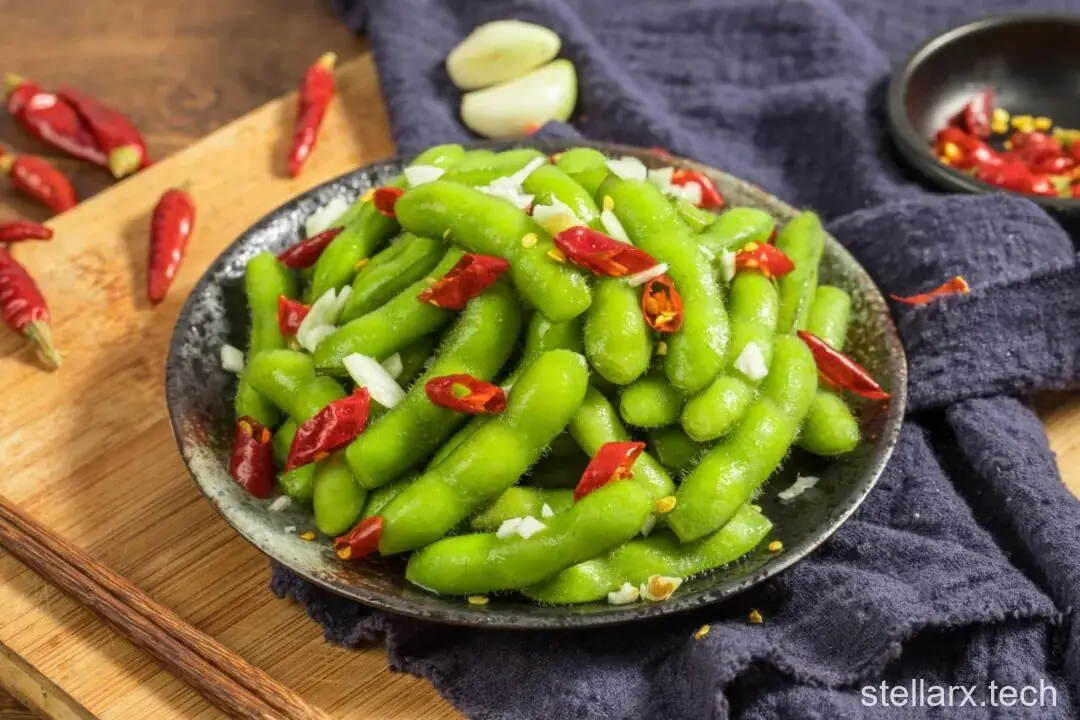
If you don't count soy as a vegetable and want greens instead, sweet potato leaves are the fiber pick.
Bell Pepper: One Piece, a Full Day of Vitamin C
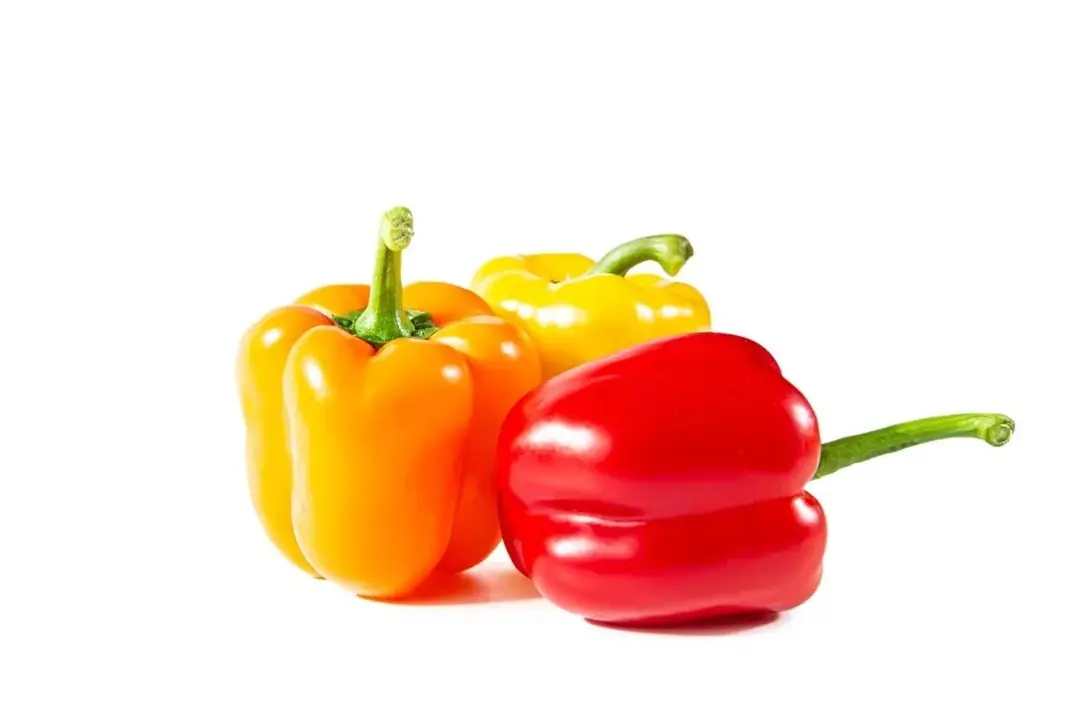
Fruit isn't the only vitamin C source — vegetables matter too. The snackable "fruit bell peppers" now on the market run 100–200g per piece, and a single one covers the full daily 100mg of vitamin C. At just 26 kcal per 100g, with 794μg of beta-carotene per 100g, the "pepper bowl" trend is a genuinely low-fat, high-nutrient diet choice.
And the board is bigger than one pepper. Bell pepper's 104mg per 100g dwarfs napa cabbage's 37.5mg and lettuce's 13mg — even coriander, the garnish nobody counts, delivers 48mg. What makes the "pepper bowl" work nutritionally is the same thing that keeps peppers crisp: almost no fat, plenty of water, and a wall of fiber holding everything together. Swap half your rice for diced bell pepper and you cut calories without cutting volume — a quiet trick dietitians would cheer. Vitamin C is fragile, though; heat, air and time all chip away at it, which is one more reason raw pepper strips beat the stir-fry when peppers are on the menu. One pepper a day, in any color, quietly outperforms most of your fruit bowl.
Shepherd's Purse: More Calcium Than Milk, Ranked No.1
Shepherd's purse (荠菜) tops the comprehensive ranking of China's 38 common vegetables. Its calcium reaches 294mg/100g — nearly three times milk's 104mg — while fiber sits at 1.7g/100g (trailing only edamame among everyday picks); it is low-sodium, high-potassium (280mg/100g); and its beta-carotene reaches 2,590μg/100g — a third of an adult woman's daily recommendation.
One honest warning: shepherd's purse is relatively high in oxalic acid, which lowers calcium absorption — blanch it before cooking. And if you want vegetable calcium with near-milk absorption, pak choi is the one not to skip. Vegetables are a major calcium source, not a milk substitute: many beat milk's 104mg/100ml.
Coriander: Ranked No.2, Massively Underrated
The garnish nobody counts as a real vegetable ranks second among China's 38 common vegetables. Coriander's vitamin C reaches 48mg/100g — far above common leafy greens like lettuce or napa cabbage — while potassium (272mg/100g), calcium (101mg/100g) and beta-carotene (1,160μg/100g, about a quarter of carrot's) all hold their own. Across six nutrition metrics it places in the top 20 of vegetables. Don't underestimate the garnish — and tell your noodle vendor to go heavy on it.
Coriander lands eighth at 48mg — and the full vegetable vitamin C leaderboard, topped by bell pepper, looks like this:
| Rank | Vegetable (vitamin C per 100g) | Vitamin C (mg) |
|---|---|---|
| 1 | Bell pepper | 104 |
| 2 | Leaf mustard (large-leaf) | 72 |
| 3 | Pak choi | 64 |
| 4 | Kale | 63 |
| 5 | Green chili pepper | 59 |
| 6 | Bitter melon | 56 |
| 6 | Broccoli | 56 |
| 8 | Coriander | 48 |
| 9 | Amaranth (green) | 47 |
| 10 | Cauliflower | 32 |
For coriander's full nutrient file — niacin, vitamin B2, copper, iron and more — here are its six standout metrics:
| Coriander nutrient (per 100g) | Value | Vegetable-class rank | vs vegetable-class mean |
|---|---|---|---|
| Niacin (vitamin B3) | 2.20 mg | No.2 | 3.5× (mean 0.62 mg) |
| Vitamin C | 48.0 mg | No.9 | 1.9× (mean 25.0 mg) |
| Riboflavin (vitamin B2) | 0.14 mg | No.9 | 1.6× (mean 0.09 mg) |
| Copper | 0.21 mg | No.8 | 1.2× (mean 0.17 mg) |
| Iron | 2.9 mg | No.14 | 1.2× (mean 2.4 mg) |
| Calcium | 101 mg | No.15 | 1.2× (mean 84 mg) |
Watercress: The 100-Point Vegetable Almost Nobody Buys
One study ranked 47 vegetables and fruits by nutrient density — comparing how much of 17 nutrients each delivers per 100 kcal. The perfect 100-point winner was something most people have never heard of: watercress (also called garden cress or 豆瓣菜 in China).
Its values (per USDA data) are remarkable for roughly lettuce's calorie load (11 kcal/100g): beta-carotene 1,914μg (domestic Chinese varieties reach up to 9,550μg — nearly double carrot's), vitamin C 43mg/100g (half of sweet pepper), calcium 120mg/100g (about equal to milk), and vitamin K 250μg/100g — nearly double broccoli or kale.
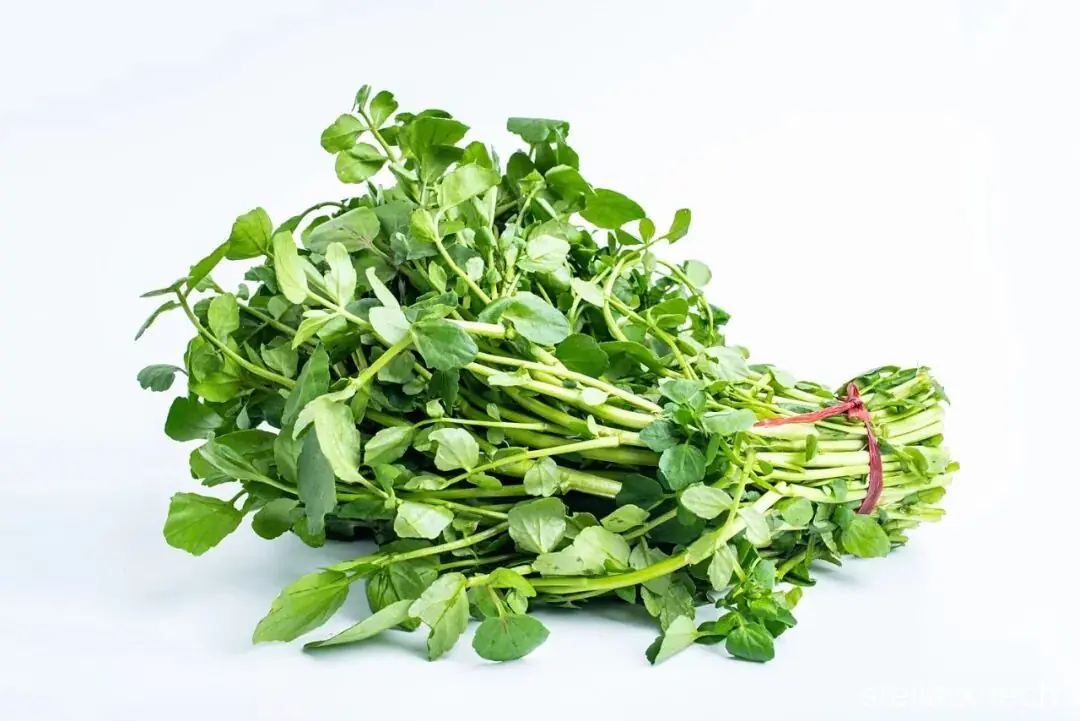
Its one real flaw: you'll rarely find it at a market. Northern readers may never have seen it. If you can buy it, try it — but don't hunt it down purely for nutrition.
For reference, here is the full insoluble-fiber leaderboard across common vegetables — edamame on top, lettuce near the bottom:
| Rank | Vegetable (insoluble fiber per 100g) | Fiber (g) |
|---|---|---|
| 1 | Edamame (fresh) | 4.0 |
| 2 | Shiitake mushroom (fresh) | 3.3 |
| 3 | Kale | 3.2 |
| 8 | Lettuce (leaf) | 0.7 |
| Note | Source: China Food Composition Tables (6th ed.); adult daily recommendation = 25 g. Top ranks plus the lettuce baseline shown; full 15-vegetable list appears in the source infographic. | |
No single vegetable carries every nutrient, and there is no true 100-point vegetable. Eating well is not hard: eat more colors, eat more kinds.
That green plate you trust so much — and every other color on the table — is built from plant cells: walls, vacuoles, chloroplasts. With a virtual microscope, you can look inside the lettuce you just ate and see why fiber lives in those cell walls, or watch the guard cells of a spinach leaf breathing. Want to see for yourself? Open the WWAI app and explore an Onion Epidermis specimen, where the cell wall, nucleus and central vacuole are clearly visible under magnification. Search "WWAI" in your app store and download it today.
Related reading
Sweet Potato Leaves: Fiber, Calcium & Lutein

Fiber and Constipation: Vegetables vs Peanuts

Potato as Staple: 25 Pounds Down, No Calorie Math
References:
[1] Di Noia J. Defining powerhouse fruits and vegetables: a nutrient density approach. Prev Chronic Dis. 2014;11:E52.
[2] USDA FoodData Central. Watercress (Nasturtium officinale) — raw.
[3] China Food Composition Tables. 6th Edition.
- Why Fish in a Plastic Bag Beat Fish in a Bucket
- 魚離開水能活多久?塑膠袋比水桶更保命
- Shamonda Virus: The First Human Case Ever Reported
- 沙蒙達病毒:全球首例人類感染病例
- Vegetable Nutrition: Why Lettuce Isn't the Healthiest Green
- 蔬菜營養排名:生菜墊底?真正的營養之王是這 5 種
- Metformin for Healthspan: Muscle, Bone, and a Tumor Switch
- 二甲雙胍延緩衰老?中年肌肉骨骼與膠質母細胞瘤的新證據
- 甜高粱會取代甘蔗與甜菜嗎?植物也會得「糖尿病」
- Why Sweet Sorghum Could Replace Sugar Cane and Beet
全部评论