Shamonda Virus: The First Human Case Ever Reported
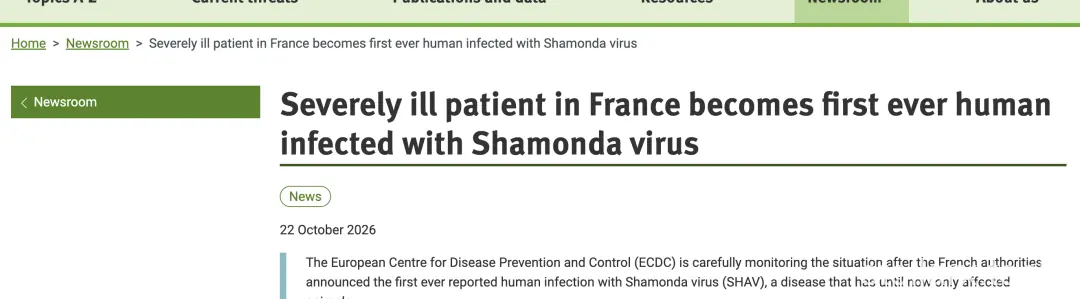
For six decades, Shamonda virus stayed quietly inside cattle. Then, on 22 October 2026, French health and agriculture authorities announced the first human infection ever documented: a severely immunocompromised patient treated in Lyon, who died in early October.
A first case, with questions still open
The joint statement reported the first formally recorded human infection with Shamonda virus (SHAV). The patient was being treated in Lyon for a serious illness that had left them severely immunocompromised, and died in early October.
Preliminary investigations suggest that brain complications before the patient's death were very likely linked to the infection. But the European Centre for Disease Prevention and Control (ECDC) stresses that whether the virus caused or contributed to the death — and how the infection was acquired — is still under investigation.
What the Shamonda virus is
Shamonda virus is an orthobunyavirus in the Simbu serogroup: a segmented, negative-sense single-stranded RNA virus with three segments, L, M and S. It was first isolated from cattle in Nigeria in the mid-1960s, and has since been reported sporadically in cattle in parts of Africa and in Japan. Cattle are considered its main host.
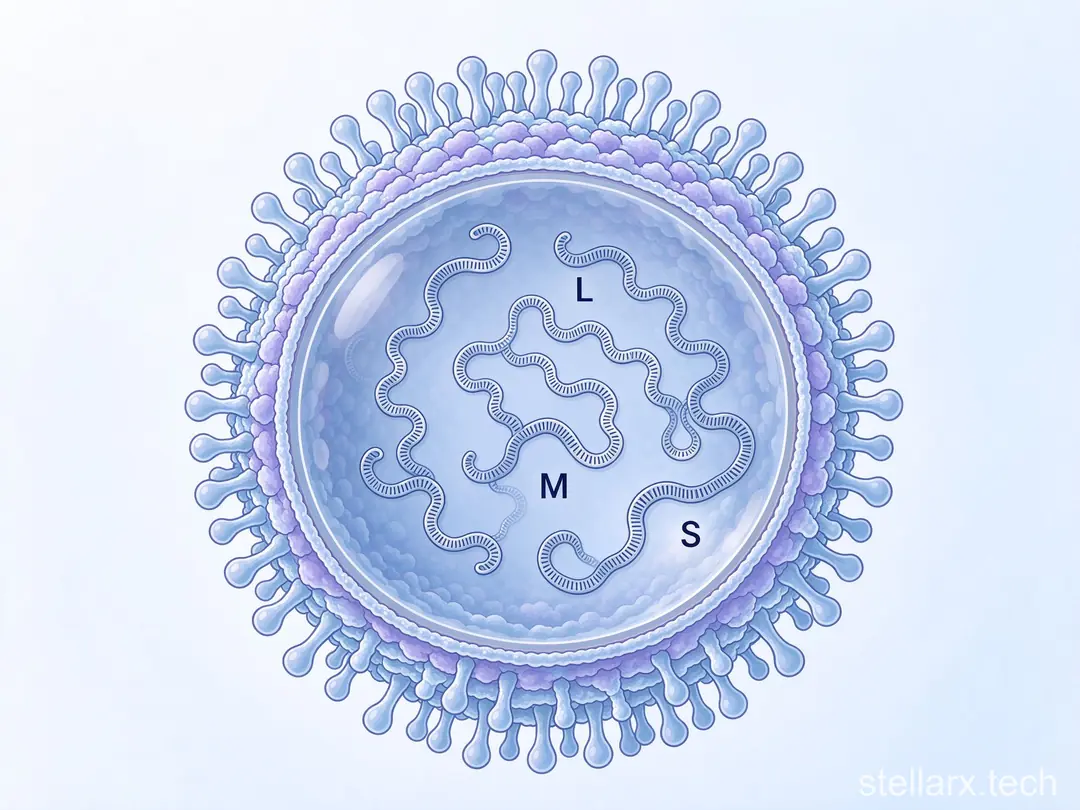
| Shamonda virus at a glance | Facts |
|---|---|
| Classification | Orthobunyavirus of the Simbu serogroup; segmented, negative-sense single-stranded RNA genome in three segments (L, M, S) |
| First isolated | 1965, from cattle in Nigeria; later detected in cattle, sheep and Culicoides midges in Japan and South Africa |
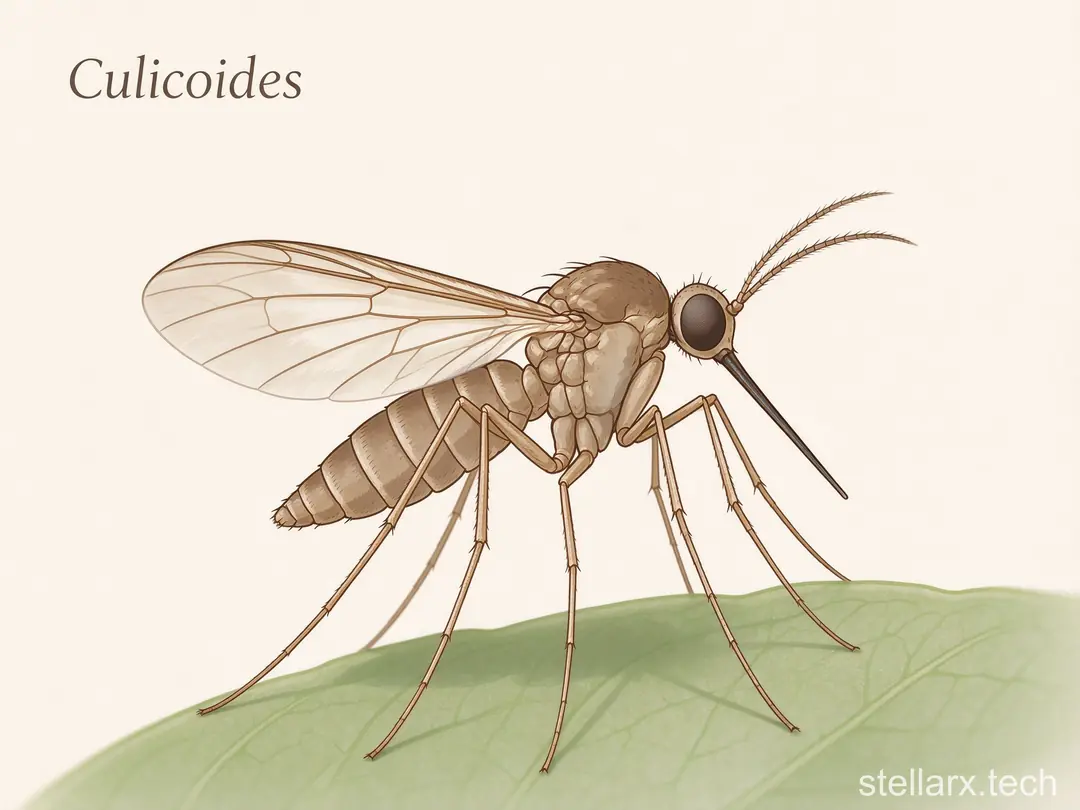
| Transmission | Bites from blood-feeding midges of the genus Culicoides — an arbovirus |
| Effects on animals | Fever, lower milk yield, reproductive losses; 2015–2016 — SHAV confirmed in 15 malformed calves in Japan with arthrogryposis and CNS lesions |
| Relationship to Schmallenberg virus (SBV) | SBV is likely its ancestor: SHAV appears to be a reassortant carrying SBV's S and L segments plus an M segment from an unclassified virus — M segment nucleotide identity is only 48.2% |
| Human risk | First human case reported in France, 2026 — a severely immunocompromised patient who died; a single exceptional case, no evidence of broad human disease or person-to-person spread |
A bite from a biting midge
Shamonda virus is an arbovirus: it spreads between animals through bites from blood-feeding midges of the genus Culicoides. French authorities suspect the patient was bitten by an infected midge in eastern France, a territory where the virus circulated in animals during spring and summer 2026. The specific midge species involved in this case has yet to be confirmed.
The jump to Europe in 2026
Summer 2026 brought the virus's first detection in European farm animals: clinical signs were reported from June, and the virus was identified in late July. It has since been found in farm animals in Austria, Belgium, France, Germany, Ireland, Italy, Liechtenstein, Luxembourg, the Netherlands, Portugal, Spain, Switzerland and Jersey.
What the risk is
French authorities describe the case as exceptional, occurring in a severely immunocompromised patient. Based on current knowledge, no public health risk to the general population has been identified. ECDC is working with the relevant EU reference laboratory to strengthen testing capacity and support member states in identifying any other potential cases.
Shamonda virus spent sixty years infecting cattle before a single patient in Lyon showed that the list of species it can reach is longer than anyone had recorded. It travels on the mouthparts of insects you barely notice — which is a good reason to look closely at what blood-feeding insects actually look like.
Want to see the kind of insect that carries viruses like this one? With WWAI, you can examine a Culex Mosquito specimen under a virtual microscope — segmented body, wing venation and piercing mouthparts — the moment curiosity strikes, with no physical microscope needed. Just search "WWAI" in your app store to download.

Related reading

Why Skipping the Rabies Shot Can Kill You

Why Mosquitoes Drink Blood — It's Not for Dinner

Alpha-Gal Syndrome: The Tick-Borne Meat Allergy
References
European Centre for Disease Prevention and Control (ECDC). Severely ill patient in France becomes first ever human infected with Shamonda virus. 22 October 2026. https://www.ecdc.europa.eu/en/news-events/severely-ill-patient-france-becomes-first-ever-human-infected-shamonda-virus
Kelleci M, et al. Detection of a novel Shamonda Orthobunyavirus in dairy cattle, France, June 2026. Euro Surveill. 2026;31(33):2600689. https://pmc.ncbi.nlm.nih.gov/articles/PMC13498902/
Goller KV, et al. Schmallenberg Virus as Possible Ancestor of Shamonda Virus. Emerg Infect Dis. 2012. https://pmc.ncbi.nlm.nih.gov/articles/PMC3471646/
- Why Fish in a Plastic Bag Beat Fish in a Bucket
- 魚離開水能活多久?塑膠袋比水桶更保命
- Shamonda Virus: The First Human Case Ever Reported
- 沙蒙達病毒:全球首例人類感染病例
- Vegetable Nutrition: Why Lettuce Isn't the Healthiest Green
- 蔬菜營養排名:生菜墊底?真正的營養之王是這 5 種
- Metformin for Healthspan: Muscle, Bone, and a Tumor Switch
- 二甲雙胍延緩衰老?中年肌肉骨骼與膠質母細胞瘤的新證據
- 甜高粱會取代甘蔗與甜菜嗎?植物也會得「糖尿病」
- Why Sweet Sorghum Could Replace Sugar Cane and Beet

全部评论