Brain Fog Fix: The Stretch That Clears Your Head
For six months, a previously clear-headed, sunny person woke up every morning into fog. Tasks that used to flow now sat tangled: no thread, no sequence, no way in. If you know that feeling, the fix sounds almost insulting: pick up a stick.
Any stick will do — a wooden dowel, a rolling pin, an empty drink bottle, a thermos, even an uncooked corn cob. It is the oldest trick in the training hall, dressed up in modern words: isometric stretch, fascia release, nervous-system reset.
The Towel-Wringing Move
Hold the stick with both hands, one at each end. Now do exactly what you would do to wring out a wet towel: push the two hands in opposite directions, and hold that tension for about half a minute. Then switch directions and wring the other way.
Add the other axes. Push the two ends toward each other, pull them apart, tilt the stick horizontal, vertical, diagonal — each time pressing into the resistance. Breathe out slowly while you build up to 50–70 percent of your maximum force; when the exhale ends, hold the isometric position for 30 seconds. You want the mild burn and warmth of working muscle. Three minutes of this, and something in your shoulders lets go.
Sitting version: place the stick behind your head at the base of the skull, press your hands gently forward while your head pushes back a little — a small, quiet battle — matched to a long exhale. Then extend the arms straight and turn the stick like a steering wheel to its end range, holding there.
Wrap it up with any twisting stretches you can invent. Half an hour a day. The goal is to comb through the three-dimensional fascia web of your chest, back, and arms, in every direction: lengthwise, crosswise, and spiraling, so the adhesions and stuck knots in the fascia can let go.
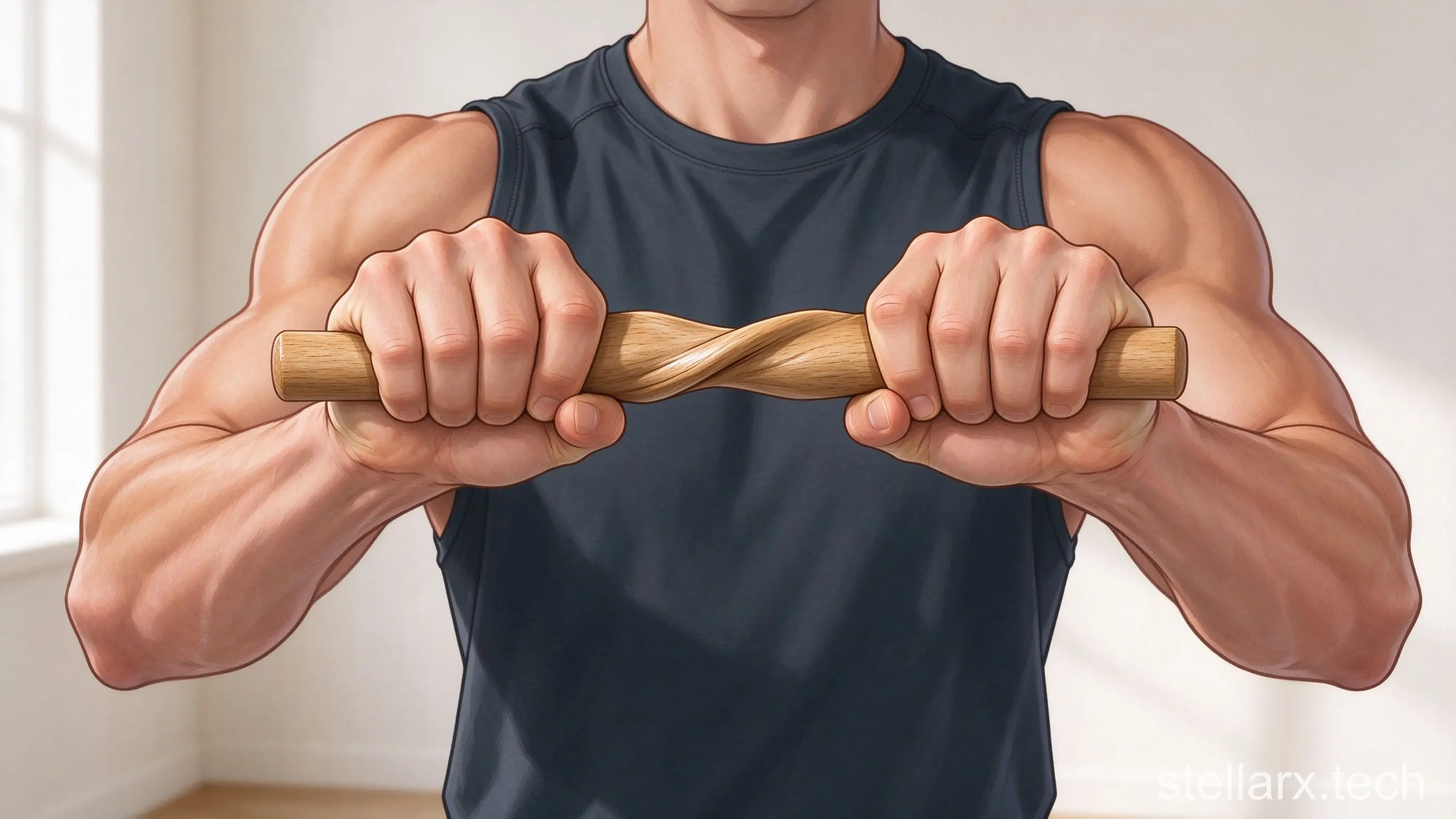
This is close to the traditional Chinese practice of taiji chi and instrument-guided stretching: a rigid bar, static twisting and pulling, matched to slow breathing. Done properly, your head feels lighter and the exhaustion lifts.
A long stick — 1.4 meters or more — also works for opening the chest and thoracic spine, which relieves the tight, shallow breathing that comes with a hunched chest. Short sticks of 30–50 centimeters you can practice sitting at a desk. Longer ones work better. And having a stick in your hands keeps it interesting; bare hands get boring fast.
What Brain Fog Actually Is
Fog is not a mystery of the mind. It is a body state, and it usually builds the same way: long hours of sitting, pressure, and low-grade anxiety push the body into a hidden "fight-or-flight" standby.
The deep muscles of the ribcage, upper back, neck, and limbs keep contracting — weakly, constantly. The chest tightens without your noticing, and breathing turns shallow. You inhale using only a small part of your lungs, ventilation drops, carbon dioxide does not get cleared, and the result is exactly the symptom list of brain fog: light-headedness, a heavy head, wandering attention, drowsiness.
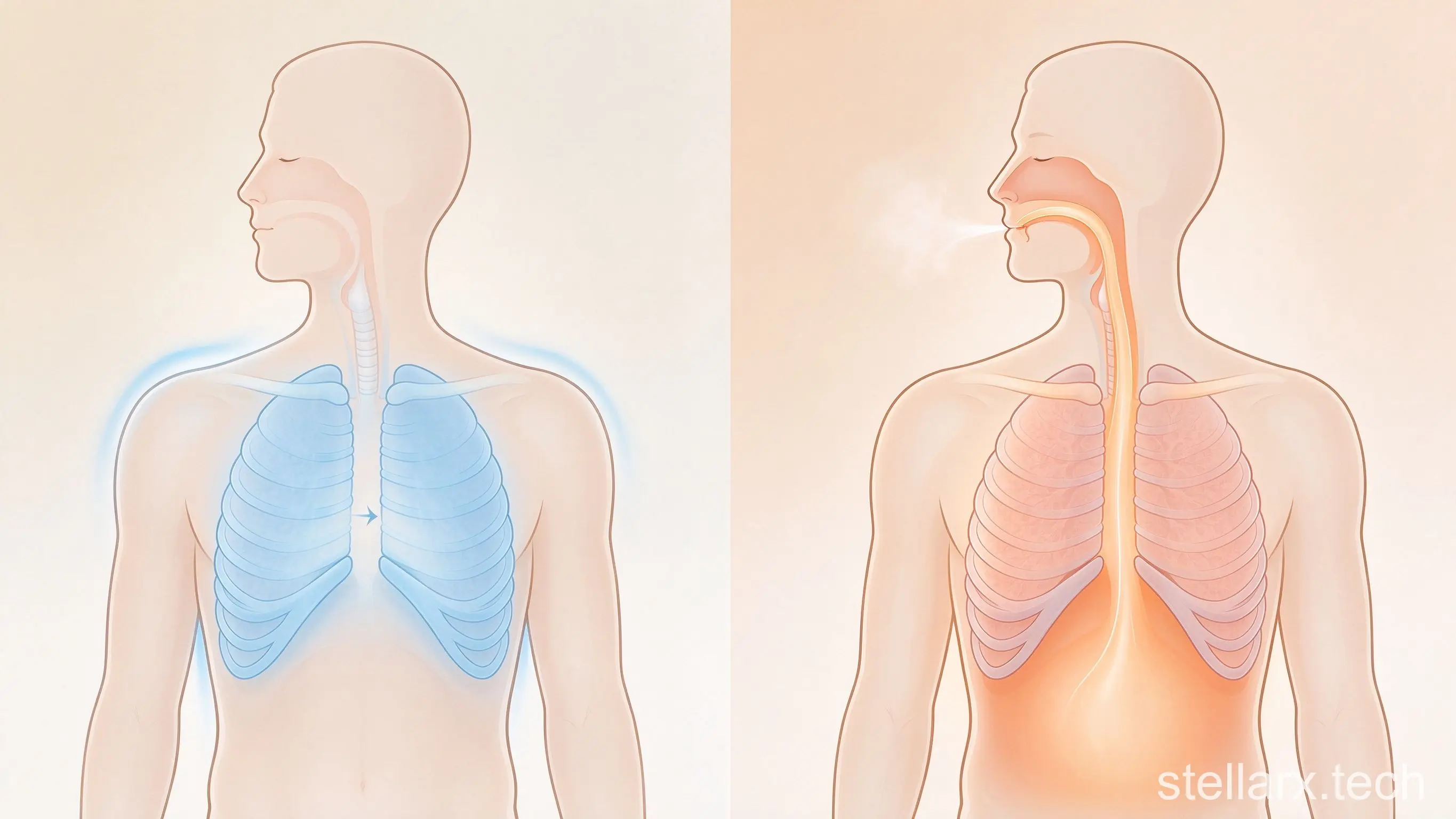
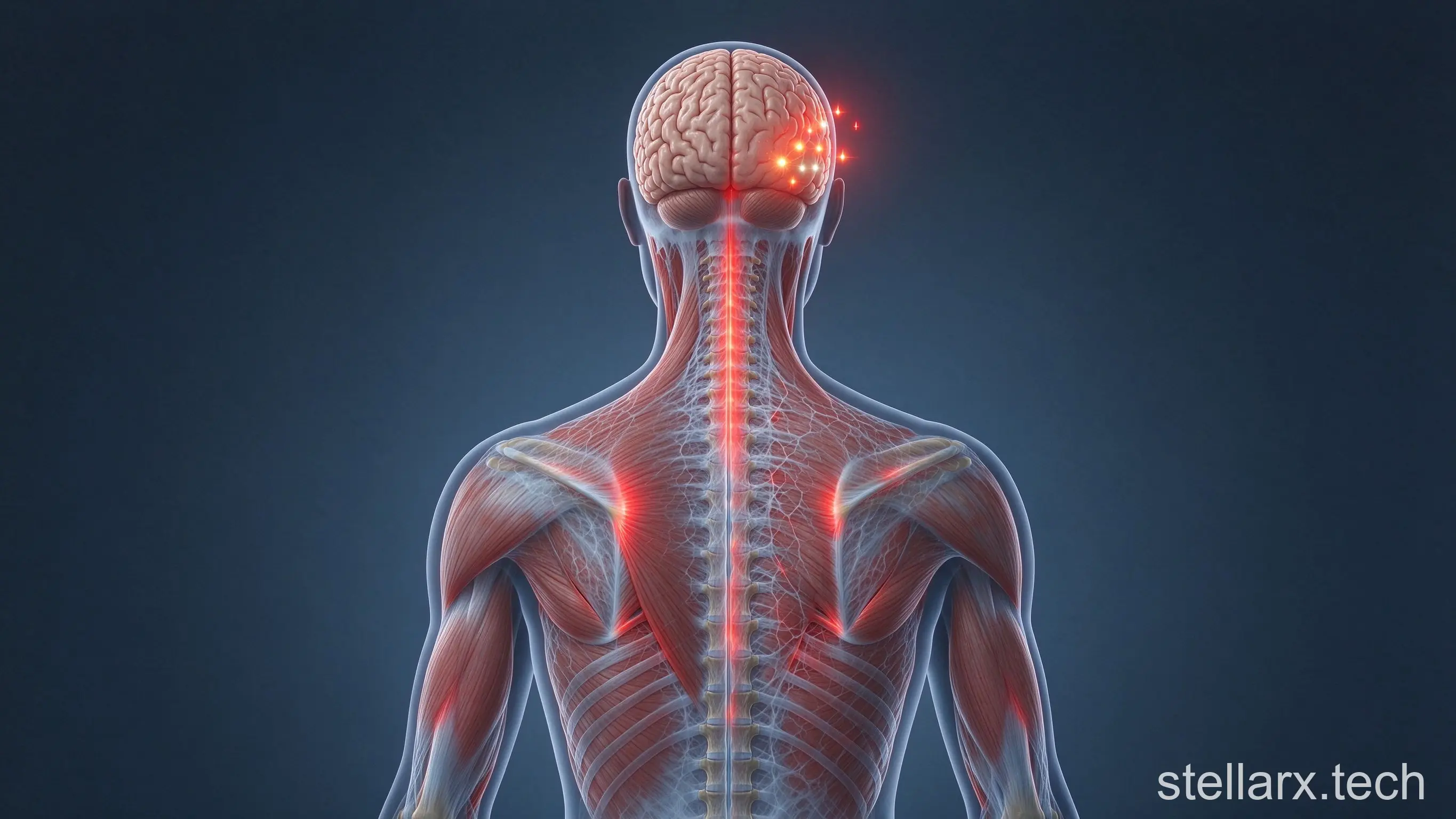
Second, fascia and muscle are packed with proprioceptors — sensors that report tension and position to the brain. A chest, back, and neck held perpetually tight fire a constant stream of alarm signals upward. The brain keeps processing these body alarms even while you rest, quietly consuming cognitive resources: thinking slows, memory dulls, fatigue persists. Your conscious mind is busy; the body's alarm system is busier.
Third, the sympathetic system stays switched on, cortisol stays chronically elevated, and that in turn raises the unconscious tension in the deep fascia and muscle — a closed loop that keeps fog thickening.
Why a Gentle Stretch Breaks the Loop
Isometric stretching does not need to be dramatic. Gentle, sustained tension lets over-contracted muscle fibers and stuck fascia gradually release. Local blood flow increases, metabolic waste is carried away, and you get that warm, open, soothed feeling — the physical signal that the alarm loop is quieting.
Slow, sustained loading is exactly what the slowly adapting receptors in fascia are built for. They respond to steady pressure and stretch rather than sharp motion, and their activation is tied to a shift toward the parasympathetic, "rest and digest" side of the nervous system — a direct brake on the sympathetic overdrive behind the fog.

So the practical prescription is mundane and ancient: half an hour a day, a stick, slow breathing, gentle resistance, every plane of your upper body's fascia combed through. People report the head going light and the fatigue dropping off. The long stick opens the chest; the short stick fits the desk; the towel-wringing twist works anywhere.
Do not settle for fog as a personality trait. It is a body loop — and a loop can be broken.
Want to see what constant tension actually does to nerve tissue — the branching neurons that carry your body's alarm signals? WWAI includes a nerve cell specimen where cell bodies, dendrites, and axons are clearly visible. Just search "WWAI" in your app store and download it today.

References:
[1] Greene, C. et al. Blood–brain barrier disruption and sustained systemic inflammation in individuals with long COVID-associated cognitive impairment. Nature Neuroscience (2024). https://www.nature.com/articles/s41593-024-01576-9
[2] Post-COVID-19 condition, brain fog, and fatigue—what do we know now? https://pmc.ncbi.nlm.nih.gov/articles/PMC11293575/
[3] Myofascial System and Physical Exercise: A Narrative Review on Stretching. Cureus (2024). https://pmc.ncbi.nlm.nih.gov/articles/PMC11698533/
[4] Myofascial release and fascial-targeted mechanical interventions in musculoskeletal rehabilitation. https://pmc.ncbi.nlm.nih.gov/articles/PMC13066130/
[5] Sustained corticosterone rise in the prefrontal cortex is a key factor for chronic stress-induced working memory deficits in mice. https://pmc.ncbi.nlm.nih.gov/articles/PMC6607320/
All illustrations are AI-generated.
Related reading

Food Coma: Why Heavy Rice Meals Drain Your Energy


- Why Humans Are the Only Animals That Need Clothes
- A Whole 1.25 kg Pomelo Has Only 280 kcal. Here's Why.
- Salmonella Is Everywhere. Here's How It Gets Into Your Food
- Your Dry Eyes Aren't Thirsty — They're Out of Oil
- 国庆团圆饭,我劝你一定要留一个位置给它……
- Tired No Matter How Much You Sleep? It Might Be Inflammation
- Why You Wake at 3 AM Every Night: Don't Check the Clock
- Why Foreigners Can't Handle Baijiu: It's the Aldehydes
- Why the Poor Love Grand Narratives: The Microscope Argument
- The Trojan Horse: How Plague Disarms Your Immune System
全部评论