Why Foreigners Can't Handle Baijiu: It's the Aldehydes
Henry Kissinger's dinner with Zhou Enlai produced one of the great anecdotes of diplomacy. The two toasted with Moutai, a liquor so strong that, as someone joked, lighting a cigarette after too much of it would make you explode. Zhou mentioned that during the Long March he had once drunk 25 cups of Moutai in a single day — calling the baijiu a "panacea" for the troops. Kissinger's verdict on that colorless liquid was less romantic: "Every time I sipped it, it felt like my throat was being peeled of its skin." He raised his glass often but drank only a tiny bit each time — to protect his esophagus.
Foreigners do not dislike baijiu because it is strong. Scotch and vodka are strong too. The difference is chemical.
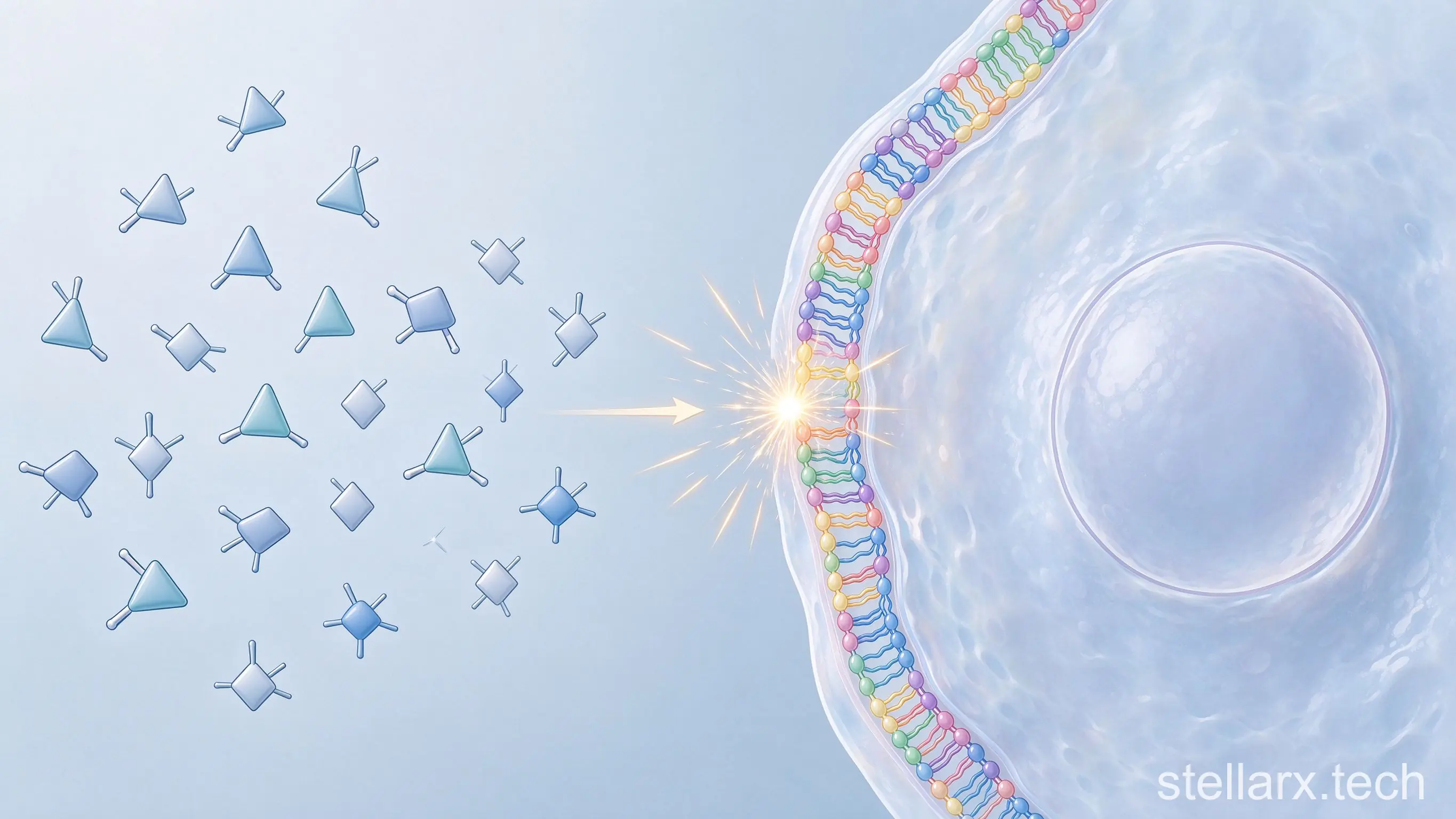
The thing that burns is not the alcohol — it is the aldehydes.
Baijiu drinkers in Guangxi joke that their local firewater is like the official's briefcase: sweet going in, staggering coming out. The heat on the tongue is the signature of aldehydes, not ethanol. In organic chemistry, stability runs aldehyde < alcohol < acid < ester. An aldehyde is an unstable, reactive molecule; when it touches the epithelial cells of your mouth, it reacts and produces a stinging pain — what the tongue reads as "spicy."
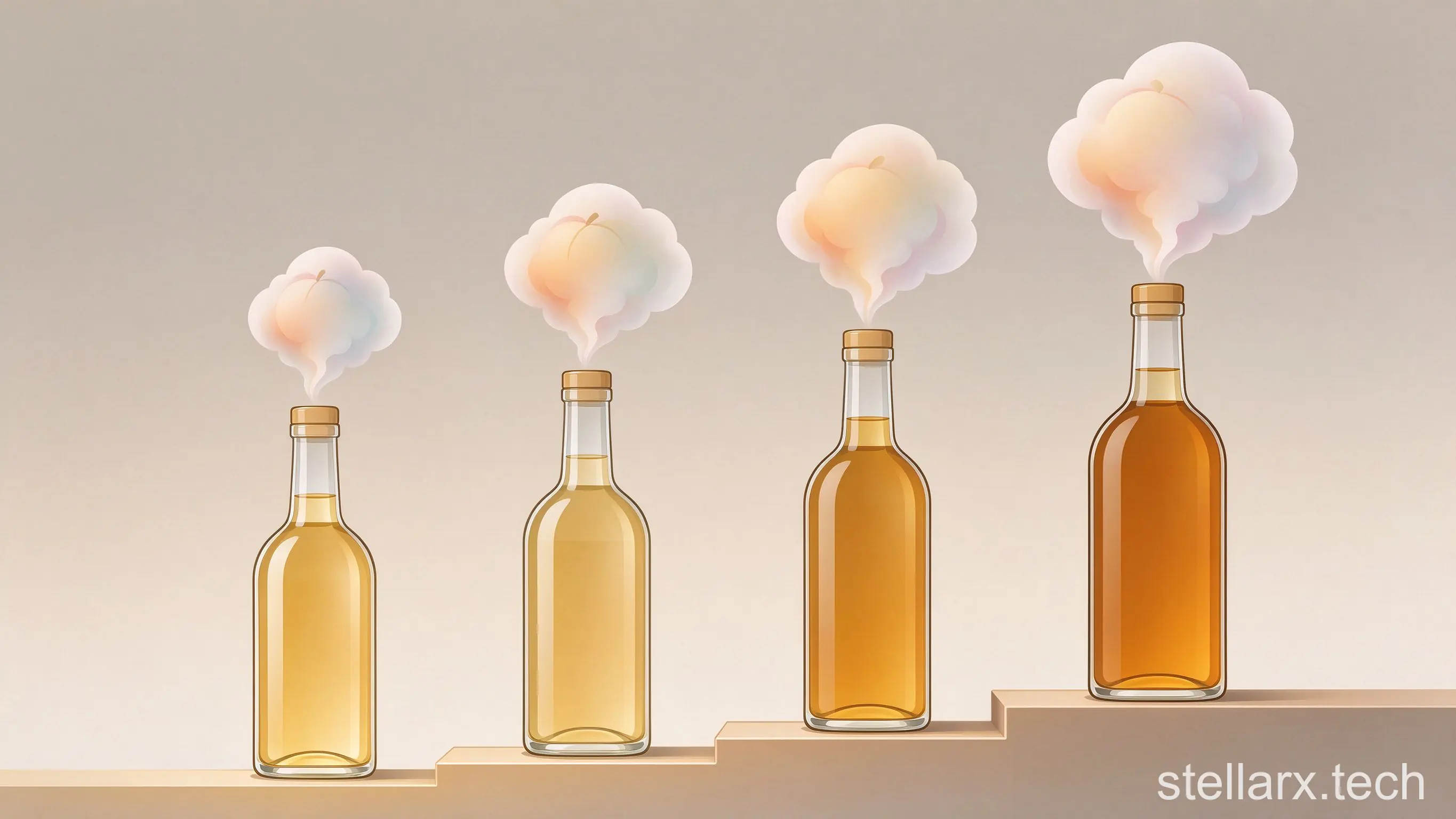
This is why the aldehydes are indispensable: they are the matchmakers of the liquor's chemistry. As baijiu ages, the unstable aldehydes react with other molecules and convert into more stable esters — and the liquor turns noticeably softer, its aroma deeper. New baijiu needs its aldehydes; aged baijiu has traded them for fragrance.
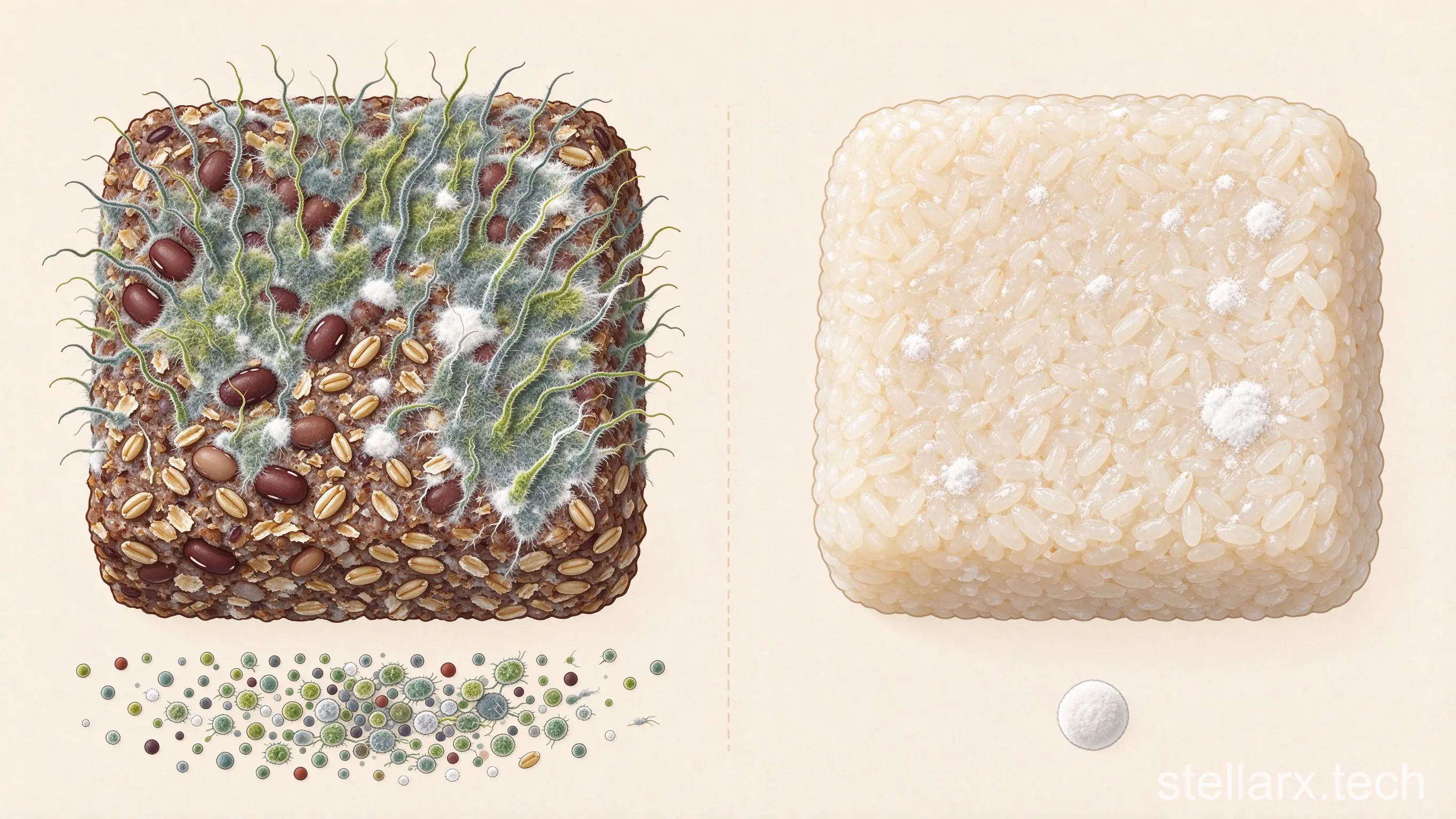
The fermentation decides everything — and China ferments with a bigger microbial army.
The "qu" (starter) is a mass of living microbes, and its complexity is the whole story. Big qu is cultured on high-protein grains — beans, bran, wheat — and grows a complex community of microorganisms; small qu uses rice and glutinous rice, low-protein grains, and grows almost a single strain. One strain makes one set of chemicals: the flavor is clean — or, less charitably, thin. Many strains fermenting together can throw up odd smells, but the fragrance multiplies.
Most foreign spirits use the "small qu" end of the spectrum. Korean soju is essentially made by one rice-mold strain per distillery — so clean that it is mostly "alcohol flavor." Whisky blends several yeasts (brewers know them as M1, US05, WLP028), and its total esters run high. Brandy distilleries add their own standard yeast; nobody relies on wild air and grape skin.
The total ester count is the shared yardstick for judging baijiu, whisky, and brandy. Most whiskies reach only the ester level of a small-qu baijiu like Jiang Xiaobai. High-end whisky matches a light-aroma baijiu like Fenjiu. A mid-grade baijiu like Jiannanchun already exceeds nearly every whisky and brandy on earth — and Moutai and Wuliangye run several times higher than the top whiskies.
Why can foreign distilleries not go further? Because they ferment in liquid: heavy molecules sink, light ones float, and the reactants never meet to form esters. Solid-state fermentation, the baijiu method, packs everything together. Japan's Yamazaki and Hakushu already borrow the technique to deepen their whisky; small American craft distilleries advertise "solid-state" as a selling point. There is a reason baijiu exports have been growing near 20% a year.
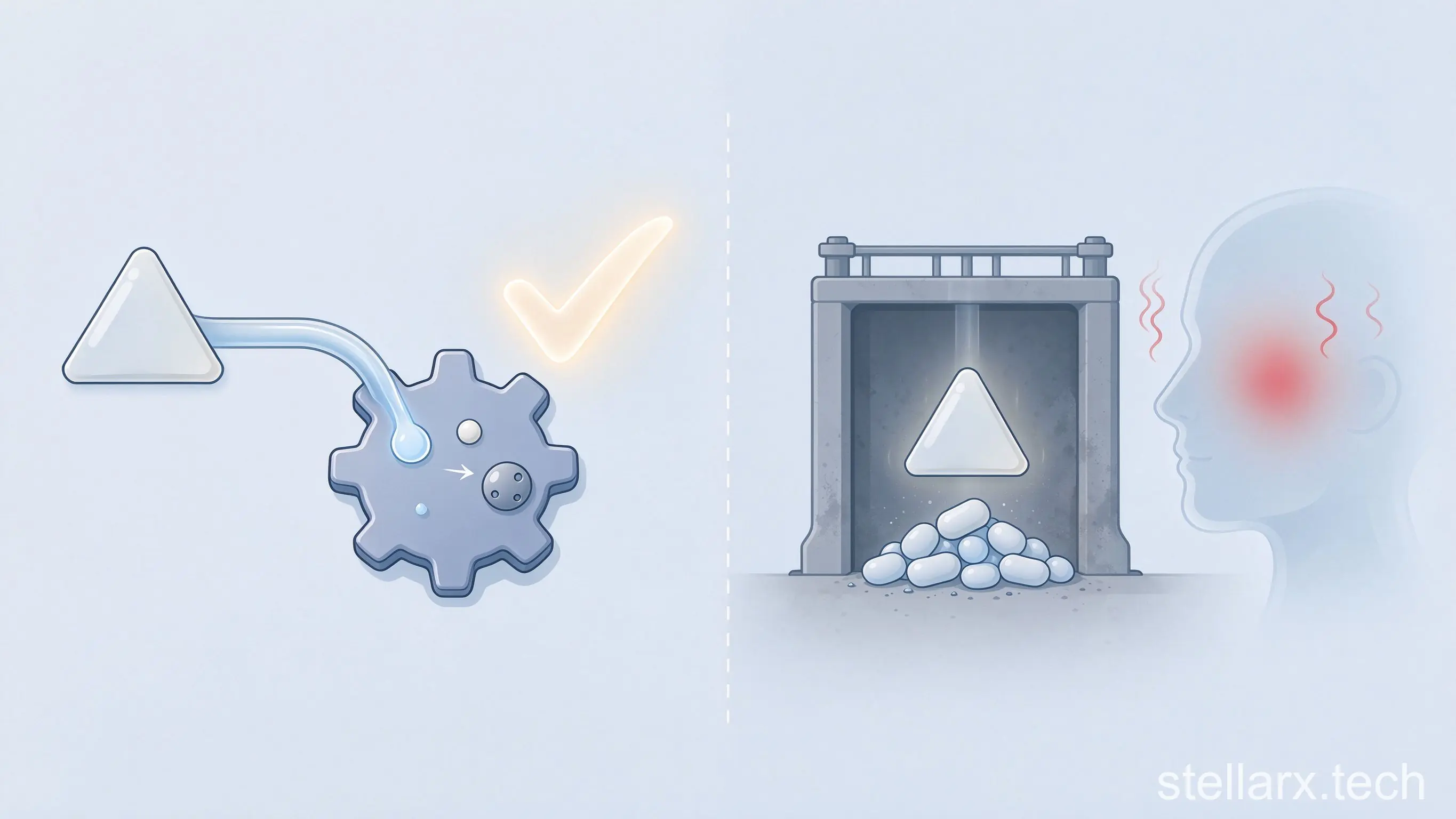
But the same chemistry carries a danger: acetaldehyde.
The main aldehyde in baijiu, acetaldehyde, is what makes the liquor feel crisp and strong — and it is also toxic, a Group 1 carcinogen, more frightening than ordinary alcohol at high concentrations. Normally the body clears it with ALDH2, an aldehyde dehydrogenase. In a large fraction of humanity — and not only East Asians; many Eastern Europeans too — ALDH2 is weak or absent. Those people flush red, and the acetaldehyde accumulates: facial flushing, dizziness, headache, nausea, vomiting, palpitations, and in severe cases difficulty breathing and confusion.
This is why the advice to "drink more and get used to it" is chemically wrong. The flush is not tolerance building up; it is the poison not being broken down. And it is why you should avoid unlabeled bulk liquor: an unscrupulous distiller chasing aroma may spike it with any aldehyde — and if that aldehyde is formaldehyde, the story is over.
The esters, meanwhile, explain why baijiu smells like fruit to some and like rancid oil to others.
Esters form when alcohols and acids react; they are oily liquids that carry fruit aromas and barely dissolve in water. Ethyl acetate smells of apple and banana; ethyl hexanoate smells of pineapple — the signature of strong-aroma baijiu, and the style most approachable to Western drinkers. But other esters do the opposite: ethyl valerate and ethyl linoleate carry a fat-stink rancid note that frightens newcomers, and sauce-aroma baijiu carries so much lactate and oleate ester that it can smell like spoiled oil to an unfamiliar nose.
Even in fine baijiu, esters make up at most 2% of the liquor — and the truly flavor-active fraction is only 0.2–0.6%. That is why foreign drinkers complain the aroma is thin. Chinese-American bartenders are already working with this: they use the wild-flower note of isobutyl acetate in strong-aroma baijiu to build "East-meets-West" cocktails.
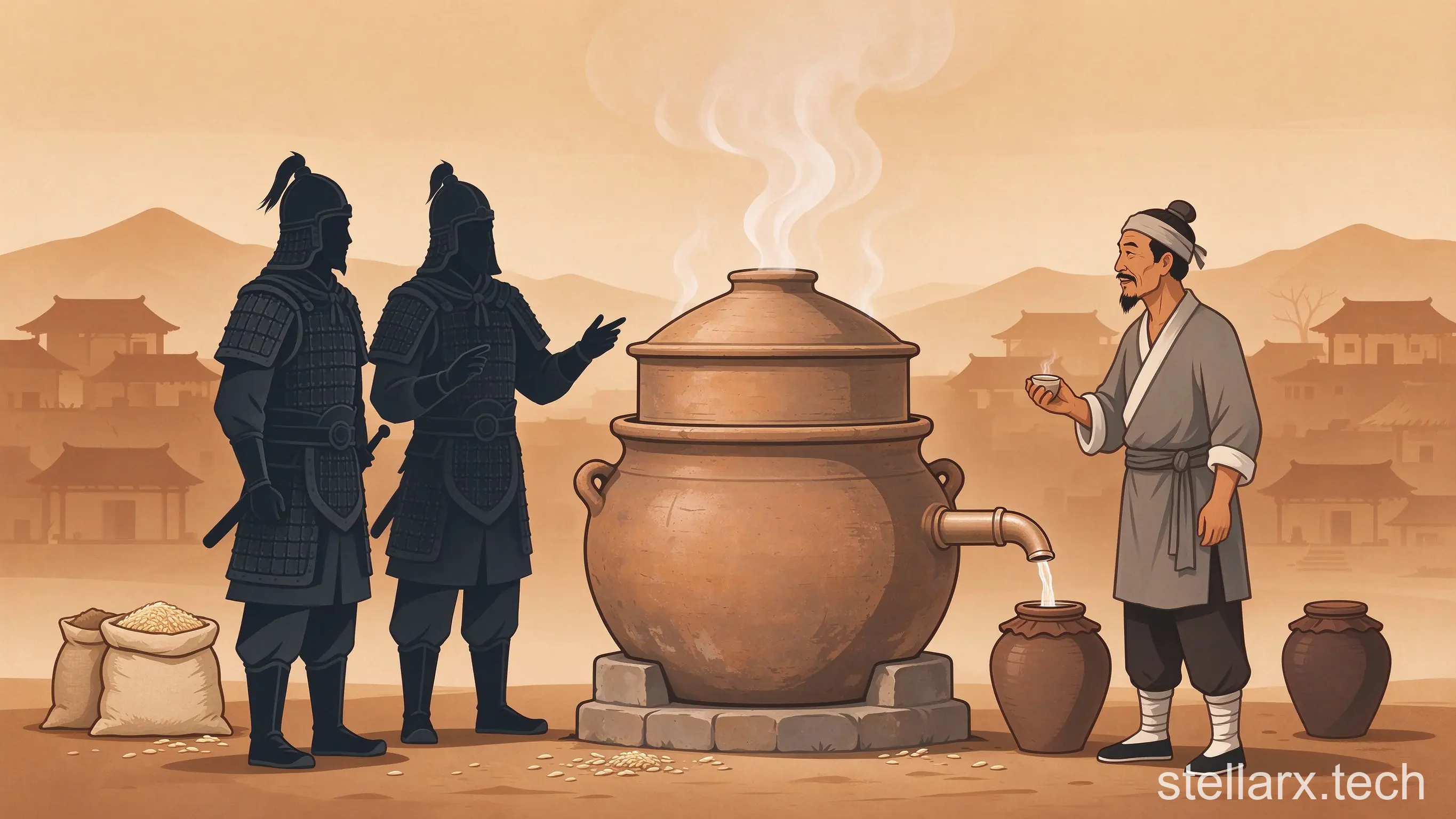
A history footnote: baijiu did not always burn.
For centuries Chinese liquor was white and cloudy — "turbid wine," sweet with suspended protein and unfermented sugar. The Chinese perfected filtration, giving rise to huangjiu and qingjiu, but never invented distillation. The technique arrived with a conquered people: in the 13th century, a Mongol army marched back from Baghdad with captured Arab distillers; during a campaign in Sichuan, the prisoners taught the locals to distill. Alcohol content broke past 24% toward 40, 50, 60% — and the legendary drinkers of the Song dynasty, men said to cross a mountain after three bowls, disappeared from history.
Every major spirit is the same story: brandy is distilled wine, whisky distilled malt aged in oak, vodka distilled potatoes and corn, gin distilled grain with juniper, rum distilled molasses. Baijiu is the one with the microbial army — and the aldehydes.
If you want to see fermentation's microscopic engine, you can now — including a yeast specimen where oval cells and the buds of asexual reproduction are clearly visible. Search "WWAI" in your app store and download it today.

References:
1. World Health Organization, Alcohol fact sheet — https://www.who.int/news-room/fact-sheets/detail/alcohol
2. IARC Monographs on the Evaluation of Carcinogenic Risks to Humans — https://monographs.iarc.who.int/list-of-classifications
All illustrations are AI-generated.
Related reading

Food Coma: Why Heavy Rice Meals Drain Your Energy


- Why Humans Are the Only Animals That Need Clothes
- A Whole 1.25 kg Pomelo Has Only 280 kcal. Here's Why.
- Salmonella Is Everywhere. Here's How It Gets Into Your Food
- Your Dry Eyes Aren't Thirsty — They're Out of Oil
- 国庆团圆饭,我劝你一定要留一个位置给它……
- Tired No Matter How Much You Sleep? It Might Be Inflammation
- Why You Wake at 3 AM Every Night: Don't Check the Clock
- Why Foreigners Can't Handle Baijiu: It's the Aldehydes
- Why the Poor Love Grand Narratives: The Microscope Argument
- The Trojan Horse: How Plague Disarms Your Immune System
全部评论