Your Dry Eyes Aren't Thirsty — They're Out of Oil
Step outside into a light wind and your eyes start pouring tears. Stare at a screen for two hours and they feel like someone sprinkled chili powder under the lids. Bright sunlight makes them squeeze shut. Most people read this as "my eyes are thirsty" — so they grab the eye drops, feel better for an hour, and the dryness comes back faster than before.
The surprise: most dry eye is not a water problem at all. It is an oil problem.
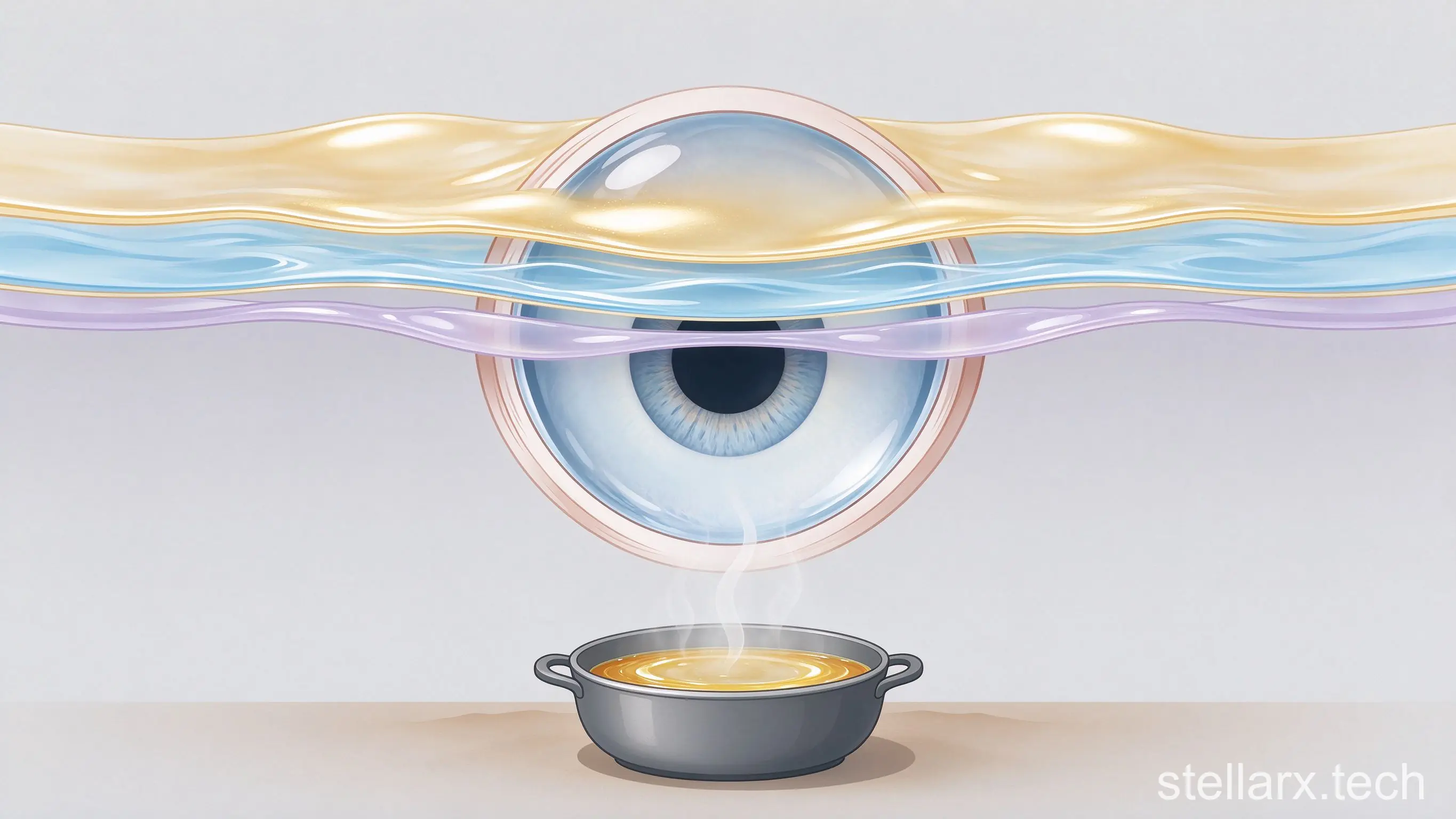
The tear film is three layers, and one of them is oil.
The eye's surface is never bare. A tear film covers it, and the film is not simply tears — it has three layers: a lipid (oil) layer on top, an aqueous (water) layer in the middle, and a mucin layer underneath. If any layer fails to form properly, dry eye can develop.
And here is what clinical practice keeps finding: in most patients, the core fault is the lipid layer — the oil is running low. Think of the film like the layer of fat on top of a pot of simmering soup: as long as that oil film is there, the water underneath barely evaporates. Remove the oil, and the moisture vanishes.
The glands that make the oil are quitting — from disuse.
The meibomian glands, the core glands that secrete the lipid layer, sit in a thin strip along the upper and lower edges of the eyelids. Their biggest modern enemy is the thing you are doing right now: staring at a screen.
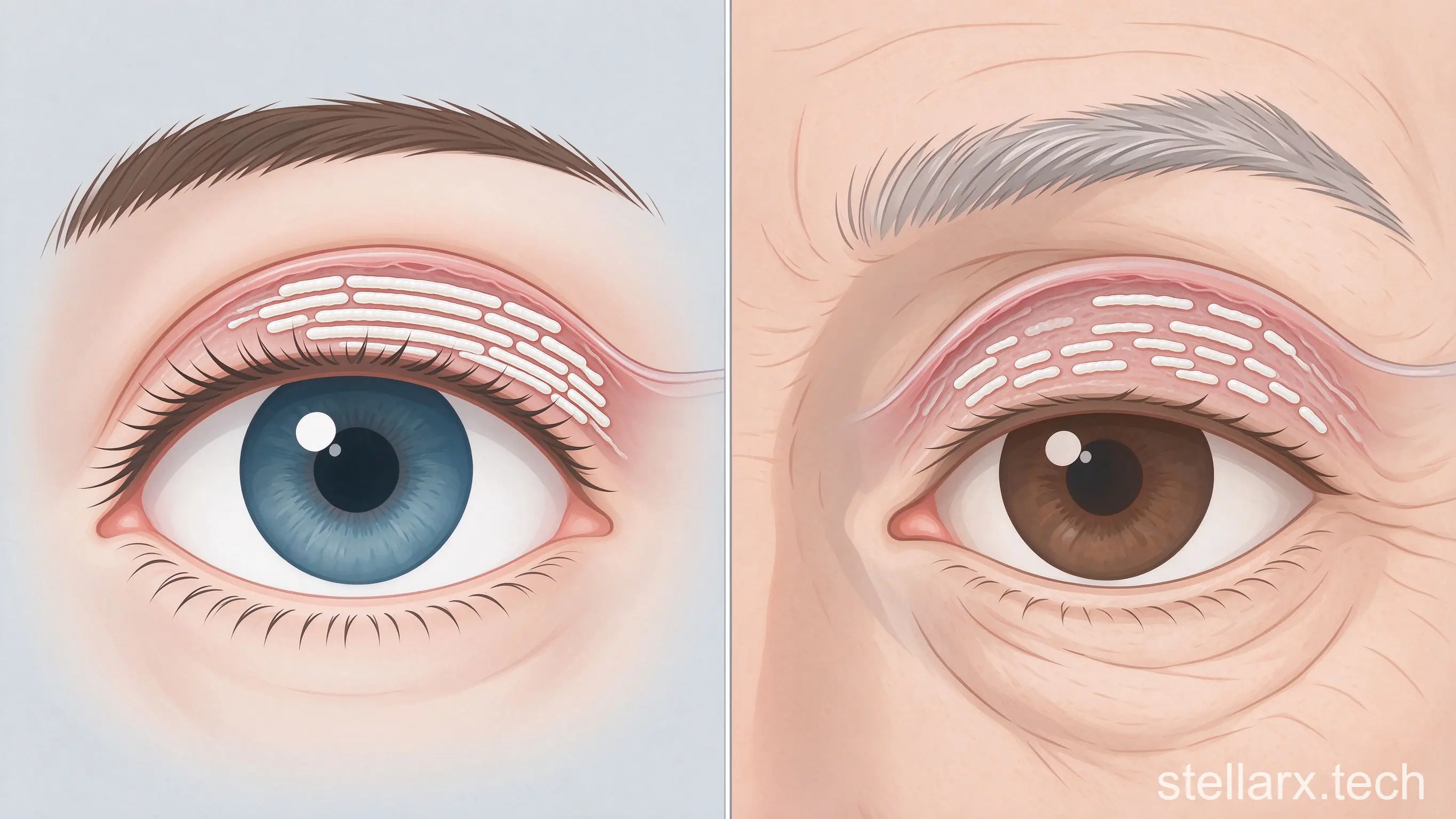
Meibomian glands are a textbook case of "use it or lose it." Blinking too little means the orbicularis oculi muscle barely contracts, so the glands cannot squeeze their oil out. Over time, the glands themselves shrink — and that shrinkage is nearly irreversible. The white streaks visible in imaging of a young man's complete set of glands become short, sparse remnants in a middle-aged man's atrophied ones.
Makeup habits add to the blockage: false lashes worn often, or eye makeup cleaned incompletely, leaves residue that plugs the gland openings. And late nights, high-sugar high-fat diets, smoking, and alcohol all weaken the glands' output. For the "out of oil" type of dry eye, the fix is not just adding water — it is restoring the oil-water balance.
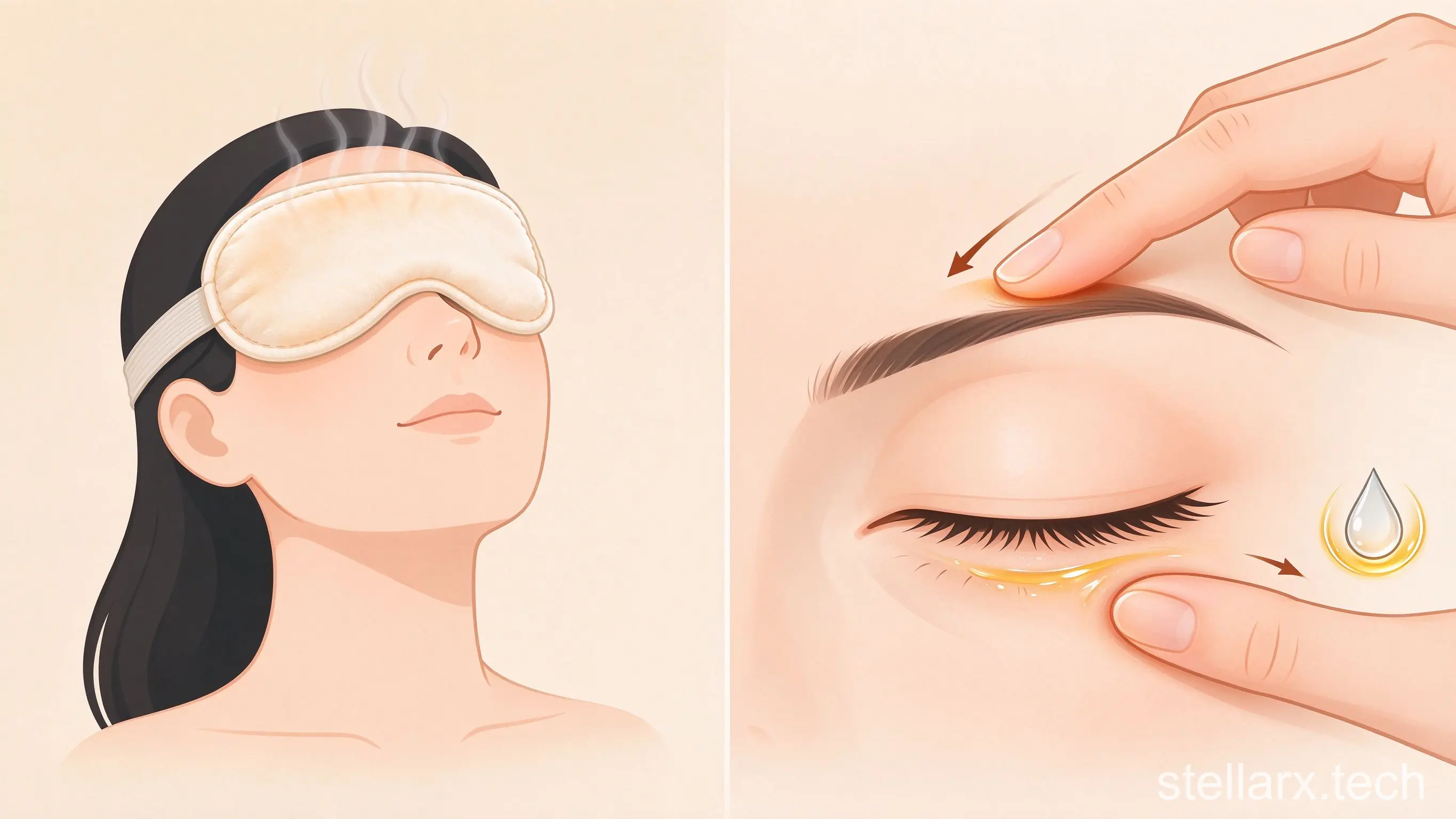
Two things that genuinely help: heat, then massage.
1. Heat softens the solidified lipid and relieves blockage. Use a sterile 40–45 °C warming eye mask or a warm towel, once or twice a day, 10–15 minutes each time.
2. Massage squeezes the softened oil out. Wash your hands or wear clean finger caps, close your eyes, and glide a fingertip from the upper edge of the upper lid downward, and on the lower lid from below upward — gently. One to two minutes per side.
If you are unsure of the technique, a clinic can do professional meibomian gland massage. This is not a "gimmick fee": it is a basic treatment written into dry-eye clinical guidelines. For eye drops, prefer artificial tears that contain a lipid component.
All of this, though, is locking the stable door. The real fix is the highest-frequency, most direct habit: stop spending so much time staring at a screen.
The 2026 clinical guideline puts lifestyle first.
The Dry Eye Full-Process Clinical Practice Guideline (2026) states plainly: lifestyle intervention is the first-line starting measure for every type of dry eye. The daily checklist it supports:
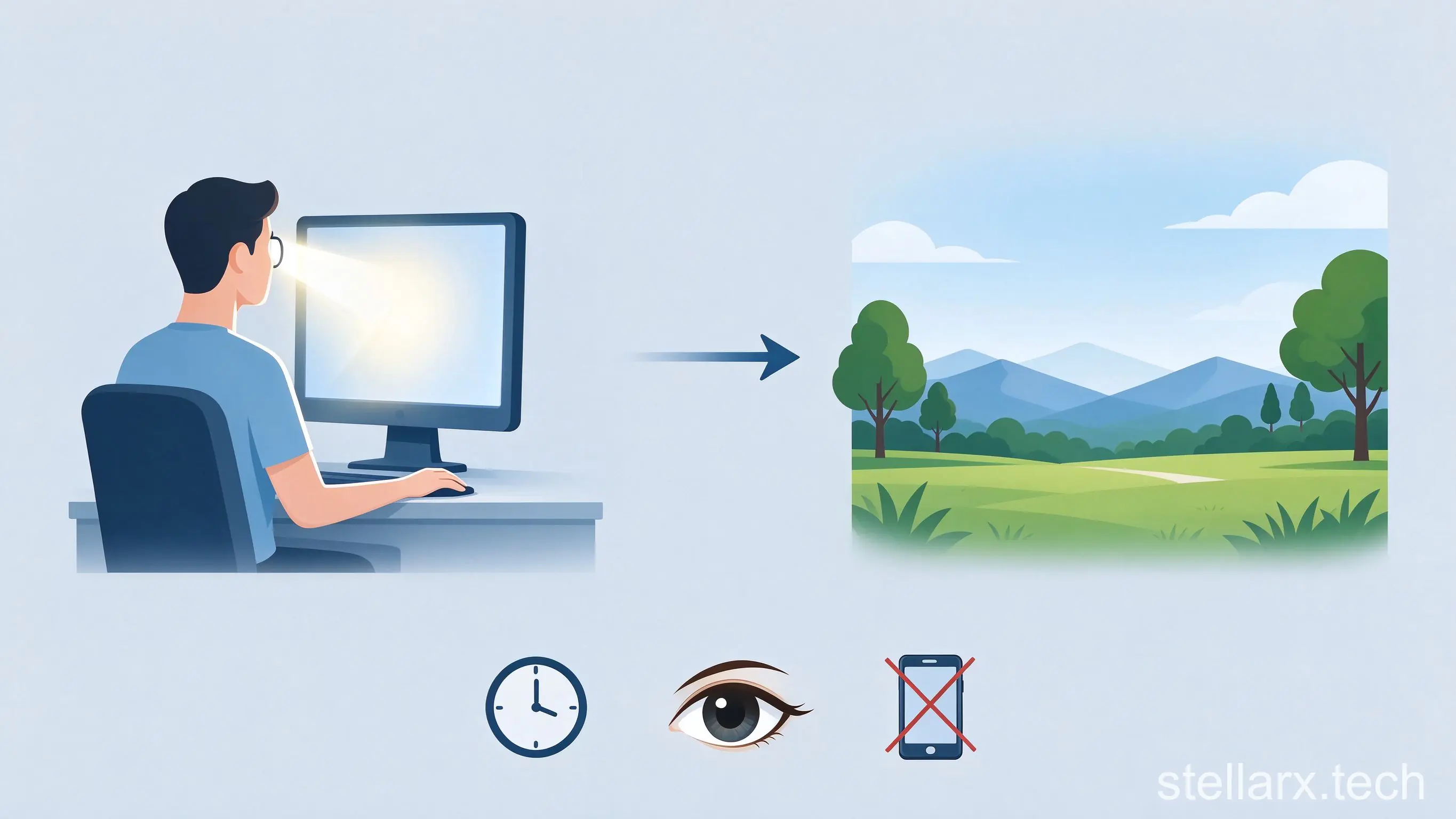
Environment. Avoid staying long in low-humidity, windy, smoky, dusty, or blue-light-drenched environments. In air-conditioned rooms, use a humidifier to hold 45–60% relative humidity.
Screen discipline. Strictly limit device time. Follow the 20-20-20 rule: every 20 minutes, look at something 20 feet (about 6 meters) away for 20 seconds.
Blink on purpose. Every 20 minutes, do 10 complete, deliberate blinks.
Evening wind-down. Cut device use in the hour before bed.
Lens pause. Stop wearing contact lenses — including cosmetic colored lenses — while symptoms are active.
Lifestyle trim. Quit smoking, cut alcohol, and avoid large amounts of caffeine.
Your eyes were never thirsty — they were running out of oil, and the factory that makes it had gone quiet from underuse. Restart the factory: blink on purpose, heat, massage, and look up at something far away. And if you want to see the muscle that does the blinking, you can: including a skeletal muscle specimen where striated muscle fibers, nuclei, and sarcolemma are clearly visible — the orbicularis oculi that squeezes your meibomian glands with every blink. Search "WWAI" in your app store and download it today.

References:
1. American Academy of Ophthalmology, Dry eye syndrome — https://www.aao.org/eye-health/diseases/what-is-dry-eye
2. National Eye Institute (NIH), Dry eye — https://www.nei.nih.gov/learn-about-eye-health/eye-conditions-and-diseases/dry-eye
All illustrations are AI-generated.
Related reading

Why Thirst Vanishes When You Swallow


- Why Humans Are the Only Animals That Need Clothes
- A Whole 1.25 kg Pomelo Has Only 280 kcal. Here's Why.
- Salmonella Is Everywhere. Here's How It Gets Into Your Food
- Your Dry Eyes Aren't Thirsty — They're Out of Oil
- 国庆团圆饭,我劝你一定要留一个位置给它……
- Tired No Matter How Much You Sleep? It Might Be Inflammation
- Why You Wake at 3 AM Every Night: Don't Check the Clock
- Why Foreigners Can't Handle Baijiu: It's the Aldehydes
- Why the Poor Love Grand Narratives: The Microscope Argument
- The Trojan Horse: How Plague Disarms Your Immune System
全部评论