The Trojan Horse: How Plague Disarms Your Immune System
The most destructive pathogen in human history does not win by destroying tissue. It wins by letting your own immune system carry it inside the walls — then disarming the garrison from within.
This is the strategy of Yersinia pestis, the bacterium of plague, and it is built on a sequence of disguises so precise they read like a military plan.
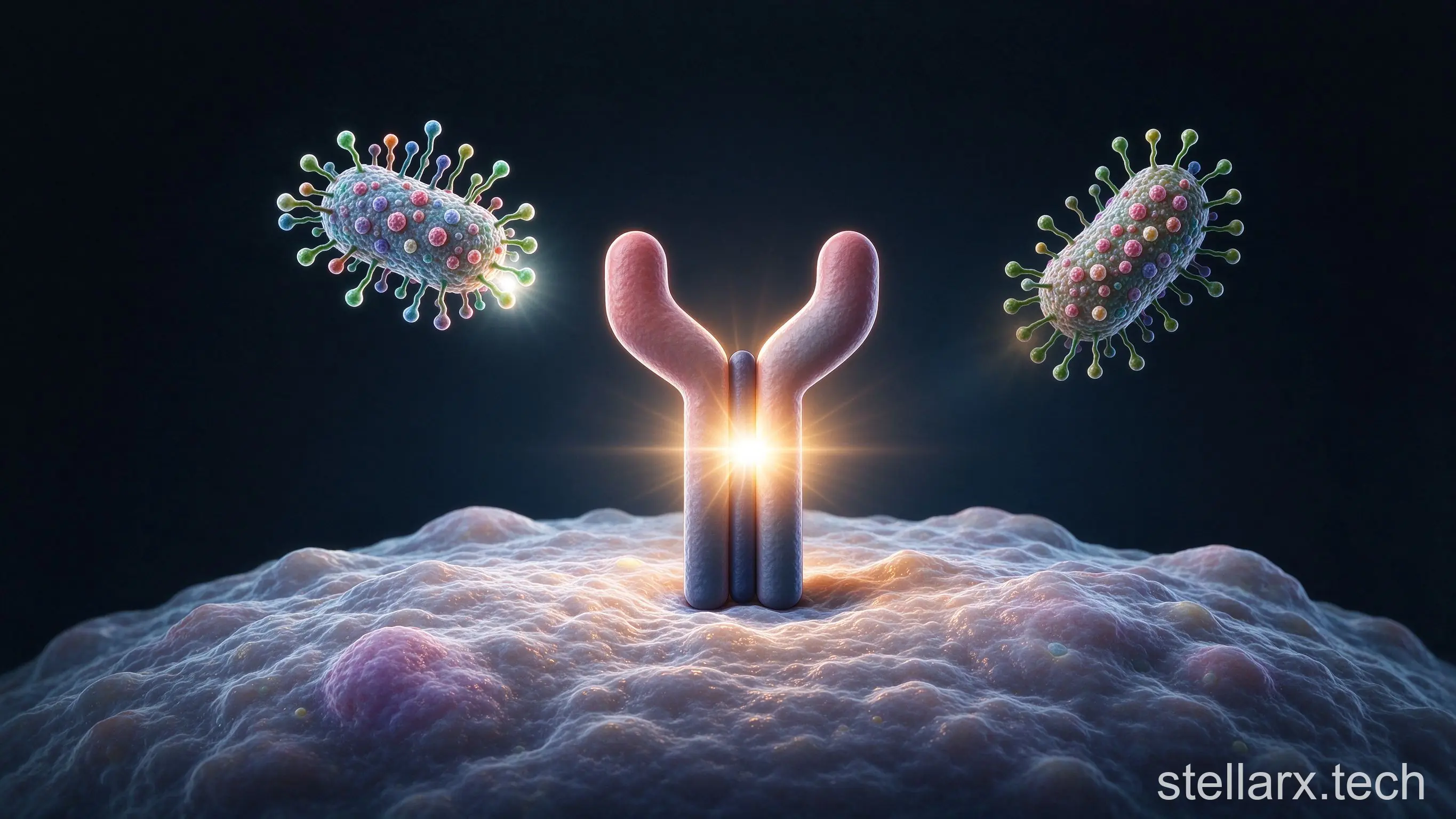
Disguise one: the alarm system never rings.
In nature, Yersinia pestis shuttles between two hosts: fleas at about 21–26 °C and mammals at 37 °C. Most Gram-negative bacteria carry lipopolysaccharide (LPS) on their surface — the exact molecule macrophages detect as an alarm. In the flea's cool body, the plague bacillus builds normal six-acyl LPS, which strongly activates the TLR4 receptor.
Then it enters a mammal. The 37 °C signal switches its gene program, and it begins making four-acyl LPS instead. The modified molecule binds TLR4 with orders of magnitude less affinity. The immune system's sensors receive a signal too faint to notice. No inflammation alarm. No recruitment call.
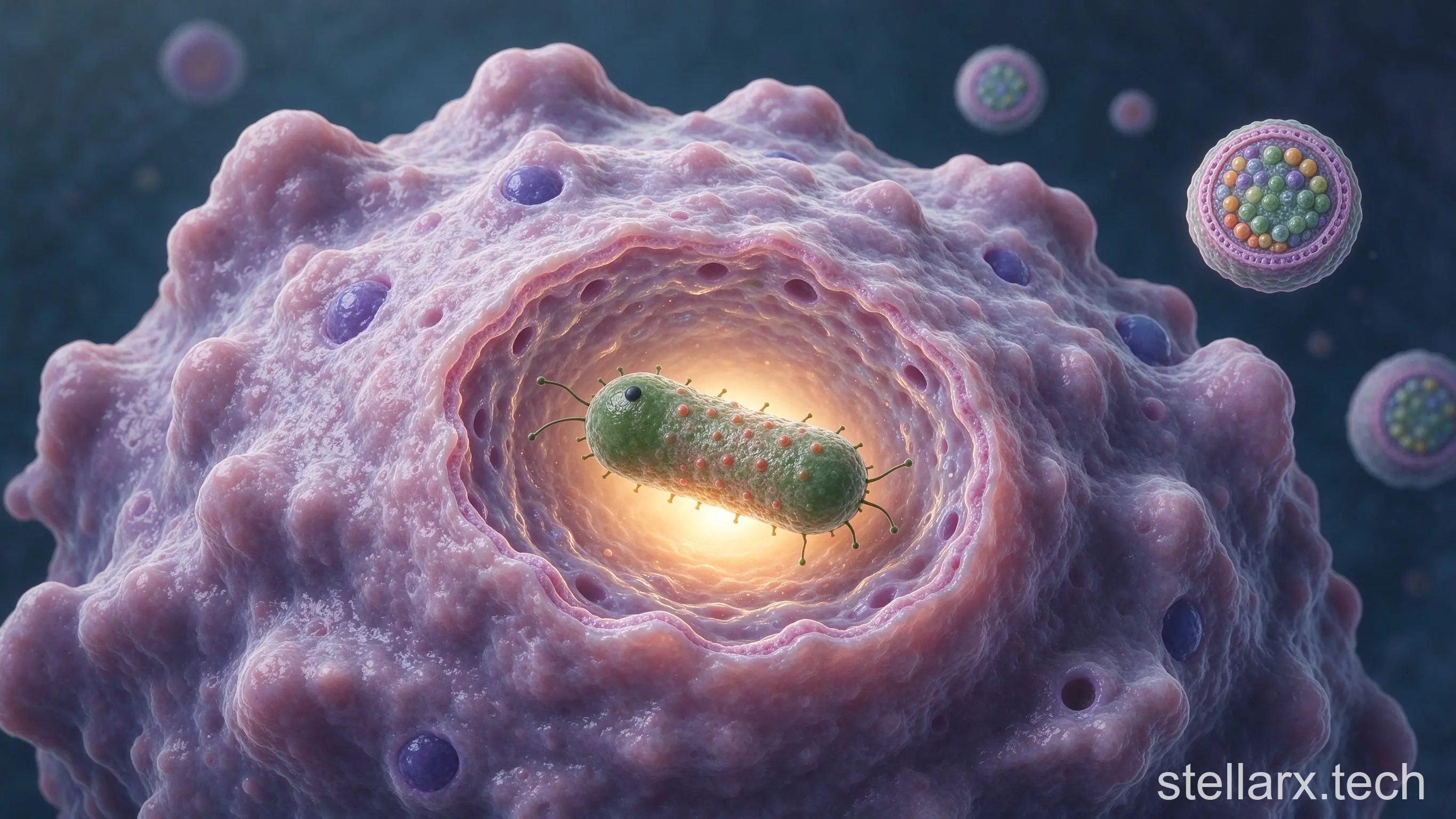
Disguise two: being eaten is part of the plan.
Even with the alarm muted, a macrophage may still swallow the bacillus by sheer physical contact. Normally, being phagocytosed is a death sentence: the engulfing vesicle fuses with the lysosome, and acid plus digestive enzymes destroy the invader.
Yersinia pestis does not resist. In the first hours inside the cell it sits quietly, like any ordinary bacterium — while sensing the environment and activating a plasmid-encoded set of virulence genes. It blocks the fusion of phagosome and lysosome. The acidification is delayed. Digestion never starts.
The warship that should have destroyed the bacterium has become its shelter and arsenal. The Trojan horse is inside the city; the soldiers are waiting.
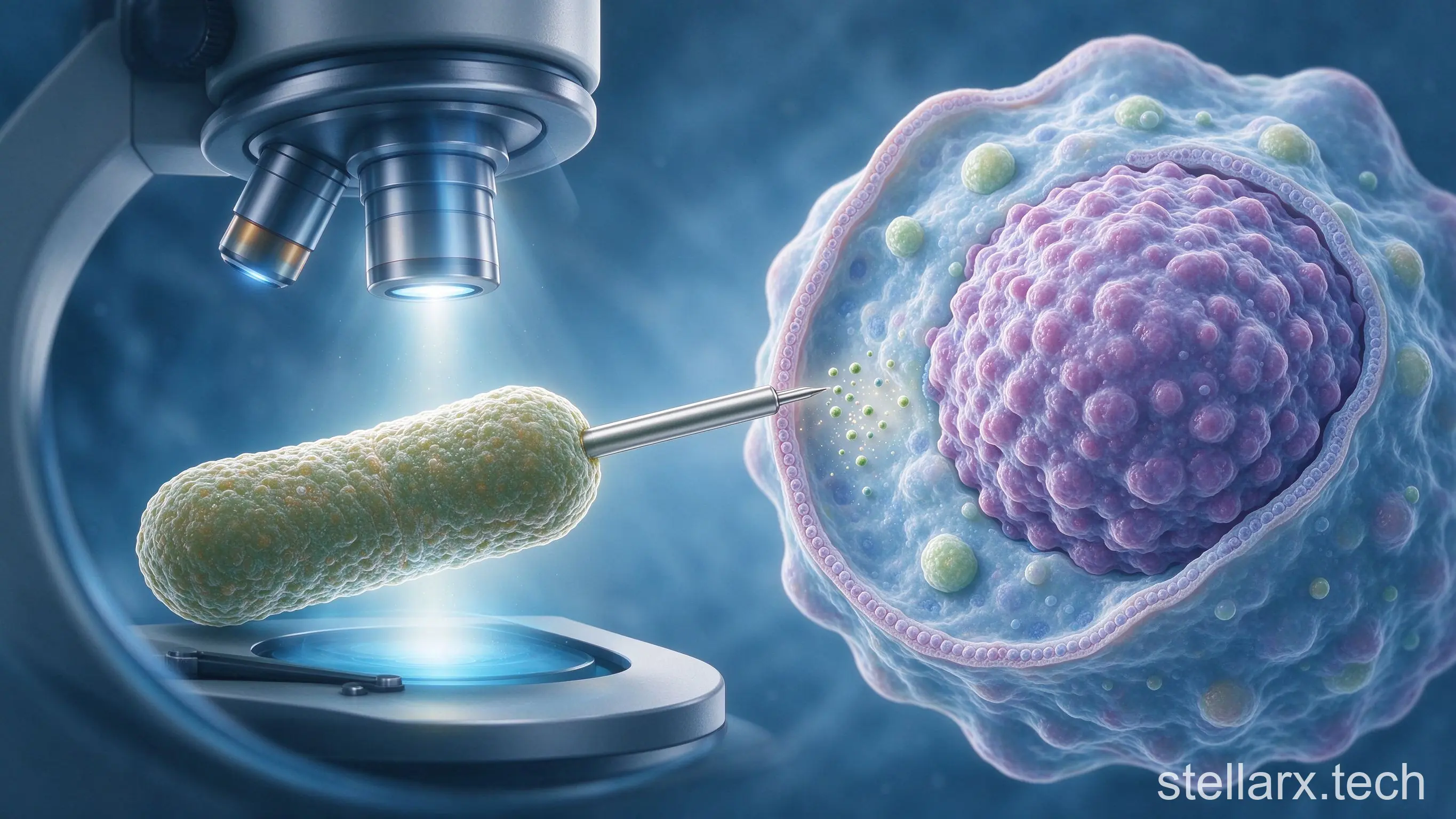
The injection needle: T3SS and the Yop proteins.
The waiting soldiers are delivered by the Type III Secretion System — a molecular injection needle built from about 20 proteins, spanning both the bacterial and host membranes, that injects effector proteins directly into the host cell's cytoplasm, bypassing antibodies and complement outside.
The injected proteins, called Yops, share one division of labor: make the immune cell unable to see the enemy, unable to fight it, unable to call for help — and, in the extreme case, quietly self-destruct. Some Yops sever internal signaling chains. Some destroy the cytoskeleton, paralyzing phagocytosis. Some suppress the cell's ability to produce inflammatory signals. One even drives macrophages into programmed apoptosis — a silent death that releases no inflammatory debris, so even the dying cell's last cry is suppressed.
With sensing, action, and communication broken at once, every injected immune cell becomes a hollow shell.
Then the bacterium hijacks the shell as transport. Infected macrophages travel with normal lymph flow into the lymph nodes — the body's filter stations — carrying the invader straight through the defenses. Inside the node, the bacillus escapes, multiplies extracellularly, and swells the node into a bubo. When the node barrier breaks, the blood is reached: septicemic plague, then pneumonic plague, spreadable person to person.
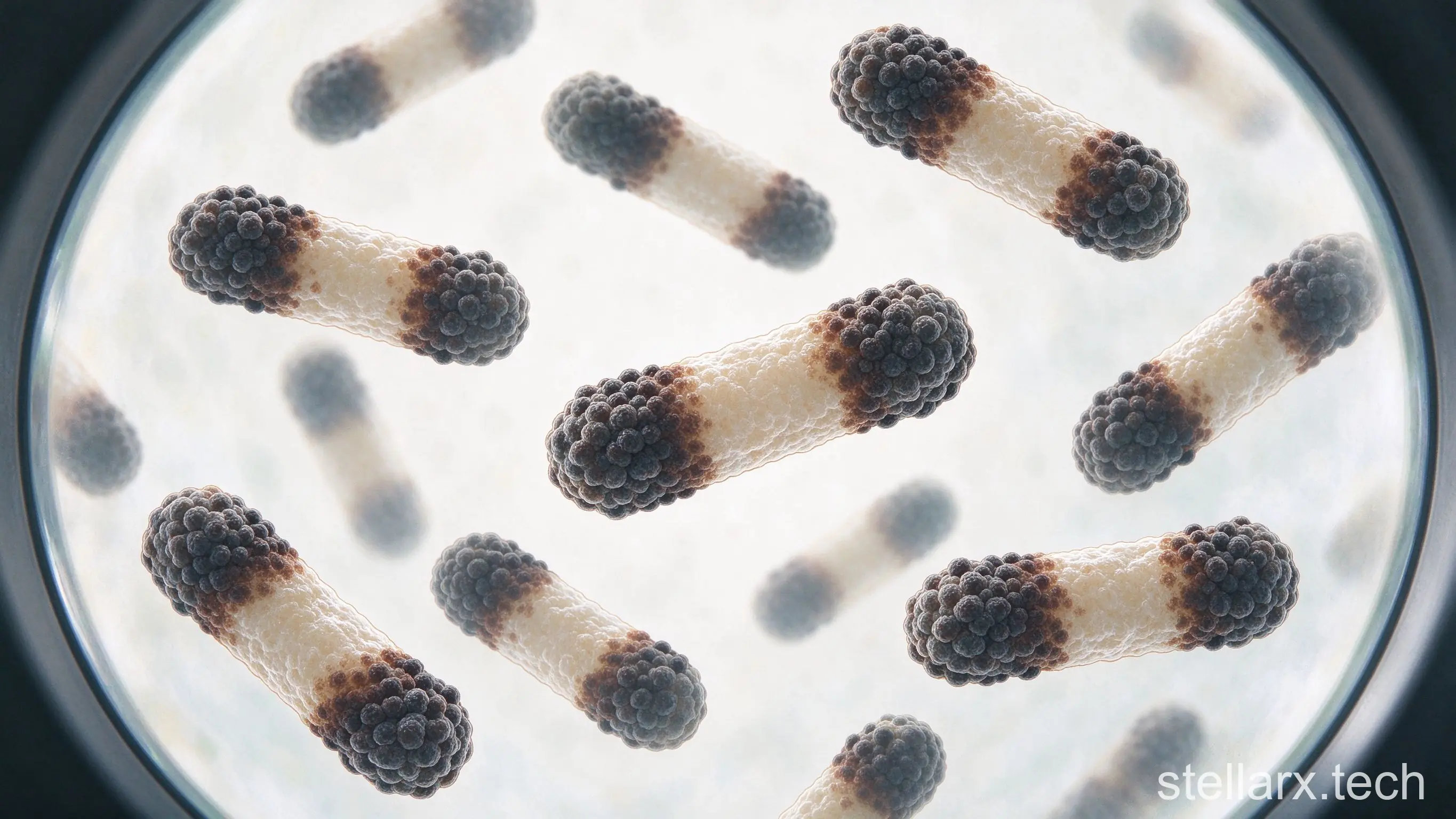
The cost of the protein cloak.
The plague bacillus hides behind an F1 capsule — and here is the rarity: its capsule is protein, not polysaccharide. Most encapsulated bacteria (pneumococcus, meningococcus, cryptococcus) wear polysaccharide capsules, which are cheap to build and weakly immunogenic. Protein capsules are almost unheard of among bacteria because they are expensive: forming one peptide bond costs 2 GTP and 2 ATP, while a glycosidic bond costs only 1–2 ATP, and nitrogen-rich amino acids are far costlier than sugars.
But protein earns two advantages: it can dodge pre-existing immunity (the body makes no response to a protein it has never seen), and once antibodies do arrive, they are high-affinity, persistent, and memorable — one plague infection confers lifelong immunity. That is why the bacillus must kill fast: given three to five days, specific antibodies will light it up for destruction.
It pays for the cloak by storing polyphosphate granules at both ends of the cell — the famous bipolar staining — and converting them to ATP to build capsule on entering the 37 °C mammal. Its LD50 is among the lowest in the bacterial world: a handful of organisms can kill a human.
The final irony: the immune response is what kills.
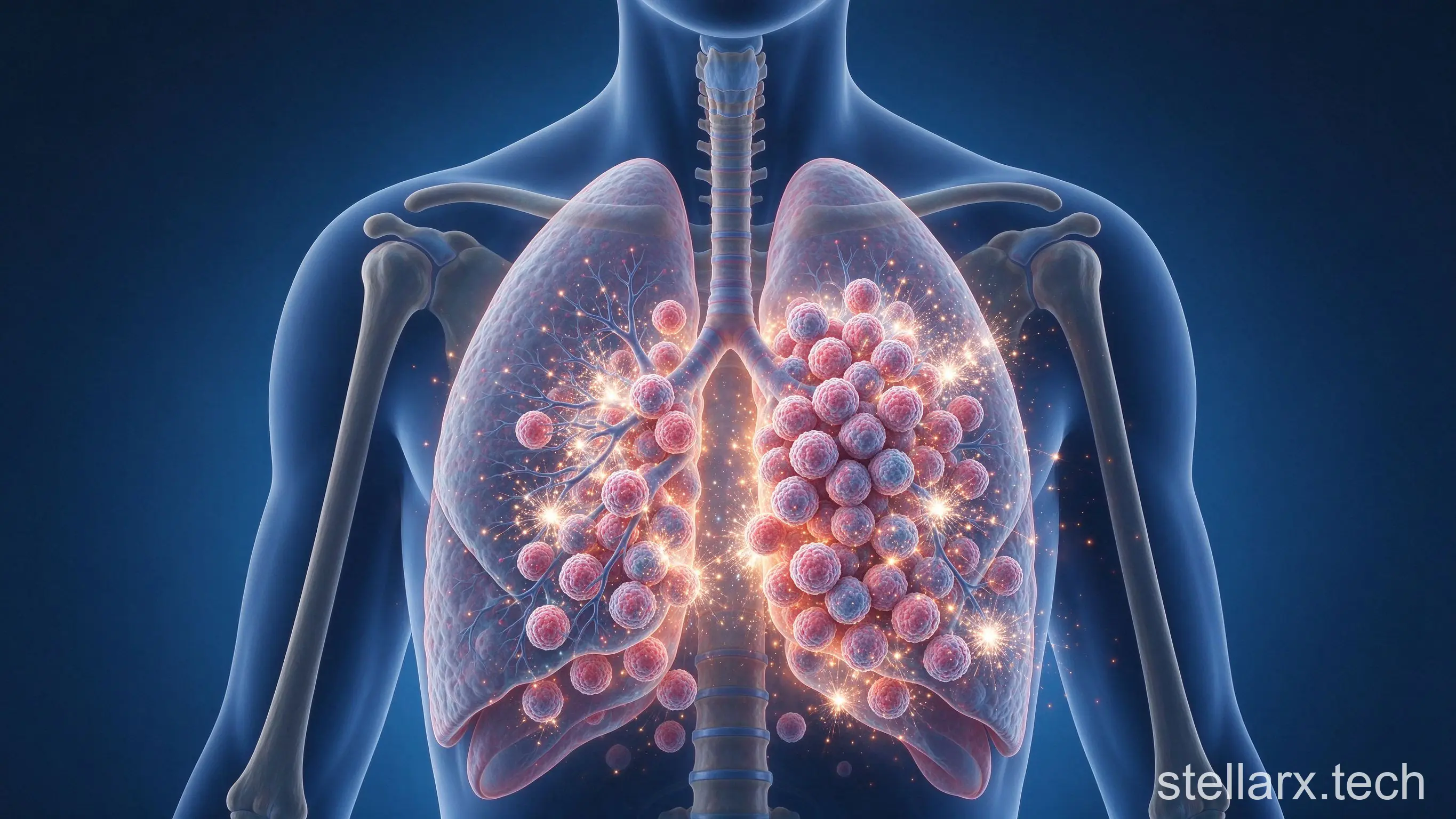
Pneumonic plague looks eerily peaceful at first: the bacillus multiplies through the lungs while inflammation markers stay normal, because every contacted leukocyte has been silenced. When detection finally comes, granulocytes flood the lung — cells loaded with explosives that detonate on contact. The delicate lung cannot survive the fight; the patient dies of pulmonary hemorrhage and respiratory failure.
Yersinia pestis itself is almost benign: it multiplies quietly in body fluids and destroys no tissue directly. The devastation is the immune system's own overreaction. When it comes to wrecking a body, no pathogen compares to immunity itself. The strongest fortress is not lost to a frontal assault — it falls from within.
If you want to meet the bacterium's close cousin, an Escherichia coli specimen under the microscope shows a Gram-negative short rod — the same family, Enterobacteriaceae, that Yersinia pestis belongs to. Search "WWAI" in your app store and download it today.

References:
1. Centers for Disease Control and Prevention, Plague — https://www.cdc.gov/plague/index.html
2. World Health Organization, Plague fact sheet — https://www.who.int/news-room/fact-sheets/detail/plague
All illustrations are AI-generated.
Related reading

Why Skipping the Rabies Shot Can Kill You

Flu Season 2026: Why the Flu Shot Is Worth It — H3N2, Antigenic Drift

Why Does Rhinitis Keep Coming Back? Frequent Sneezing and Runny Nose M…
- Why Humans Are the Only Animals That Need Clothes
- A Whole 1.25 kg Pomelo Has Only 280 kcal. Here's Why.
- Salmonella Is Everywhere. Here's How It Gets Into Your Food
- Your Dry Eyes Aren't Thirsty — They're Out of Oil
- 国庆团圆饭,我劝你一定要留一个位置给它……
- Tired No Matter How Much You Sleep? It Might Be Inflammation
- Why You Wake at 3 AM Every Night: Don't Check the Clock
- Why Foreigners Can't Handle Baijiu: It's the Aldehydes
- Why the Poor Love Grand Narratives: The Microscope Argument
- The Trojan Horse: How Plague Disarms Your Immune System
全部评论