Fiber and Constipation: Vegetables vs Peanuts
Your gut is not born hating vegetables and loving peanuts. The real story: most vegetables are actually low in dietary fiber — not nearly enough to push your intestines along — and different types of fiber work on blood lipids, blood sugar, stool and weight loss through very different mechanisms.
Vegetables Are Not Fiber Powerhouses
There is a widespread misunderstanding: people treat "vegetables" and "rich in fiber" as the same thing, then assume that gnawing through a mountain of greens will cure constipation.
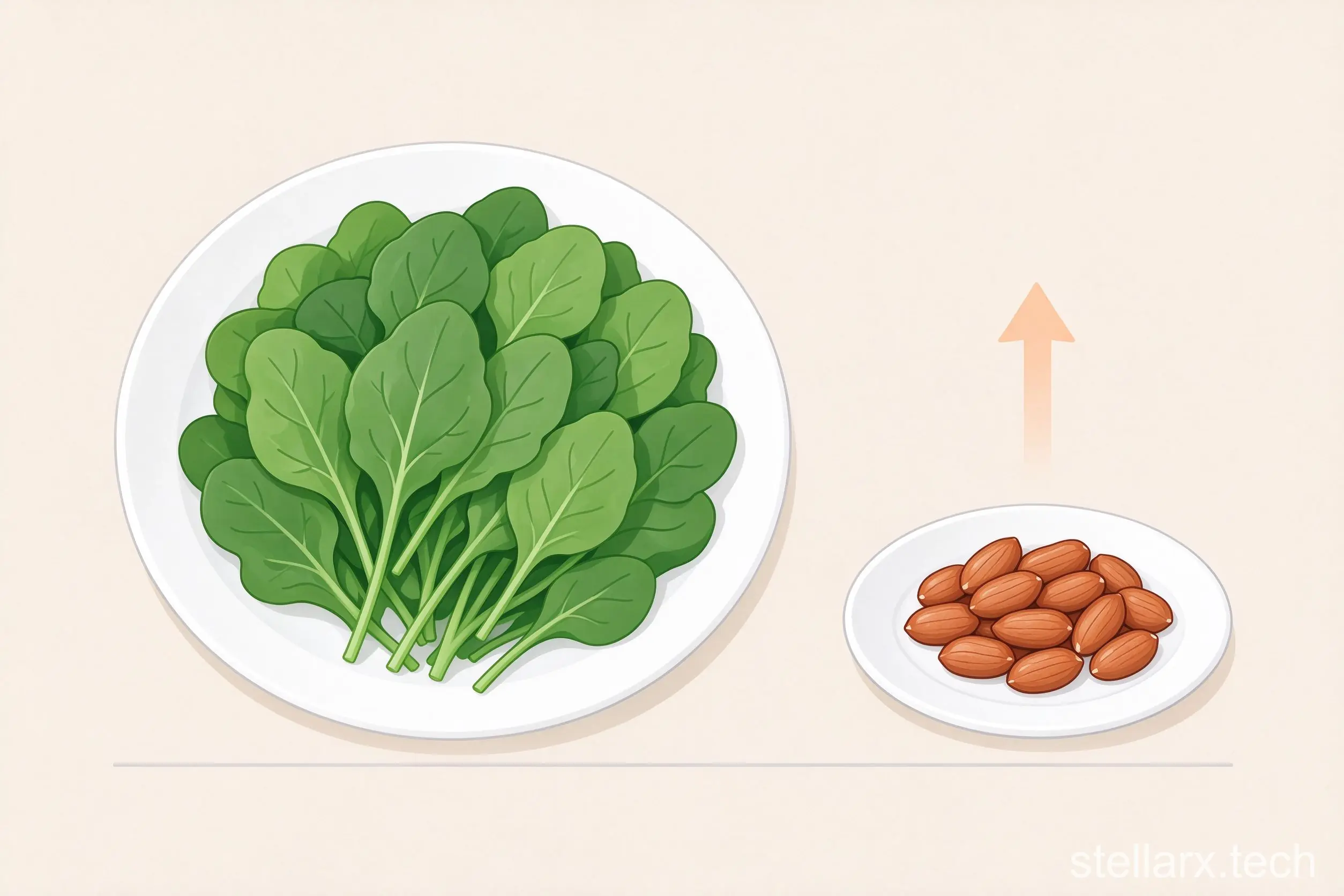
In fact, most vegetables are mostly water — usually over 90% — so their fiber content is not high at all, typically 0.5%–2.8%. Leafy greens: Chinese cabbage about 0.8%, lettuce 1.0%–1.3%, spinach about 2.2%, kale about 4.1%. Flower vegetables: broccoli 1.6%–2.6%, cauliflower 2.1%. Root vegetables: carrot about 2.8%, potato 2.1%, lotus root 4.9%. Melons and nightshades: tomato about 0.5%, cucumber 0.7%, pumpkin 1.5%–3.2%.
Now the math. The Chinese dietary reference intakes (2023 edition) recommend 25–30 g of fiber per day for adults over 18. Take 27 g as the middle value: to get it entirely from spinach, you would need 27 ÷ 2.2 × 100 ≈ 1,272 g — almost 2.5 jin of raw spinach. From broccoli, the better option: 27 ÷ 3.7 × 100 ≈ 730 g, over 1.5 jin. Even following the food-guide pyramid's 500 g of vegetables a day gives you only about 10 g of fiber.
Chinese residents are not close to this target: the average daily fiber intake in 2015–2017 was just 10.4 g — less than half the recommendation.
So why do nutrition guides insist on vegetables? Because vegetables are loaded with vitamins, minerals and plant phenolics; fiber is simply not their strongest suit. Their core job is diverse nutrition and filling dietary volume — which is exactly why a balanced diet matters.
[
Why Peanuts Work
Peanuts sit high in the fiber family: about 8 g of fiber per 100 g raw, 5–7 g per 100 g when boiled. To hit 27 g from peanuts alone, you would need about 450 g — roughly a jin. Compare that with 1,273 g of spinach.
But here is the catch: a jin of peanuts also delivers about 2,300–2,500 kcal — nearly one and a half days of energy for an adult man — and roughly 200 g of fat. Peanut kernels carry about 44.3 g of fat per 100 g. Most of it is the "good" kind — monounsaturated (MUFA) and polyunsaturated (PUFA) fats that can lower bad cholesterol and support heart health — but the total fat still blows past the daily recommendation.
Fiber achieved, calories and fat exceeded. Peanuts are a highly efficient fiber fighter, but they cannot — and should not — fight alone.
The Fiber Army: A Combination Strategy
The winning move is a diverse, high-fiber food army, which is exactly why the food pyramid exists.
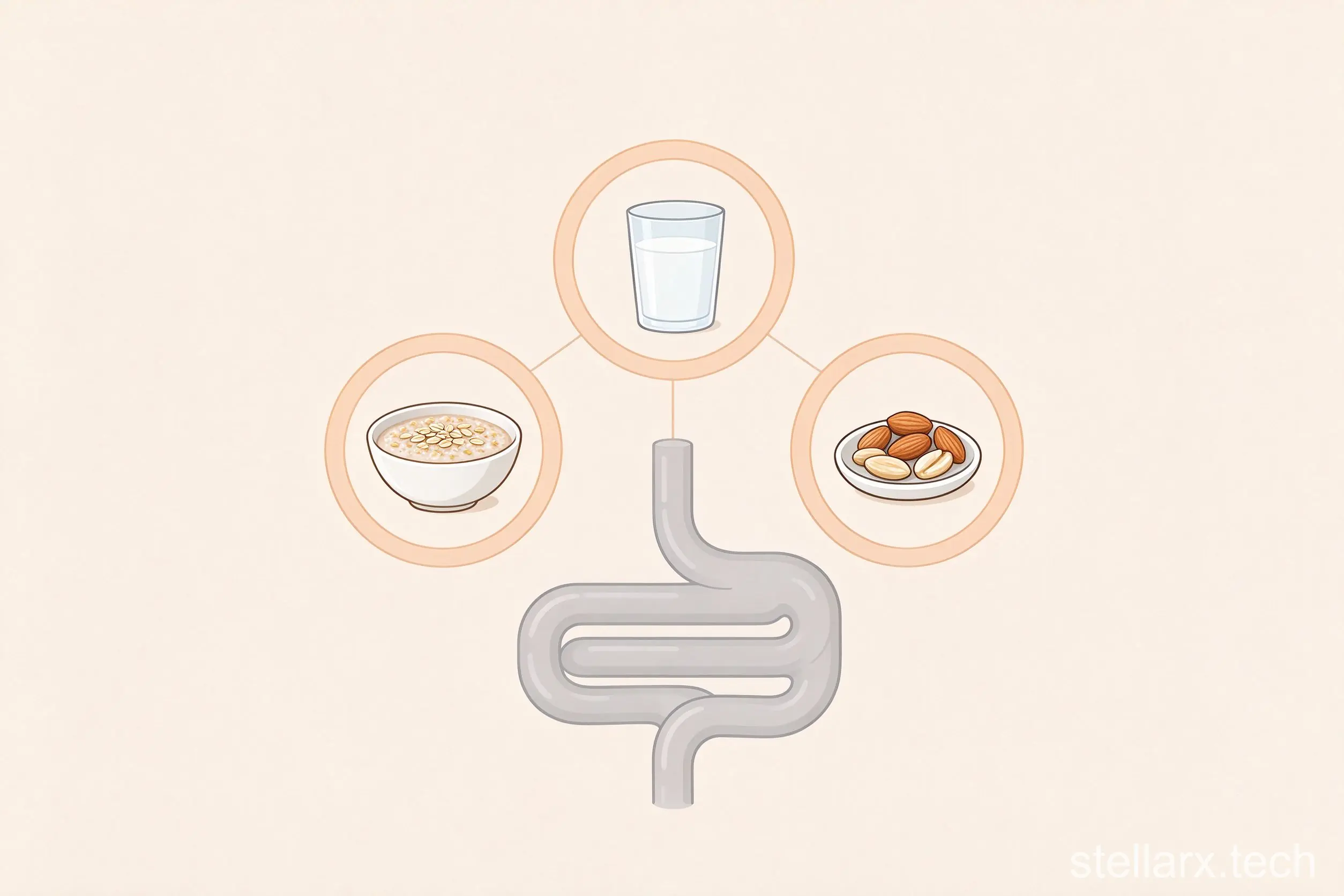
The main force — whole grains and legumes. The dietary guide recommends that a quarter to half of your daily staples be whole grains and legumes. Per 100 g dry weight they deliver about 6–15 g of fiber; making them a third of your staple intake (about 100 g) brings roughly 10 g. The pyramid calls for 200–300 g of staples a day, including 50–150 g of whole grains and legumes.
The special forces — nuts and seeds. Peanuts, almonds and similar nuts carry 4%–11% fiber (black sesame 14%, pine nuts 12.4%). They pair fiber with healthy fats, but they are calorie-dense, so keep the portion small: a handful of 10–15 g a day as a snack or side. Their protein (peanuts rank second only to almonds among nuts) brings strong satiety, and their unsaturated fats stimulate cholecystokinin, which lowers appetite through both vagal and non-vagal pathways. The 2021 Chinese expert consensus on type 2 diabetes even suggests diabetics drink water before meals and eat a small handful of nuts — say 10 almonds or 20 peanuts.
The support troops — high-fiber vegetables and fruits. On top of the daily 300–500 g of ordinary vegetables, consciously add fiber-rich picks: edamame, peas, mushrooms, pears, strawberries. A handy pattern is the "3-2-1" vegetable mode: 3 liang of leafy greens, 2 liang of any other vegetables (excluding potato, yam, lotus root, taro), and 1 liang of fungi and seaweed — mushrooms, enoki, laver, kelp, black fungus.
A full day then writes itself: a bowl of oatmeal (5–8 g), half of lunch and dinner staples switched to brown rice or whole wheat (8–10 g), a jin of vegetables and fruit (8–10 g), plus a small handful of peanuts or almonds (2–3 g). Target reached, nutrition balanced.
Quality Matters: Soluble vs Insoluble Fiber
Not all fiber is the same. Per the Chinese Nutrition Society's 2021 scientific consensus and the national food-nutrient terminology standard, dietary fiber must be: naturally present in plants or extracted/synthesized from them; a polymer of at least 3 carbohydrate units; edible but not digestible or absorbable in the human small intestine; and beneficial to health.
The 2023 dietary guide for hyperlipidemia recommends 25–40 g of fiber daily for those with high blood lipids, including 7–13 g of soluble fiber.
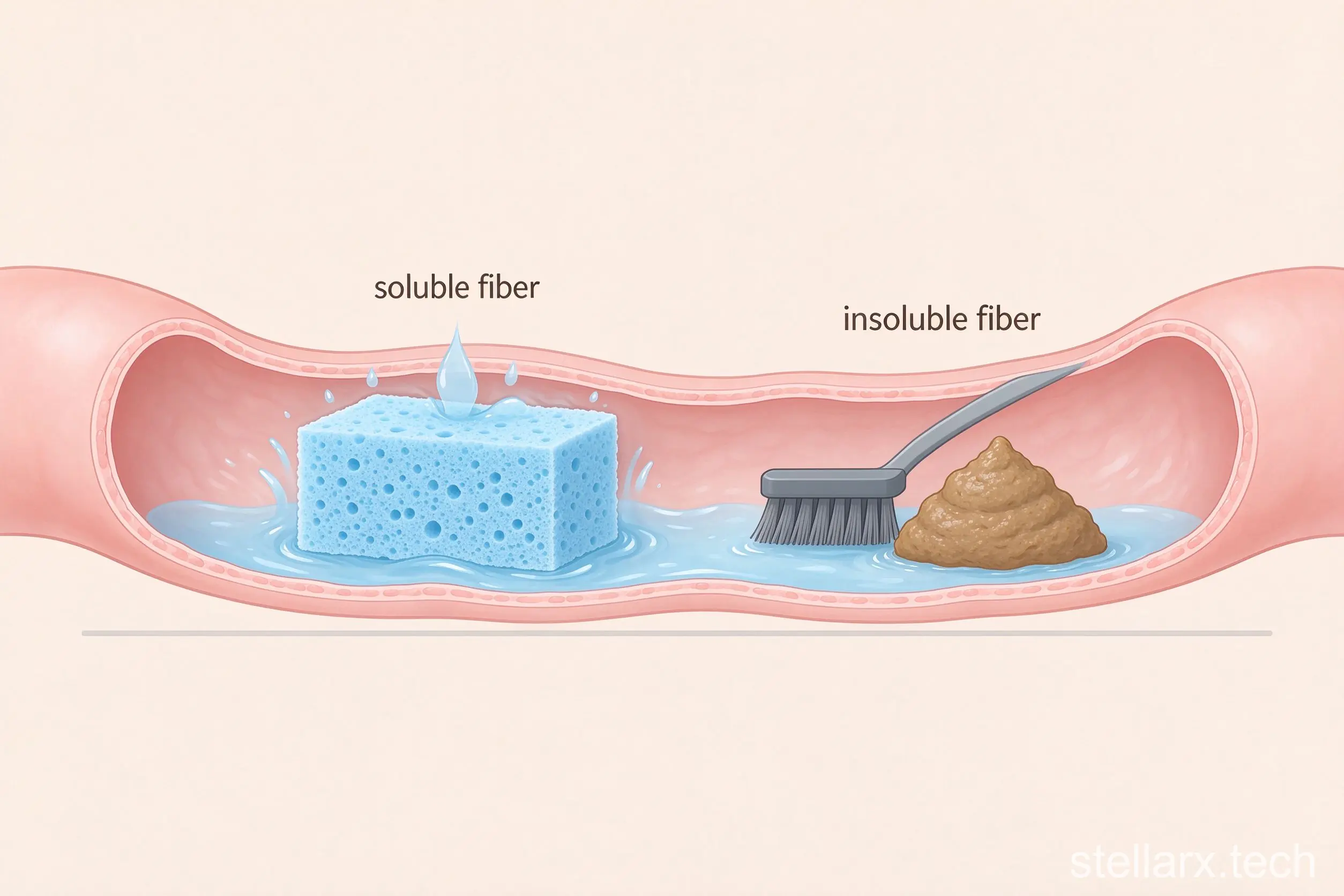
Soluble fiber dissolves in water and forms a gel: it slows food movement, brings satiety, and is fermented by colon bacteria — increasing bacterial numbers and stool bulk. It works like a sponge: soaking up water, softening the stool, expanding its volume. It also acts as a prebiotic, feeding beneficial gut bacteria and supporting the microbiome — helpful for constipation, but to be limited during diarrhea.
Insoluble fiber does not dissolve in water, is not fermented, and adds no calories: it increases stool bulk, speeds colonic transit and prevents constipation. Think of it as a gentle "brush" that mechanically stimulates the gut wall, adding volume and pushing things along.
They work as a pair: one softens the "quality," the other drives the "quantity." Here is the twist in your story: most vegetables deliver mainly insoluble fiber — the "brute-force pusher" — but in an effective dose too small to matter, and without the bulk-expanding soluble fraction, they never reach the threshold that triggers a bowel movement. A big plate of crisp lettuce contains just 1.3 g of fiber per 100 g — the volume is there, but the fiber grams may be fewer than half a handful of peanuts. Crunchy vegetables like cucumber and tomato are mostly soluble fiber: they gel, soften and feed bacteria, but they are not the "violent" peristalsis drivers that insoluble fiber is.
The Peanut's Secret: Dose, Mechanics and Lube
Peanuts lose to vegetables in quantity and quality of greens, but win on mechanics: about 8 g of fiber per 100 g, roughly 80% insoluble and 20% soluble. Think of them as a miniature "gut broom" that adds stool volume and physically prods the intestinal wall to get moving — while their rich healthy oils act as a lubricant. Physical stimulus plus chemical lube, backed by plenty of water (at least 1.5–2 liters a day, or the fiber can actually make blockage worse).
So the truth is likely this: your gut does not hate vegetables. Your vegetable plan simply never reached the threshold — in insoluble-fiber dose and mechanism — to trigger a bowel movement. Peanuts just happened to provide a concentrated, compound "push package."
A Foolproof Constipation Diet
First, upgrade your vegetable picks. Within variety, add fiber-dense, especially insoluble-fiber-dense options: edamame (about 5 g fiber per 100 g), pea shoots, broccoli, celery — rough, coarse-fiber greens.
Second, respect the golden trio. Fiber + water + healthy fats is the iron triangle of smooth bowels: at least 1.5–2 liters of water a day, or fiber only clogs; a little healthy fat is the natural lubricant.
Third, fix your staples. Swap some refined rice and white flour for whole grains — oats, brown rice, corn — the steadiest, most generous fiber source, giving persistent, gentle gut power.
Fourth, make peace with your body and farm your microbiome. Every gut flora is unique, and research shows individuals genuinely differ in how they ferment specific fibers in nuts and legumes. If peanuts work spectacularly for you, keep them as a quality source of fiber and healthy fat — a small handful daily as a snack or side.
Constipation is the final output of a digestive system working together. It rejects single, crude solutions and rewards balanced, clever combinations. Stop blaming "my gut hates vegetables." Think like a systems engineer: give your gut the combination punch it actually needs, and it will reward you with that effortless, light feeling after a clean bowel movement.
Curious what actually lives in your gut while fiber feeds it? WWAI is an AI-powered biology encyclopedia with an online microscope, including an E. coli specimen where the Gram-negative, rod-shaped cells typical of gut bacteria are clearly visible. Search "WWAI" in your app store and download it today.
References
Related reading

Why Constipation Happens: A Colon Story


- Why Fish in a Plastic Bag Beat Fish in a Bucket
- 魚離開水能活多久?塑膠袋比水桶更保命
- Shamonda Virus: The First Human Case Ever Reported
- 沙蒙達病毒:全球首例人類感染病例
- Vegetable Nutrition: Why Lettuce Isn't the Healthiest Green
- 蔬菜營養排名:生菜墊底?真正的營養之王是這 5 種
- Metformin for Healthspan: Muscle, Bone, and a Tumor Switch
- 二甲雙胍延緩衰老?中年肌肉骨骼與膠質母細胞瘤的新證據
- 甜高粱會取代甘蔗與甜菜嗎?植物也會得「糖尿病」
- Why Sweet Sorghum Could Replace Sugar Cane and Beet
全部评论