Deep Vein Thrombosis: A Silent Killer Linked to Sitting
Most people think blood clots belong to heart and brain vessels. There is a quieter one — venous thromboembolism (VTE) — that can kill within hours when a clot breaks loose and reaches the lungs.
Why It's Called the Silent Killer
VTE covers deep vein thrombosis (DVT) of the legs and pulmonary embolism (PE). It is the third-largest cardiovascular killer worldwide.
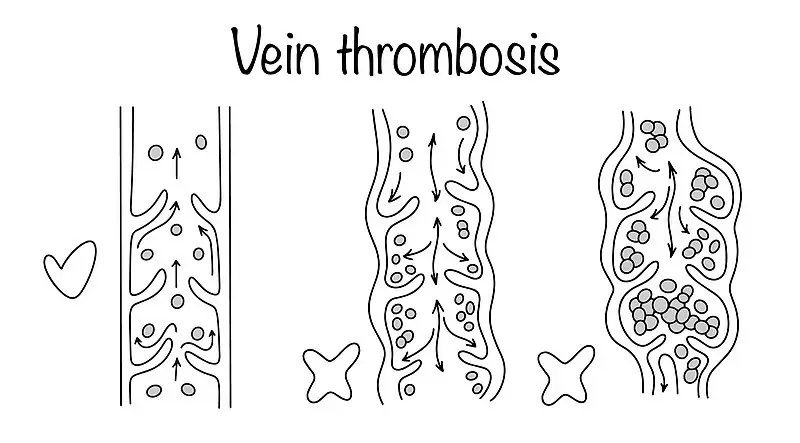
Three things build a clot: damage to the vessel lining, blood that coagulates too easily, and slow blood flow. A common myth says only bedridden patients get clots. Not true. Surgery, trauma, cancer, pregnancy and childbirth, long-term hormone use, and central venous catheters all raise the risk. So does something ordinary: sitting for over 4 hours — a long drive, a flight, a desk session — slows blood in the legs and can trigger a clot. That is the "economy class syndrome."
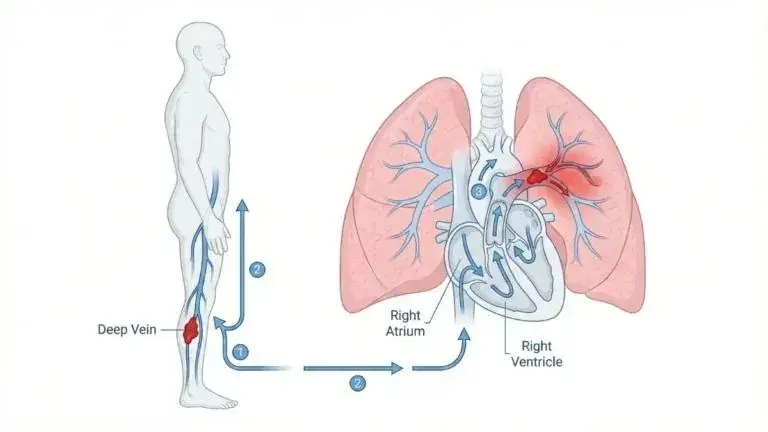
About half of all deep vein thromboses show no leg pain or swelling at all. For many patients, the first symptom is acute pulmonary embolism.
How to Spot the Warning Signs
The classic DVT picture: one leg swollen, the calf aching, the skin warmer, a heavy feeling when walking. If both legs swell at once, acute thrombosis is less likely.
Sudden chest tightness, breathlessness, chest pain, a racing heart, coughing blood, or fainting for no reason — treat these as possible acute pulmonary embolism. This is an emergency. Call an ambulance immediately. Do not "wait and watch."
Three Layers of Prevention
VTE prevention comes in three layers: basic, physical, and drug. High-risk people need a doctor's assessment before combining them.
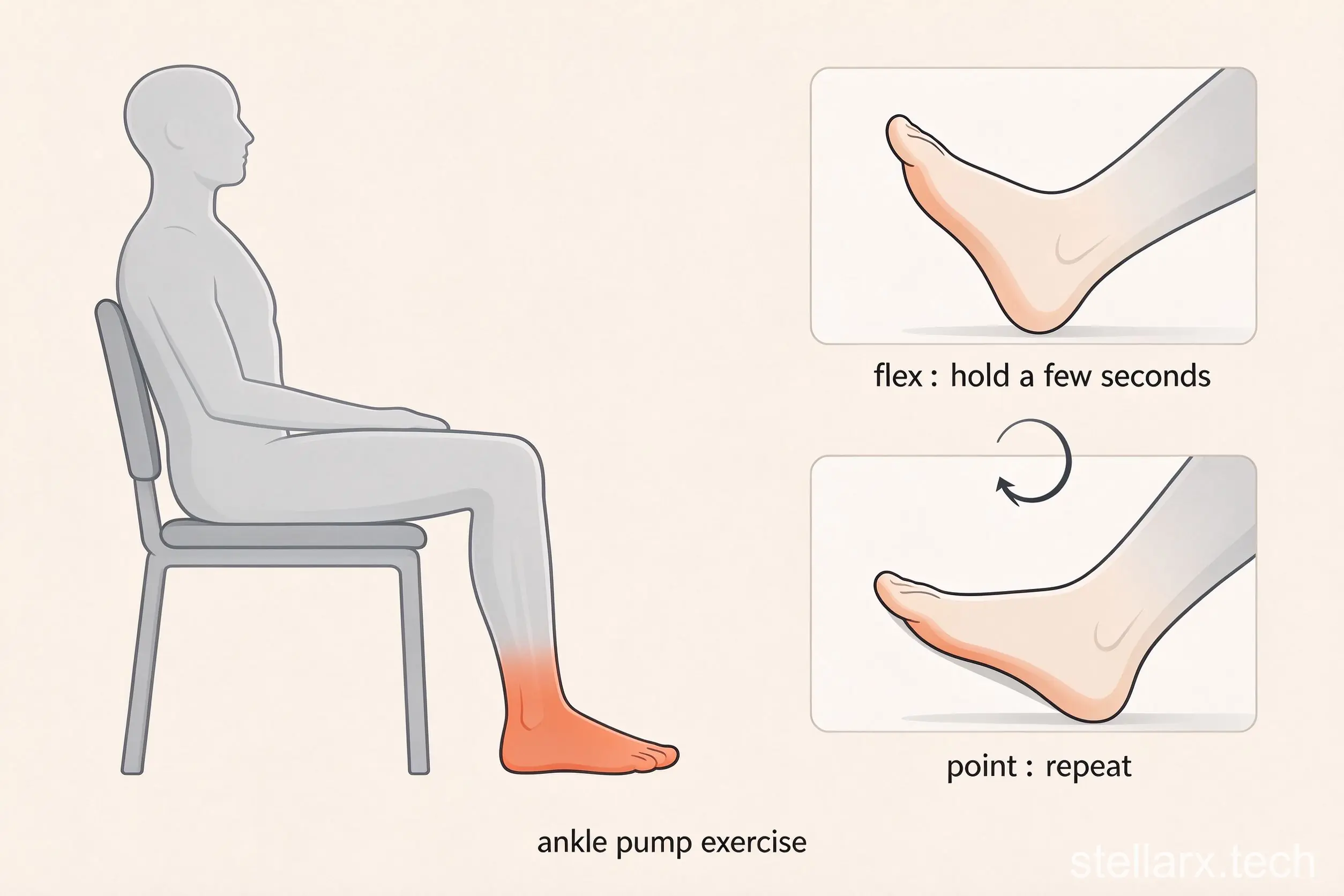
Basic prevention — for everyone. Get up and move as early as possible. For bedrest or seated hours, do the ankle pump: slowly flex your toes toward you and hold for a few seconds, then push them away hard, and repeat in cycles — it actively drives blood back up the leg. Drink enough water. Avoid long-term crossed legs and tight clothing. Stop smoking and control weight. People with heart or kidney insufficiency should follow their doctor's advice on fluids.
Physical prevention. Intermittent pneumatic compression devices and medical graduated compression stockings are used for moderate-to-high-risk patients who cannot yet take anticoagulants. Stockings are medical devices — not a random purchase. People with severe leg artery disease, broken skin, or severe heart failure must not use them. A health worker measures the leg and chooses the right pressure and size.
Drug prevention. For hospitalized moderate-to-high-risk patients, after the doctor balances clot risk against bleeding risk, low-molecular-weight heparin or a novel oral anticoagulant may be used. Never buy and use these yourself.
Five Myths That Get People Killed
Myth 1: Anticoagulants melt the clot. They do not. Anticoagulants stop the clot from growing and lower the risk of pulmonary embolism; the body's own fibrinolytic system gradually absorbs it. Clot-busting or surgical removal is reserved for critical emergencies like phlegmasia cerulea dolens or massive iliofemoral thrombosis — not routine treatment.
Myth 2: Massage, heat, or hot foot soaks will dissolve the clot. In the acute phase the clot is not firmly attached. Outside pressure can knock it loose and trigger a fatal pulmonary embolism. Massage, heat, and soaking are strictly forbidden in the acute phase.
Myth 3: No pain, no swelling — stop the drugs. Symptoms disappearing does not mean the clot is gone. Stopping on your own sharply raises the relapse risk, even triggering embolism. Duration is the doctor's call: for a one-off trigger like surgery or injury, anticoagulation usually lasts 3 months; for active cancer, it continues long-term and must not be interrupted.
Myth 4: Any clot means a filter. Inferior vena cava filters are not routine. They are reserved for people with an absolute contraindication to anticoagulation or repeated pulmonary embolism. Retrievable filters are preferred — and must be removed on time.
Myth 5: A clot means strict bedrest. Current guidelines say the opposite: once effective anticoagulation is started, early mobilization is encouraged. It does not raise embolism risk, it reduces leg swelling, and it lowers the chance of long-term post-thrombotic syndrome.
Recovery at Home
If a clot damages the venous valves, the long-term result is post-thrombotic syndrome: repeated leg swelling, dark skin pigment, and in severe cases non-healing ulcers. At home, take medications strictly as prescribed and attend follow-ups. Bleeding signs — persistent gum bleeding, large bruises, black stools, blood in urine — mean an immediate medical visit. Avoid long standing or sitting; on long trips, get up and move every hour.
VTE is preventable, controllable, and treatable. It is not distant: whether you are a patient in a hospital bed or an ordinary person at a desk or on a long flight, your veins deserve attention. Assess early, prevent early, recognize early, treat properly — and keep away from this silent killer of blood vessels.
Curious what a real blood vessel looks like under a microscope? WWAI is an AI-powered biology encyclopedia with an online microscope, including a blood vessel specimen where arterial and venous wall layers and the lumen are clearly visible. Search "WWAI" in your app store and download it today.

References
Related reading

The 1-Hour Habit That Fixes Your Sleep


- Why Fish in a Plastic Bag Beat Fish in a Bucket
- 魚離開水能活多久?塑膠袋比水桶更保命
- Shamonda Virus: The First Human Case Ever Reported
- 沙蒙達病毒:全球首例人類感染病例
- Vegetable Nutrition: Why Lettuce Isn't the Healthiest Green
- 蔬菜營養排名:生菜墊底?真正的營養之王是這 5 種
- Metformin for Healthspan: Muscle, Bone, and a Tumor Switch
- 二甲雙胍延緩衰老?中年肌肉骨骼與膠質母細胞瘤的新證據
- 甜高粱會取代甘蔗與甜菜嗎?植物也會得「糖尿病」
- Why Sweet Sorghum Could Replace Sugar Cane and Beet
全部评论