Female Thigh Fat: A Second Sex Characteristic
Here is a puzzle from a viral question: the average female thigh circumference equals the male average, yet women are shorter and lighter than men. So should women aim for thin thighs and a big butt to look good?
A sculptor's anatomy instructor would answer the opposite way. The lower belly, the pelvis, and the thighs are female second sex characteristics.
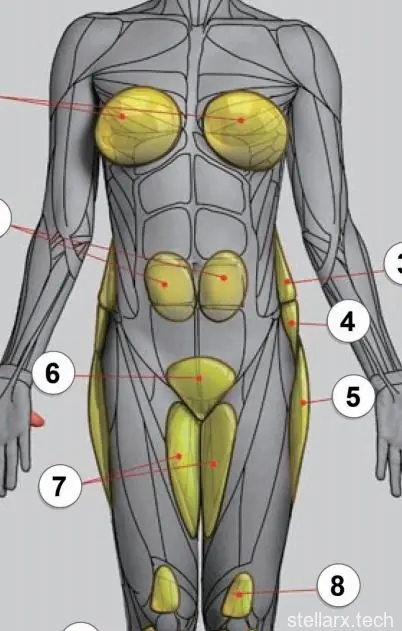
When learning artistic anatomy, one thing becomes obvious: female fat is far more likely to accumulate in the fat pad of the lower belly and the fat pad above the greater trochanter — the knob of bone at the top of the thigh. (The exact thigh location, the answer's author admits, is the one he keeps forgetting.) And because the female pelvis is wider, the thigh has to be a little thicker for the body to look coordinated.
The current fashion of pushing women toward a flat stomach and stick-thin legs is, in this view, promoting male second sex characteristics — a new brand of feudal superstition.
What Sculptural Anatomy Shows About Subcutaneous Fat
A quick clarification: artistic anatomy only cares about the superficial muscles and the subcutaneous fat that sits on top of them. Visceral fat — the fat underneath the muscles, wrapped around organs — is bad for both sexes in excess. And when female fat becomes extreme, it looks as bad as being too skinny. The images below come from the sculpting-anatomy literature.
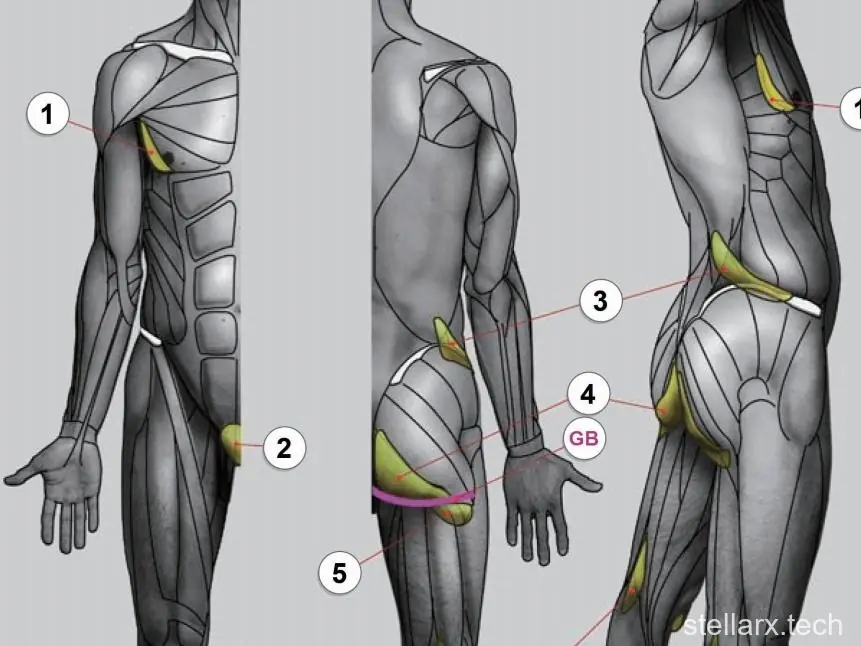
This is male subcutaneous fat:
This is female subcutaneous fat:
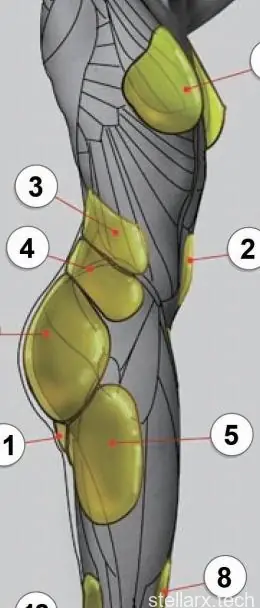
From the side, the pads deepen the curve of the lower back and upper thigh.
From behind, the same fat pads round out the hip and the upper thigh.
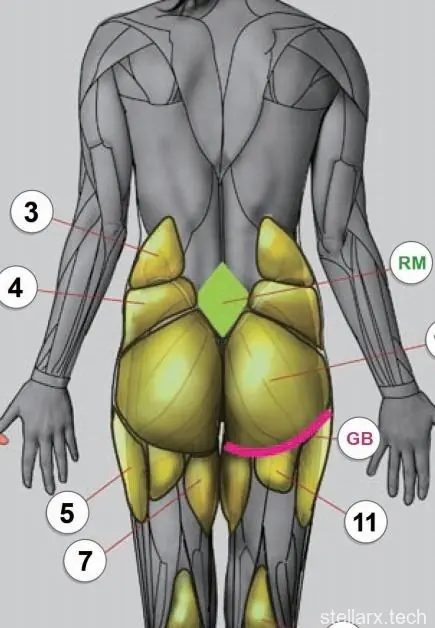
Notice where the big pads sit: the chest, the lower belly, and the whole band from the lower back down to the upper thigh. These are second sex characteristics. Dieting your thighs away is anatomically the same project as dieting your chest away.
The S-Curve That Male Bodies Don't Have
The thicker female thigh, together with the waist, forms the S-shaped curve that is unique to the female body. A male silhouette runs almost straight up and down.
And because the female buttock is propped up by fat, it looks rounder and fuller — while the male hip shows a hollow above the greater trochanter, where there is no fat pad to support the shape.
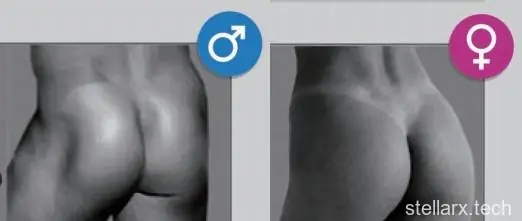
The anatomy literature says it directly: women have more and thicker subcutaneous fat pads than men, which is exactly why the "typical female curve" appears.
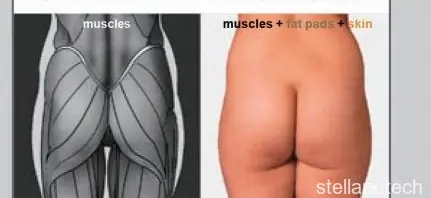
The author's own note on the last figure: the curve is not perfect — a slightly thinner waist or a slightly thicker thigh would make the waist and buttock flow into one continuous line, which would look even better.
The takeaway is a matter of biology, not taste: thick thighs on a woman are not a defect of the body — they are the body's own design.
The microscopic world behind this story is just as visible as the curves themselves: inside a muscle, the spindle-shaped fibers that make strength and shape are hidden from the naked eye. With WWAI, you can see them the moment curiosity strikes, including a muscle cell specimen where spindle-shaped, fasciculated muscle fibers are clearly visible. Search "WWAI" in your app store and download it today.

References
Sculptural anatomy reference figures (muscle and subcutaneous fat diagrams) reproduced from the original source answer's cited anatomy book illustrations for educational science communication; locally adapted for this site's science-communication positioning.
All anatomical diagrams are educational illustrations; no individual identifiable person is depicted.
Related reading

Stroke & Brain Hemorrhage: First Step Saves Life


- 同手性是什麼?2026 諾貝爾化學獎得主解開生命之謎
- Homochirality Explained: Nobel Chemistry 2026 | stellarx
- Is Using Your Phone in Bed Bad for Your Eyes?
- AI Consumer Spending: Who Actually Pays for AI?
- How Do Bees Communicate? Dance and Pheromones
- How Kidneys Work: Filter, Reabsorb, Keep What Matters
- Female Thigh Fat: A Second Sex Characteristic
- IceCube Neutrino Detector: Ghost Particle Hunter | stellarx
- Lobster Mushroom: The Fungus That Parasitizes Mushrooms
- Sacculina: The Crab-Castrating Parasite Explained
全部评论