Homochirality Explained: Nobel Chemistry 2026 | stellarx
Every amino acid in your body is left-handed. Its mirror twin exists too — but life almost never uses it.
On October 7, 2026, the Royal Swedish Academy of Sciences awarded the Nobel Prize in Chemistry to Henri B. Kagan of France and Kenso Soai of Japan, "for the discovery of non-linear effects and autocatalysis in asymmetric organic synthesis."
They cracked one of chemistry's oldest riddles: how chemical asymmetry — homochirality — ever came to be.
The Mirror Mystery
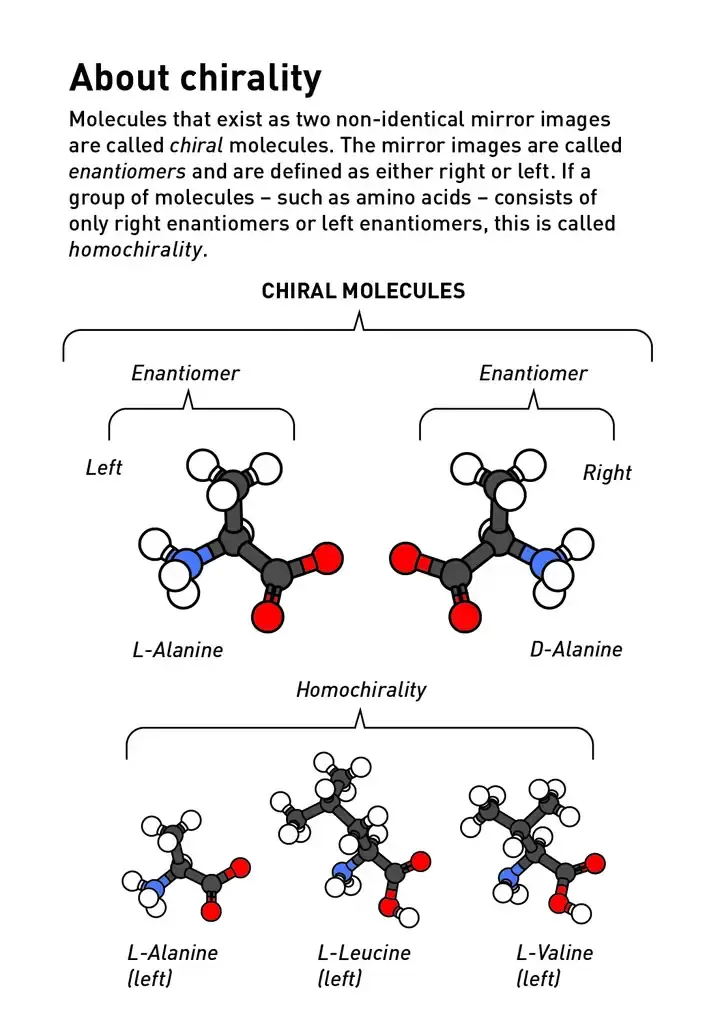
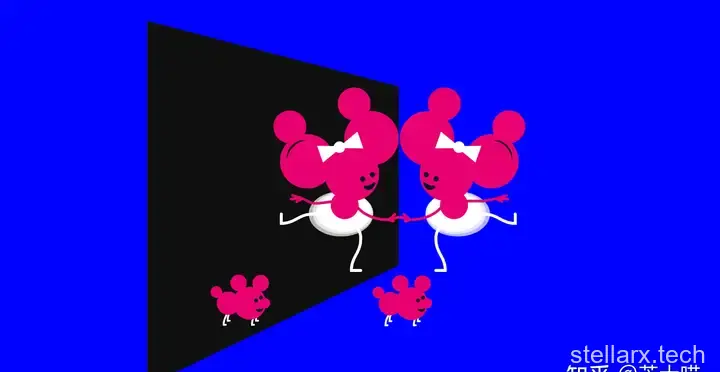
Certain molecules, like amino acids, exist in two mirror-image variants. Yet living organisms contain only one of the two mirrors.
How did this chemical asymmetry arise? For a long time, chemists could not solve the puzzle.
Life's chemistry is what chemists call homochirality — a term from the Greek words for "same" and "hand." Like your two hands, all amino acids exist as two mirror-image isomers, but only one of them appears in the proteins inside your cells. The other is extremely rare in nature.
Chemists were puzzled by where homochirality came from. When they ran reactions that could produce both mirror-image molecules, the test tube always returned equal amounts of the two forms. Yet chemists wanted to produce just one mirror form — because when developing molecules that interact with living organisms, such as drugs, only one mirror form produces the intended effect.
Kagan's First Step: A Non-Linear Effect
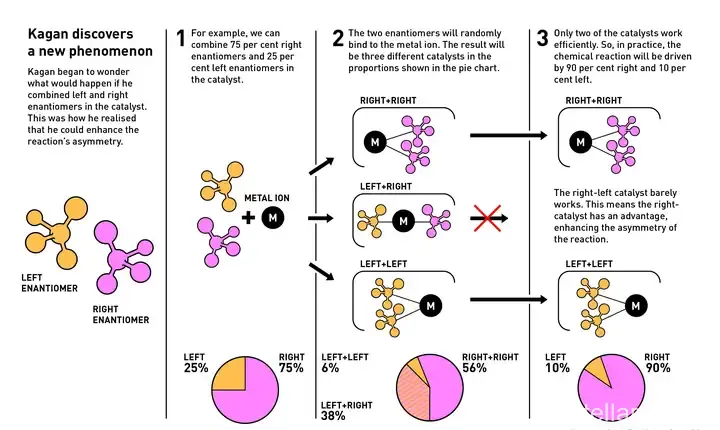
In 1986, Henri Kagan took the decisive first step. He found a new way to steer a chemical reaction — a method that produced far more of one mirror isomer than anyone had thought possible.
His discovery became known as the non-linear effect: combine equal amounts of left and right enantiomers in a catalyst, and the catalyst can actually enhance the reaction's asymmetry. The proportions shift — the catalyst ends up driving the reaction far more toward one mirror form than the starting mixture would suggest.
For chemists designing reactions to make medicines, perfumes, flavors, and new materials, this was revolutionary.
Soai's Breakthrough: Life-Like Self-Replication
Kenso Soai went one step further. In 1995, a key paper described how he had designed the first chemical reaction capable of producing a homochiral outcome. Then, in 2003, he succeeded.
He demonstrated a reaction in which only one of the two possible mirror products was formed. Before that, only life itself had ever achieved this feat.
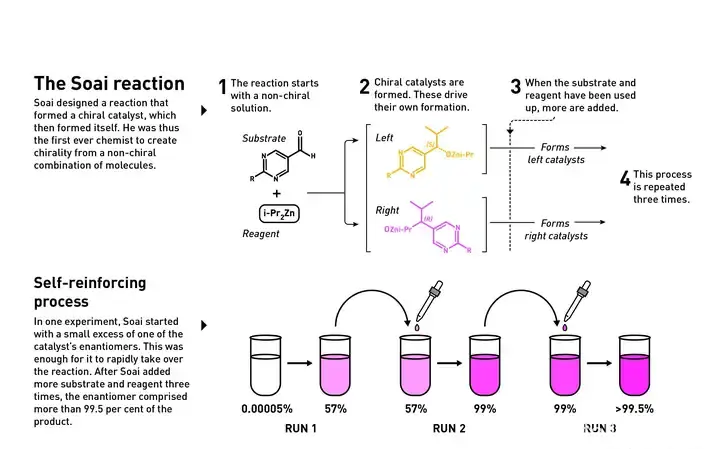
The Soai reaction is a self-reinforcing process: the reaction starts with a non-chiral solution, forms a chiral catalyst, and that catalyst then drives its own formation. Add more substrate and reagent, and the process repeats — the dominant enantiomer rapidly takes over.
In one experiment, Soai started with a tiny excess of one enantiomer — just 0.00005%. After three rounds, that enantiomer made up more than 99.5% of the product.
"Besides life itself, no one had ever done this before," the Nobel committee noted. The Soai reaction is now regarded as one of the most astonishing experiments in chemistry.
Why It Matters
Thanks to the discoveries recognized by the 2026 Nobel Prize, chemists gained a fundamental new tool for everyday work. But most importantly, these findings answered one of the biggest mysteries in chemistry: how homochirality — exactly as it exists in all living organisms — could emerge.
The non-linear effect discovered by Kagan is now a crucial tool for chemists designing new reactions. The non-linearity reveals information about how a reaction works. With that information, chemists can optimize reactions to obtain the highest-purity enantiomer of a product. This matters enormously for every company producing substances that interact with living organisms — medicines, fragrances, flavors, and agrochemicals — and in some cases, for producing new materials.
The Soai reaction has ignited fresh enthusiasm among chemists studying the origin of life. Researchers around the world are now trying to repeat Soai's achievement — but their goal is to synthesize homochiral amino acids and sugars.
(Source: The Nobel Committee)
The Invisible Machinery Behind the Prize
Chirality is a property of molecules far too small to see — but it decides which medicine works, which flavor tastes right, and which amino acids build your proteins.
That hidden molecular world is exactly what a microscope brings into view — not just molecules, but the living structures built from them.
In the WWAI app, a Vorticella specimen lets you watch a single-celled organism stretch, contract, and feed under the lens — one of the smallest complete life forms, built from the same kind of chiral chemistry honored this year.
Curious to see the machinery of life with your own eyes? Open the app store and search WWAI to download — the specimen is online, ready the moment you are.
References
The Royal Swedish Academy of Sciences / Nobel Prize Committee, 2026 Nobel Prize in Chemistry official announcement (October 7, 2026).
Illustrations: ©Johan Jarnestad / The Royal Swedish Academy of Sciences; official Nobel Prize portrait by Niklas Elmehed (reproduced from the source article under fair use).
Locally adapted for this site's science-communication positioning.
Related reading

Why Cockroaches Aren't as Tough as You Think


- 同手性是什麼?2026 諾貝爾化學獎得主解開生命之謎
- Homochirality Explained: Nobel Chemistry 2026 | stellarx
- Is Using Your Phone in Bed Bad for Your Eyes?
- AI Consumer Spending: Who Actually Pays for AI?
- How Do Bees Communicate? Dance and Pheromones
- How Kidneys Work: Filter, Reabsorb, Keep What Matters
- Female Thigh Fat: A Second Sex Characteristic
- IceCube Neutrino Detector: Ghost Particle Hunter | stellarx
- Lobster Mushroom: The Fungus That Parasitizes Mushrooms
- Sacculina: The Crab-Castrating Parasite Explained
全部评论