Why Thigh Fat Is Actually Good for Your Health
If you have ever stood in front of a mirror after pregnancy and stared at thighs that no longer fit your old jeans, you are not alone. For many women, that moment arrives when the zipper stops halfway — and the first feeling is frustration.
What if that frustration is pointed at the wrong thing?
The fat stored on your thighs is not a failure of willpower. It is one of the most metabolically protective tissues in your body — and the evidence for that has been building for years.
The Fat Your Body Stores on Purpose
A prospective study tracked 557 healthy women from before pregnancy through week 35. In the first few weeks, subcutaneous fat changed very little. But from week 6 to week 35, thigh skinfold thickness increased by an average of 7.3 millimeters — more than at the triceps or several other measurement sites.
That fat does not wander. It sits quietly in reserve, waiting for late pregnancy and breastfeeding. Then it is gradually mobilized: partly to meet the energy needs of the developing fetus and infant, and partly to provide a stable fuel supply for the mother through nursing.
Your body is not being careless. It is making a deposit.
[
Why Thigh Fat Protects You
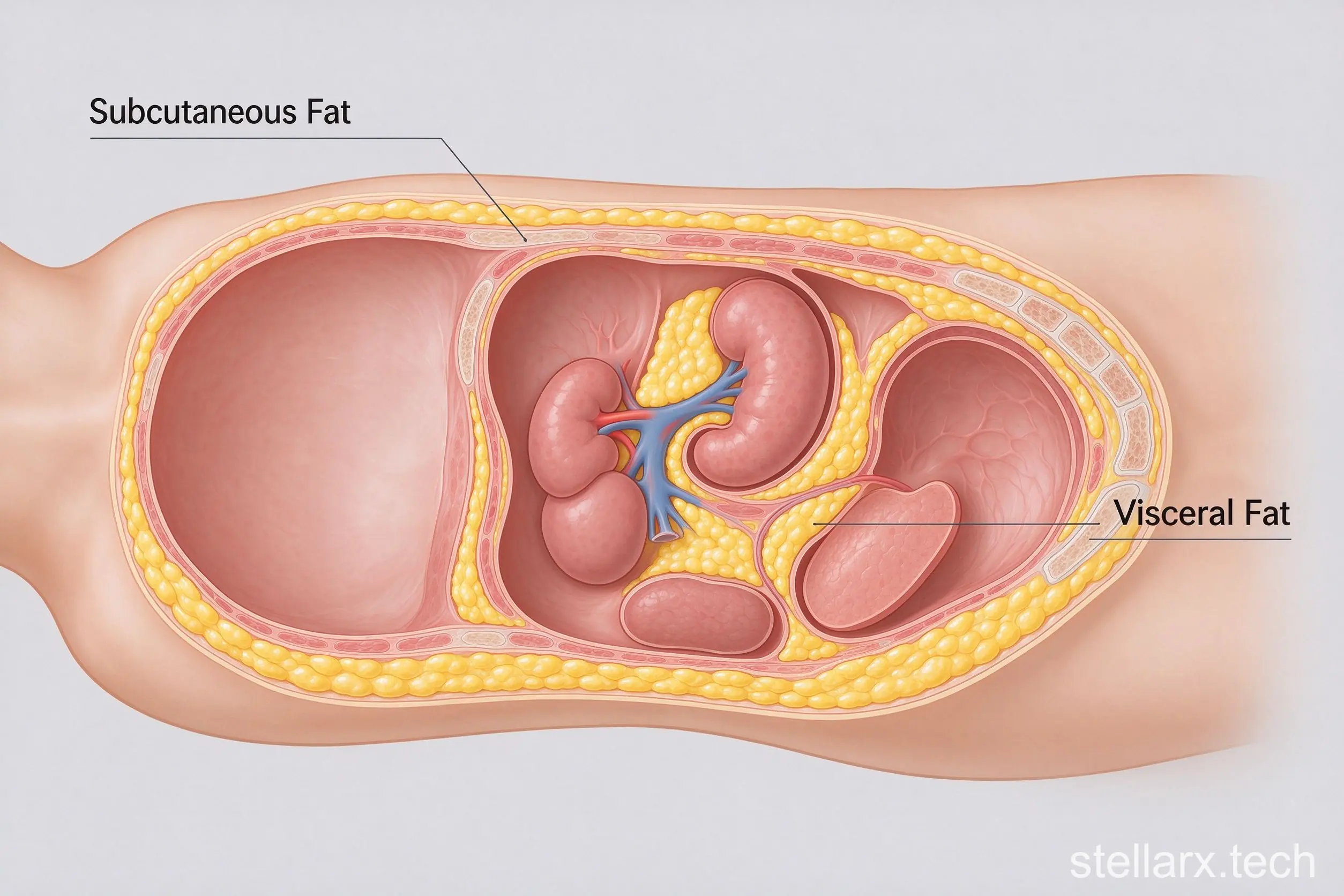
Subcutaneous fat on the hips and thighs has a defining characteristic: it releases free fatty acids slowly. That makes it a stable, long-term energy reservoir — unlike abdominal fat, which tends to dump lipids into circulation at the smallest signal of stress.
Fat that stays put is fat that cannot cause trouble elsewhere. When excess calories are safely locked into gluteofemoral subcutaneous depots, they are less likely to land in the liver, pancreas, or around the heart — where ectopic fat drives insulin resistance, type 2 diabetes, and cardiovascular disease.
A 2024 review and a 2026 Annual Review of Nutrition summary both reach the same conclusion: even after accounting for overall obesity, greater storage of fat in the hip and thigh region is consistently associated with better metabolic health. People with higher leg fat tend to have healthier lipid profiles and higher levels of high-density lipoprotein — the "good" cholesterol.
A Chinese survey of more than 9,000 people found a significant association between thigh circumference and blood pressure: regardless of body weight or waist size, those with a higher proportion of thigh fat were less likely to have hypertension.
None of this means "the fatter the better." These are observational associations, not a license to ignore overall health. But they do deliver a clear signal — thigh fat is not the enemy.
The Muscle You Did Not Know You Were Building
Thigh size is not only about fat. It is also about muscle — and if you are a parent, you have been training your leg muscles without setting foot in a gym.
Lifting a 10-kilogram child from the floor is a functional weighted hip-and-knee extension. Standing up from the sofa while holding a baby is a weighted squat. Pushing a stroller uphill is resistance walking. Carrying a toddler in one arm and a bag in the other while climbing stairs recruits the glutes, legs, and core all at once.
Add dozens of daily squats to pick up toys, rise from a play mat, bathe a child, and buckle a car seat — and you have a training program most people would pay for.
For women after 30, this matters more than it seems. Skeletal muscle begins a slow decline around age 30 to 40, and because the lower body carries so much muscle mass, even a small loss is noticeable. Enough leg muscle does more than help you climb stairs: it reduces back compensation, raises baseline activity expenditure, and even improves how the body handles glucose.
Your Thighs Are Not the Problem
If your waist circumference, metabolic markers, and overall weight are within a reasonable range, and you have no abnormal swelling — then strong, muscular thighs with a healthy layer of fat are not a flaw. They are evidence that your body stored energy where it is safest, and built muscle where you need it most.
The jeans from three years ago may never zip the same way. But the legs that carried you through pregnancy, lifted your children, and will carry you up stairs in your sixties and seventies are worth more than a waistband.
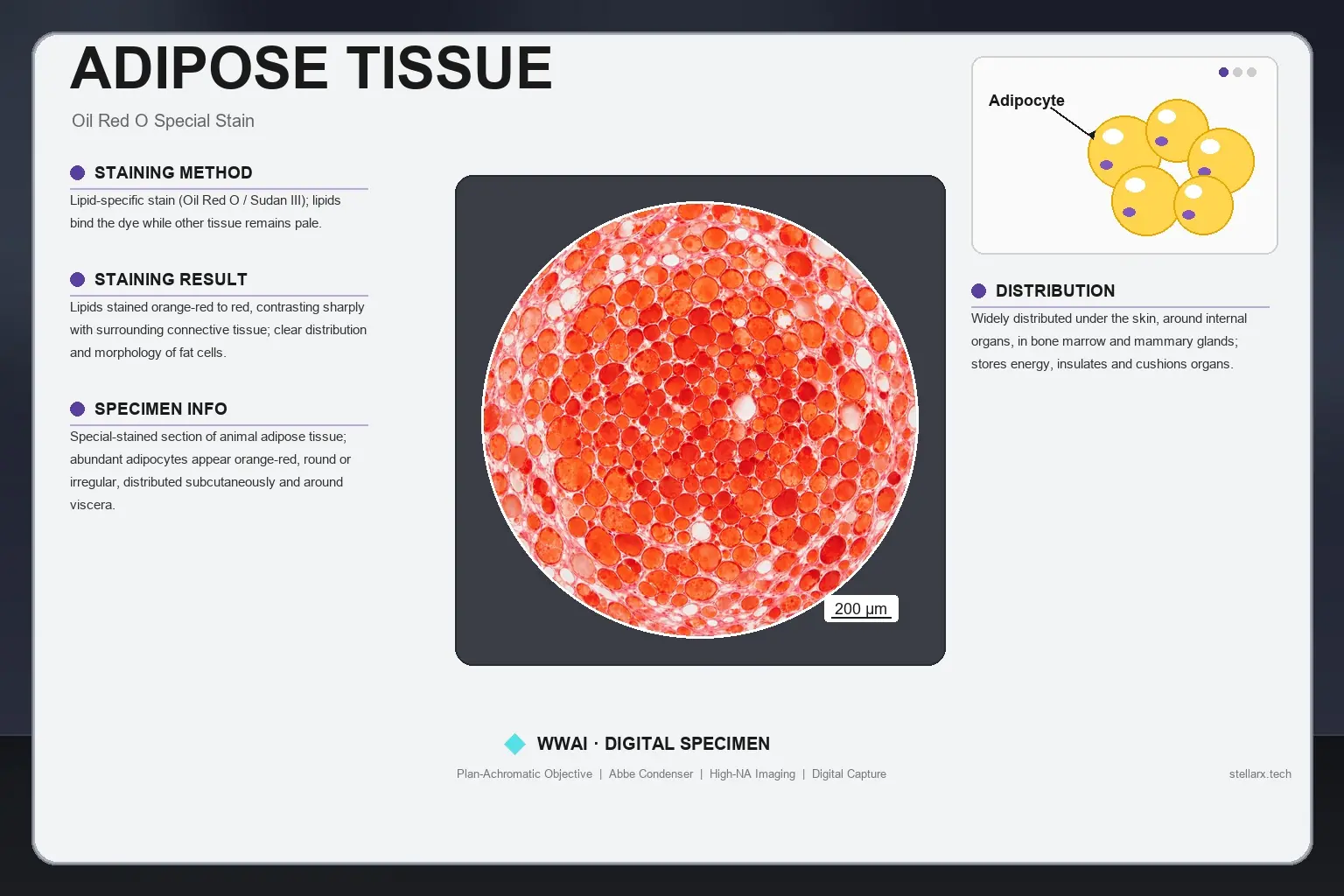
Want to see the tissue that makes this possible up close? WWAI lets you explore real biological specimens under a digital microscope — including a human adipose tissue specimen (special stain) where orange-red fat droplets and adipocytes with the nucleus pushed to the cell edge are clearly visible. Ask AI anything about the biology, then switch to 4X, 10X, 40X or 100X and look for yourself. Search WWAI in your app store to download.

Related reading

Potato as Staple: 25 Pounds Down, No Calorie Math

Sugary Drinks: Can Exercise Cancel the Damage?

Female Thigh Fat: A Second Sex Characteristic
References
[1] Sidebottom AC, Brown JE, Jacobs DR. Pregnancy-related changes in body fat. European Journal of Obstetrics & Gynecology and Reproductive Biology. 2001;94(2):216-223.
[2] Snijder MB, Dekker JM, Visser M, et al. Trunk fat and leg fat have independent and opposite associations with fasting and postload glucose levels: the Hoorn study. Diabetes Care. 2004;27:372-377.
[3] Van Pelt RE, Evans EM, Schechtman KB, Ehsani AA, Kohrt WM. Contributions of total and regional fat mass to risk for cardiovascular disease in older women. Am J Physiol Endocrinol Metab. 2002;282:E1023-E1028.
[4] Shi J, Yang Z, Niu Y, et al. Large thigh circumference is associated with lower blood pressure in overweight and obese individuals: a community-based study. Endocr Connect. 2020;9(4):271-278.
[5] Lotta LA, Gulati P, Day FR, et al. Integrative genomic analysis implicates limited peripheral adipose storage capacity in the pathogenesis of human insulin resistance. Nat Genet. 2017;49(1):17-26.
- Why Fish in a Plastic Bag Beat Fish in a Bucket
- 魚離開水能活多久?塑膠袋比水桶更保命
- Shamonda Virus: The First Human Case Ever Reported
- 沙蒙達病毒:全球首例人類感染病例
- Vegetable Nutrition: Why Lettuce Isn't the Healthiest Green
- 蔬菜營養排名:生菜墊底?真正的營養之王是這 5 種
- Metformin for Healthspan: Muscle, Bone, and a Tumor Switch
- 二甲雙胍延緩衰老?中年肌肉骨骼與膠質母細胞瘤的新證據
- 甜高粱會取代甘蔗與甜菜嗎?植物也會得「糖尿病」
- Why Sweet Sorghum Could Replace Sugar Cane and Beet

全部评论