Is Honey Bee Vomit? The Sweet, Gross Truth
About 8,000 years ago, humans were already climbing rope ladders to steal honey from wild hives. For a very long time, honey was one of the few sweet things our ancestors had.
It was more than food. Ancient Egyptians used honey as medicine — including treatments for hemorrhoids and other rectal complaints, as recorded in the Ebers Papyrus.
Sound unappetizing? Wait until you hear how honey is actually made.
Honey: The Bee Regurgitation Workflow
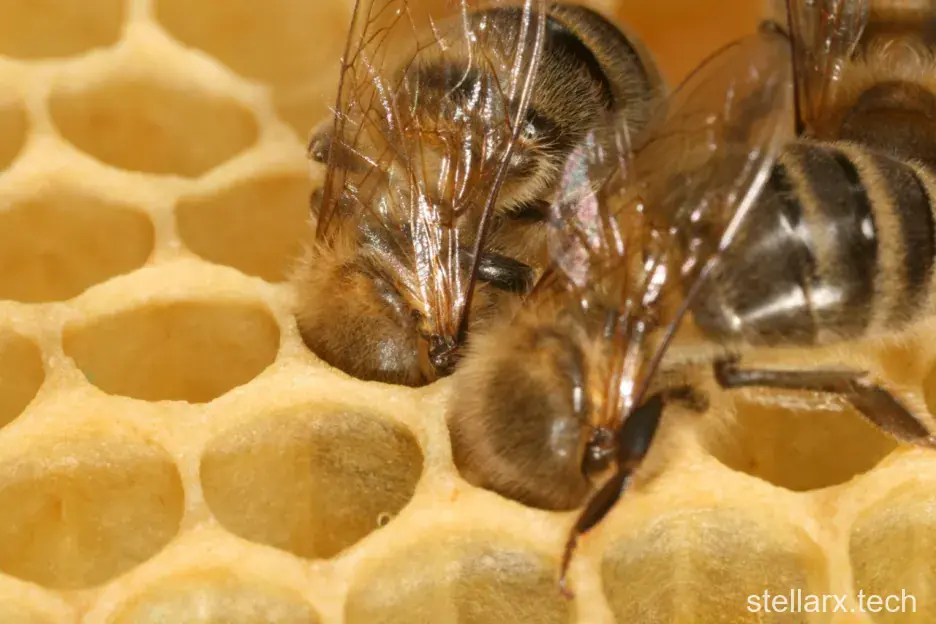
Here is the old rumor first: honey comes from pollen. It does not. Pollen is the bees' protein snack, not the raw material. The real ingredient is nectar — the sweet liquid a plant makes and offers to pollinators.
A worker bee sucks nectar up through its mouthparts and stores it in a special pouch at the front of its abdomen: the honey stomach. That is not where digestion happens — it is a transport tank.
Back at the hive, the forager regurgitates the nectar, mouth to mouth, into the mouth of a receiver bee. The nectar moves back and forth between honey stomach and mouth, and with every pass, enzymes in the bees' bodies break sucrose down into glucose and fructose.
One bee's enzymes are not enough for the job — so the nectar is passed, vomited, and re-vomited through many bees before it is finally spat into a cell of the comb. A single worker bee, across its whole life, produces about one teaspoon of honey.
The Dehydration Machine
The other half of the recipe is drying. Moisture starts leaving the nectar even before the forager lands back at the hive.
Once the partially finished honey is stored in the comb, house bees fan their wings over it in synchronized waves, driving moisture down fast. Stand two or three feet from a hive in this phase and you can hear the hum.
When the water content falls low enough for long-term storage, the bees seal each cell with a wax cap. That is the moment the honey is ready — and the moment we humans show up to steal it.
Nectar Is Not the Only Ingredient
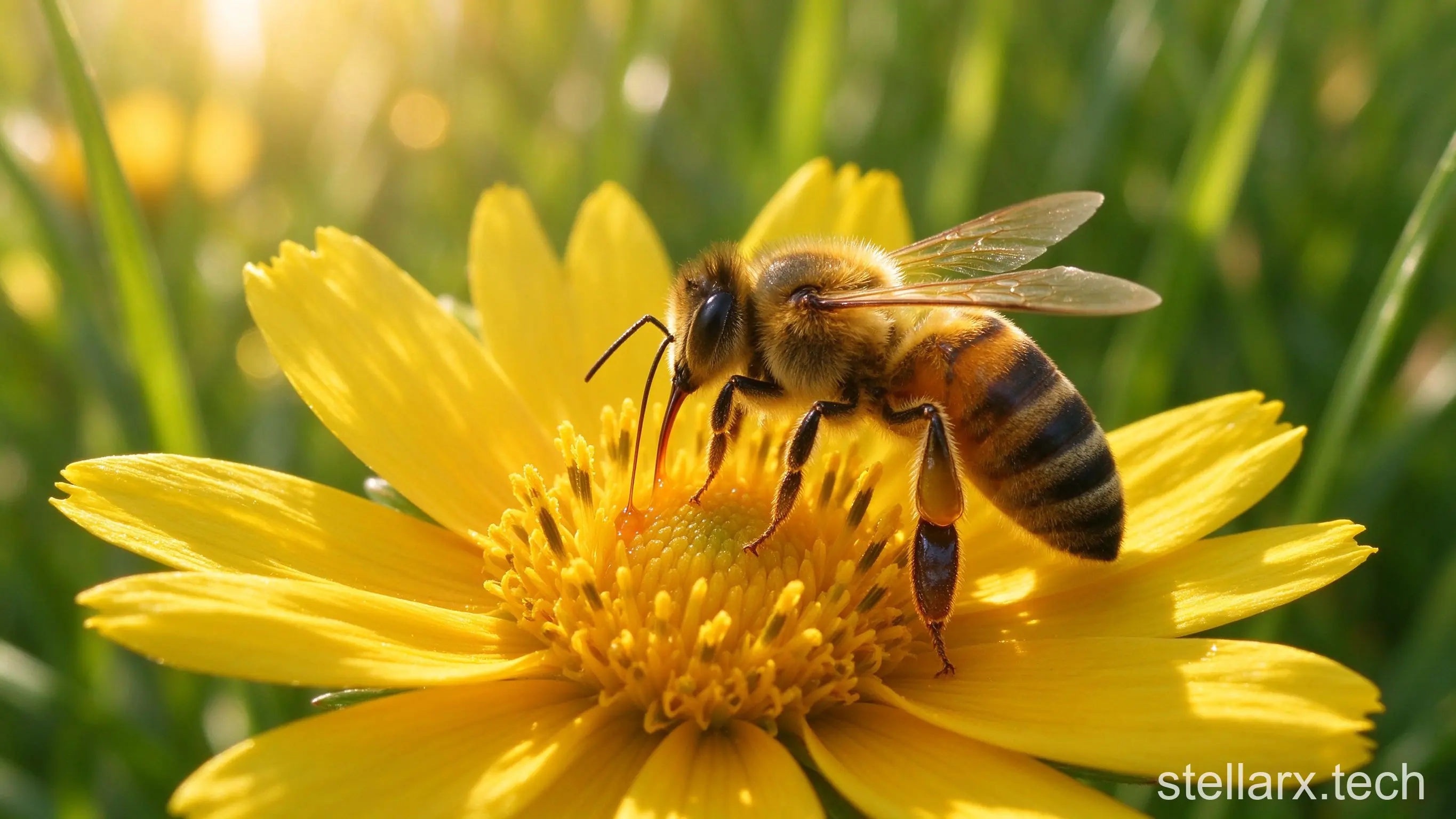
Normally, honey starts from nectar. "Normally" is doing a lot of work in that sentence.
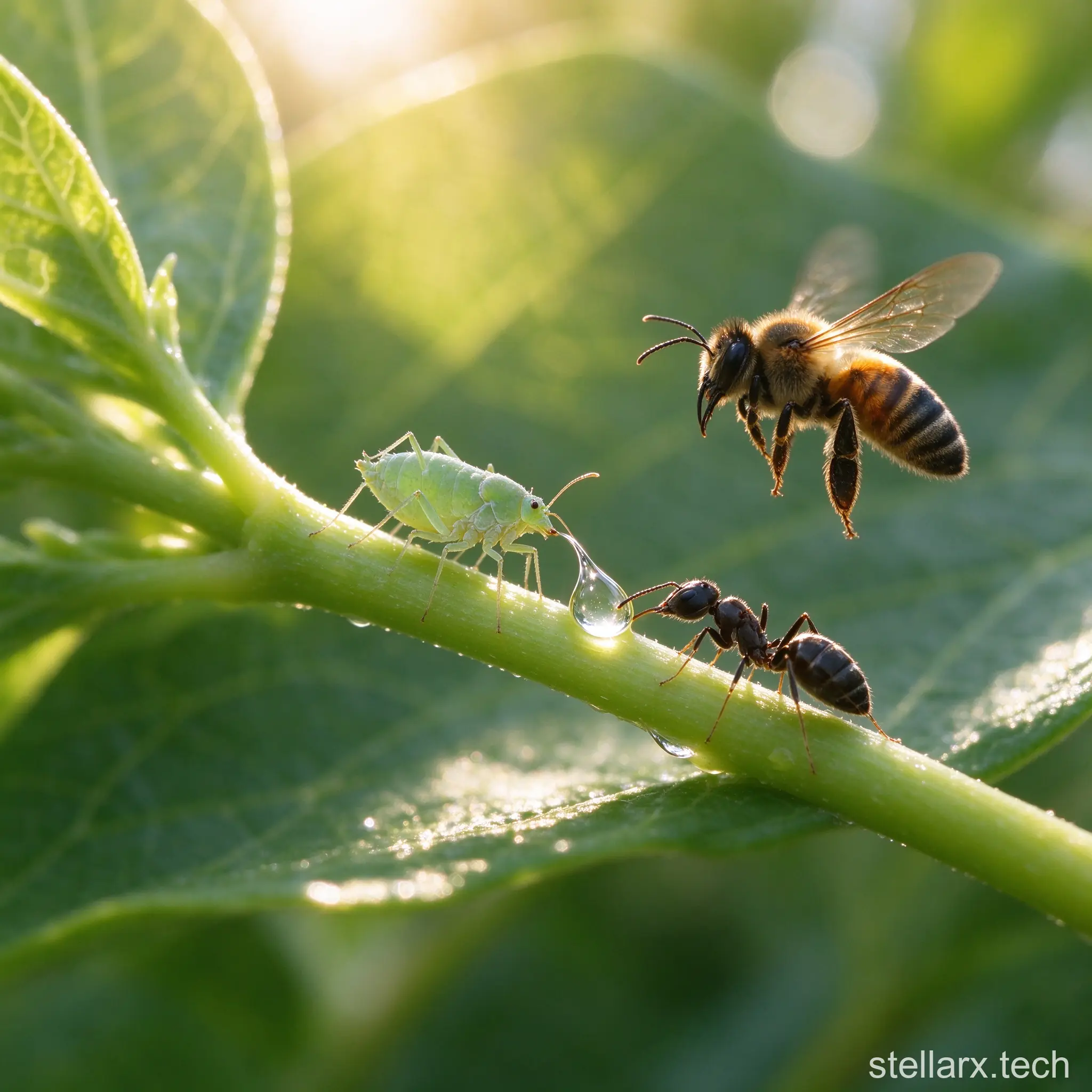
Honeydew honey is the exception. Its raw material is not plant nectar at all, but the sugary excretion of aphids and scale insects. These insects pierce plant stems, drink the sap, and push the excess sugar out through their anus as glistening drops of "honeydew."
Ants line up to collect those drops, and honey bees do too — turning insect waste into another kind of honey. The process is just as unglamorous as the nectar route.
The Same Trick, Repeated Across the Menu
If honey is bee regurgitation, what else have we been cheerfully eating?
Bird's nest soup is first. It is built from the hardened saliva of swiftlets (genus Collocalia), which they use to glue their nests to cave walls. Harvest, clean, soak — and the result is a luxury soup.
Then there is civet coffee, or kopi luwak: coffee beans eaten and excreted by palm civets, then collected from the droppings. The journey through the digestive tract reportedly changes the beans' surface structure, protein composition, and aroma profile. Thailand's version, Black Ivory coffee, runs the same beans through elephants instead.
China has its own entry: insect tea. In parts of Hunan, Guizhou, and Guangxi, the droppings of moth larvae that feed on selected plant leaves are collected, dried, and brewed — a traditional "cooling" drink.
Some insect products are hiding in plain sight. The shiny coating on candy and chocolate? That is shellac, a secretion of the lac bug — not, thank goodness, a bug-dropping glaze. And ambergris, the "floating gold" of perfume, forms in the gut of sperm whales and only smells sweet after years of oxidation in seawater.
Maybe curiosity is not always good for the appetite. If you have tasted any of these delicacies, feel free to share your experience — the grosser, the better.
Want to see how an insect's mouthparts really work under a microscope? WWAI is an AI-powered biology encyclopedia that answers your biology questions instantly, from insect anatomy to food science, and lets you observe real microscope slide specimens online — including a Culex mosquito specimen where segmented bodies, wing veins, and a piercing mouthpart are clearly visible, the perfect comparison for a bee's nectar-sipping mouthparts. Just search "WWAI" in your app store and download it today.
Related reading

Do Apples Have to Be Crisp to Taste Good? Why Are Some Apple…

Why Are Yams and Okra So Slimy? What Is That Sticky Mucilage…

Are Redder Apples Really Sweeter? Don’t Judge an Apple by Co…
References:
[1] Dams M, Dams L. "Spanish rock art depicting honey gathering during the Mesolithic." Nature, 1977, 268: 228-230. https://doi.org/10.1038/268228a0
[2] The Ebers Papyrus (English translation), Saxon Academy of Sciences and Humanities, Leipzig. https://sae.saw-leipzig.de/en/documents/papyrus-ebers
[3] FAO/WHO Codex Alimentarius Commission. Standard for Honey (CXS 12-1981), Rome: FAO/WHO, 2022. https://www.fao.org/fao-who-codexalimentarius/sh-proxy/en/?lnk=1&url=https%3A%2F%2Fworkspace.fao.org%2Fsites%2Fcodex%2FStandards%2FCXS%2B12-1981%2FCXS_012e.pdf
[4] Nicolson S W, Human H, Pirk C W W. "Honey bees save energy in honey processing by dehydrating nectar before returning to the nest." Scientific Reports, 2022, 12: 16224. https://doi.org/10.1038/s41598-022-20626-5
[5] Swears R M, Manley-Harris M. "Composition and potential as a prebiotic functional food of a Giant Willow Aphid honeydew honey produced in New Zealand." Food Chemistry, 2021, 345: 128662. https://doi.org/10.1016/j.foodchem.2020.128662
[6] Looi Q H, Amin H, Aini I, et al. "De novo transcriptome analysis of the salivary glands of edible bird's nest producing swiftlets." BMC Genomics, 2017, 18: 504. https://doi.org/10.1186/s12864-017-3861-9
[7] Marcone M F. "Composition and properties of Indonesian palm civet coffee (Kopi Luwak) and Ethiopian civet coffee." Food Research International, 2004, 37(9): 901-912. https://doi.org/10.1016/j.foodres.2004.05.008
[8] Clarke R. "The origin of ambergris." Latin American Journal of Aquatic Mammals, 2006, 5(1): 7-21. https://lajamjournal.org/index.php/lajam/article/download/231/183/183
[9] All illustrations are AI-generated.
- Why Humans Are the Only Animals That Need Clothes
- A Whole 1.25 kg Pomelo Has Only 280 kcal. Here's Why.
- Salmonella Is Everywhere. Here's How It Gets Into Your Food
- Your Dry Eyes Aren't Thirsty — They're Out of Oil
- 国庆团圆饭,我劝你一定要留一个位置给它……
- Tired No Matter How Much You Sleep? It Might Be Inflammation
- Why You Wake at 3 AM Every Night: Don't Check the Clock
- Why Foreigners Can't Handle Baijiu: It's the Aldehydes
- Why the Poor Love Grand Narratives: The Microscope Argument
- The Trojan Horse: How Plague Disarms Your Immune System
全部评论