Your Kidneys Are a Selective Filter You Can Ruin
Someone in a group chat once argued with the author about why dialysis patients develop heart failure. The author said: beyond failing to clear metabolic waste, uremia also disrupts water excretion — retained fluid overloads the circulation, and the heart bears the weight. The reply came back: "Nonsense. The kidney removes toxins. With uremia the poison stays in and poisons the heart."
"Have you studied medicine?" the author asked.
"Do I need to? It's common sense."
That shut the conversation down. But the misconception is worth unpacking — because once you understand what a kidney actually does, you also understand which daily habits quietly break it.
The Kidney Is a Semi-Permeable Membrane — but an Active One
Textbooks on nephrology spend a remarkable share of pages not on kidney disease but on how the kidney works (it also makes hormones and regulates blood pressure, but excretion is the core here).
Reduced to essentials: the kidney first stops blood cells and large molecules from passing, lets most of the water and small molecules through, then actively reabsorbs the useful stuff. The metabolic waste the body can't reuse — urea, creatinine, excess hydrogen ions, excess salt — stays in the filtrate, gathers with the remaining water, and leaves as urine.
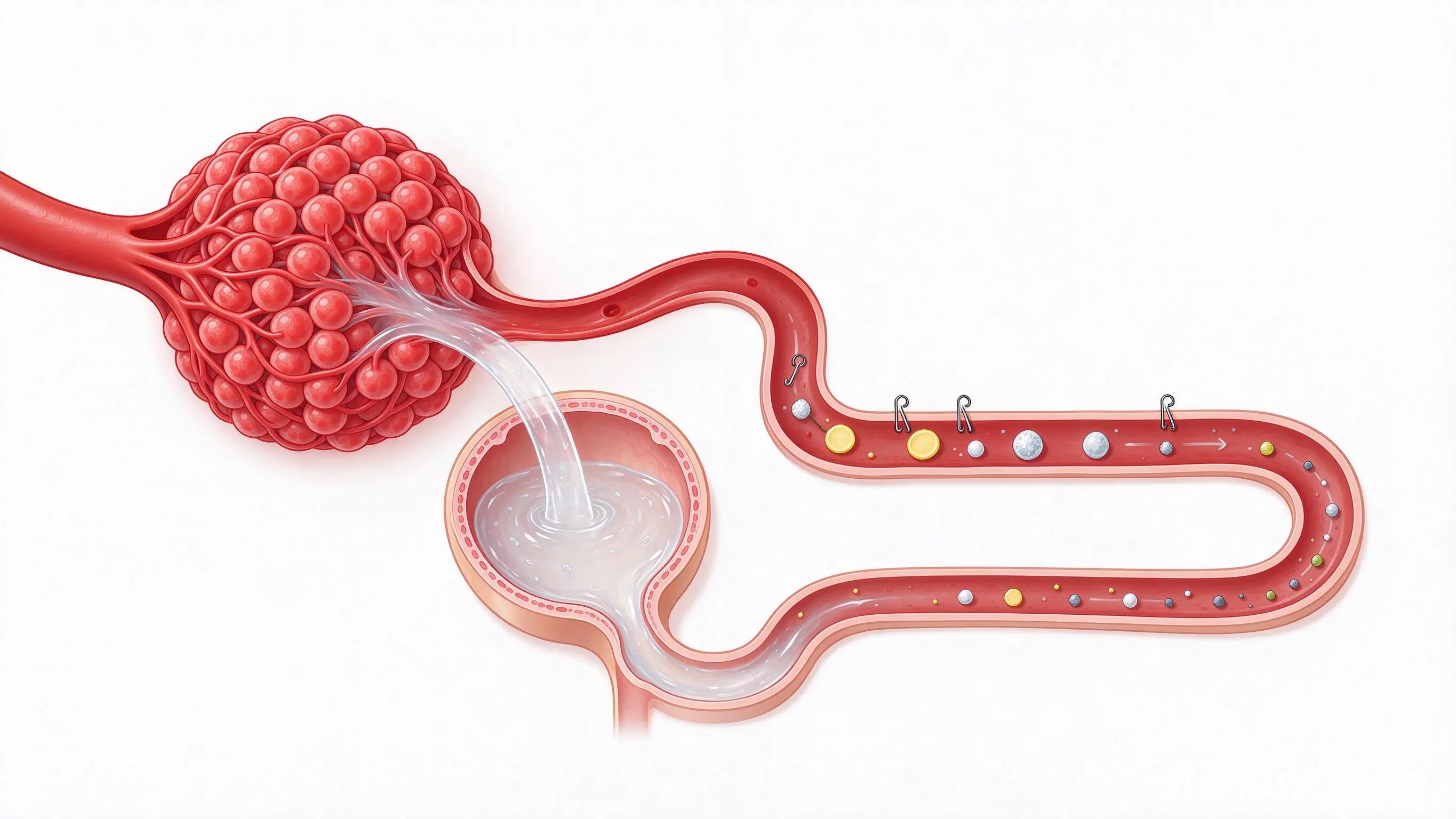
The working unit behind this is the nephron: a knot of capillaries (the glomerulus) filters blood into a capsule, and a long twisting tubule then reabsorbs what the body needs — glucose, salts, water — while leaving the waste to flow on.
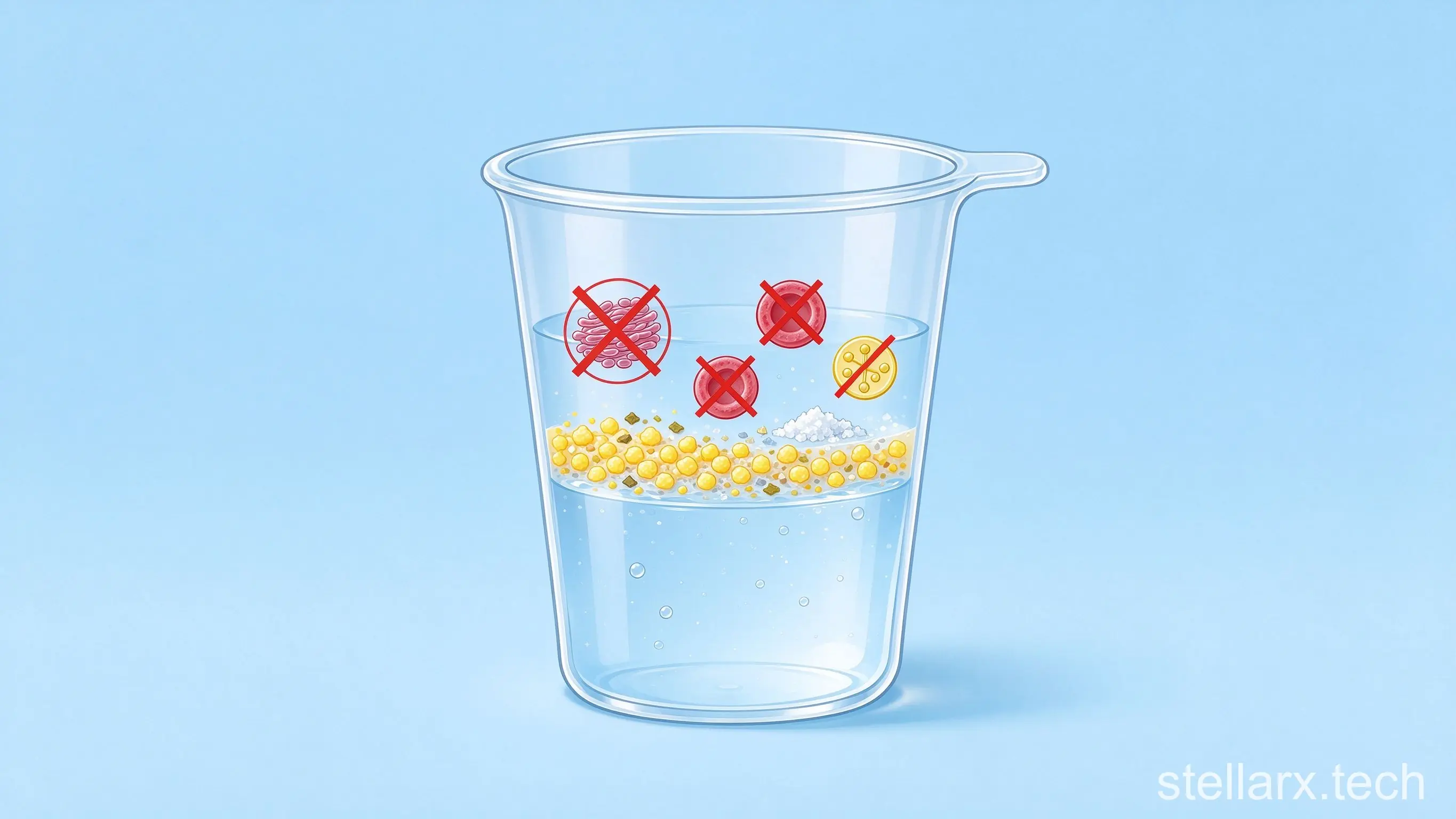
Look at Urine and You'll See What the Kidney Wants to Keep
Urine is mostly water. The rest is mainly urea, excess salt, and a little creatinine. It contains almost no protein, blood cells, or glucose — precisely because those are precious, and the kidney recycles all of them back into the blood.
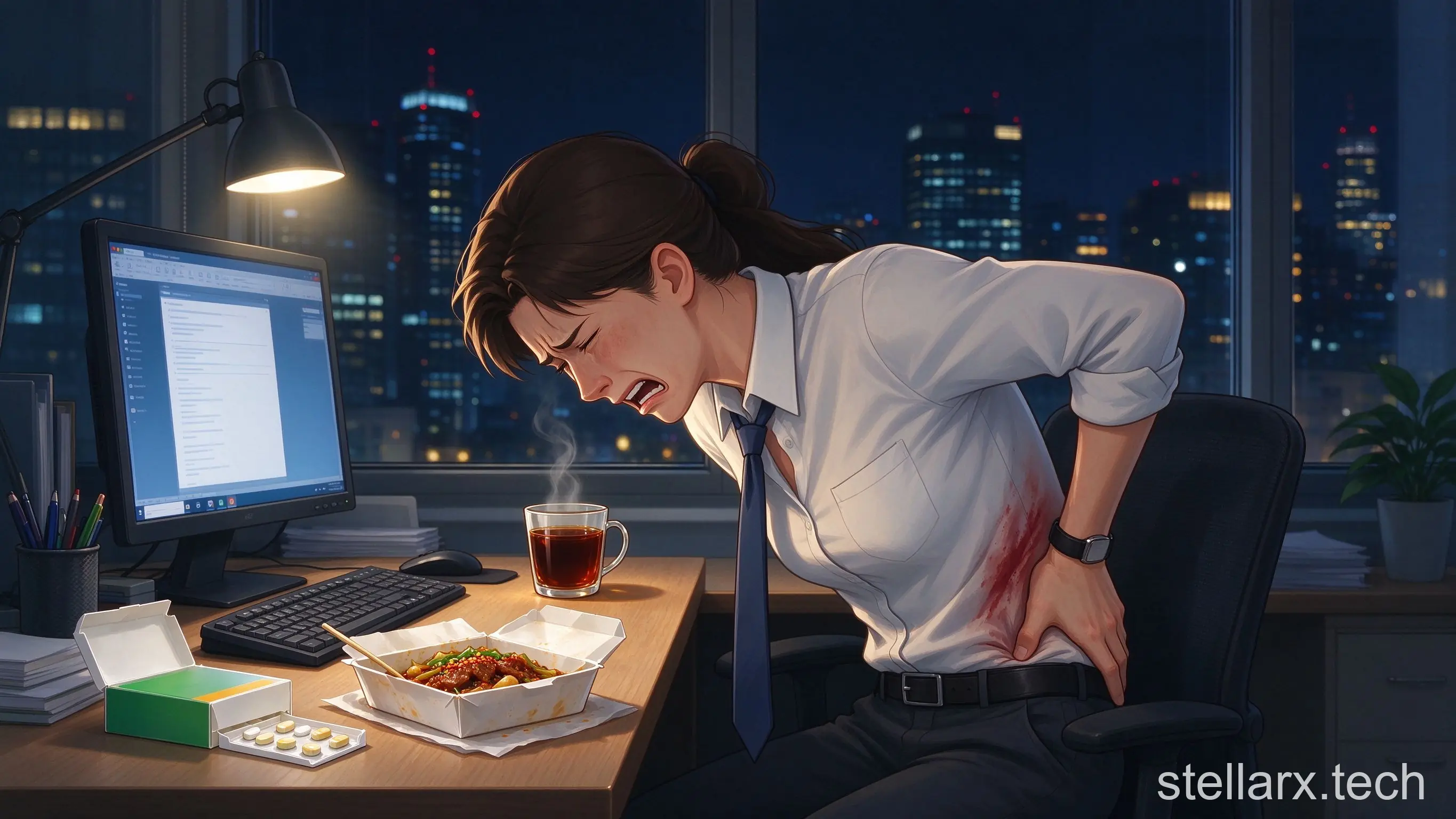
What Quietly Damages a Kidney
Holding urine for hours. Stored urine gives bacteria room to multiply; reflux can infect the renal pelvis and cause pyelonephritis. Meanwhile rising bladder pressure feeds back and impairs glomerular filtration. Repeated over years, it injures kidney tissue.
Drinking too little. Less urine means higher concentrations of waste and salts, which can crystallize into kidney stones; the persistently concentrated toxins also irritate the tubules and add to filtration load.
A long-term high-salt diet. Sodium raises blood pressure, and the kidney is a core blood-pressure-regulating organ. Sustained pressure damages glomerular microvessels and accelerates glomerulosclerosis.
Excessively high protein intake. Protein's metabolic end products are urea and creatinine; large amounts significantly raise the glomerular filtration burden. In people with already reduced kidney function, it accelerates decline. Healthy people generally tolerate it short-term; years of overeating raise risk.
Overusing painkillers, unverified folk remedies, and supplements. Many drugs and herbs are nephrotoxic, directly injuring tubular epithelial cells and causing acute interstitial nephritis — in severe cases, acute kidney failure.
Chronic sleep deprivation and prolonged sitting. Both disturb whole-body blood-flow regulation and reduce renal perfusion; sustained sympathetic arousal raises blood pressure, indirectly worsening vascular injury to the kidneys.
High-purine foods (organ meats, concentrated meat broths, seafood hotpot soup). Purine metabolism produces uric acid; excess leads to hyperuricemia, urate crystals depositing in the kidney — uric-acid nephropathy and stones.
High-oxalate foods (large amounts of spinach, amaranth, strong tea). Oxalate binds calcium into calcium-oxalate stones that deposit in the urinary tract and kidney. Small amounts are fine; large intake plus insufficient water raises risk.
Moldy food. Mycotoxins such as aflatoxin can directly injure the renal tubules, and simultaneously damage the liver, indirectly adding to the kidney's metabolic burden.
The Kidney Is Tough — Until Both of Them Fail
The kidney is actually fairly resilient. The two kidneys back each other up; nephrons in a healthy body work in rotation, and if disease costs you one kidney, the remaining one is entirely sufficient.
But sometimes both fail at once — beyond heredity, this is often the accumulated result of the habits above. And then, short of dialysis, there is only transplantation.
So protect your kidneys, and live well. None of us knows when we might lose one — or two.
Curious what the blood vessels filtering your body actually look like under a microscope? WWAI is an AI-powered biology encyclopedia with an online microscope, including a blood vessel specimen where the layered walls and lumen of arteries and veins are clearly visible. Search "WWAI" in your app store and download it today.
Related reading

One Kidney vs Liver Regeneration: Why They Differ

Pomelo: The Low-Calorie Fruit That Fills You Up

Why Humans Are the Only Animals That Wear Clothes
References:
Locally adapted for this site's science-communication positioning. Facts and examples follow the source material; all illustrations are AI-generated.
- Your Kidneys Are a Selective Filter You Can Ruin
- Testicular Torsion: The Six-Hour Clock Ticks at Home
- Your Gut Is a Second Brain. It Also Votes on What You Eat
- Prostate Calcification: What the Blip Really Means
- A Daily Bubble Tea Turned This Teen's Neck Black
- Your Gut Makes Most of Your Serotonin
- Raw Spring Water Almost Killed a 61-Year-Old
- Why Restaurant Meals Leave You So Thirsty
- Why Porridge Spikes Blood Sugar Like Soda
- How the Kidney Filters 180 Liters of Plasma a Day
全部评论