Testicular Torsion: The Six-Hour Clock Ticks at Home
"The golden six hours" — the phrase sounds like you have six usable hours once you reach the hospital. The real allocation is reversed: most of those six hours are spent at home and on the road. By the time the surgical team scrubs in, an hour or two is often all that's left.
So the answer to "how to treat torsion within the golden six hours" is half not on the operating table.
And one direction gets overlooked: the ones delayed longest are adult men, not kids.
It's the Spermatic Cord That Twists — and the Blood Flow That Dies
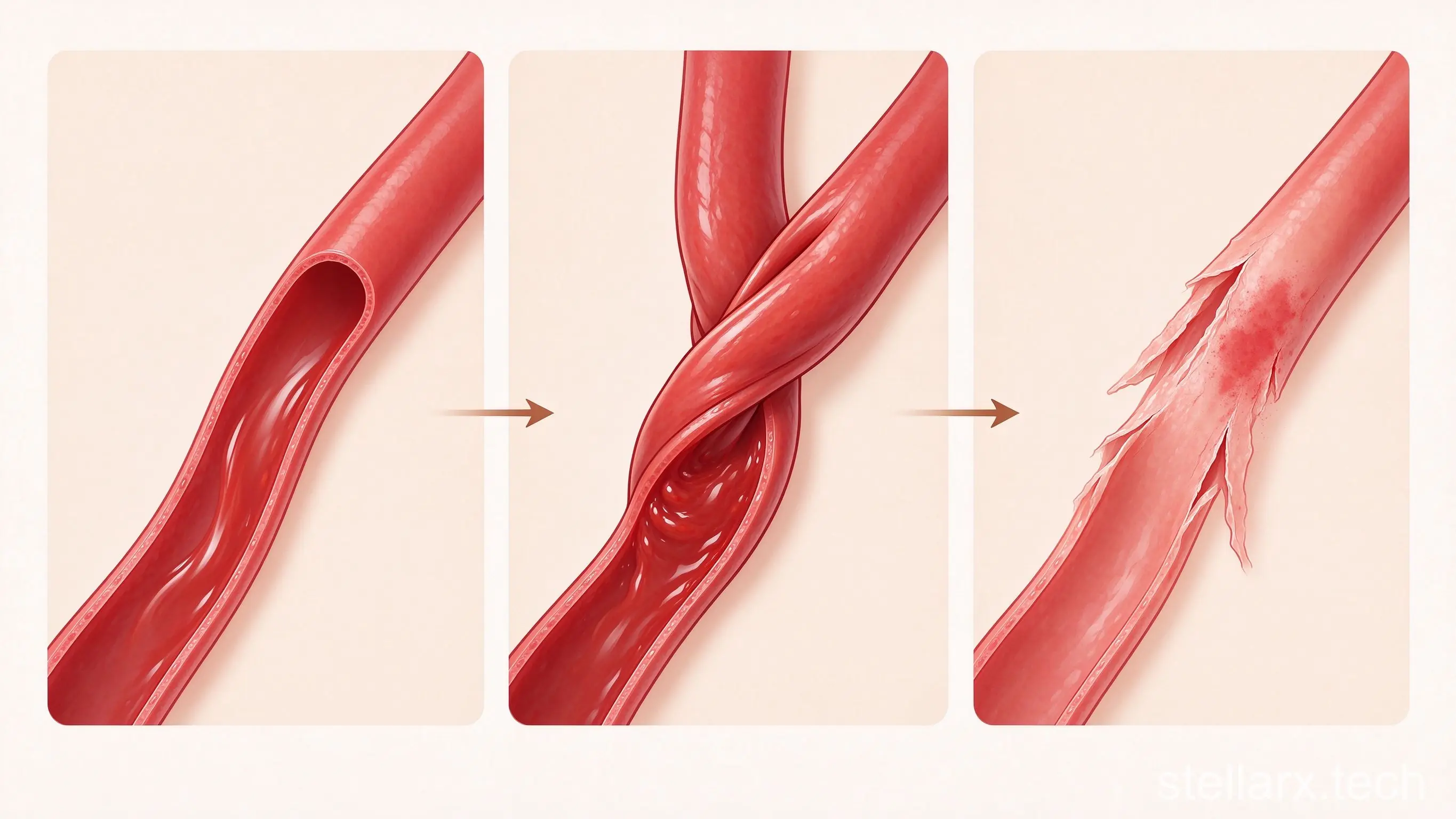
The testicle rotates along its long axis, once or even several times, and drags the spermatic cord with it. An Andrology 2023 review states it plainly: once the cord twists, blood flow and perfusion to the testicular tissue drop sharply; the tissue enters ischemia, hypoxia, and oxidative stress; germ cells necrose, spermatogenesis stops, and testosterone falls.
This isn't swelling from inflammation. It's a piece of tissue losing its blood supply — more like a tourniquet tightening around a finger than a finger that's infected.
Inside the Hospital, the Clock Counts in Minutes
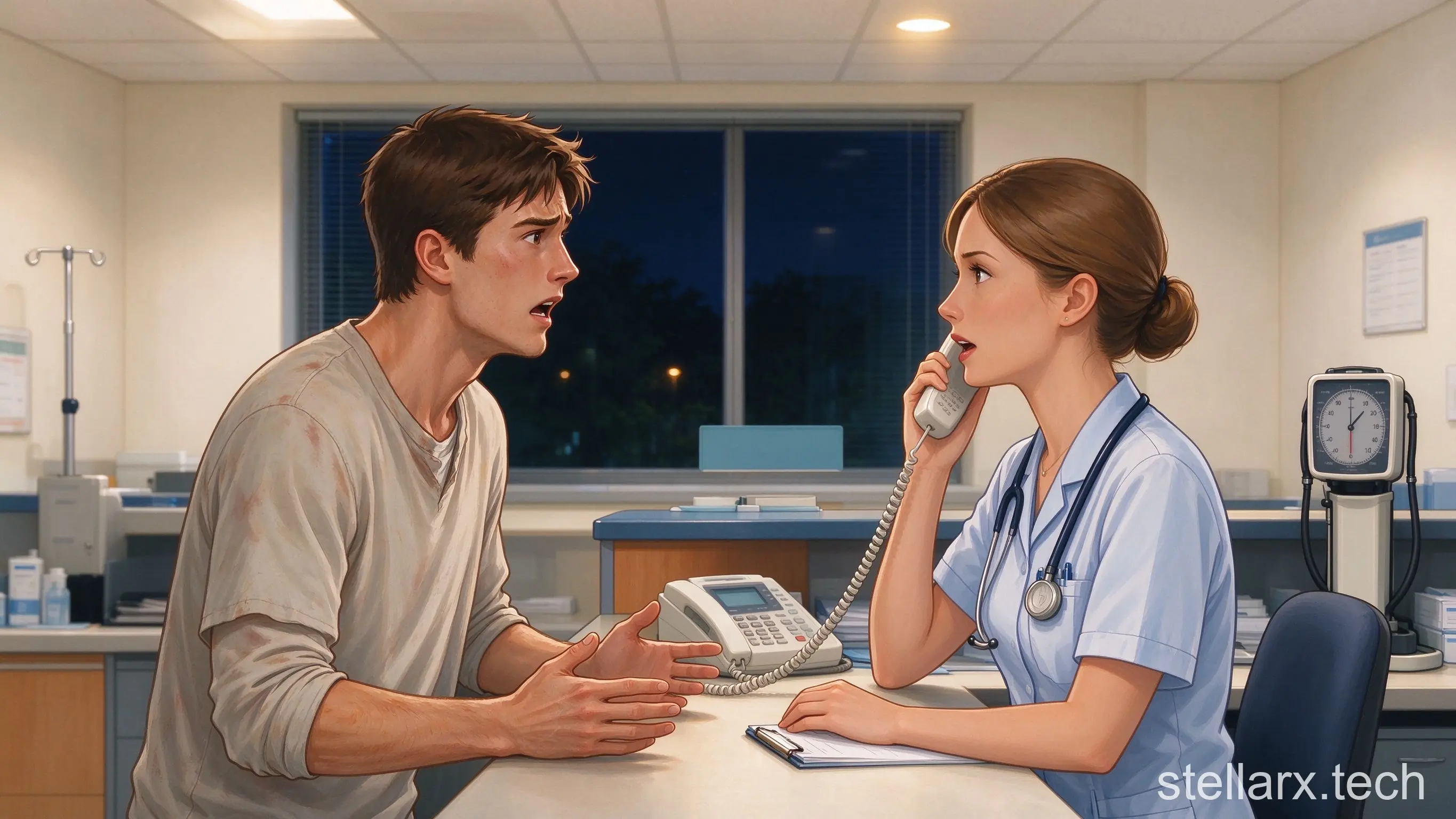
A US children's hospital reviewed 286 testicular torsion cases over ten years (2015–2024; J Pediatr Urol 2026), measuring specifically "door to detorsion." The median was 146.5 minutes — 133 minutes for testicles that survived, 166 for those removed. In multivariable analysis, every extra 10 minutes from arrival to detorsion raised the odds of removal by 6%; every extra hour, by 35%. That night-shift call to the OR nurse — "prepare for emergency testicular torsion surgery" — wasn't drama. The 6% was actually moving.
Same data, another variable: children found intraoperatively with torsion beyond 540 degrees had a removal ratio 4.85 times that of the 0-degree group. Same disease, but twisting 180 degrees versus one and a half turns leaves different amounts of time — and nobody controls that one.
The Six Hours Aren't a Slogan — They're the Only Variable Left in the Regression
A tertiary children's hospital ran 114 consecutive acute torsion cases over five years (West J Emerg Med 2015). Overall salvage: 55.3%. The researchers put age, insurance type, socioeconomic status, outside transfer, time of presentation, and time to surgery into a multivariable model — and exactly one variable predicted whether the testicle survived: symptom duration under six hours, with an odds ratio of 22.5 (P < 0.001). Even "transferred from another hospital" didn't drag the salvage rate down. What decides the outcome is the stretch from first pain to the hospital door, not how fast the hospital runs once you're inside.
Wait a Day, and It's Nearly Over
An Indian hospital performed 101 acute scrotal explorations over 14 months, 64 of them torsion (Urol Ann 2022):
| Time from pain to arrival | Testicle saved |
|---|---|
| Within 6 hours | 100% |
| Within 24 hours | 52.2% |
| After 24 hours | 7.7% |
64 torsion cases among 101 acute scrotal explorations in 14 months at an Indian hospital; overall salvage rate 28.1% (P = 0.001). Source: Murali TV, et al. Urol Ann 2022;14:167-171.
Cases that arrived within six hours: all saved. Those arriving after 24 hours: 7.7%. The group that kept the testicle had a median symptom duration of 6.5 hours; the removal group, 72 hours. Two useful details along the way: torsion affected the left side more often (65.6%), and the incidence peaked at ages 11–15.
"It's Just a Stomachache" — the Easiest One to Miss
Among the same 101 acute scrotal cases, symptom frequencies ran: scrotal pain 92.2%, abdominal pain 18.8%, nausea/vomiting 18.8%, fever 9.4%, urinary symptoms 3.1%. People with nausea, vomiting, or abdominal pain turned out to have torsion at a significantly higher rate than those without (P < 0.05).
Notice fever: only 9.4%. So the reasoning "no fever, must not be urgent" runs exactly backward. Of these cases, 22.8% were appendix torsion and 13.9% were epididymo-orchitis — the three look alike at the doorstep.
Adults Get Delayed More — Every Step
A hospital's 134 torsion cases from 2012–2022 (Urology 2023), split at age 18:
| Step | Adults (≥18) | Minors (<18) | P |
|---|---|---|---|
| Registration to ultrasound | 152 min | 87 min | < 0.001 |
| Registration to operating room | 268 min | 185 min | < 0.001 |
| Testicle removed | 48.8% | 31.5% | 0.057 (n.s.) |
134 torsion cases, 2012–2022, same hospital. On-call vs daytime teams and pediatric vs adult surgeons showed no difference. Source: Zhao K, et al. Urology 2023;184:83-86.
The same paper checked two common guesses: on-call teams and daytime teams showed no time difference, and pediatric vs adult surgeons showed no difference in operative time or salvage rate. The difference was whether torsion crossed the treating doctor's mind at triage.
Detorsion Isn't the End
Untwisting the testicle isn't the whole story. Reperfused ischemic tissue develops reperfusion injury: endothelial damage, microcirculatory disruption, continued germ cell loss (a Heliyon 2024 review collects the animal-model picture). Antioxidants, calcium-channel blockers, anti-inflammatory and vasodilating drugs have been tried in animals to blunt this phase — but none has been clinically validated in humans. Surgical detorsion remains the only intervention of proven value.
What You Can Actually Do
Sudden severe pain in one testicle — especially at night, in the early morning, or after exercise — is an emergency. Don't wait for daylight.
Nausea, vomiting, or lower abdominal pain alongside it is not a "ate something bad" bonus. It's a torsion bonus.
No fever doesn't rule it out — fewer than one in ten of these cases had one.
Pain easing on its own is not a sign of recovery. This is a routine clinical warning, not a number from a study: pain reflects the state of nerves, and how much tissue is left can only be judged by imaging and by the surgeon's eyes.
Say the words "possible testicular torsion" when you arrive. That one sentence can shrink exactly the gap in the 152-vs-87-minute table above.
On this disease, the author's preference is explicit: better a wasted emergency visit than a night at home "waiting to see if it gets better." Other conditions can wait. This one can't.
The time ledger comes down to this: degrees of twist are uncontrollable; age of onset is uncontrollable; the two hours inside the hospital are compressible but limited, with every 10 minutes worth 6%. The pre-hospital stretch — from the first twinge of pain to pushing open the emergency door — is usually the longest, and the most compressible. The golden six hours are really waiting for that stretch.
Curious what sperm cells actually look like under a microscope? WWAI is an AI-powered biology encyclopedia with an online microscope, including a frog sperm specimen where the head and tail of vertebrate sperm cells are clearly visible. Search "WWAI" in your app store and download it today.

Related reading

Alpha-Gal Syndrome: The Tick-Borne Meat Allergy

Glowing Algae: A Lockdown Story of Luck

Food Adulteration in Ancient China
References:
[1] Ramachandra P, et al. West J Emerg Med 2015;16:190-194 — 114 consecutive torsion cases, symptom duration <6 h as the only significant predictor (OR 22.5).
[2] Murali TV, et al. Urol Ann 2022;14:167-171 — 101 acute scrotal explorations, 64 torsions, salvage by time window (table above).
[3] Shields LBE, et al. J Pediatr Urol 2026;22:105719 — 286 pediatric torsion cases, door-to-detorsion time and removal odds.
[4] Zhao K, et al. Urology 2023;184:83-86 — 134 torsion cases, adults vs minors timing and removal rates (table above).
[5] Minas A, et al. Andrology 2023;11:1267-1285 — review of ischemia-reperfusion pathophysiology in spermatic cord torsion.
[6] Akhigbe RE, et al. Heliyon 2024;10:e27760 — review of reperfusion injury after detorsion.
All illustrations are AI-generated.
- Your Kidneys Are a Selective Filter You Can Ruin
- Testicular Torsion: The Six-Hour Clock Ticks at Home
- Your Gut Is a Second Brain. It Also Votes on What You Eat
- Prostate Calcification: What the Blip Really Means
- A Daily Bubble Tea Turned This Teen's Neck Black
- Your Gut Makes Most of Your Serotonin
- Raw Spring Water Almost Killed a 61-Year-Old
- Why Restaurant Meals Leave You So Thirsty
- Why Porridge Spikes Blood Sugar Like Soda
- How the Kidney Filters 180 Liters of Plasma a Day
全部评论