Why Restaurant Meals Leave You So Thirsty
You finish a great meal at a restaurant, and suddenly you're gulping water like you've crossed a desert — and it barely helps. Then you start asking the obvious question: did the kitchen load the food with deadly amounts of MSG?
The real culprit isn't what you think.
It's Sodium, Not MSG
The thirst is your body doing its job. High-sodium food raises the osmotic pressure of your blood plasma, the brain reads the signal and tells you to drink, and the water you swallow dilutes the plasma back to normal.
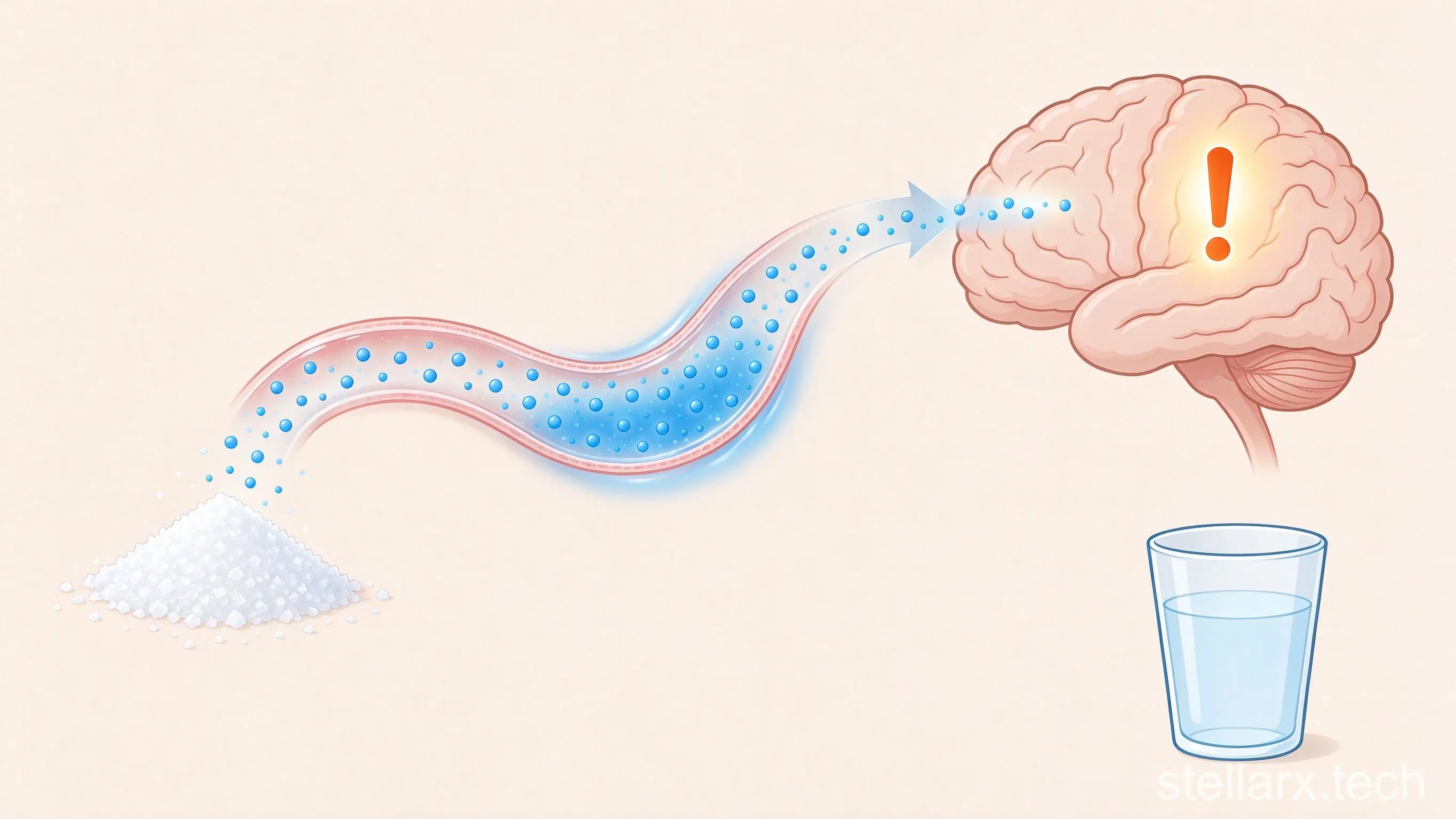
MSG does contain sodium — but far less than salt. Table salt is 39.4% sodium by weight; MSG is only 13.6%.
| Seasoning | Main component | Sodium share |
|---|---|---|
| MSG (wei jing) | Monosodium glutamate | 13.6% |
| Table salt | Sodium chloride | 39.4% |
What actually matters is the total sodium coming from salt plus every salty condiment the chef reaches for: light soy sauce, dark soy sauce, oyster sauce, MSG, and spice mixes all carry sodium. A dish that's been "lifted" with a full seasoning arsenal is nearly impossible to keep low-sodium.
One Restaurant Dish Can Blow Your Whole Day
Health guidelines cap adults at about 5 grams of salt — roughly 2,000 mg of sodium — per day. A study of more than 8,000 dishes across southern and northern Chinese cuisines found that a single restaurant serving averages 3,331.2 mg of sodium, and 62.6% of dishes exceed the 2,000 mg limit recommended to prevent chronic disease.
Soups are the worst, at an average 4,805.4 mg per serving; fried dishes follow at 3,356.1 mg. Southern restaurants run even higher, averaging 115.3 mg more per dish than northern ones.
Where does all that sodium come from? Mostly the cooking salt itself — but MSG, soy sauce, and the raw ingredients add up too.
| Where the sodium comes from | Share of a dish's sodium |
|---|---|
| Cooking salt | 45.8% |
| MSG | 17.5% |
| Food ingredients | 17.1% |
| Soy sauce | 9.4% |
| Other seasonings / condiments | 10.2% |
The Wild Test: One Table, Two Days of Salt
The data above comes from a lab study. To see it with their own tongues, one team took a salinity meter to a restaurant in Jiangsu–Zhejiang, where the food is considered light — and ordered a normal table: six dishes, a bowl of noodles, and a cola.
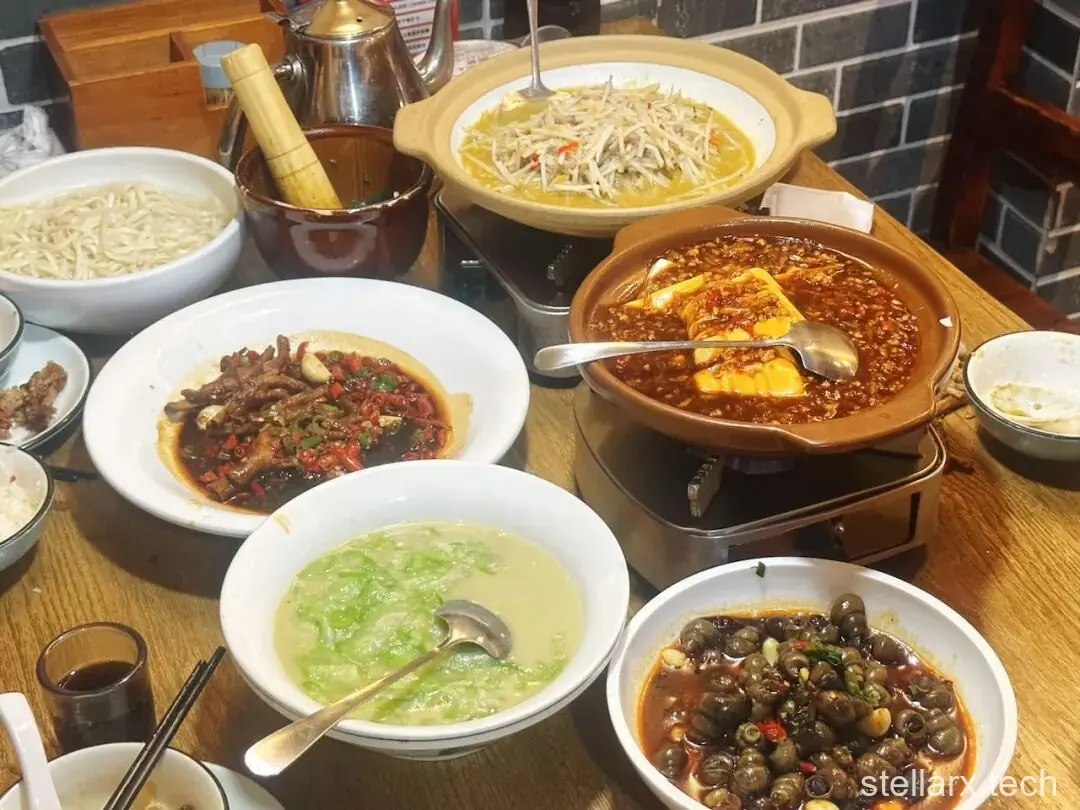
Even taking just 100 g of each dish, the rough estimate landed at 7.72 g of salt and 3,088 mg of sodium — both past the daily limits. The meter readings for individual dishes tell the same story: sauces in the clay-pot tofu and braised snails ran at nearly twice the ~1% salinity most people consider "just right."
| Dish (measured) | Sodium (mg / 100 g) | Salt (g / 100 g) |
|---|---|---|
| Pounded chili with preserved egg | 428 | 1.07 |
| Taro-shredded beef | 364 | 0.91 |
| Clay-pot tofu | 780 | 1.95 |
| Stir-fried spicy chicken feet | 428 | 1.07 |
| Braised snails | 776 | 1.94 |
| Stir-fried luffa | 196 | 0.49 |
| Plain boiled noodles | 92 | 0.23 |
| Cola | 24 | 0.06 |
Why You Don't Taste It
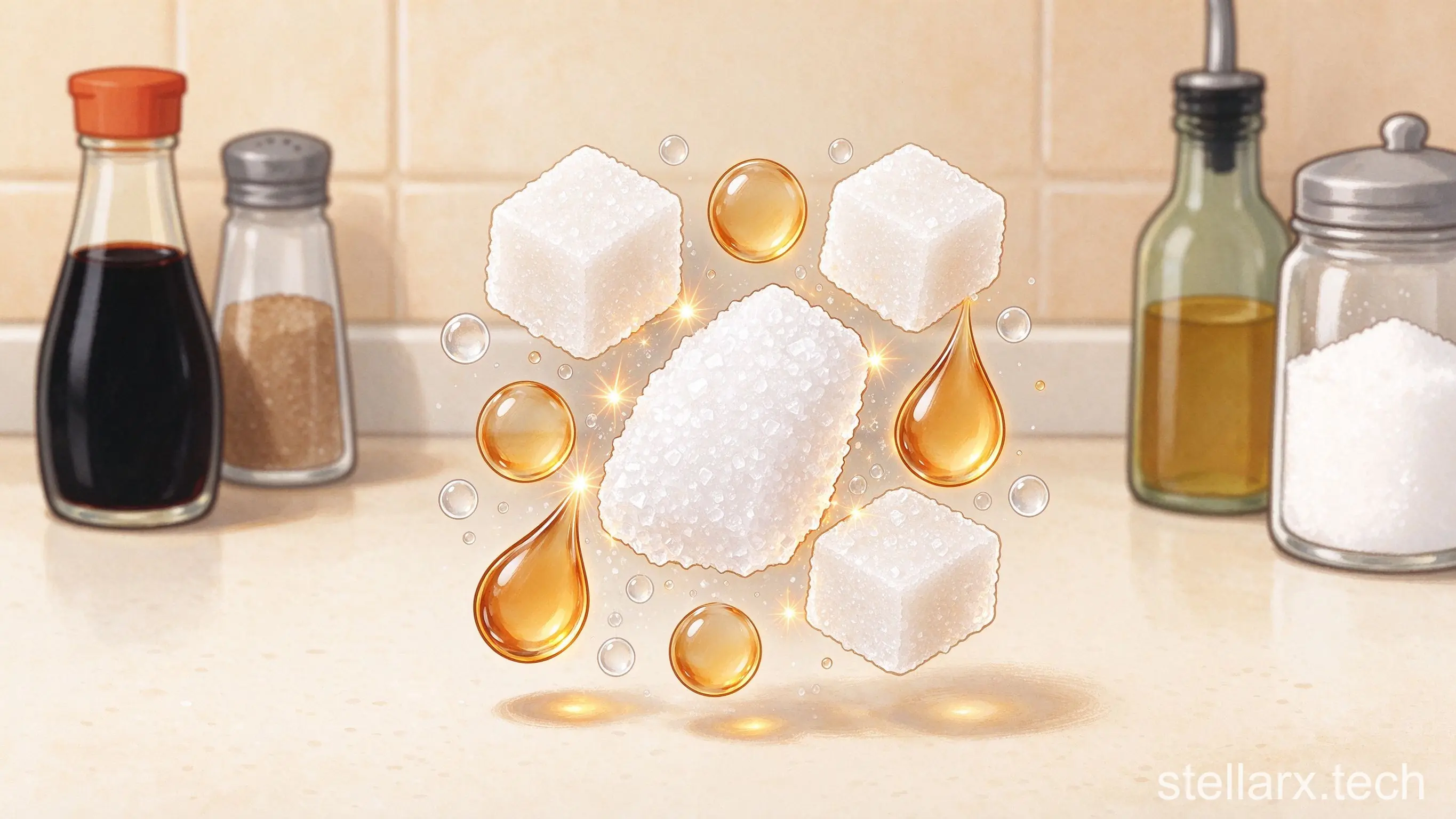
Compound seasoning is the first trick. Salt, MSG, chicken bouillon, oyster sauce, bean paste, fish sauce — layer them all and the dish should taste aggressively salty. It doesn't, because flavors interfere with each other on the tongue. Sugar and vinegar are the classic saboteurs: sugar and acid meet sodium in a dish and quietly cancel out the saltiness.
The numbers are startling. In a 1–2% salt solution, adding sugar at 7–10 times the salt makes the saltiness fade — even mostly disappear. Dishes like stir-fried "three delicacies," tomato-and-egg stir-fry, chicken soup, and pork rib soup don't taste sweet at all, yet they're loaded with sugar.
| Restaurant dish | Hidden sugar / vinegar (approx.) |
|---|---|
| Sweet-and-sour pork ribs | ≈ 30 g sugar |
| Lemon chicken feet | ≈ 10 g sugar |
| Cola chicken wings | ≈ 25 g sugar |
| Pineapple sweet-and-sour pork | ≈ 45 g + 15 g sugar |
| Yuxiang shredded pork | ≈ 30 g sugar |
| Vinegar-fried chicken | ≈ 20 g sugar + 30 g vinegar |
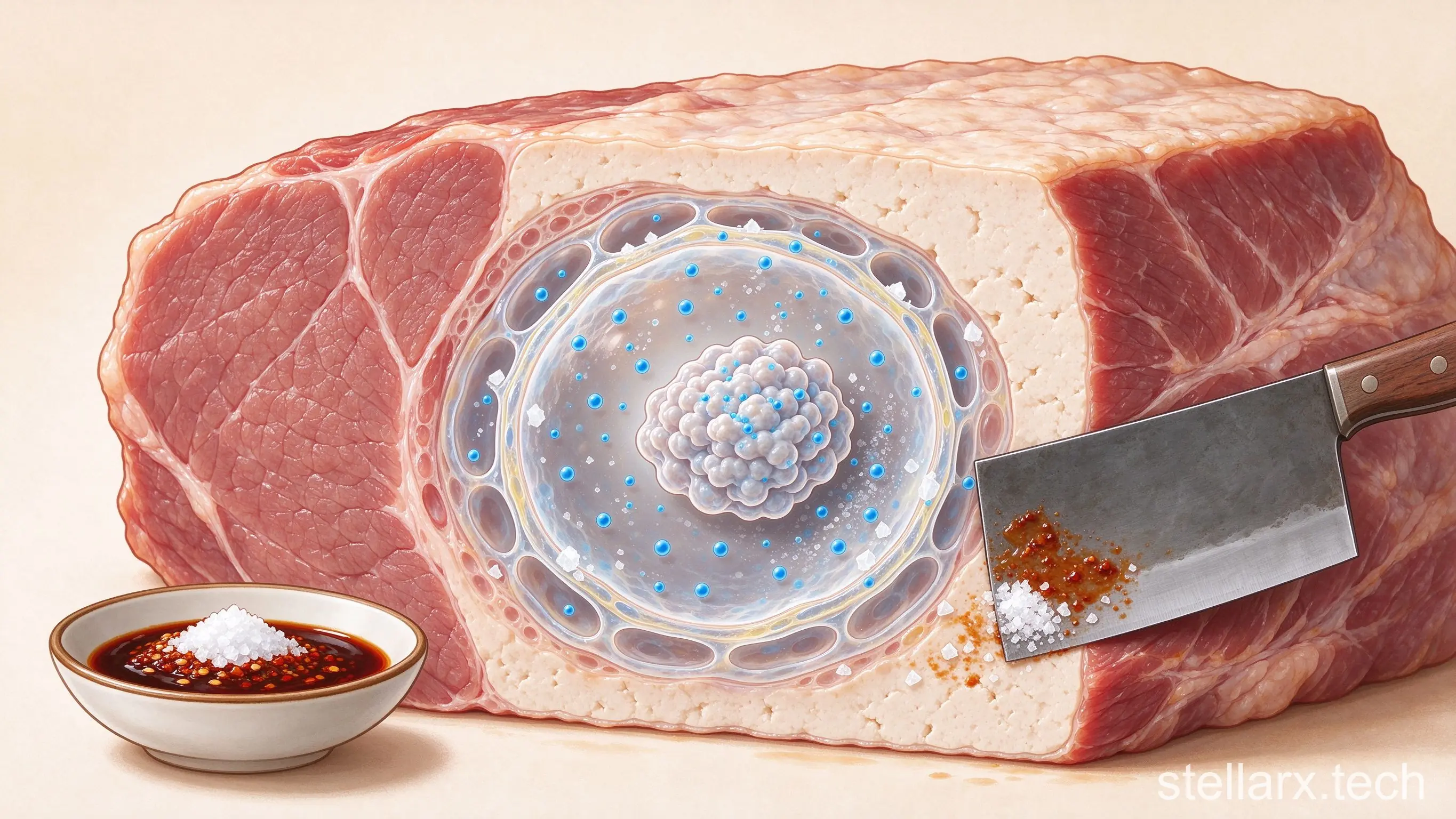
Marinating is the second trick. You taste salt when sodium ions hit your taste buds. But when ingredients are marinated or simmered for a long time, part of the sodium seeps into the cells and binds with proteins inside — chemically hidden from your tongue.
The Real Bill Comes Due Later
Thirst is only the visible symptom. To keep osmotic pressure stable, your body holds onto water, expanding the extracellular fluid volume — and your heart has to pump against the extra load. Over years, that extra salt quietly raises blood pressure and the risk of hypertension.
Your tongue never noticed the salt. Your heart, however, is keeping count.
Curious what the cells lining your mouth look like — the ones that let you taste saltiness at all? WWAI is an AI-powered biology encyclopedia with an online microscope, including an oral epithelial cell specimen where the cells of your mouth lining are clearly visible. Search "WWAI" in your app store and download it today.

Related reading

A 1 cm Thyroid Nodule Turned Out to Be Cancer While a Bigger…

Why Are Mysterious Round Holes Appearing on Parked Cars? The…

Why 'Sugar-Free' Mooncakes Can Still Spike Your Blood Sugar
References:
[1] Du W, Wang H, Zhang J, et al. Sodium content of restaurant dishes in China: a cross-sectional survey. Nutrition Journal, 2022, 21(1). https://nutritionj.biomedcentral.com/articles/10.1186/s12937-022-00762-4
The dish photo is from the source article's field test. Table data (MSG vs. salt sodium share, sodium sources, dish measurements, and hidden sugar amounts) is transcribed from the source article's charts.
- Your Kidneys Are a Selective Filter You Can Ruin
- Testicular Torsion: The Six-Hour Clock Ticks at Home
- Your Gut Is a Second Brain. It Also Votes on What You Eat
- Prostate Calcification: What the Blip Really Means
- A Daily Bubble Tea Turned This Teen's Neck Black
- Your Gut Makes Most of Your Serotonin
- Raw Spring Water Almost Killed a 61-Year-Old
- Why Restaurant Meals Leave You So Thirsty
- Why Porridge Spikes Blood Sugar Like Soda
- How the Kidney Filters 180 Liters of Plasma a Day
全部评论