Optogenetics Nobel: Luck, Timing, and the Names Left Off
When the 2026 Nobel Prize in Physiology or Medicine went to Karl Deisseroth, Peter Hegemann and Georg Nagel, the first thought for many people who follow the field was not the science. It was this: luck is strange. And yes — you also have to live long enough.
The Crowded Race
Everyone agreed optogenetics would win a Nobel eventually. The only question was whose names would be on it. Before 2026, the field had already collected three major prizes — and the lists of who won and who did not tell their own story.
The Lasker Award, 2021. The Lasker is known as the Nobel's weather vane. In 2021 it went to Deisseroth, Hegemann and Dieter Oesterhelt. The first two made this year's Nobel list. The third did not — because Oesterhelt died in 2022.
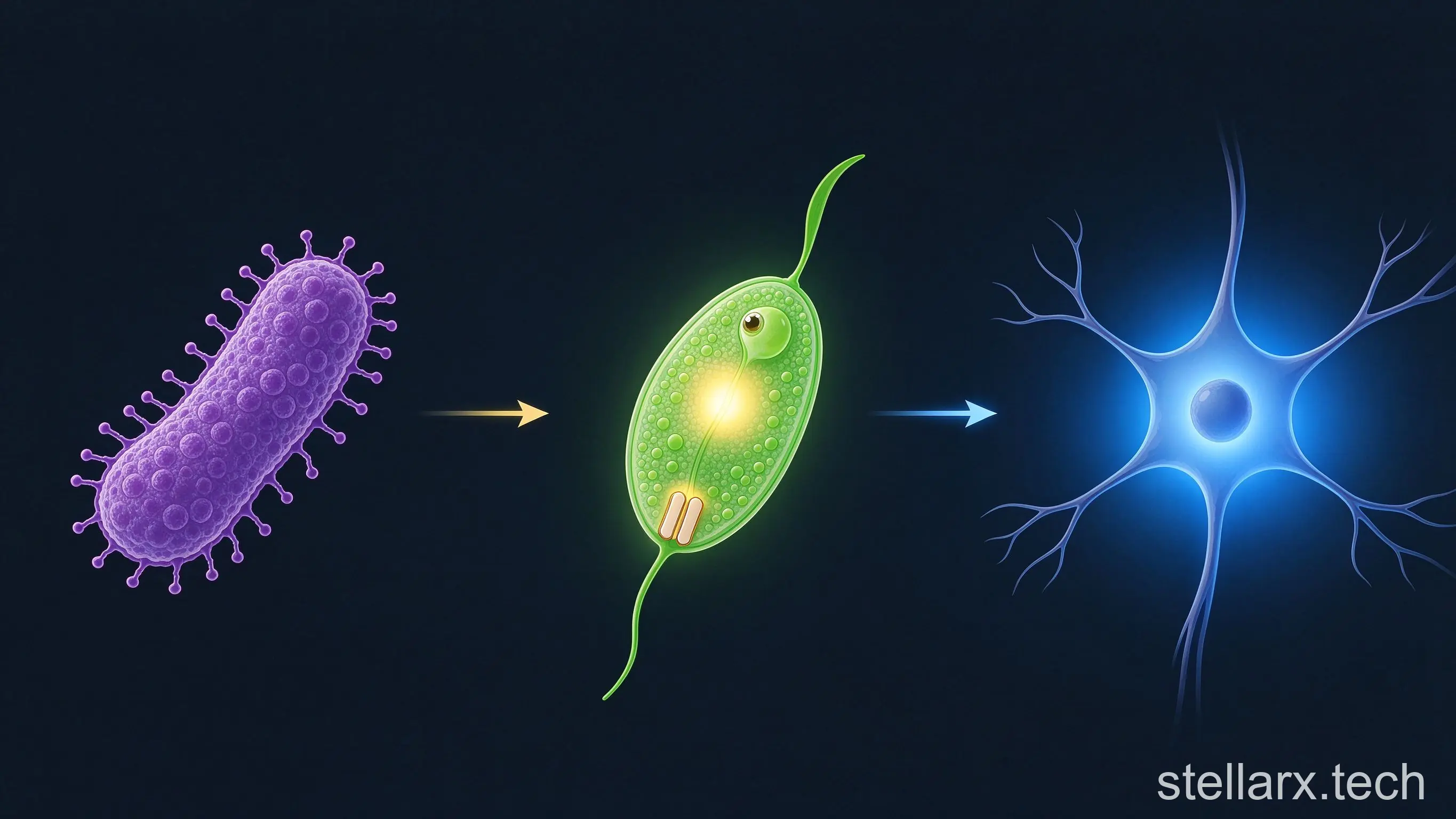
And Oesterhelt was the one who first discovered microbial rhodopsin — bacteriorhodopsin, the very protein family the whole field grew from. Science even ran a feature on him. If this year's Nobel followed the complete chain of discovery, he had the strongest claim of anyone. The chain reads: Oesterhelt discovered microbial rhodopsin → Hegemann and Nagel identified the true light-gated ion channels ChR1/ChR2 from the alga → Deisseroth engineered and delivered the tool.
The Brain Prize, 2013. Called "the Nobel of neuroscience," the Brain Prize went to six people at once: Gero Miesenböck, Karl Deisseroth, Ernst Bamberg, Edward Boyden, Peter Hegemann and Georg Nagel. That list contains all three of this year's Nobel winners. The other three are now permanently off the Nobel ledger.
The Shaw Prize, 2020. The Shaw Prize in Life Science and Medicine went to Miesenböck, Hegemann and Nagel.
Then there is the face in the room. The key 2005 Nature Neuroscience paper — the one that showed millisecond-precise optical control of neural activity — lists Boyden, Zhang, Bamberg, Nagel and Deisseroth. Feng Zhang is there: the gene-editing virtuoso who, as it turned out, missed both the gene-editing Nobel and the optogenetics Nobel.
Luck, really.
The scoreboard: Peter Hegemann swept all four — Brain Prize, Shaw, Lasker and Nobel. Deisseroth took three (missing only Shaw); Nagel took three (missing only Lasker). Miesenböck: two. Bamberg, Boyden and Oesterhelt: one each.
Why the Committee Picked These Three
With so many contenders, the committee had to tell one complete story with three names. This year's narrative: the light switch, then the toolkit.
Hegemann and Nagel found the natural "light switch" — the channelrhodopsin proteins in algae. Deisseroth took that part from the alga and turned it into a general-purpose tool for controlling neurons.
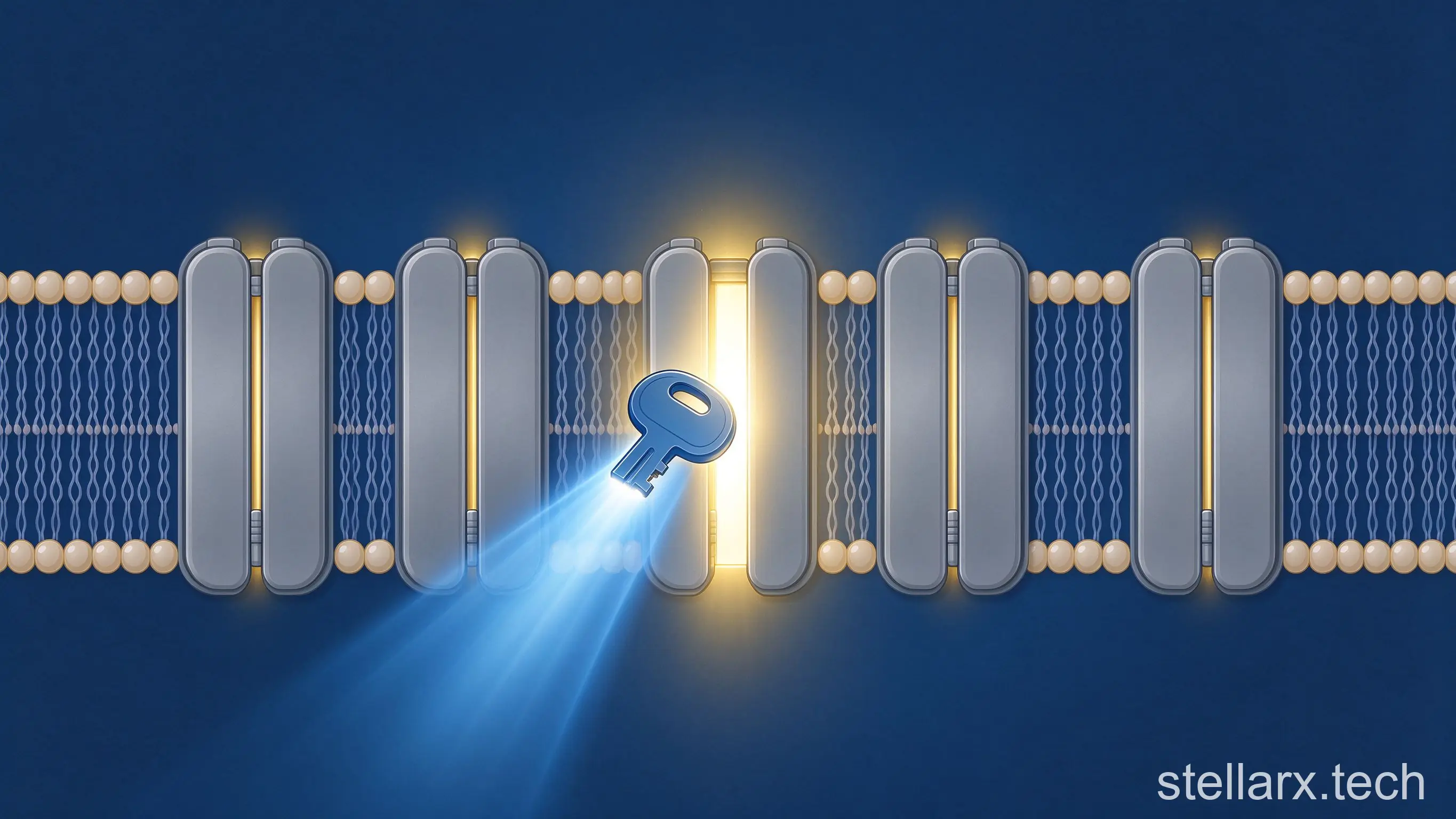
The logic runs deep. Light is one of the largest external environments for life on Earth. The 2017 Nobel went to circadian rhythms — again, the influence of light. This prize is the same story one level deeper. A single-celled alga swims toward light; that is the most basic light sensing. But how? The answer: it senses light through rhodopsins. Hegemann and Nagel went on to identify Channelrhodopsin-2 (ChR2) — a cation-selective membrane channel gated directly by light, functionally proven in Xenopus oocytes and mammalian cells. Found the channel, and Deisseroth converted the algal part into a universal neuron-control tool.
The Application That Helped
Optogenetics is usually discussed as brain science, but it has one very foundational application: vision.
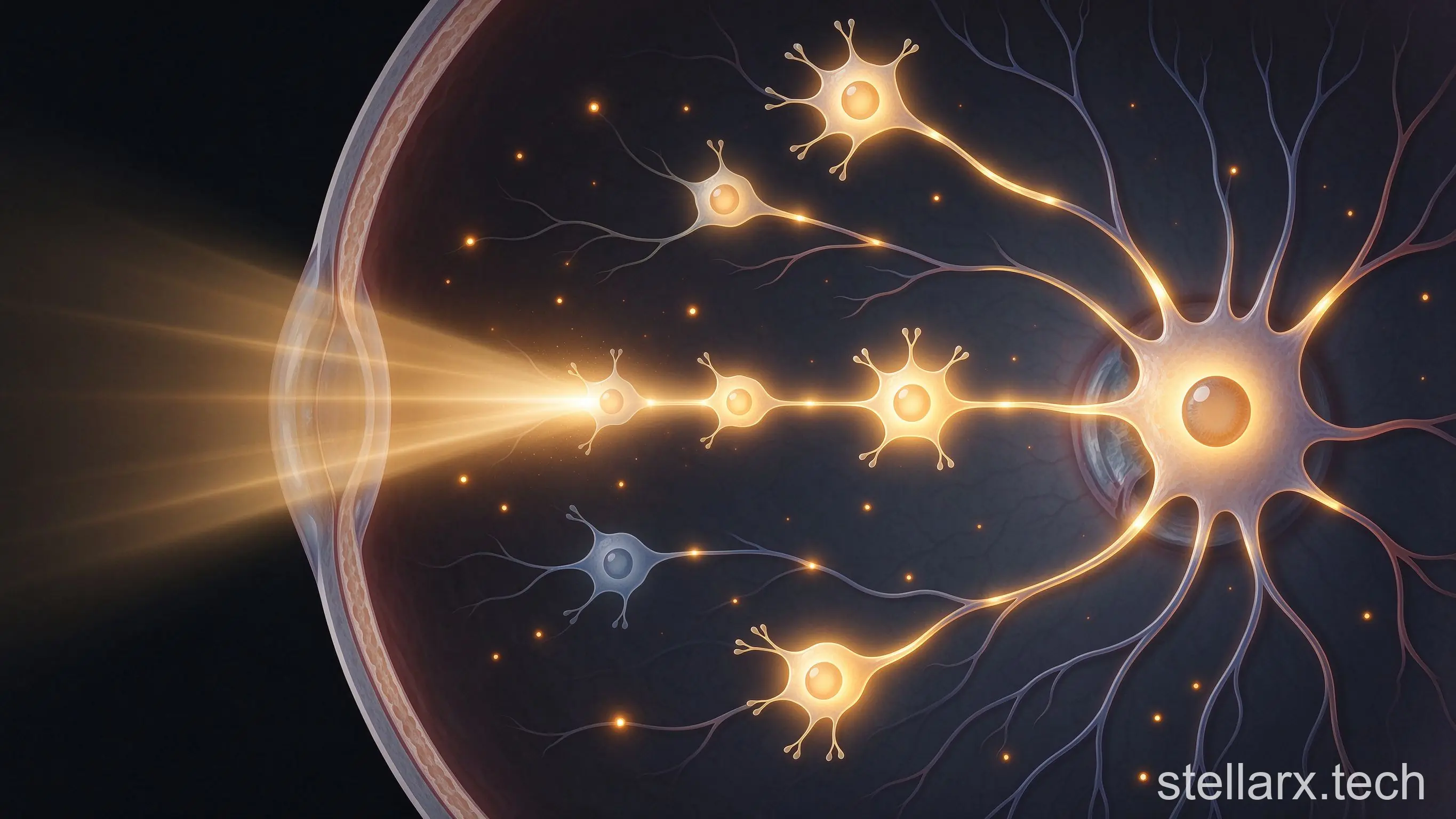
In 2021, Nature Medicine reported the case of a patient with advanced retinitis pigmentosa, a degenerative eye disease. Researchers combined an intraocular injection of a viral vector encoding ChrimsonR — a red-shifted channelrhodopsin — with engineered goggles. The goggles detected changes in light intensity and projected matching pulses onto the retina in real time, activating the genetically transduced retinal ganglion cells.
Wearing the goggles, the blind patient could perceive, locate, count and touch different objects — partial vision restored.
That may be part of why the Nobel came this year: recent Nobel Prizes in Medicine have shown a growing tendency to reward fields with real, demonstrated applications, not just elegant ideas.
The Bottom Line
The Nobel list has room for three names. The contribution list does not. Optogenetics was built by a chain of discoverers — and a few of them simply ran out of time before the committee ran out of patience.
Luck, timing, and living long enough. That is the other lesson of the 2026 prize.
Curious what the very cells look like that optogenetics switches on with a flash of light — the neurons behind all this? WWAI is an AI-powered biology encyclopedia with an online microscope, including a nerve-cell specimen where the soma, dendrites and axon are clearly visible. Search "WWAI" in your app store and download it today.
References
[1] Lasker Foundation — 2021 Albert Lasker Basic Medical Research Award: Light-sensitive microbial proteins. https://laskerfoundation.org/winners/light-sensitive-microbial-proteins-optogenetics/
[2] The Brain Prize 2013 — Optogenetics. https://brainprize.org/winners/optogenetics-2013
[3] Nagel G, et al. Channelrhodopsin-2, a directly light-gated cation-selective membrane channel. Proceedings of the National Academy of Sciences, 2003.
[4] Boyden ES, Zhang F, Bamberg E, Nagel G, Deisseroth K. Millisecond-timescale, genetically targeted optical control of neural activity. Nature Neuroscience, 2005.
[5] The Nobel Prize in Physiology or Medicine 2017 — circadian rhythm. NobelPrize.org. https://www.nobelprize.org/prizes/medicine/2017/summary/
[6] Sahel JA, et al. Partial recovery of visual function in a blind patient after optogenetic therapy. Nature Medicine, 2021. https://pmc.ncbi.nlm.nih.gov/articles/PMC9239363/
[7] The Nobel Prize in Physiology or Medicine 2026 — official announcement. NobelPrize.org. https://www.nobelprize.org/prizes/medicine/2026/summary/
Related reading

Mercury in 'Baby Cod': A Toddler's Label Trap


- Fermented Sauces: Why Sichuan's Champion Chef Wins on Taste
- Cisplatin: How an Electrode Accident Became a Cancer Cure
- Lazarus Species: Six Animals That Came Back from Extinction
- Termite Snap-Jaws: The Fastest Insect Mandibles
- Fried Rice Syndrome: Why Leftover Rice Can Poison You
- Washed Eggs: Why a Family Got Poisoned by Scrambled Eggs
- Optogenetics Nobel: Luck, Timing, and the Names Left Off
- Infantile Amnesia: Why You Can't Remember Being Three
- Optogenetics Nobel 2026: How Light Controls Neurons
- Sudden Death and the 100,000 km of Blood Vessels
全部评论