Bed Bugs Are Back: Why Sprays Fail and What to Do
"The bed bug was nearly wiped out." That, says the entomologist, is the funniest joke he has heard all year. Since 2020 he has answered 86 questions about bed bugs found indoors — every month of the year, in every province of the country. Nobody had to tell him the bed bugs came back; they never really left.
The "Comeback" That Never Ended
China once ran an official campaign against the "four pests," and for a while the bed bug was pushed to the edges of the map. But the campaign never truly won. In August 1992, Li Hanjun of the Hubei Provincial Health and Epidemic Prevention Station surveyed eleven city districts — 6,614 households, 78 inns, 47 hospitals, and 3 schools — and caught 1,580 bed bugs. Every single one was the common bed bug (Cimex lectularius). The four-pest campaign had not beaten them; it had only pushed them out of sight. Over the following two decades, attention faded, and the bugs rolled back. 
Trains spread them, too — and still do. Researchers at the Urumqi Railway Center for Disease Control presented a study on bed bug infestations and extermination on passenger trains at the 2019 annual meeting of the Chinese Pest Control Association. Rail is not their only ride.

A Bed Bug Is Not a Louse
The name "bed bug" sounds like a kind of louse, but they are not related. Bed bugs belong to the family Cimicidae — order Hemiptera, suborder Heteroptera — a family of about 110 species, of which only two feed on humans, almost always the common bed bug (Cimex lectularius), with its tropical cousin in warmer regions. They are, in fact, highly specialized true bugs, and calling plant-feeding stink bugs "bed bugs" only invites confusion.
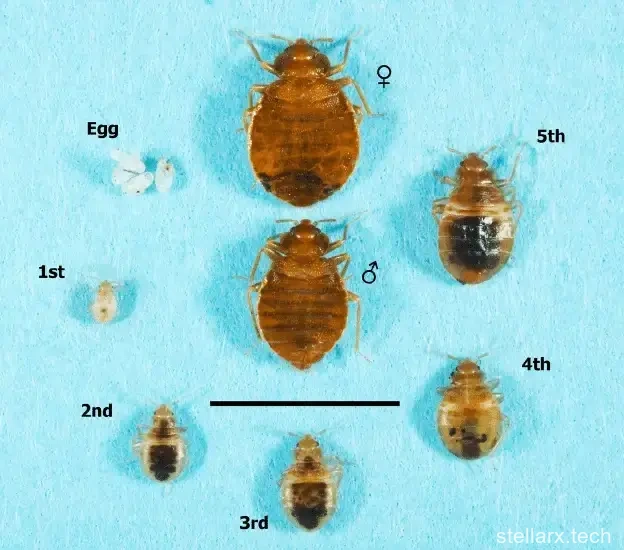
The adult is flat and nearly round, usually dark red, with a pointed tip on each antenna — a family hallmark. The young are yellowish and translucent, and no stage has wings. Bed bugs live in the cracks of mammal nests, crawl out only to feed, and otherwise hide in the seams of mattresses and the gaps of bedrooms, where sprays barely reach them.
The Real Damage Is the Itch, Not Disease
Here is the good news: a bed bug can carry more than a hundred kinds of pathogens in its body, yet no evidence shows it transmits a single one. Bed bugs do not spread disease. The bad news is the saliva — it triggers an immune reaction in humans, raising itchy red welts that vary wildly from person to person; some people show no reaction at all, while most itch badly enough to lose sleep. Antihistamines or anti-allergy medicine ease the symptoms. Panic is not required. The real problem is that bed bugs are extremely hard to kill and extremely easy to spread.
Sprays Alone Will Never Fix It
There is a popular piece of advice that tells people to simply buy an insecticide online and spray. The entomologist calls it the second-funniest joke of the year. Bed bugs have widespread resistance to insecticides; relying on spray alone to solve a bed bug problem is a plan that cannot work.
The bugs are built to outlast us. The common bed bug survives from -10°C to 45°C — about three days at -12°C, and death only above 45°C. It tolerates dryness and hunger: a well-fed adult can live a year without eating in cool conditions, and even a first-instar nymph lasts weeks without blood. It tolerates low oxygen, surviving about three days with almost no air.
Then there is the arithmetic. A female can lay up to 500 eggs, two or three a day, across a lifespan of up to nine months. Nymphs take at least two months to mature and drink blood at every instar. One fertilized female is enough to produce a nightmare infestation within a few weeks.
Prevention Is the Only Easy Win
Bed bugs cannot fly, cannot jump, and cannot run fast — animals like that normally spread poorly. But they love the folds of luggage, and humans love traveling with luggage, which is how they reach every province by rail, bus, dorm, and budget hotel. They are active at night, so a day trip is safe; an overnight stay is when you check the seams of the bed, the corners of the mattress, and the pillow. A settled infestation shows itself: droppings, shed skins, a dirty look, an odor — bed bugs are highly social and leave plenty of traces.
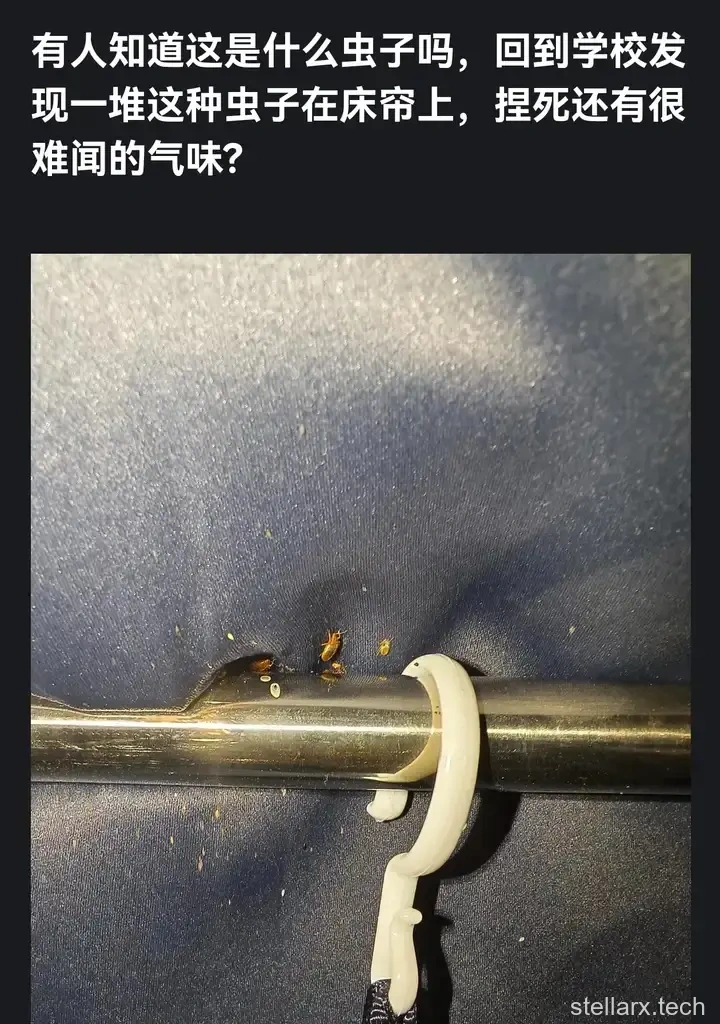
Rule one: never bring home furniture someone else threw away. Cases exist of families buying second-hand furniture and importing a bed bug colony with it — a textbook way to pay money for trouble.
If the infestation is already yours, it is a campaign, not a chore, and it may take weeks or months. First, map the extent — which rooms, which furniture, which wall cracks — and if the problem reaches a neighbor, a building, or a community, get everyone cooperating. Second, seal infested furniture and bedding in plastic bags or boxes and let the bugs starve (about a year), take large pieces apart, seal wall gaps, or dispose of furniture after breaking it down so nobody recycles it. Freezing works too — below 12°C for three days — as does heat: black bags in the sun, a hot car, a hairdryer, or boiling water, with care. Third, once the bed is clear, tape sticky barriers under the bed legs, dust talc or insecticidal diatomaceous earth to stop the climb. Fourth, re-inspect every few days — eggs in corners hatch, and a sticky trap at the bedside will catch the stragglers.
If you hire an exterminator, be skeptical: many local firms are of questionable skill, and a team that only sprays is wasting your money. Sprays and fumigation barely reach bugs hiding in cracks, resistance is common, and lingering pesticide residue is a health and fire hazard on its own.
Why They Keep Winning
Europe and the United States have seen their own outbreaks in recent years. The pattern is grimly predictable: when the economy dips and people move around more, bed bugs spread fast. Looking down on them — treating them as a minor annoyance — is exactly why they keep winning. The entomologist's final note to readers who call the problem trivial: if everyone underestimated the bed bug this much, no wonder nobody can control it.
Want to see what this kind of tiny household pest actually looks like up close? WWAI's virtual microscope includes a mite specimen where the whole body, segmented legs, body setae, and mouthparts are clearly visible — the same sort of minute anatomy that makes bed bugs so hard to spot. Ask the AI what you are looking at, then open the specimen yourself. Search for WWAI in your app store.

Related reading

Why Mosquitoes Drink Blood — It's Not for Dinner

Why Cockroaches Aren't as Tough as You Think

Centipede Leg Count: 21 to 191 Pairs
References
Reinhardt, K. & Siva-Jothy, M.T. (2007). Biology of the Bed Bugs (Cimicidae). Annual Review of Entomology, 52, 351–374.
Doggett, S.L., Miller, D.M. & Lee, C.-Y. (Eds.). (2018). Advances in the Biology and Management of Modern Bed Bugs. Wiley Blackwell.
U.S. Centers for Disease Control and Prevention. Bed Bugs. https://www.cdc.gov/bed-bugs/index.html
U.S. Environmental Protection Agency. Bed Bugs. https://www.epa.gov/bedbugs
- Ectopic Tooth in Eyelid: A World-First Superior Orbit Case
- 眼瞼長牙的真相:全球首例眶上異位牙
- What Is Lean Muscle? 4 Factors Behind 'Thin Muscle' Physique
- 薄肌理論是啥?4 個特徵決定你的肌肉線條
- 雙層保溫碗夾層長黴:60℃ 熱水殺不死的細菌
- Mold in a Double-Wall Baby Bowl: What 60°C Can't Kill
- Why Vacuum-Sealed Food Can Cause Botulism
- 肉毒桿菌中毒:真空包裝不是保鮮保險箱
- Why the Death's Head Hawkmoth Looks Like a Skull
- 鬼臉天蛾背上的骷髏,是人腦畫出來的

全部评论