Why Do Humans Mate in Private? Ask a Desert Bird
Of the world's roughly 5,000 species of mammals, almost every one mates in plain view. Antelope do it on the savanna. Zebras do it on the move. Lions do it loudly, in the middle of a pride. Humans — the species with houses, locks and doors — do it in secret. Why do humans mate in private when nearly every other mammal doesn't? The answer, it turns out, was hiding in a desert bird.
The Privacy No Culture Lacks
The anthropologist Yitzchak Ben Mocha, of the University of Zurich, went looking for one thing: a culture where public sex is an everyday event. He worked through more than 4,500 ethnographies covering 249 cultures — from modern cities to Stone Age hunter-gatherer bands, from societies that talk about sex openly to those that never mention it.
He found nothing. Not a single culture treats sex in public as routine.
Think about the medieval European farmhouse where the whole family slept on one bed. The great brick kang — the heated platform bed — that filled a room in northern China. The Inuit snow house, cramped and shared. The longhouse where dozens of people lived, ate and slept side by side. No doors. No locks. And still people "hid": they waited for darkness, waited until everyone else was asleep, kept their voices low, pulled the quilt tight. Everyone else, for their part, pretended to sleep.
The door came later. The hiding never did.
Public sex appears in the record only as ritual — fertility ceremonies, festival days that came with special permission. It takes a ritual to override the rule, and the exception only nails the rule down tighter.
Even Mangaia, the Pacific island famous for its sexual openness, encouraged young people to explore — but the act itself had to be private. What was open was who you slept with. No society, anywhere, ever opened up the doing.
The Predator Theory Collapses
The obvious explanation for secrecy is danger. Mating is the most vulnerable moment an animal can choose: attention scattered, posture compromised, escape impossible. That should be the strongest reason on earth to hide.
Then you look at the animals that actually live on the edge. Antelope mate in the open, right next to the grass where predators are hunting. Zebras mate in the middle of migration. Lions — the species with the longest, most conspicuous matings of all — do it in front of the whole pride, the male literally roaring through it.
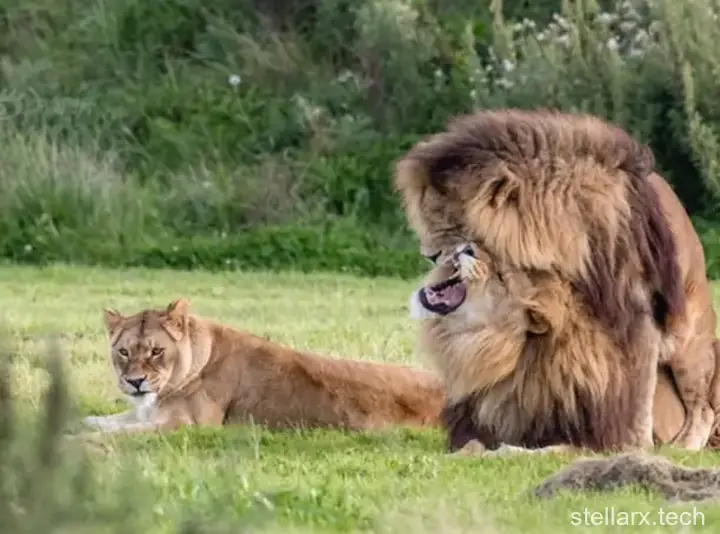
And by the time humans were hiding sex, they were the least endangered species on the savanna. Fire, spears, dozens of companions — leopards avoided people. There was no predator left worth this level of care.
The details give it away. Waiting until everyone sleeps. Pitch darkness. A quilt pulled up. A voice kept low. None of that means anything to a leopard. All of it means something to eyes and ears.
You hide from the people you live with. Kin, friends, the companions who share your roof and your meals. Human society has too many variables for a predator-based theory to work — so the theory was quietly wrong.
The One Bird That Hides Too
One exception could be shrugged off as a fluke. Two exceptions in the whole animal kingdom mean you are looking at a pattern.
Meet the Arabian babbler (Turdoides squamiceps): a drab, streaky bird smaller than a pigeon, living in the Negev desert of Israel. Its social system is the reason it matters. Arabian babblers breed cooperatively — a group of about a dozen birds where only the top-ranked pair reproduces. Everyone else gives up breeding entirely and works as unpaid babysitters: incubating eggs, feeding nestlings, standing guard against predators.
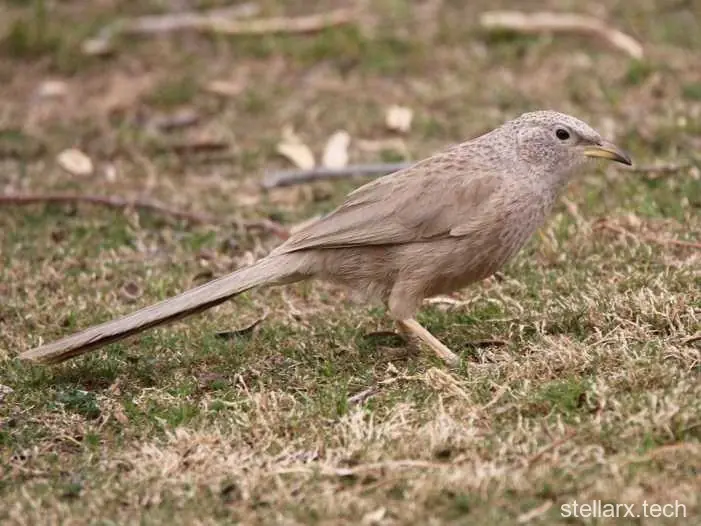
Researchers watched these groups for years, recording every single mating. The result stunned them. Every mating, without a single exception, was hidden. The dominant pair either waited until the helpers wandered off, or slipped away out of sight.
In birds, mating in the open is so absolute a norm that a species doing otherwise is news. A bird that hides sex like a human — that was the second exception, and it broke the case open.
Why Hide From Your Own Team?
Ben Mocha's 2018 study of the babblers ruled out the usual suspects: the birds weren't hiding from predators, weren't using secrecy to display status, and weren't dodging social interference — they simply concealed every copulation from the adults in their own group.
That pointed to a different logic, published in 2020 as the cooperation maintenance hypothesis. The immediate reason to conceal mating: prevent sexual arousal in bystanders. The deeper reason: keep two things at once — exclusive mating control over your partner, and cooperation with the group members who are denied mating rights.
Watch what happens if the pair mated in the open. Helpers get aroused. Arousal turns into interest, interest into interference — beta males trying to insert themselves. In a cooperative group, that is the fuse that blows the whole arrangement. The pair hides sex because the cost of an audience isn't embarrassment — it's the collapse of cooperation that keeps everyone fed and alive.
National Geographic's coverage of the babblers put it simply: sociality is the key. In a society that runs on cooperation, public sex is a conflict machine.
So the next time you reach for the lock, you're not guarding modesty. You're doing what no other mammal bothers to do — protecting the quiet social contract that holds your group together, the same way a drab little bird does in the desert.
Curious what the cell actually doing the mating looks like? Under a virtual microscope you can zoom into a frog sperm specimen where the compact head and the long, whipping tail are clearly visible — the two parts of the only cell in the body whose entire job is to seek out and fuse with another. Open your app store, search "WWAI" and take a look.

Related reading

Woodpecker Concussion Myth: Real Brain Damage

Quick Mating & Evolution: Why Fast Didn't Win

Sacculina: The Crab-Castrating Parasite
References
Ben Mocha, Y. (2018). "Why hide? Concealed sex in dominant Arabian babblers (Turdoides squamiceps) in the wild." Evolution and Human Behavior, 39(5), 575–582.
Ben Mocha, Y. (2020). "Why do human and non-human species conceal mating? The cooperation maintenance hypothesis." Proceedings of the Royal Society B, 287.
National Geographic (2018, November 20). "These birds are one of the rare animals that hide to have sex."
- 秋天為什麼讓你咳不停?5 個咳嗽元兇
- Why Autumn Makes You Cough: 5 Causes of Fall Cough
- Why Do Humans Mate in Private? Ask a Desert Bird
- 為什麼人類交配要私密?沙漠裡的一隻鳥給出答案
- Why Do Cats Go Limp When Scruffed? Tigers Won't
- 捏住老虎後頸,牠會像貓咪一樣乖巧順從嗎?
- How to Tell If an Adrenal Nodule Makes Hormones
- 腎上腺結節功能檢查:抽血判斷,不是看 CT 大小
- Pacific Oyster Invasion: The Edible Ecosystem Engineer
- 牡蠣:入侵歐洲的海洋工程師,也是桌上美食

全部评论