Firefly Glow: A Cold Light Humans Learned to Copy
A firefly converts chemical energy into light at about 95% efficiency. No electricity. No heat. Its tail literally glows by chemistry alone — and it can even switch the glow on and off like a lamp.
Your LED bulb, by contrast, is a different machine entirely. And that's just the beginning of what humans stole from this tiny beetle.
The LED myth
Plenty of people assume LED bulbs were inspired by fireflies. They weren't.
An LED works by electroluminescence: electricity excites electrons in a semiconductor, and they emit light as they settle. It is a physical process, and it still produces heat.
Humans have borrowed from the firefly — but only its lantern's nano-scale scale structure, to improve how light escapes an LED. The chemistry inside the beetle was never the point.
The real firefly trick is biochemical: in the presence of oxygen and magnesium ions, the enzyme luciferase catalyzes the oxidation of luciferin. Nearly all of the chemical energy becomes light — almost zero heat, almost zero wasted energy. It is the cold-light reaction evolution spent hundreds of millions of years perfecting. And modern labs have copied it outright.
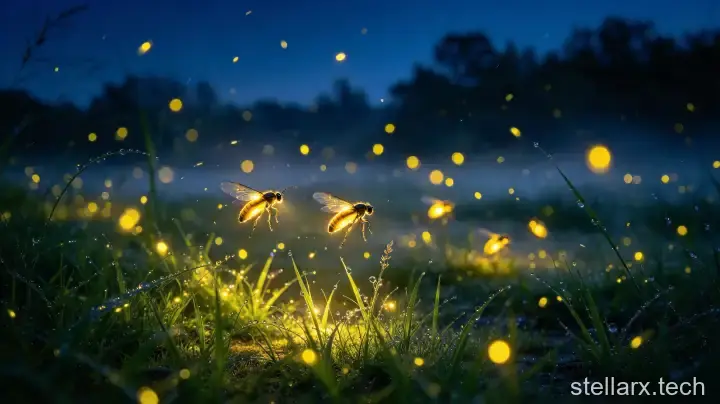
The lantern, taken apart
Fireflies are beetles — order Coleoptera, family Lampyridae. About 2,000 species worldwide, over 100 in China.
The glow lives in an organ on the underside of the abdomen, built from light-emitting cells and reflector cells. Inside the light cells sit luciferin and luciferase. The enzyme catalyses luciferin reacting with oxygen, using the cell's energy currency ATP, and light comes out.
Energy never appears from nowhere. A table lamp converts electricity into both light and heat; a firefly converts the chemical energy of ATP into both as well — except the split is wildly different. The firefly's light share is huge, its heat share tiny. That's the "cold light." Reflector cells bounce it out, making it look even brighter.
The color, brightness and rhythm of the flash depend on the species (the genes), on the cell environment (pH, temperature, oxygen levels), and on the firefly's nervous system. Catch a firefly and it often stops glowing — that's its nervous system responding to a threat. And it isn't only adults that shine: eggs, larvae and pupae all emit light too. A firefly glows until the light runs out — quite literally to the end of its life.
In firefly society, the glow is a "light language": telling companions where you are, a male courting a female, or driving off an enemy.
The color code of dusk and night
Species that flash around dusk tend to flash yellower. Against a background of green leaves, a yellow flash is easier to spot. Species that flash in full night tend to glow green.
Inside the lantern, firefly luciferin, ATP and O₂ react, catalyzed by luciferase and Mg²⁺, producing yellow-green light. The firefly regulates oxygen supply by controlling its breathing, which is what makes the light pulse — one blink, then another, in rhythm.
Bioluminescence is often called a "cold light source": the reaction releases little heat, roughly 95% of the energy coming out as light. It won't burn the firefly's own rear end.
Compare a firefly to an incandescent bulb: about 10% of that bulb's energy becomes light — the rest is wasted as heat. Humanity can build brighter lights than a firefly, but a more efficient one? We still can't touch it.
What humans built with the trick
Food-safety swabs. Every living bacterium and microbe carries ATP. Scientists rebuilt the firefly reaction as a reagent: swipe a restaurant counter, a cafeteria tray, or a cutting board, add the reagent, and bacterial ATP triggers a flash. The brighter the glow, the dirtier the surface. Results in seconds — no days-long culture. It is now standard equipment in food-hygiene inspection.
Gene reporters. Scientists take the firefly's luciferase gene and attach it to a gene they want to study. When that gene switches on, the cell makes luciferase; add luciferin and the cell lights up. Wherever it glows, the gene is working; the brighter, the more active. This is used across drug screening, gene-function validation and disease research — more than half of the world's biology labs and pharma R&D use it, and it underpins many FDA-compliant diagnostic tests.
Live-animal imaging. Instead of X-rays or biopsies, researchers insert the luciferase gene into disease cells in a lab animal — tumor cells, inflamed cells — then inject luciferin. The disease lights up from inside the living body. Instruments track the tumor's position, size and spread in real time, no surgery, no radiation. It has transformed how anti-cancer drugs are tested.
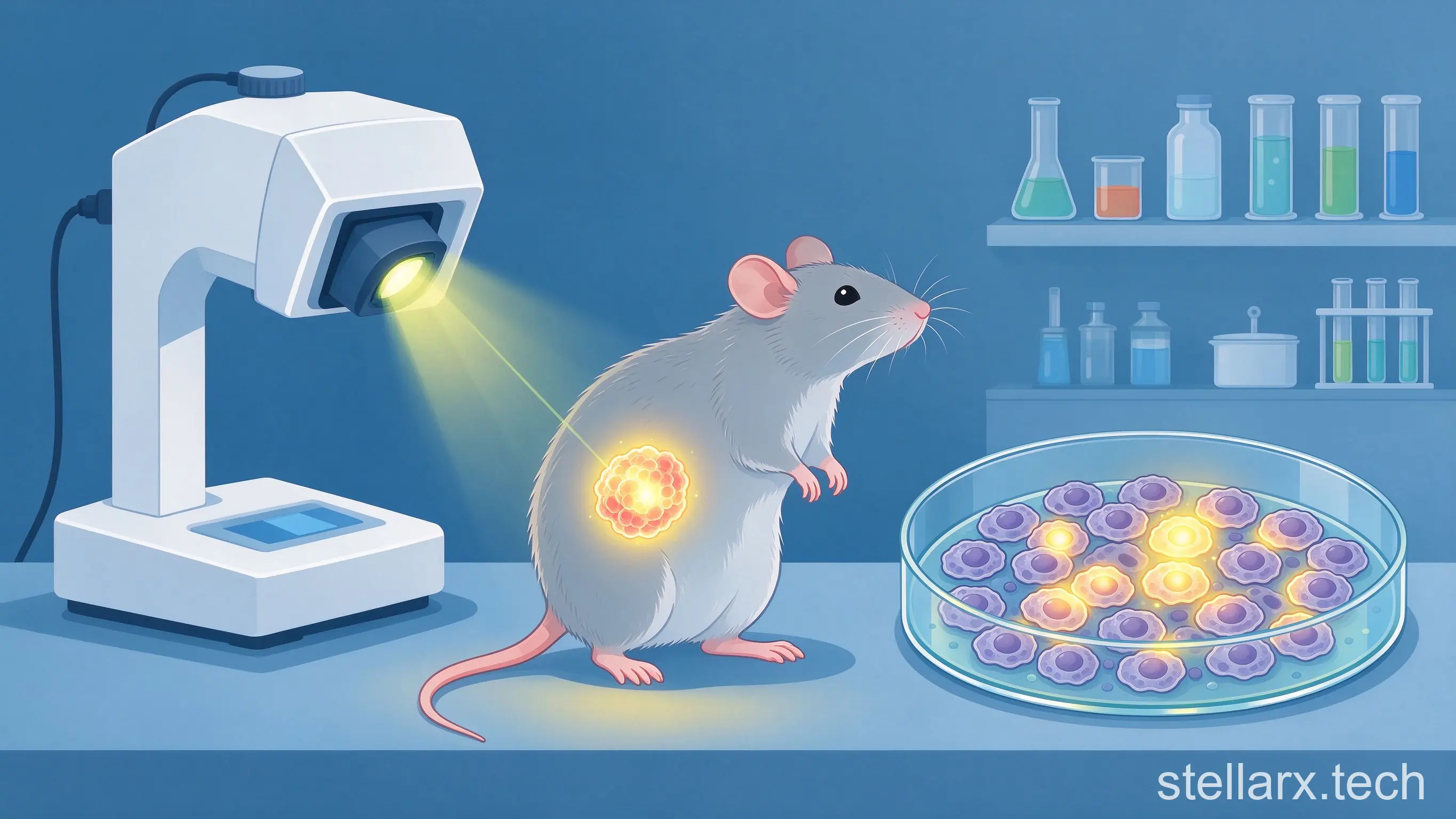
Explosion-proof light. Ordinary lamps make heat and sparks. In mines, flammable workshops, sterile operating rooms and deep-sea work, that's dangerous. Bio-cold-light devices reproduce the firefly's chemistry — no electricity, no heat, no sparks — for high-risk industrial and medical environments.
The future: glowing plants. Scientists pack luciferin, luciferase and helper cofactors into nanoparticles and implant them into plant leaves. The leaf glows softly on its own. If it matures, we get self-lit greenery for indoor ambiance and night-time landscape lighting — true "zero-electricity" light.
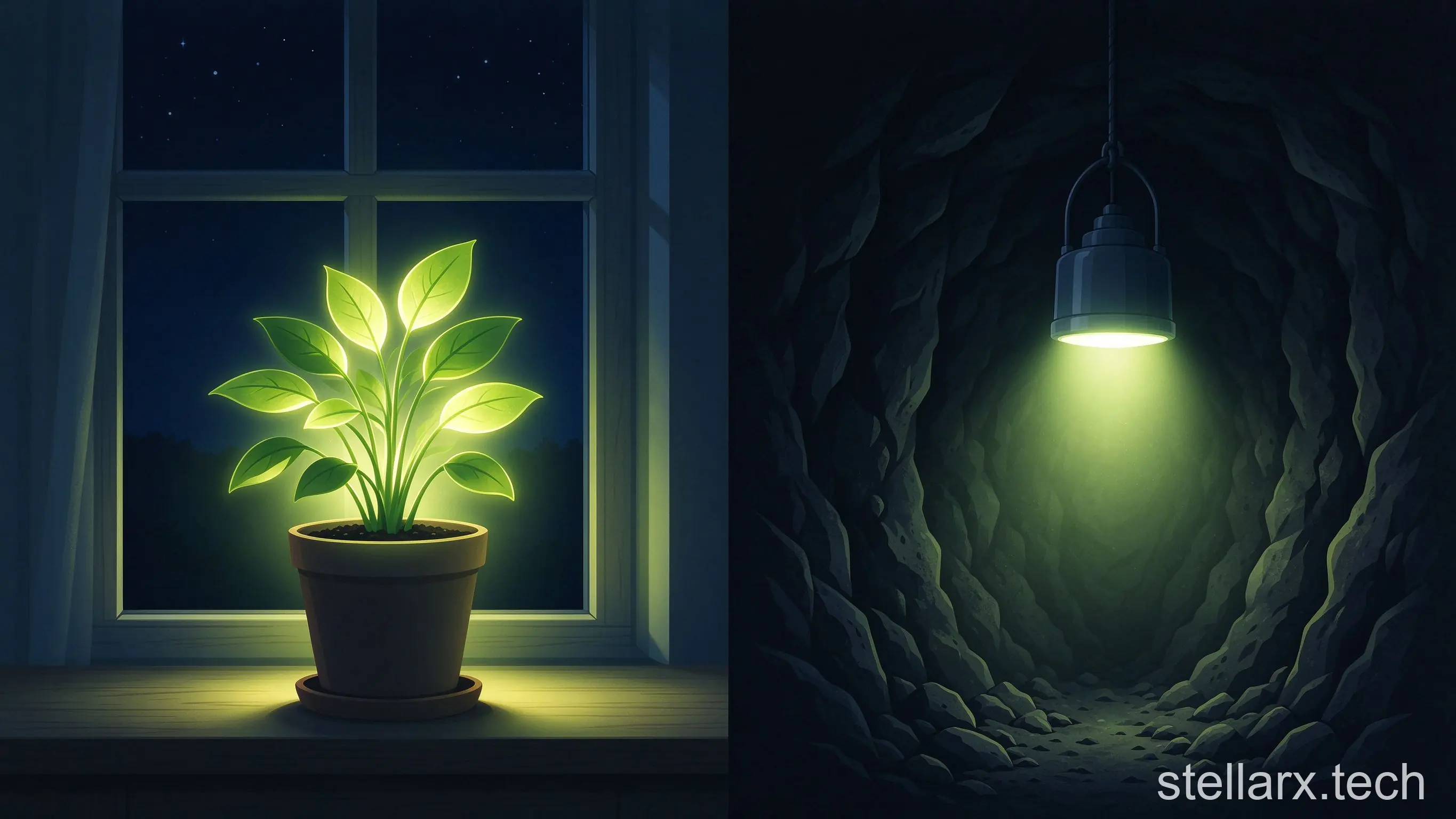
Fireflies are not the only bioluminescent animals — glowworms in the sea, some jellyfish, some fish, and fungus gnats in dark caves all shine by similar chemistry, the same luciferase-luciferin logic. But the firefly is the most-studied bioluminescent system on Earth, the reference manual for an entire branch of biotechnology.
What the firefly leaves humanity is never just summer romance. No circuits, no external power — one simple chemical reaction, the most efficient light in nature.
Nature's tiniest creatures are its best engineers.
See the bacteria a firefly-inspired test hunts. An E. coli specimen under the microscope shows Gram-negative short rods — exactly the kind of microbe whose ATP lights up the food-safety swab. Search "WWAI" in your app store and download it today.

Related reading

Centipede Leg Count: 21 to 191 Pairs


- Feeding Wildlife Can Get It Killed
- The Chicken's Gizzard: A Dinosaur's Stone Crusher
- Heart Attack at 49: Fit, Sober, Still Struck
- Stroke & Brain Hemorrhage: First Step Saves Life
- Firefly Glow: A Cold Light Humans Learned to Copy
- Heartburn or GERD: The Valve That Gives Up
- A Tiny Wound Nearly Killed Him: Tetanus Facts
- One Kidney vs a Regrowing Liver: Two Different Organs
- IBS and the Gut-Brain Axis: Why You Poop When You Leave Home
- Stomach Burst Risk: A 2-Hour Buffet Emergency | stellarx
全部评论