A Tiny Wound Nearly Killed Him: Tetanus Facts
A bamboo splinter. A cut that healed in days. A week later his jaw locked, his back stiffened, his whole body seized — and he stopped breathing.
No rust was involved. No rusty nail. He almost died anyway.
The bamboo cut that turned into "Seven-Day Madness"
He is a 69-year-old man, called Hua by the hospital that saved him. He went up into the hills to cut bamboo, and a piece of it stabbed his left forearm.
The wound got red and pus-filled. He ignored it. Within days it healed over.
One week later, his jaw would not open. It felt like a toothache. Then his back went tight and hard. Then full-body spasms. The local hospital told him the truth: it was tetanus, spreading from the wound.
He was rushed to the Emergency Department of the First Affiliated Hospital, Zhejiang University School of Medicine — already critical. The team gave him CPR, intubated him, put him on a ventilator, and pumped in high-dose tetanus immunoglobulin plus antibiotics, balancing his electrolytes, then moved him to the ICU. He survived. As this story was written, he was expected to leave the hospital.

It is not "catching a draft"
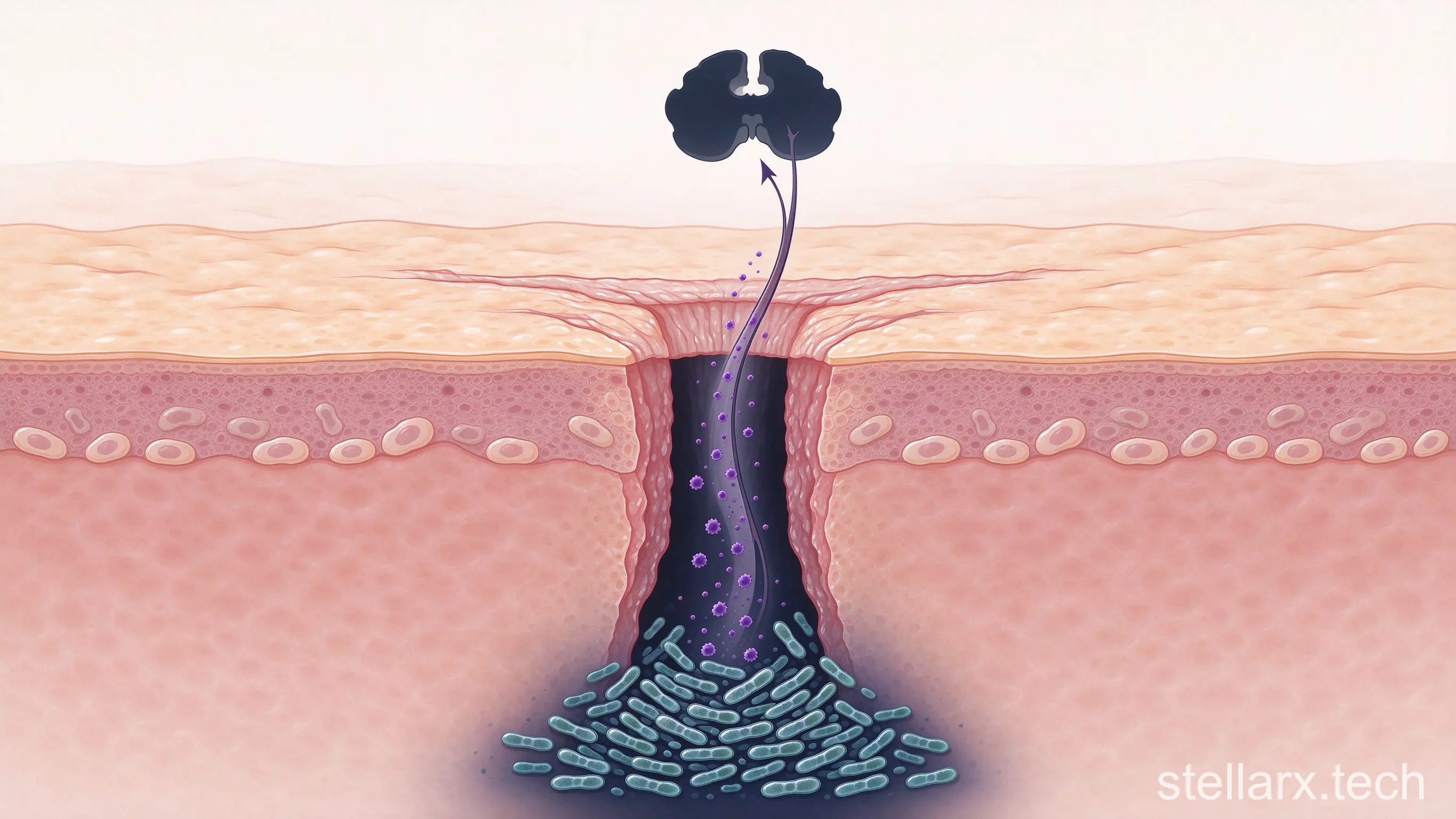
Tetanus is not the folk tale of "getting wind." It is an acute, specific poisoning caused by Clostridium tetani, a bacterium that enters through a break in the skin or mucous membrane and, in the right conditions, multiplies and makes toxin.
The germ is everywhere: soil, dust, rust, animal and human waste. It survives for a long time, waits in a dormant spore form, and comes back to life when conditions suit it.
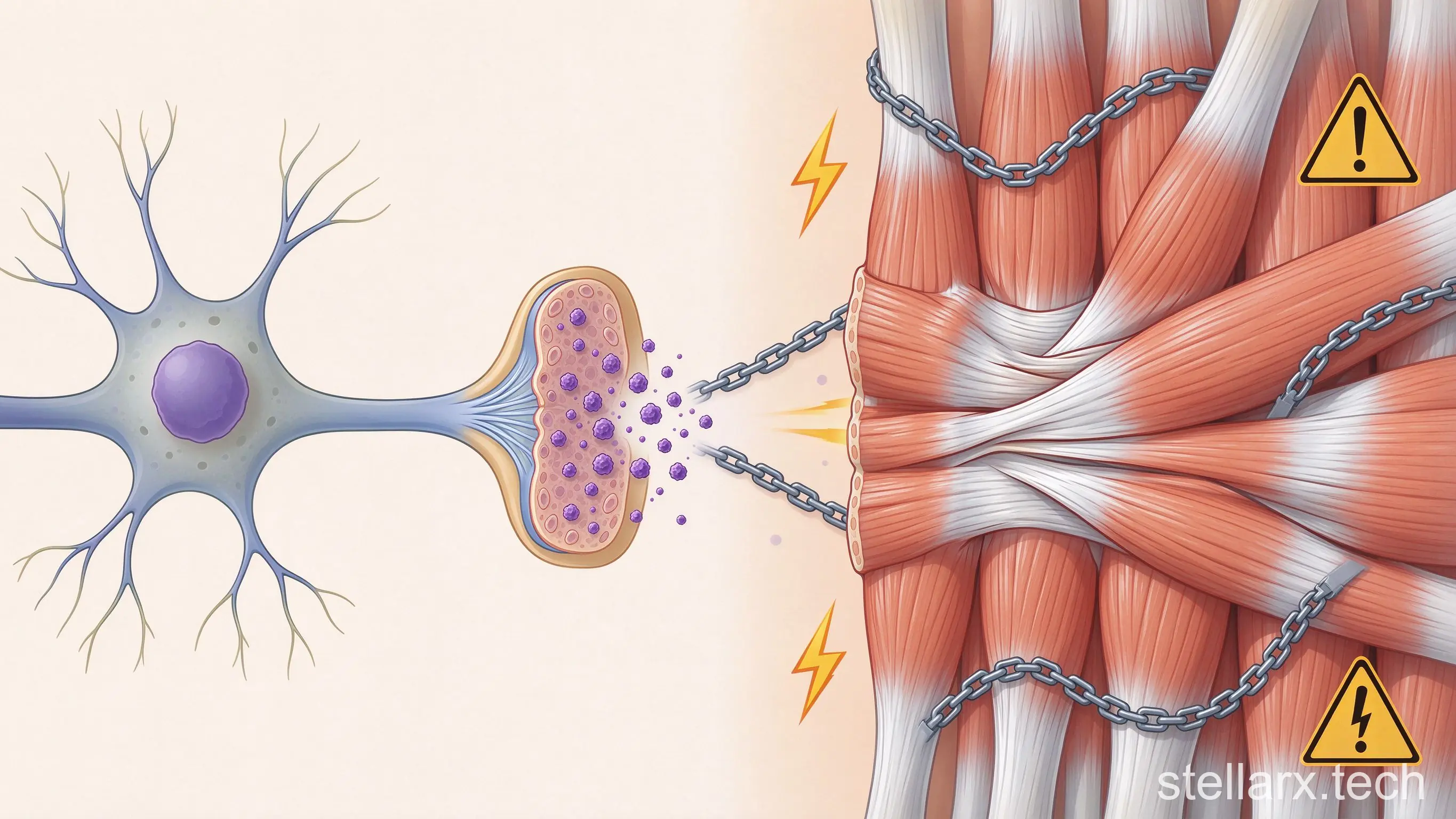
The toxin it makes — tetanospasmin — is brutally potent. The lethal dose for a human is less than 1 microgram. It attacks the nervous system, driving every muscle into continuous spasm, until the breathing muscles cramp shut and the person suffocates. In folklore it earned the name "lockjaw" for a reason.
Without medical intervention, the death rate approaches 100%. Even with the full modern treatment, the global fatality rate is still 30–50%.
Why the smallest wound is the most dangerous
Most people believe only a rusty nail can give you tetanus. Wrong.
Clostridium tetani is an anaerobe — oxygen suppresses it, and it multiplies fastest in a closed, oxygen-free space. A sharp object makes a wound that is narrow and deep: the surface closes quickly, but deep down it stays oxygen-free. The perfect nursery.
That is why the doctors at Zhejiang University's hospital have treated patients infected by stone cuts, bamboo splinters, and animal bites — wounds nobody took seriously.
The incubation period runs from one day to months, most often 3–21 days, peaking around day seven — hence the Chinese name "Seven-Day Madness." The closer the wound is to the central nervous system, the shorter the incubation and the worse the disease.
Early signs are easy to misread: a jaw that won't open looks like a toothache or a jaw-joint problem; a stiff neck looks like a bad pillow; an elderly person's sudden convulsions get blamed on stroke. There is no quick, specific lab test for it. Diagnosis depends on history plus the classic signs — which is exactly why patients take the long way around.
Three things that make it 100% preventable
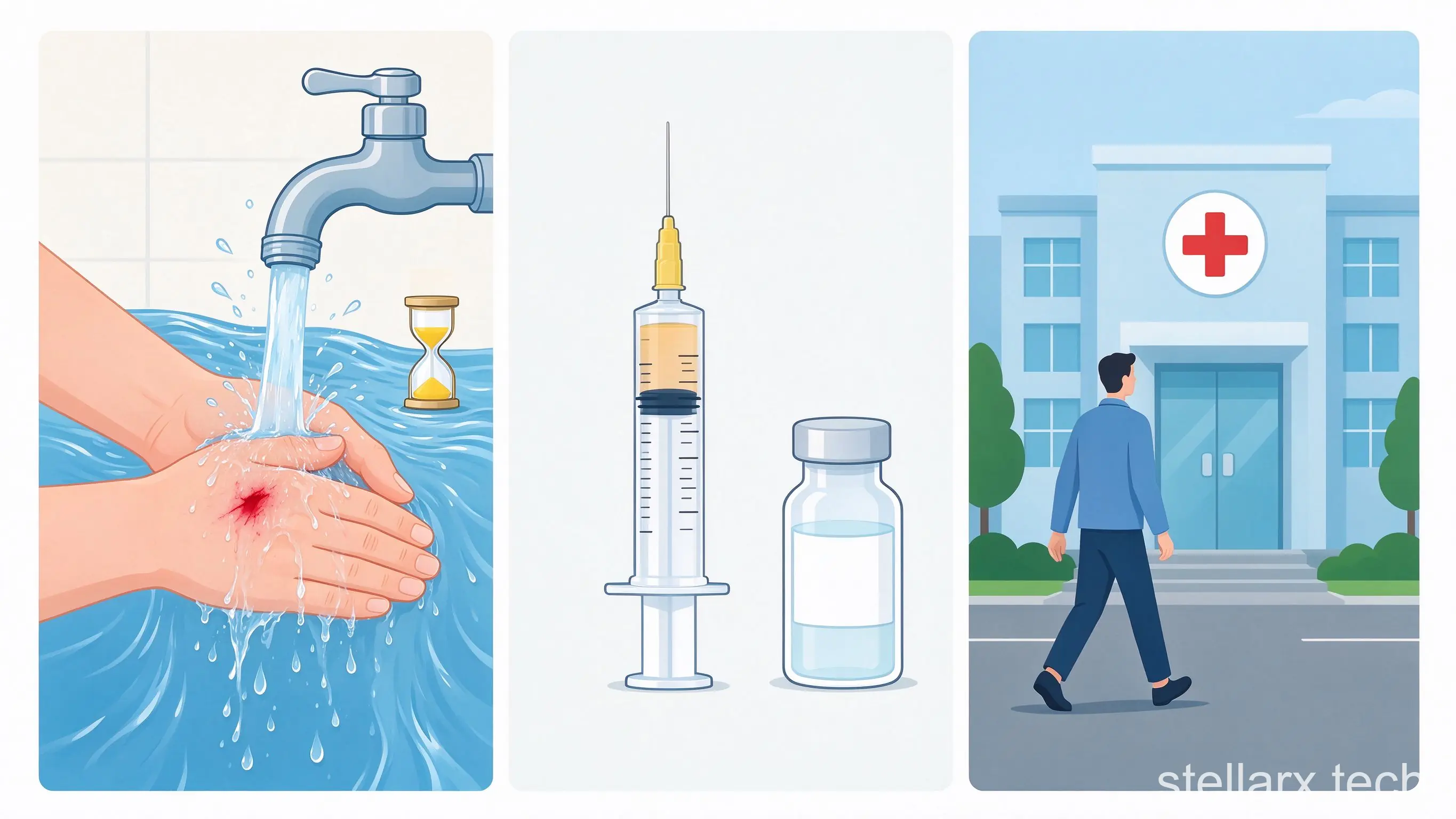
1. Handle the wound properly. Rinse immediately under running water or soapy water for at least 5 minutes, remove dirt and debris, then disinfect with iodine or alcohol. Wounds to the head or face, deep narrow wounds, contaminated wounds, and animal bites must go to a proper hospital for debridement, fast.
2. Build the vaccine wall. Children get the DTaP series on schedule and gain basic tetanus immunity. Adults with unknown vaccination history, or whose last dose was more than 5 years ago, should get a booster. Whether you need a tetanus shot after an injury, and which kind, is a decision for a doctor looking at the actual wound.
3. Never tough out the symptoms. Jaw tightness, neck stiffness, trouble swallowing, muscles that feel tight — don't file it under "slept wrong" or "toothache." Go to a real hospital immediately. Every minute of earlier treatment is a minute of avoided risk.
A wound that healed in days nearly killed a man. Tetanus does not need rust — it needs one thing you gave it: silence.
See what a toxin attacks. A nerve cell specimen under the microscope shows neuron cell bodies, dendrites, and axons clearly — the very tissue tetanospasmin hijacks. Search "WWAI" in your app store and download it today.

References:
The First Affiliated Hospital, Zhejiang University School of Medicine; China News Service.
All illustrations are AI-generated.
Related reading

Vibrio vulnificus: Seafood Prick Danger


- Feeding Wildlife Can Get It Killed
- The Chicken's Gizzard: A Dinosaur's Stone Crusher
- Heart Attack at 49: Fit, Sober, Still Struck
- Stroke & Brain Hemorrhage: First Step Saves Life
- Firefly Glow: A Cold Light Humans Learned to Copy
- Heartburn or GERD: The Valve That Gives Up
- A Tiny Wound Nearly Killed Him: Tetanus Facts
- One Kidney vs a Regrowing Liver: Two Different Organs
- IBS and the Gut-Brain Axis: Why You Poop When You Leave Home
- Stomach Burst Risk: A 2-Hour Buffet Emergency | stellarx
全部评论