Heart Attack at 49: Fit, Sober, Still Struck
A 49-year-old celebrity suddenly felt unwell, was rushed to hospital, and was diagnosed with acute myocardial infarction — his coronary artery 90% blocked. The day before, he had been swimming with his kids, looking perfectly fine. His family had once posted that he never touched alcohol.
Fit, athletic, sober — and still struck. Yet doctors say this is not an isolated case at all.
Why "loves exercise" ≠ "heart is safe"
In most people's minds, a heart attack is an "old person's disease," or something that happens to people who never exercise and stay weak. Cardiologist Liu Jian, chief physician at Peking University People's Hospital, says this is a myth worth correcting.
Exercise itself does not directly cause heart attacks — but it can be the fuse that ignites the bomb. Underlying heart disease is the "explosive charge"; intense or excessive exercise is the "fuse."
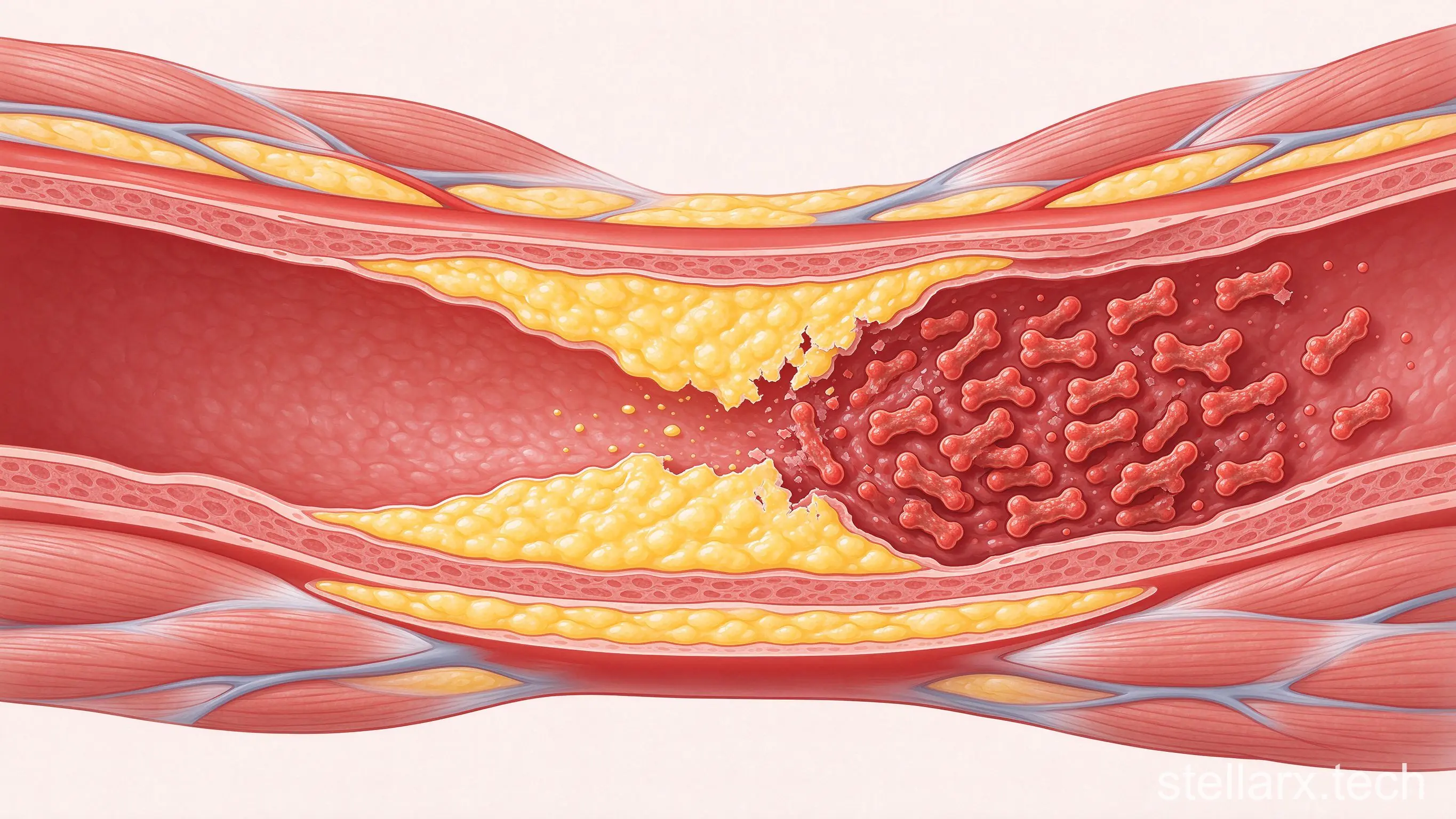
For middle-aged exercisers over 40, the most common hidden danger is coronary atherosclerosis. Studies show that among sudden-exercise-death victims over 35, coronary heart disease is one of the leading causes. Even if you train regularly, if plaque has already formed in your vessels, high-intensity exercise, extreme fatigue, or emotional excitement can spike blood pressure and heart rate, rupture the plaque, and instantly form a clot that blocks the artery.
A top international cardiology journal once reported a 49-year-old marathon runner's heart attack: no traditional risk factors like hypertension or diabetes — but coronary angiography revealed significant narrowing in the distal left anterior descending artery, treated with a stent. "Clinically healthy" high-intensity exercisers can carry "subclinical" coronary disease.
"One day he's swimming with his kids, the next he's in the ICU" — that contrast is exactly what makes heart attacks so vicious. For people with a family history of cardiovascular disease, long-term smoking, sleep deprivation, or chronic stress, even a muscular frame and zero alcohol don't guarantee clean vessels. Not drinking only removes one risk factor — it is not a "get out of jail free" card.
Heart attack symptoms are not just "chest pain"
Movies teach us the dramatic grab-the-chest-and-fall scene. Reality differs: about one-third of heart attack patients have no typical chest pain at all.
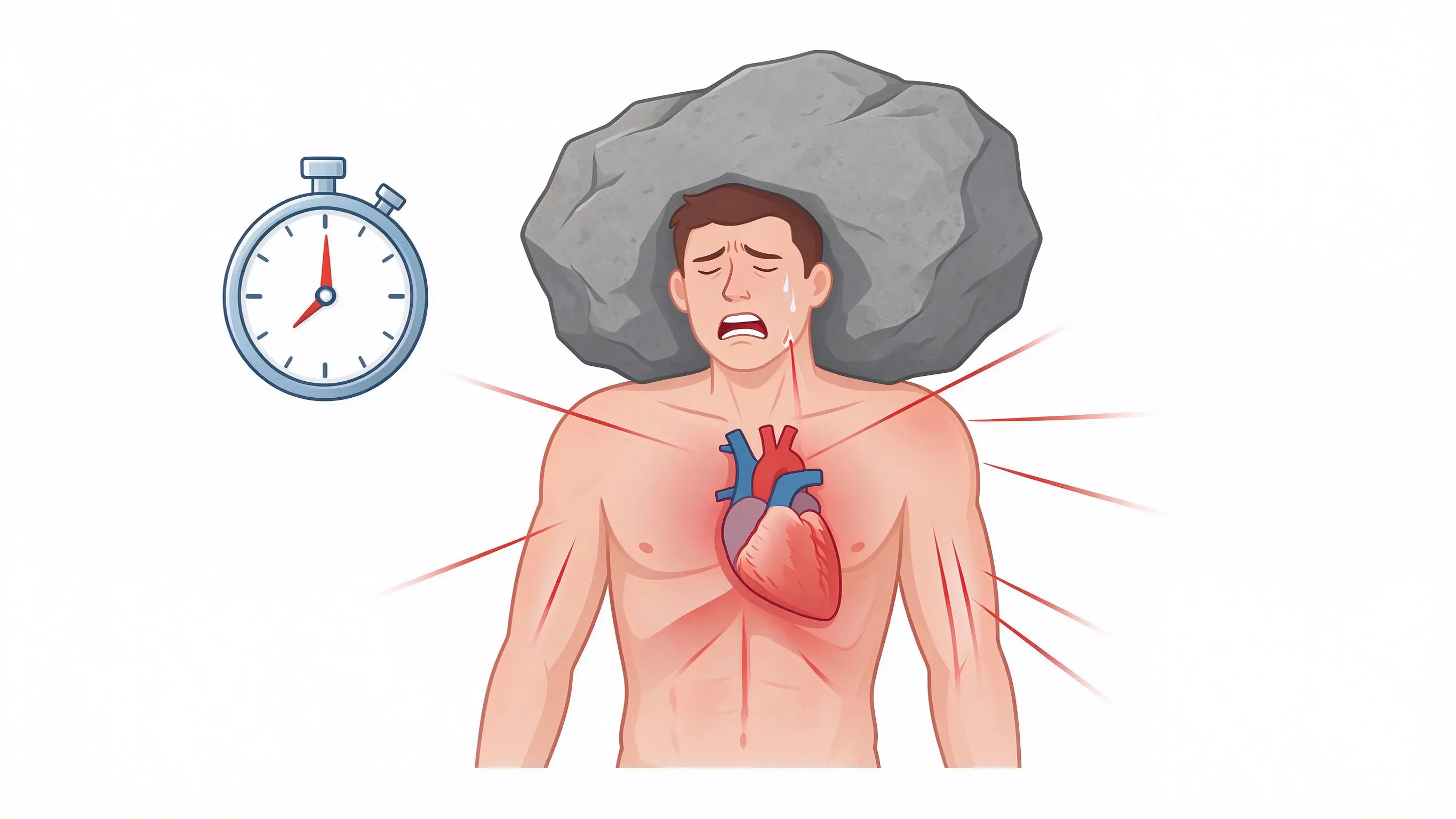
The classic signal: squeezing, constricting pain or discomfort behind the sternum or over the left chest — "like a boulder pressing on your chest" — lasting more than 15 minutes, not fully relieved by rest or nitroglycerin under the tongue. The pain can radiate to the left shoulder, inner left arm, jaw, back, even the upper abdomen.
The ones to fear more are the atypical warnings:
"Painless" heart attack: mostly older adults and people with diabetes. It can show only as sudden fatigue, shortness of breath, cold sweats, "stomach discomfort," nausea or vomiting — easily mistaken for a digestive problem.
Referred pain: toothache, a tightening throat, back pain, left shoulder pain — if these come with exertion and ease with rest, check the heart.
Prodromal signs: days before the event, many patients feel fatigue, chest discomfort, or palpitations after activity. These "small signals" get ignored. Many patients live a normal day right before the attack — the "quiet period" is dangerously deceptive, but the body has often already whispered warnings nobody recognized.
Sudden chest pain: the three-step rescue and two "120"s
Time is muscle. Time is life. The golden window for heart attack rescue is 120 minutes from onset — every minute of delay permanently kills large numbers of heart muscle cells.
If you suspect a heart attack:
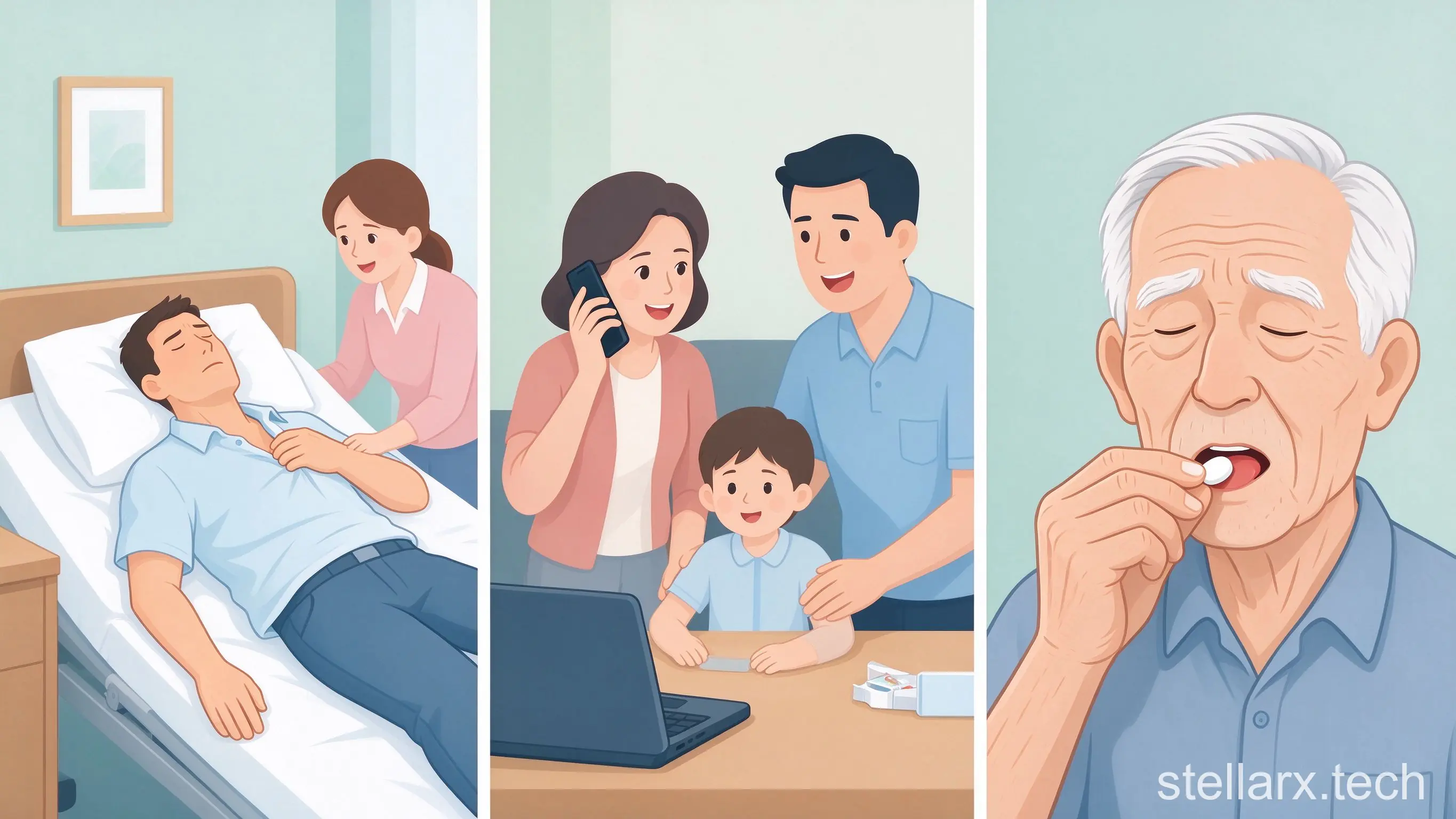
Step one: stop everything, don't tough it out. Have the patient stop all activity immediately, lie flat or semi-reclined, loosen collar and belt, keep the room ventilated. Never drive to the hospital yourself, never help the patient walk around — any activity adds load to the heart. If symptoms came after exercise, stop and rest in place.
Step two: call 120 immediately. Give the address and symptoms clearly, wait for professional paramedics. The ambulance carries equipment and trained staff, who can start treatment on the way — the safest way to transport.
Step three: use medicine carefully. If the patient has no low blood pressure (no dizziness, no heavy sweating, no pale face) and a doctor has previously prescribed nitroglycerin, place one tablet under the tongue. If no relief in 5 minutes, another tablet — but no more than 3 total. If blood pressure is low or uncertain, do not take it blindly: nitroglycerin lowers blood pressure further and can worsen the condition.
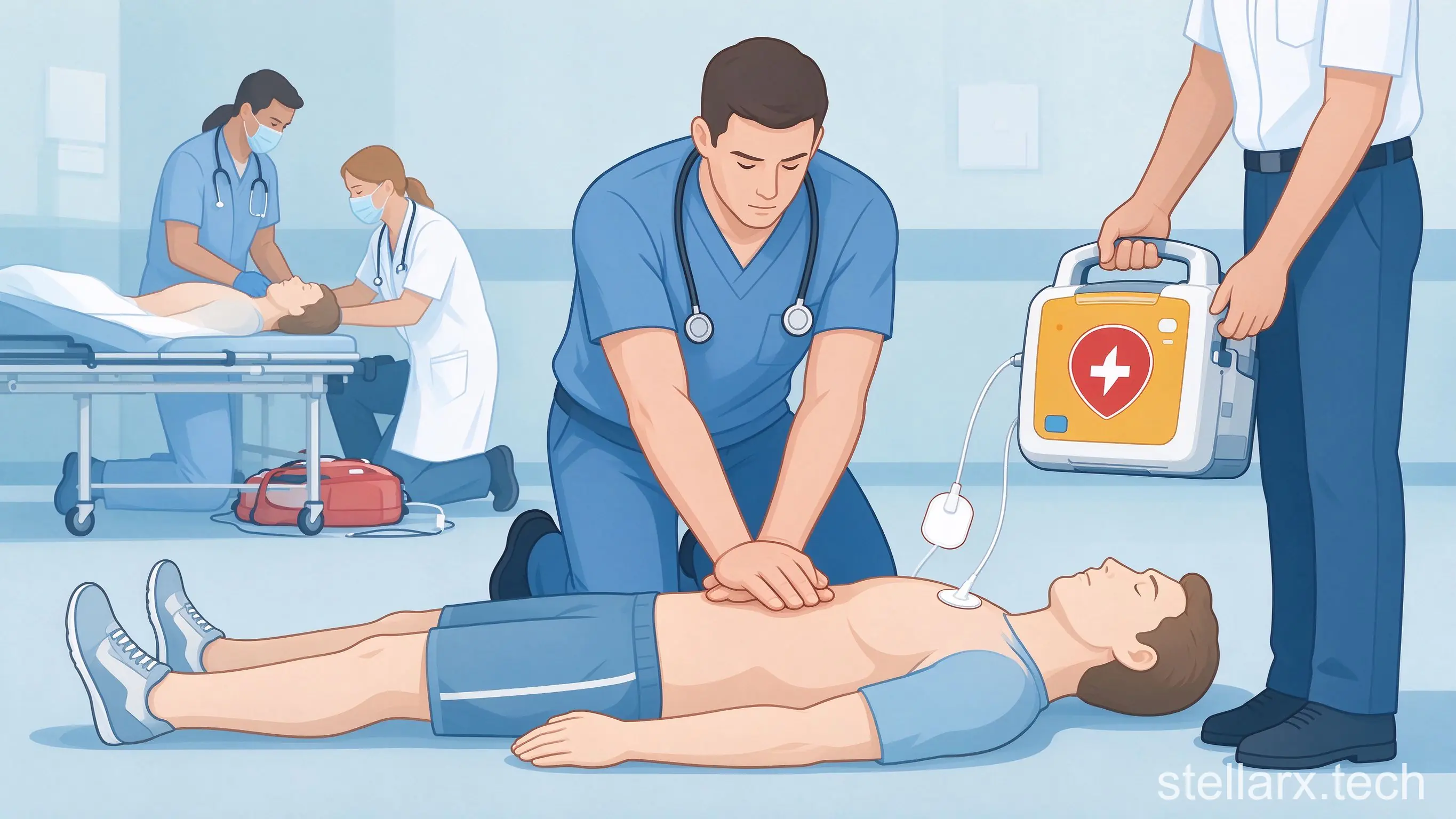
If the patient loses consciousness and stops breathing, start CPR immediately and use an AED (automated external defibrillator) as soon as possible.
[
"1120" is not just a date. Two numbers, at the critical moment, save a life.
The real protection: know your heart's baseline
Heart attacks are preventable and treatable, Professor Liu stresses. No matter how good your body feels, whether you drink or not, whether you exercise or not: get regular check-ups — especially ECG, lipids, blood glucose and blood pressure.
Exercise is medicine — but scientific exercise, and knowing your own heart's baseline, is the true heart protection. Don't let "I'm usually fine" become the reason you ignore warning signals.
Heart muscle cells don't regenerate. The ones lost in those 120 minutes stay lost.
See the cells a heart attack kills. A heart muscle cell specimen under the microscope shows short, branching cells — the microscopic basis of every heartbeat, and the tissue that dies permanently while you wait. Search "WWAI" in your app store and download it today.

Related reading

The 1-Hour Habit That Fixes Your Sleep


- Feeding Wildlife Can Get It Killed
- The Chicken's Gizzard: A Dinosaur's Stone Crusher
- Heart Attack at 49: Fit, Sober, Still Struck
- Stroke & Brain Hemorrhage: First Step Saves Life
- Firefly Glow: A Cold Light Humans Learned to Copy
- Heartburn or GERD: The Valve That Gives Up
- A Tiny Wound Nearly Killed Him: Tetanus Facts
- One Kidney vs a Regrowing Liver: Two Different Organs
- IBS and the Gut-Brain Axis: Why You Poop When You Leave Home
- Stomach Burst Risk: A 2-Hour Buffet Emergency | stellarx
全部评论