Heartburn or GERD: The Valve That Gives Up
A short-drama joke went viral: a character who can eat anything and never, ever gets heartburn — "doesn't burn the heart." Funny.
For roughly 100 million people in China, it is not a punchline. And here is the first surprise: heartburn has nothing to do with the heart.
The city gate that opens the wrong way
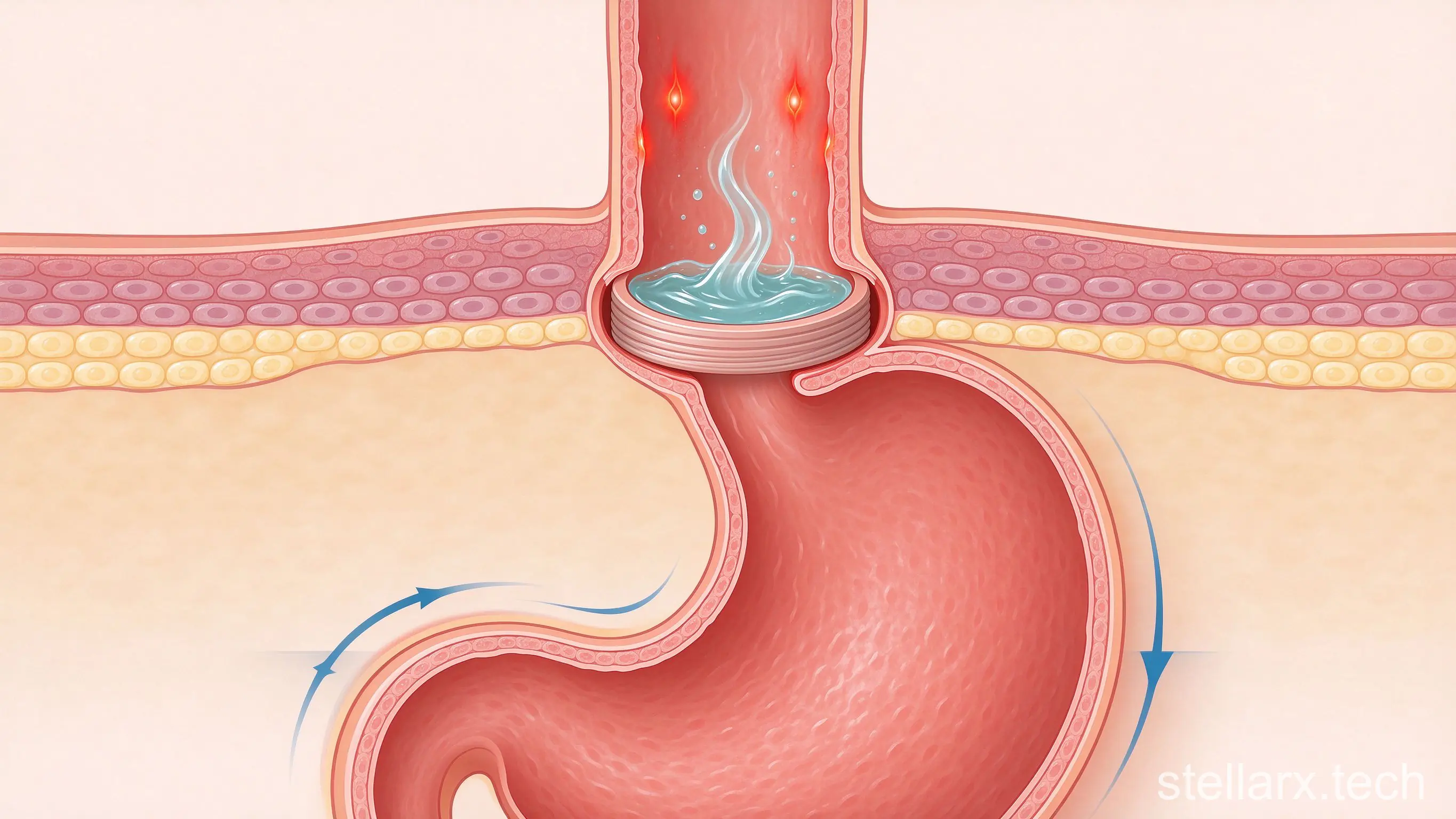
Picture the stomach as a city, and the esophagus as the road leading in. Where they meet sits a gate: a ring of muscle called the lower esophageal sphincter. It is a one-way door. Food comes down; acid stays down.
In acid reflux, the door fails. And it fails in two ways.
1. The gate itself goes loose. Overeating, wolfing down food, heavy drinking, vomiting, certain medicines (some blood-pressure drugs), and plain aging all lower that muscle's pressure and weaken the gap in the diaphragm — the "door frame" gets flimsy too. The gate can no longer close tight.
2. The pressure inside the city rises. Eating too full, bending over, exercising, lying flat, tight clothes, obesity, constipation — all push abdominal pressure up. That pressure shoves the stomach's contents against a gate that was never that strong to begin with. The gate gives way.
Stomach acid flows backward into the esophagus. The esophagus has no acid-proof lining. That burning feeling behind the breastbone — "heartburn" — is actually the esophagus burning.
The disease wearing a mask
The classic signs are easy to spot — once you know them. Heartburn: a burning sensation behind the breastbone. Regurgitation: stomach contents flowing back up toward the throat and mouth. In Chinese clinical data these two account for 82.4% and 58.8% of reported symptoms.
Then come the impostors. Nearly 4 in 10 GERD patients (37.6%) feel chest pain that can mimic angina. About a third (35.5%) get upper abdominal pain. Belching, upper-abdominal burning — all easy to file under "ate something wrong."
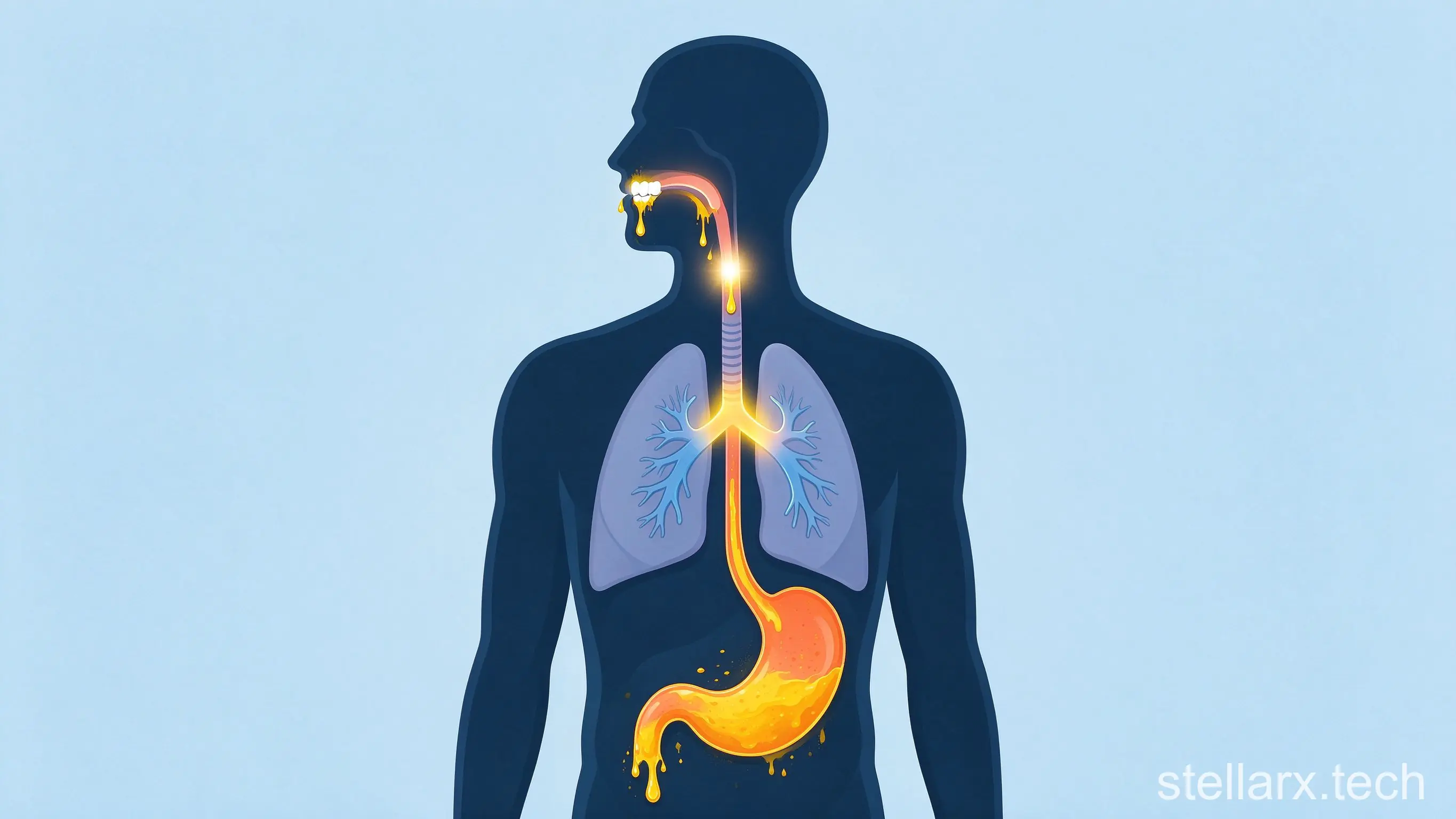
Worse, reflux can climb far past the esophagus and touch other organs, where almost nobody connects the dots:
Throat: chronic cough, hoarseness, a feeling of something stuck, reflux laryngitis.
Lungs: reflux-triggered asthma-like symptoms.
Teeth: acid erodes enamel — dentists see the damage, nobody suspects the stomach.
Sinuses and ears: recurring sinusitis and middle-ear inflammation.
The result: people treat the cough, the tooth sensitivity, the chest pain — while the real culprit, acid visiting where it doesn't belong, keeps working at night.
Why it happens: the loose gate, explained
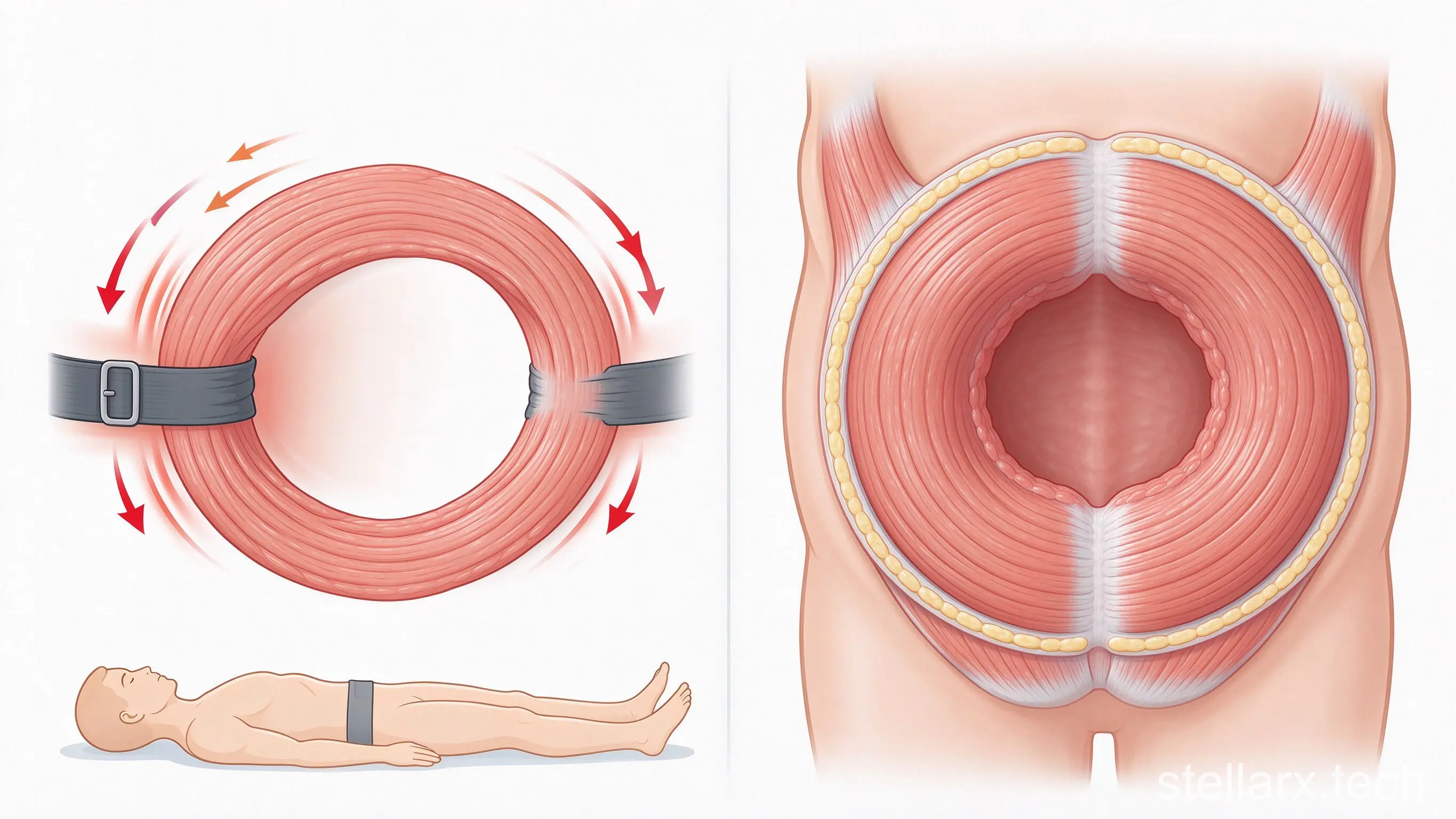
The lower esophageal sphincter is a ring of smooth muscle. Three things decide whether it holds:
Its resting pressure — healthy enough to keep the door shut. Its position — the diaphragm opening that should hug it like a collar. And the pressure gradient above and below it — the "city pressure" that tries to force it open.
Aging loosens the muscle; weight gain and tight clothes raise the abdominal side; eating late or lying flat right after a meal lets gravity work against you. Every habit on that list from the doctors' advice — slow down, eat less per meal, lose weight, quit heavy drinking, don't lie down within 2–3 hours after eating, raise the head of the bed, avoid tight clothing — is aimed at one thing: keeping that ring tight.
Three layers of defense
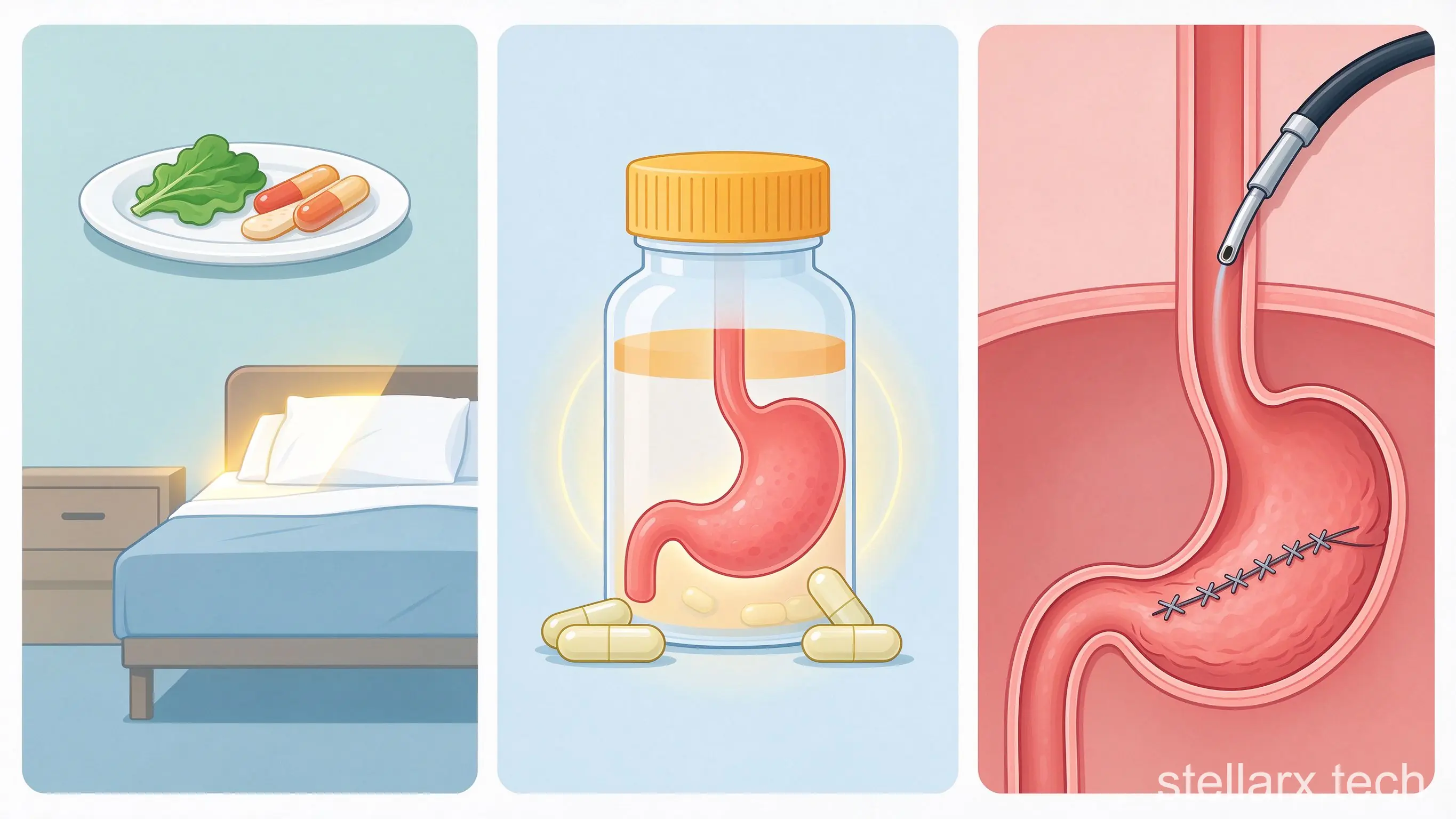
1. Lifestyle — the foundation. Smaller meals, eaten slowly. No lying down for 2–3 hours after eating. Lose weight if overweight; cut alcohol and smoking; ease off coffee, strong tea, chocolate. Raise the head of the bed. Skip the tight waistbands.
2. Medication — the main force. Proton-pump inhibitors (PPIs) and H2 blockers suppress acid production; alginate preparations form a raft that floats on the stomach contents and blocks reflux mechanically. These are the workhorses of treatment.
3. Endoscopy or surgery — the heavy artillery. For refractory or severe disease: fundoplication, which wraps part of the stomach around the lower esophagus to rebuild the valve, or radiofrequency treatment of the sphincter. This is where medicine stops managing and starts rebuilding the door.
"Never heartburn" is a great punchline. For 100 million people, it's also a diagnosis.
See the muscle that holds the door. A smooth muscle specimen under the microscope shows the elongated spindle-shaped fibers with rod-shaped nuclei — the very tissue of the esophageal gate. Search "WWAI" in your app store and download it today.

Related reading

Why Baijiu Burns: Aldehydes, Not Alcohol


- Feeding Wildlife Can Get It Killed
- The Chicken's Gizzard: A Dinosaur's Stone Crusher
- Heart Attack at 49: Fit, Sober, Still Struck
- Stroke & Brain Hemorrhage: First Step Saves Life
- Firefly Glow: A Cold Light Humans Learned to Copy
- Heartburn or GERD: The Valve That Gives Up
- A Tiny Wound Nearly Killed Him: Tetanus Facts
- One Kidney vs a Regrowing Liver: Two Different Organs
- IBS and the Gut-Brain Axis: Why You Poop When You Leave Home
- Stomach Burst Risk: A 2-Hour Buffet Emergency | stellarx
全部评论