IBS and the Gut-Brain Axis: Why You Poop When You Leave Home
You know that friend. Before leaving, you ask: "Do you need the bathroom?" — "No, I'm fine." One foot steps onto the bus, and suddenly: "I need to poop."
There's a name for this. And there are other names, too.
The likely suspect: irritable bowel syndrome (IBS)
IBS is a common functional gastrointestinal disorder. Its core features: repeated abdominal pain, with changed bowel habits — diarrhea, constipation, or both.
The pattern is recognizable: you get a stomachache and feel the urge when you're tense. Exams, meetings, rushing to catch a train — the urge spikes. Traveling to an unfamiliar place makes it worse. If that sounds like you, it's worth a doctor's visit.
Why the gut panics before you do: the gut-brain axis
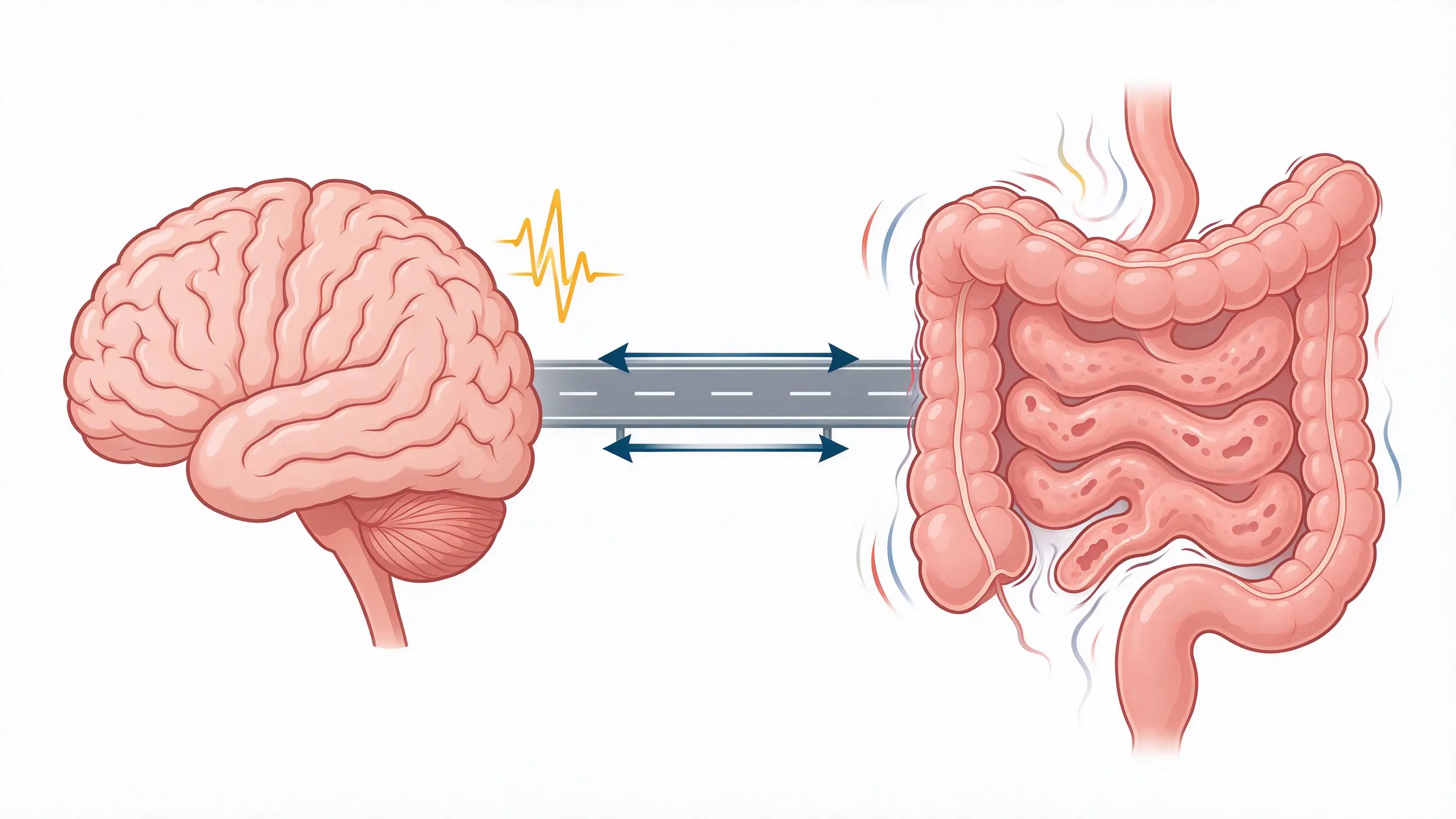
The brain and the gut are connected by a two-way highway called the gut-brain axis. When you're tense or anxious, signals from the brain change how the gut moves — and how sensitive it is.
Some people react to rushing for a flight, to the fear of being late, or simply to being somewhere unfamiliar: the gut gets "nervous" right along with the person.
The other triggers: routine, food, and the trip itself
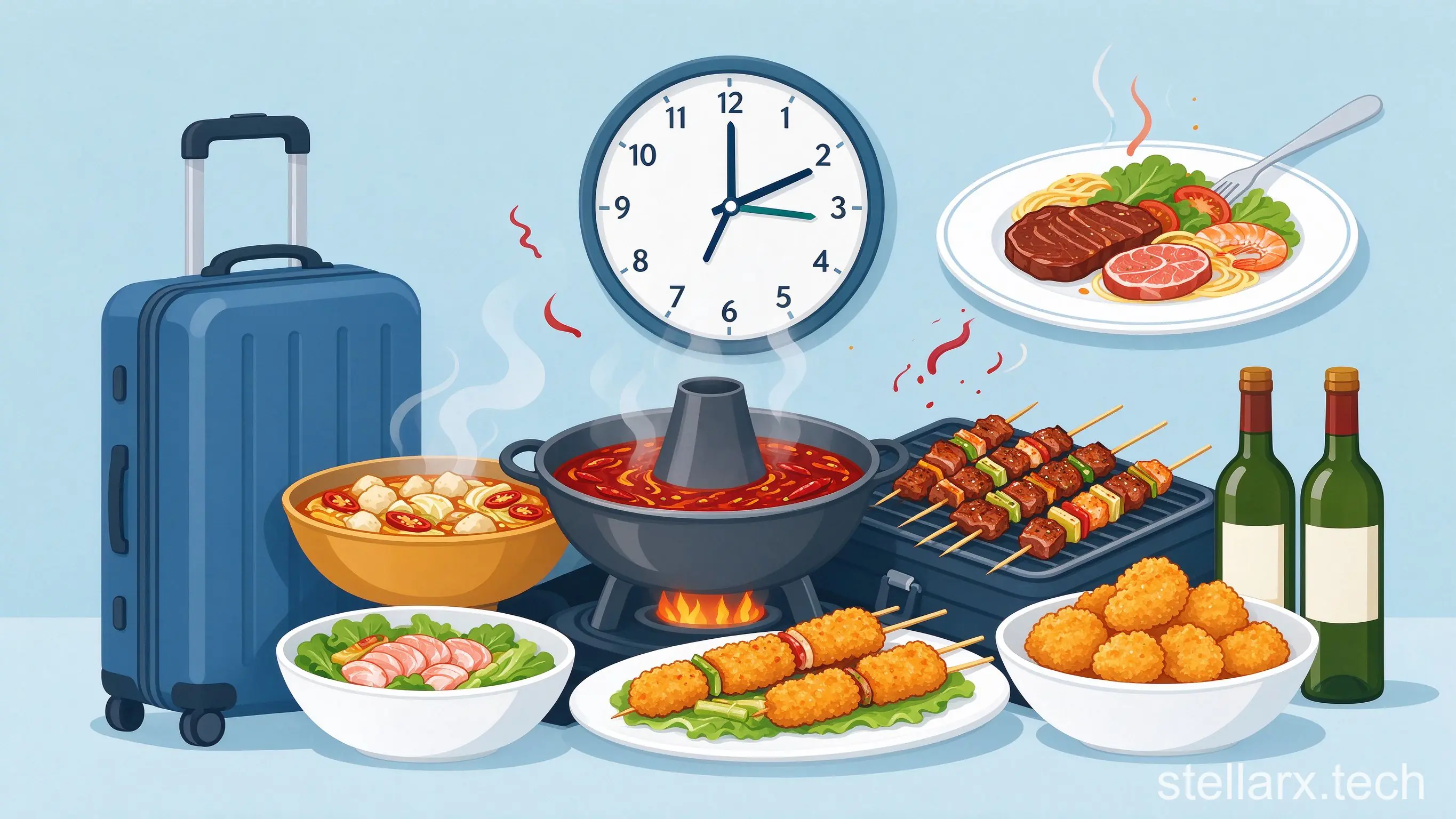
Your schedule changed. You usually eat and sleep on a schedule. On a trip you stay up late and skip meals — and your bowel rhythm goes with it. People who already tend toward constipation or diarrhea are the most sensitive.
Your food changed. Hotpot, barbecue, fried food, alcohol — all at once. For a sensitive gut, a sudden load of high-fat, spicy food and heavy drinking can trigger pain and diarrhea.
You genuinely ate something bad. Sometimes it really is food poisoning, not IBS.
How to keep the gut stable on holiday
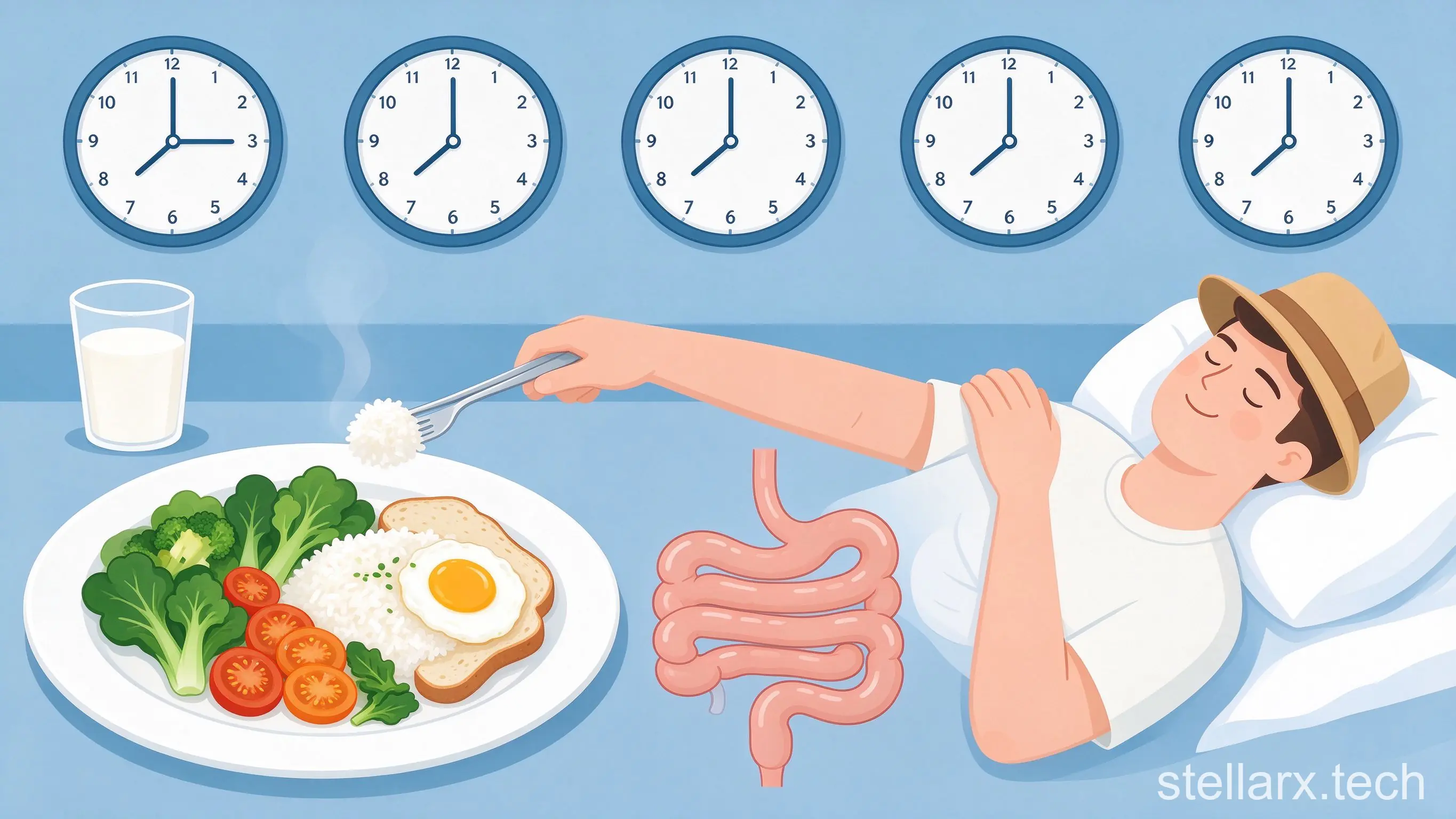
Before you go: don't suddenly binge, and don't mass-try foods you rarely eat.
While traveling: keep meal and sleep times as regular as possible, and avoid foods you already know trigger you.
If stress is your trigger: don't pack your itinerary wall-to-wall. Less tension, less gut drama.
When it stops being "just a sensitive stomach"
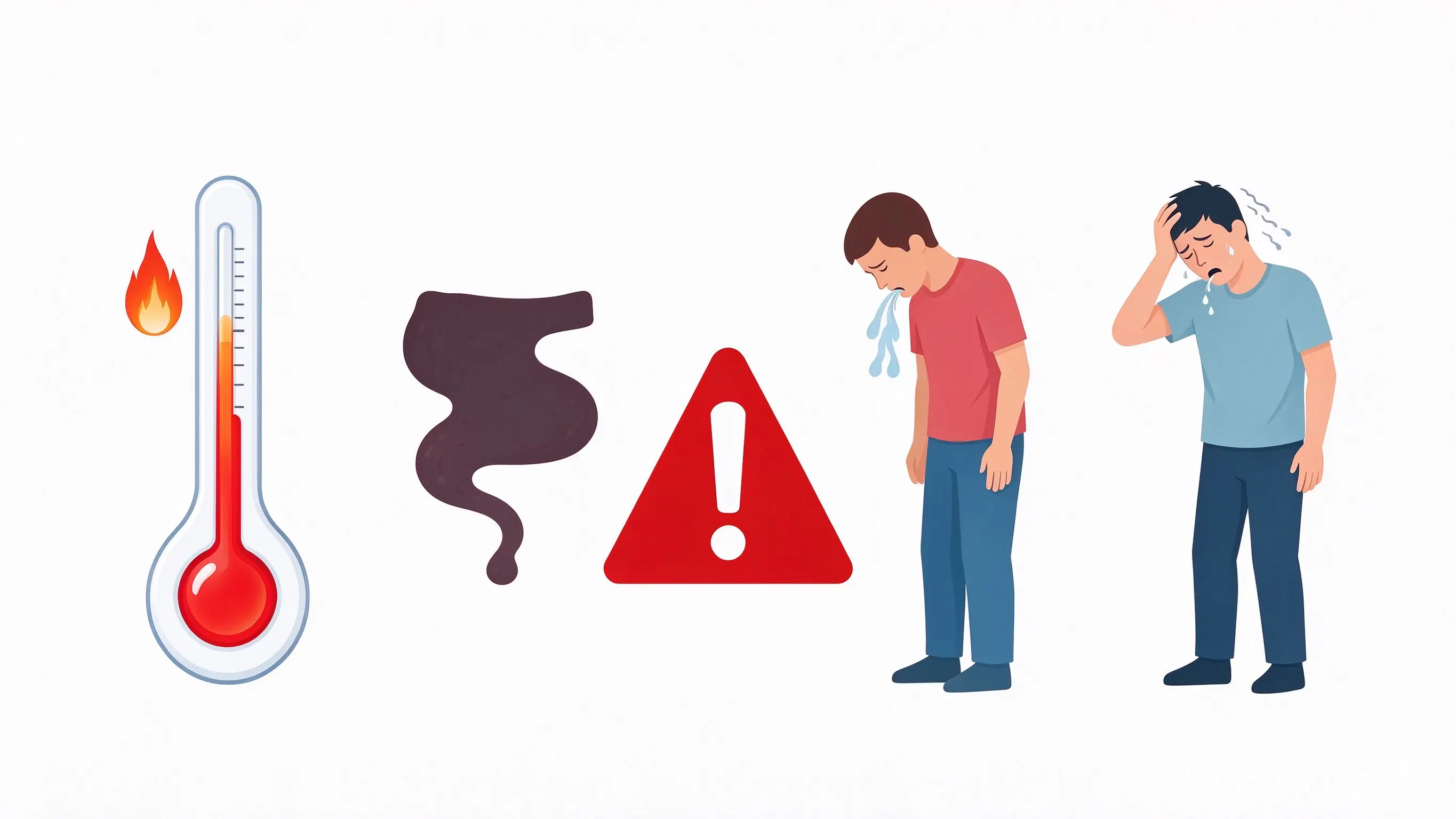
Do not wave off these red flags as ordinary gut sensitivity — see a doctor:
Persistent high fever;
Bloody or black stools;
Severe abdominal pain;
Continuous vomiting;
Clear dehydration: little urine, dizziness, dry mouth.
A happy holiday means eating well — but a stable gut matters more.
May you poop when you want to, and not when you don't.
See the gut that IBS fusses over. An E. coli specimen under the microscope shows the Gram-negative rods living in your intestine — the microbial backdrop of the gut-brain axis and functional gut disorders. Search "WWAI" in your app store and download it today — AI answers your questions while the live microscope shows you the structure.

References:
1. National Institute of Diabetes and Digestive and Kidney Diseases (NIDDK) — Irritable Bowel Syndrome (IBS). — https://www.niddk.nih.gov/health-information/digestive-diseases/irritable-bowel-syndrome
All illustrations are AI-generated.
Related reading

Salmonella: How It Contaminates Your Food


- Feeding Wildlife Can Get It Killed
- The Chicken's Gizzard: A Dinosaur's Stone Crusher
- Heart Attack at 49: Fit, Sober, Still Struck
- Stroke & Brain Hemorrhage: First Step Saves Life
- Firefly Glow: A Cold Light Humans Learned to Copy
- Heartburn or GERD: The Valve That Gives Up
- A Tiny Wound Nearly Killed Him: Tetanus Facts
- One Kidney vs a Regrowing Liver: Two Different Organs
- IBS and the Gut-Brain Axis: Why You Poop When You Leave Home
- Stomach Burst Risk: A 2-Hour Buffet Emergency | stellarx
全部评论