Stroke & Brain Hemorrhage: First Step Saves Life
A well-known TV host just died of sudden cerebral hemorrhage — and "stroke" suddenly feels closer than ever. Many people still call it an old person's disease. The reality: midlife cases are climbing.
Brain infarction and brain hemorrhage are brothers with opposite first-aid. The first step, done right, buys the brain its only chance.
Four names, one family
Ask doctors and patients keep asking the same thing: "Stroke, cerebrovascular disease, cerebral infarction, cerebral hemorrhage — are these four different diseases?"
They aren't. "Stroke" is the family name. Inside the family live two very different brothers.
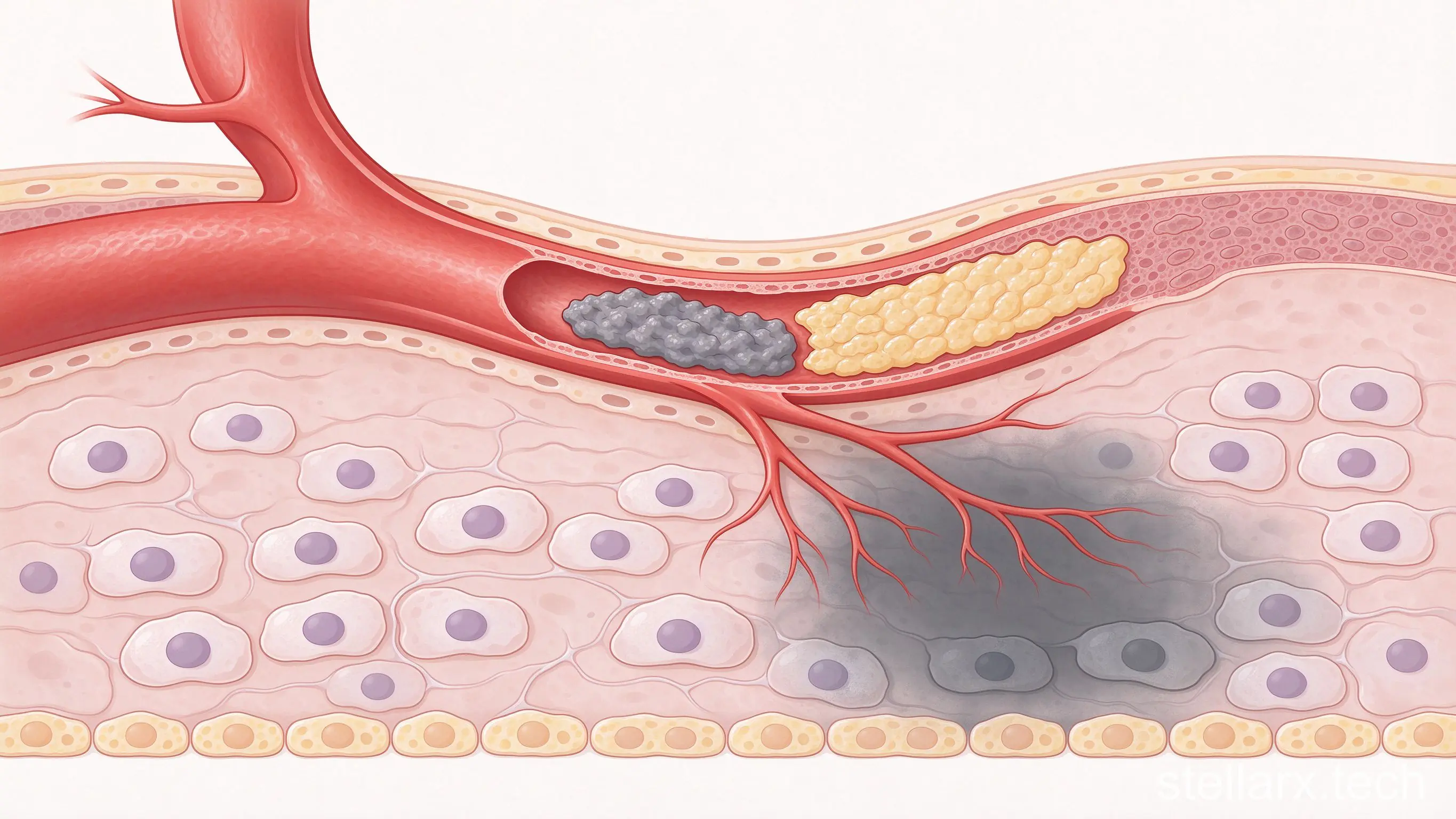
Cerebral infarction (ischemic stroke): a thrombus or plaque blocks the vessel. The brain tissue downstream loses blood and oxygen — "cut off from water and food" — and begins to die fast. It is the most common type, about 70% of strokes.
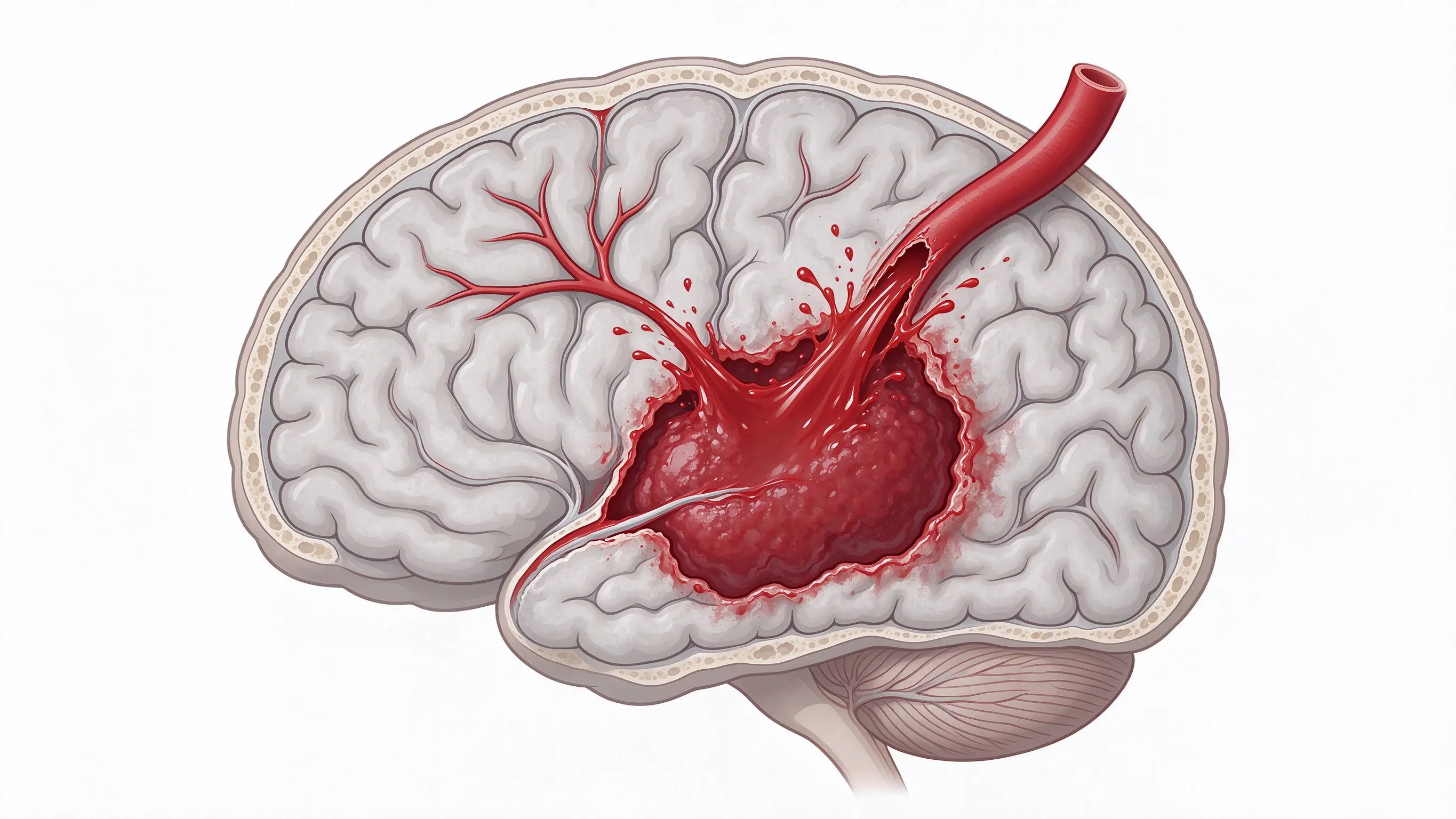
Cerebral hemorrhage (hemorrhagic stroke): a vessel bursts. Blood floods into brain tissue, forms a hematoma, and directly crushes and destroys surrounding brain cells. It accounts for only 20–30% of strokes — but its acute fatality rate is 30–40%. Far more vicious than infarction.
Both end the same way: rapid brain-cell death. Both are emergencies. And their treatments run in opposite directions — one must be "opened," the other "stopped."
The two ways they arrive
Cerebral infarction often "appears" quietly, during rest or sleep. The patient wakes up to find half the body won't obey, or speech suddenly blurs. Symptoms worsen gradually — peaking hours or even a day or two later.
Cerebral hemorrhage ambushes during activity or emotional excitement. Its signature signal is a sudden, explosive headache — patients describe it as "the worst headache of my life," "like being struck." Then comes projectile vomiting — not gradual retching, but an uncontrollable spray, and the headache does not ease after vomiting. Within minutes the condition can spiral: confusion, then coma.
What stroke looks like
Cerebral infarction: crooked mouth, one-sided weakness, slurred speech. A massive infarct can also bring headache, vomiting and coma.
Cerebral hemorrhage: sudden onset during activity, emotional excitement or straining; explosive headache, vomiting, rapid drowsiness and coma, blood pressure spiking. A small bleed, though, may only show as a numb hand and crooked mouth.
And other conditions can masquerade as stroke: subdural hematoma, epidural hematoma, hypoglycemia, post-seizure paralysis, migraine attacks, intracranial inflammation, intracranial tumors.
Neurologist Liu Zunjing, chief physician at Peking University People's Hospital, puts it plainly: "Whether it's a blockage or a rupture, the end result is brain cells dying fast, so both are emergencies. The public doesn't need to distinguish which type — if it looks like a stroke, treat it as an emergency."
The gold standard for telling them apart is not symptoms. It is a head CT. "On scene, the only principle: don't self-diagnose, don't self-medicate — race to the hospital."
Remember the "120" check
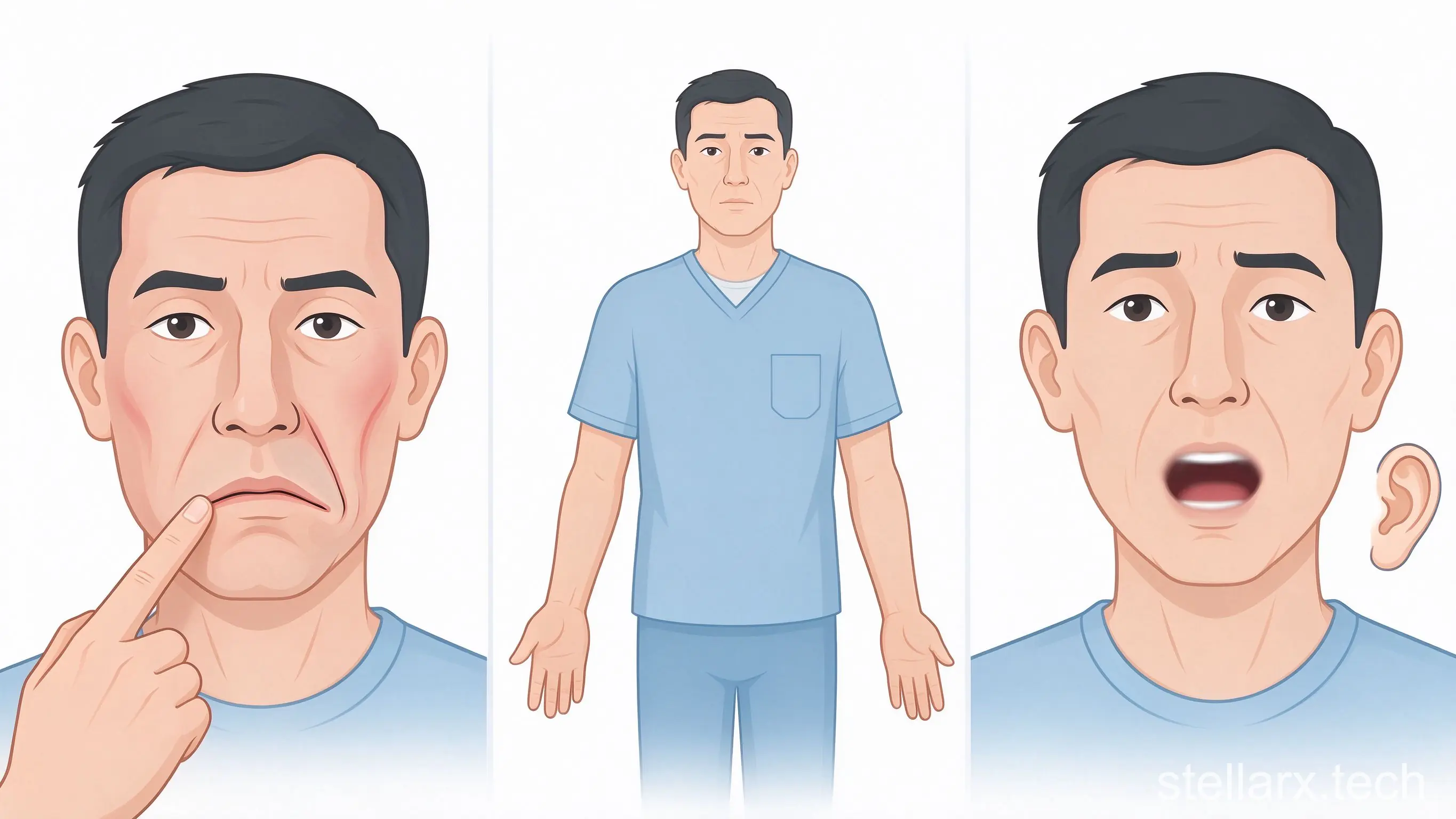
Whether infarction or hemorrhage, fast recognition comes first. The "120" mnemonic:
"1" — one face: look at the face — asymmetry, a drooping mouth corner.
"2" — two arms: raise both arms parallel — one side sags and falls.
"0" — zero speech (listen): slurred, unclear, hard to express.
If any one of these appears, call 120 (China's emergency number) immediately.
What to do — and what never to do
✅ Do:
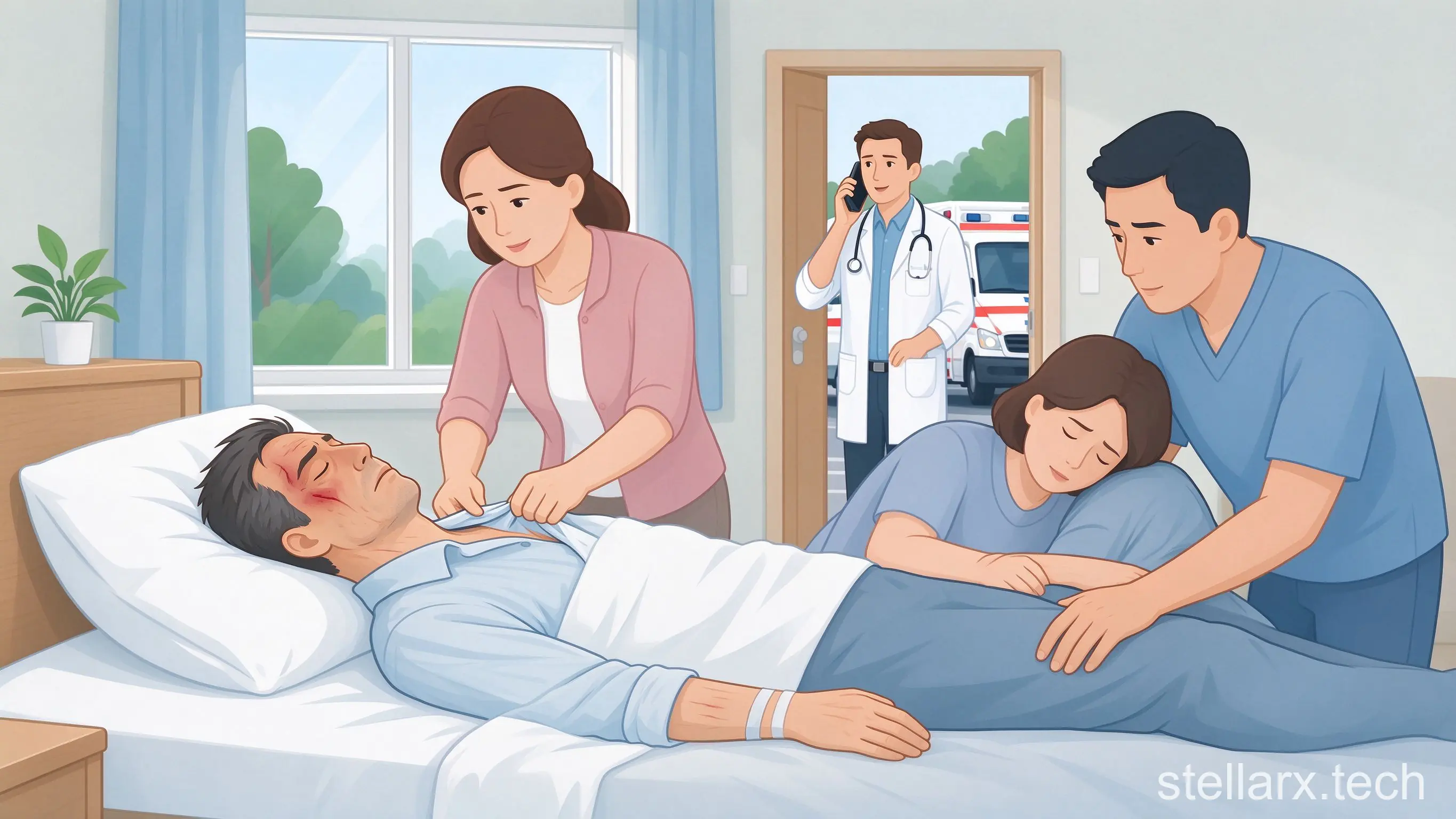
Call the emergency line right away. Give the exact address (down to building, floor, room), describe the patient's condition using the symptoms above, leave a call-back number and keep it reachable.
Lay the patient flat and safe; slightly raise the head about 30° to ease intracranial pressure.
Loosen tight clothing — collar, belt, tie, underwear — and keep the airway open. If the patient is vomiting or unconscious, turn the body to one side (recovery position) so vomit can't block the airway and cause choking.
Note the exact time symptoms started. This can decide the treatment plan — especially thrombolysis.
Prepare medical documents: ID, insurance card, history, current medications (especially antihypertensives and glucose-lowering drugs), and known allergies.
❌ Never:
Don't feed anything. Stroke can impair swallowing — food can cause choking, aspiration pneumonia, even suffocation. Don't force any medication, including Angong Niuhuang Wan (a traditional pill many families keep): you can't know if it's infarction or hemorrhage, and the wrong drug can worsen the case.
Don't give any medicine blindly — aspirin, antihypertensives, glucose-lowering drugs. Aspirin during hemorrhage worsens bleeding — potentially fatal. In the acute phase the body deliberately raises blood pressure to keep ischemic brain areas perfused; blind pressure-lowering worsens brain damage.
Don't pinch the person's philtrum (renzhong). The most widespread folk "first aid." It doesn't help — and the pain may agitate the patient, raise blood pressure, worsen bleeding, and waste precious rescue time.
Don't move or shake the patient. Avoid unnecessary handling, especially of the head — rough movement can worsen hemorrhage or brain injury.
Don't drive yourself to the hospital. Calling 120 is better: paramedics assess and monitor en route, and alert the hospital to open the "green channel," skipping ER registration and triage. In your own car, traffic or a sudden change — and you're helpless.
Don't stand down because symptoms eased. If numbness or slurred speech fully resolves within minutes or hours, it may be a transient ischemic attack (TIA) — a warning signal of a severe stroke to come. Go to the hospital immediately and find the cause.
At the hospital: the CT comes first
The first thing to do at the hospital: get the head CT done fast. CT is the quickest, most reliable way to separate infarction from hemorrhage.
Confirmed cerebral infarction can be treated with intravenous thrombolysis or arterial thrombectomy within the time window. Time is brain — the earlier the vessel is reopened, the more brain cells are saved.
Cerebral hemorrhage treatment focuses on controlling hematoma growth and lowering intracranial pressure, with surgery when needed.
But not every hemorrhage needs craniotomy, says neurosurgeon Zhou Jingru, also chief physician: "Small, deep hematomas can often be stabilized with blood-pressure control and dehydration. But if it's a ruptured aneurysm, vascular malformation bleeding, a hematoma steadily enlarging, or consciousness deepening — don't wait and watch. Surgery is required. Neurosurgery now does minimally invasive hematoma evacuation, aneurysm coiling or clipping, and combined embolization-resection for malformations — the principle is as minimally invasive as possible."
Prevention beats rescue
Cerebrovascular disease is not a bolt from the blue — it leaves a long window, and active management keeps most risk at the door:
Daily habits: low-salt, light diet; more vegetables and whole grains; less trans fat; regular exercise; no smoking; limited alcohol; prevent constipation; control anger; avoid sudden bending and straining.
Chronic disease is the big one: hypertension, diabetes, dyslipidemia and atrial fibrillation must be treated and monitored properly — never stop or swap drugs on your own.
If a stroke already happened, secondary prevention is the baseline: antiplatelet or anticoagulant therapy, statins, antihypertensives taken long-term and regularly; start rehabilitation as soon as the condition stabilizes — don't relax because "there are no symptoms."
Age over 40, family history, or repeated headaches: consider a head MRA or CTA to screen for aneurysms and vascular malformations before they announce themselves.
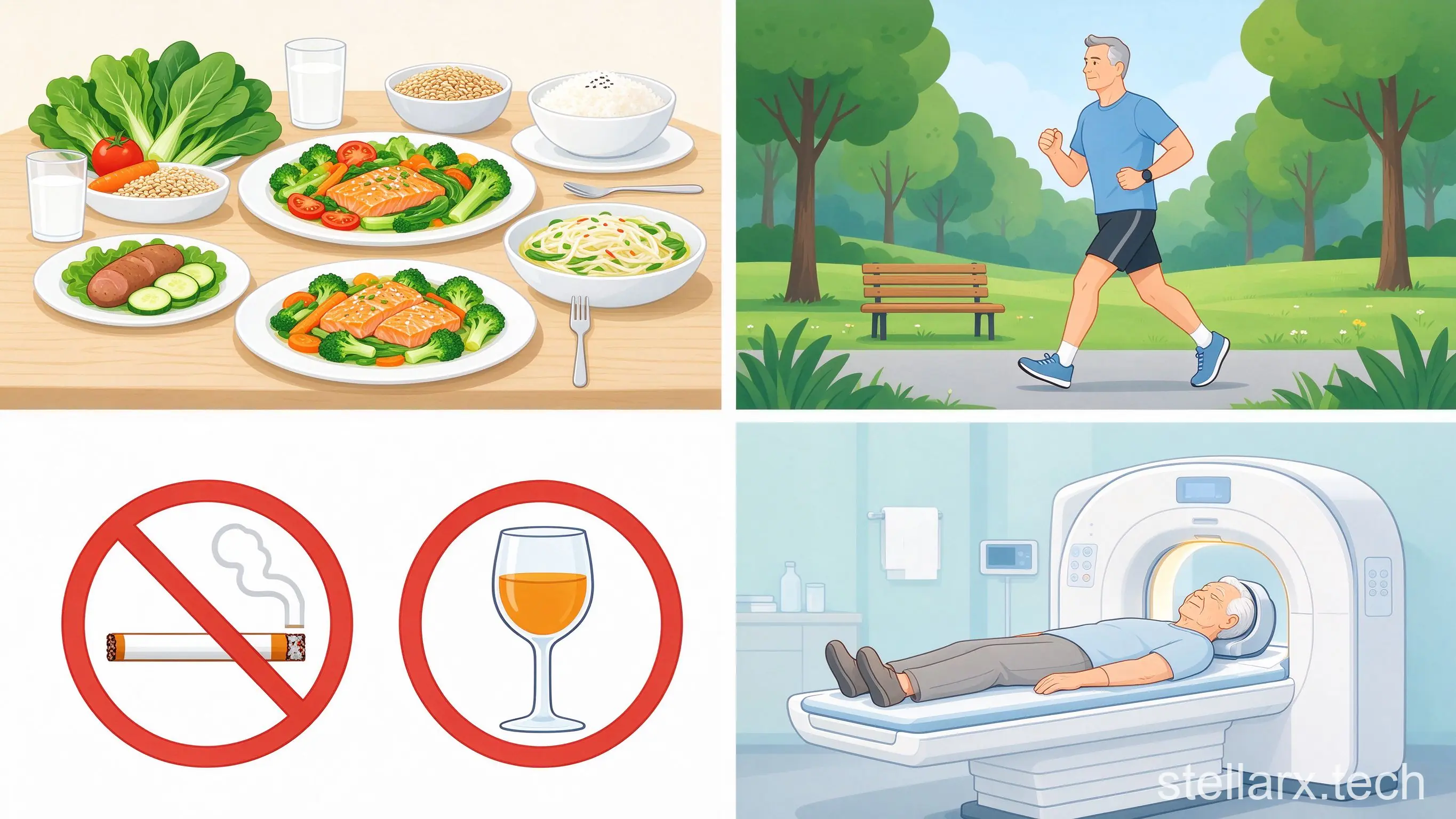
Preventing one stroke beats ten rescues.
The brain doesn't give second chances easily — the family's first step is the stroke patient's first life.
See the brain cells a stroke kills. A nerve cell specimen under the microscope shows neuron bodies, dendrites and axons — the structures that die within minutes when a vessel blocks or bursts. Search "WWAI" in your app store and download it today.

Related reading

Why Baijiu Burns: Aldehydes, Not Alcohol


- Feeding Wildlife Can Get It Killed
- The Chicken's Gizzard: A Dinosaur's Stone Crusher
- Heart Attack at 49: Fit, Sober, Still Struck
- Stroke & Brain Hemorrhage: First Step Saves Life
- Firefly Glow: A Cold Light Humans Learned to Copy
- Heartburn or GERD: The Valve That Gives Up
- A Tiny Wound Nearly Killed Him: Tetanus Facts
- One Kidney vs a Regrowing Liver: Two Different Organs
- IBS and the Gut-Brain Axis: Why You Poop When You Leave Home
- Stomach Burst Risk: A 2-Hour Buffet Emergency | stellarx
全部评论