Veratridine: The Sodium-Channel Toxin That Stops a Heart
A man in Yangzhou wanted hands that would stop shaking. A friend's "folk remedy" handed him 40 grams of dried veratrum root, ordered online. Thirty minutes later came abdominal cramping and vomiting. One hour later, circulatory shock.
The plant is Veratrum, a genus in the family Melanthiaceae. English names tell the story: green false hellebore (Veratrum viride), white hellebore (Veratrum album). The danger is a family of steroidal alkaloids, and the chief culprit is veratridine. A dried root dose of one to two grams can kill an adult. He took twenty to forty times that.

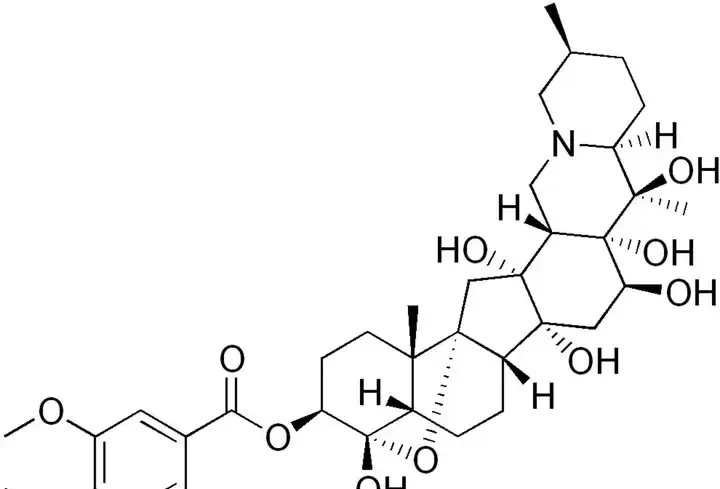
At the molecular level, veratridine hijacks the α subunit of voltage-gated sodium channels. It delays channel closing and lowers the activation threshold, so neurons stay depolarized and fire abnormally instead of resetting.
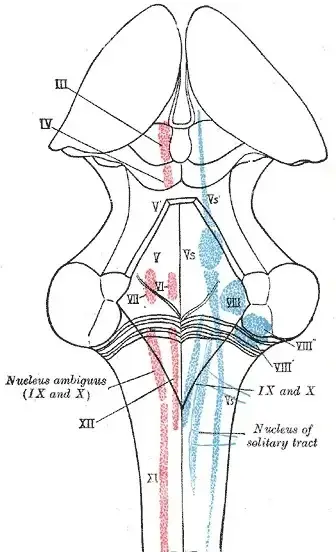
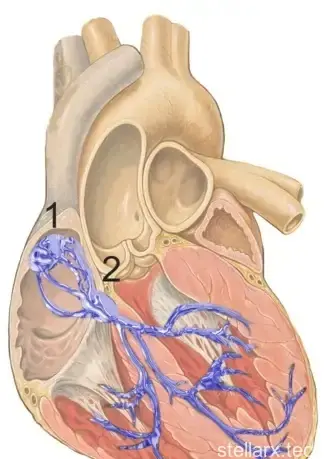
The heart is where the sequence turns lethal. Sensory nerve endings in the posterior-inferior wall of the left ventricle are dense in a sodium channel subtype called NaV1.7. Veratridine lights up those endings, and the signal rides the vagus nerve up to the nucleus of the solitary tract (NTS) in the medulla. From there, a glutamatergic projection excites the caudal ventrolateral medulla (CVLM), which sends a GABAergic inhibitory projection onto the rostral ventrolateral medulla (RVLM). Sympathetic drive fades, and the heart and blood vessels lose their adrenergic input.
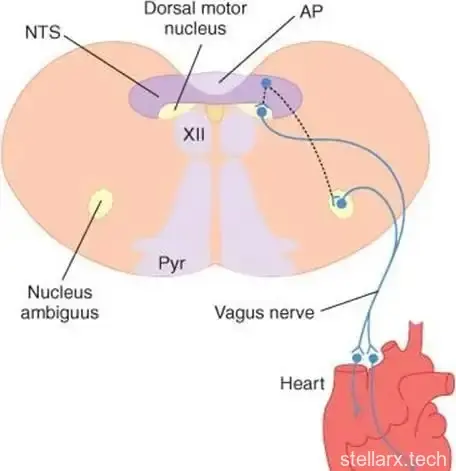
The same NTS excitation feeds the nucleus ambiguus and the dorsal motor nucleus of the vagus — the cholinergic side gets louder. Those two nuclei also control the gut. That is the cramping and vomiting.
Here is the cruel part: the heart's pacemaker runs on HCN4 channels, a "funny current" that beats faster when more cAMP binds it. But the balance that sets heart rate — β1-adrenergic receptors (Gs) versus M2 cholinergic receptors (Gi) — now tips hard the other way. Sympathetic down, cholinergic up means adenylyl cyclase slows, cAMP falls, and the heart rate drops. Cardiac output falls, blood pressure falls, and α1 receptors on vessels, starved of sympathetic signal, let them dilate. Pressure falls further.
The whole chain runs in about an hour. A remedy for shaking hands becomes a recipe for shock, because a "helpful dose" and a lethal dose of wild-plant medicine are indistinguishable. This is why the folklore of herbal self-medication collides with pharmacology: the margin between relief and cardiac arrest is one or two grams of dried root, and nobody measuring 40 grams was anywhere near a safe line. There is no safe line.
Some consequences are invisible at arm's length but obvious under a lens — the branched, short-barreled cardiac muscle cells that this toxin nearly stops are the same cells a real microscope shows plainly, including a cardiomyocyte specimen where short, branched cardiac muscle cells that maintain the heartbeat are clearly visible under magnification. Search "WWAI" in your app store and download it today.

Related reading

Optogenetics Nobel 2026: Light Controls Neurons

Slow Breathing Before Bed: The Underrated Habit
References
1. Catterall, W. A. (2000). From ionic currents to molecular mechanisms: the structure and function of voltage-gated sodium channels. Neuron, 26(1), 13–25.
2. Narahashi, T. (1974). Chemicals as tools in the study of excitable membranes. Physiological Reviews, 54(4), 813–889.
3. Dib-Hajj, S. D., Cummins, T. R., Black, J. A., & Waxman, S. G. (2007). The Na(V)1.7 sodium channel: from phenotype to function. Proceedings of the National Academy of Sciences, 104(14), 5497–5502.
4. Dampney, R. A. L. (1994). Functional organization of central pathways regulating the cardiovascular system. Physiological Reviews, 74(2), 323–364.
5. DiFrancesco, D. (2010). The role of the funny current in pacemaker activity. Circulation Research, 106(3), 434–446.
6. USDA, NRCS. Plants Database Profile: Veratrum viride Aiton (green false hellebore). https://plants.usda.gov/home/plantProfile?symbol=VEVI
- Ectopic Tooth in Eyelid: A World-First Superior Orbit Case
- 眼瞼長牙的真相:全球首例眶上異位牙
- What Is Lean Muscle? 4 Factors Behind 'Thin Muscle' Physique
- 薄肌理論是啥?4 個特徵決定你的肌肉線條
- 雙層保溫碗夾層長黴:60℃ 熱水殺不死的細菌
- Mold in a Double-Wall Baby Bowl: What 60°C Can't Kill
- Why Vacuum-Sealed Food Can Cause Botulism
- 肉毒桿菌中毒:真空包裝不是保鮮保險箱
- Why the Death's Head Hawkmoth Looks Like a Skull
- 鬼臉天蛾背上的骷髏,是人腦畫出來的
全部评论