Why a Tick Bite Can Make You Allergic to Red Meat
You eat beef your whole life without a problem. Then a tick bites you — and suddenly a steak is dangerous. The immune system did not start treating beef as an enemy. It changed which kind of antibody it uses to greet it.
It Was Never About the Door
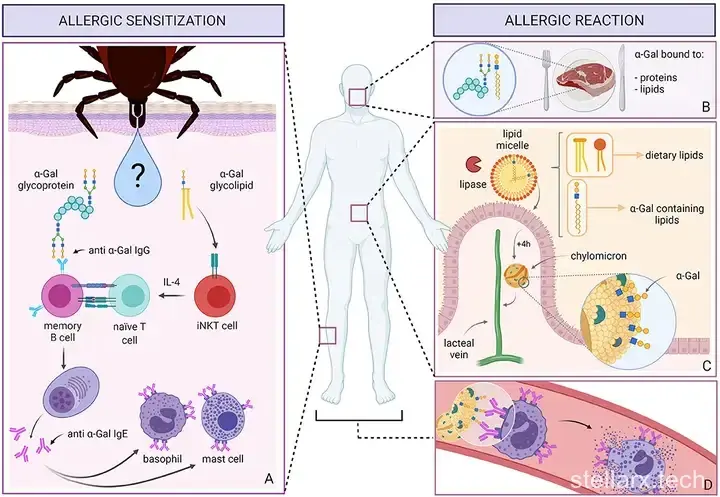
For most people, alpha-gal syndrome is blamed on a bite from the lone star tick (Amblyomma americanum) — in other parts of the world, other ticks are responsible: Ixodes holocyclus in Australia, Ixodes ricinus in Europe, Haemaphysalis longicornis in Japan. It is not inevitable, and it is not every tick. In a small fraction of people, the immune system mounts a useless IgE response to the alpha-gal sugar the tick injects with its saliva, and they become allergic to alpha-gal wherever it appears — in red meat, some vaccines, antivenom, even contact-lens materials. Most people never develop this.
Alpha-gal is short for galactose-alpha-1,3-galactose, a sugar that mammals like cattle, pigs, and sheep carry everywhere in their bodies — but humans do not make it. So it is foreign to us, yet we eat it daily. Almost everyone already has natural antibodies to it: IgM, IgG, and IgA. What the tick bite changes is not whether you recognize the sugar; it is which antibody class your body deploys.
Who Gets It, and What They Can Eat
Certain injuries, and injections of medicines made from animal products — heparin from pig intestines, heart valves from pigs or cattle, the cancer drug cetuximab — can also trigger alpha-gal syndrome in a small number of people. Blood type seems to matter too: people with type B or AB blood carry a B-antigen with a structure similar to alpha-gal, and may be relatively protected.
People with alpha-gal syndrome can safely eat red meat from monkeys and great apes, since those animals, like us, do not make alpha-gal. In practice most choose poultry and seafood instead. Most patients can also tolerate dairy.
Unlike most food allergies, alpha-gal syndrome often fades over time: if the patient is no longer bitten by ticks, it may gradually weaken and disappear within 8 months to 5 years. A minority can be desensitized; more are managed with antihistamines or epinephrine. Patients should also watch out for cooking-oil fumes and aerosol exposure near livestock farms.
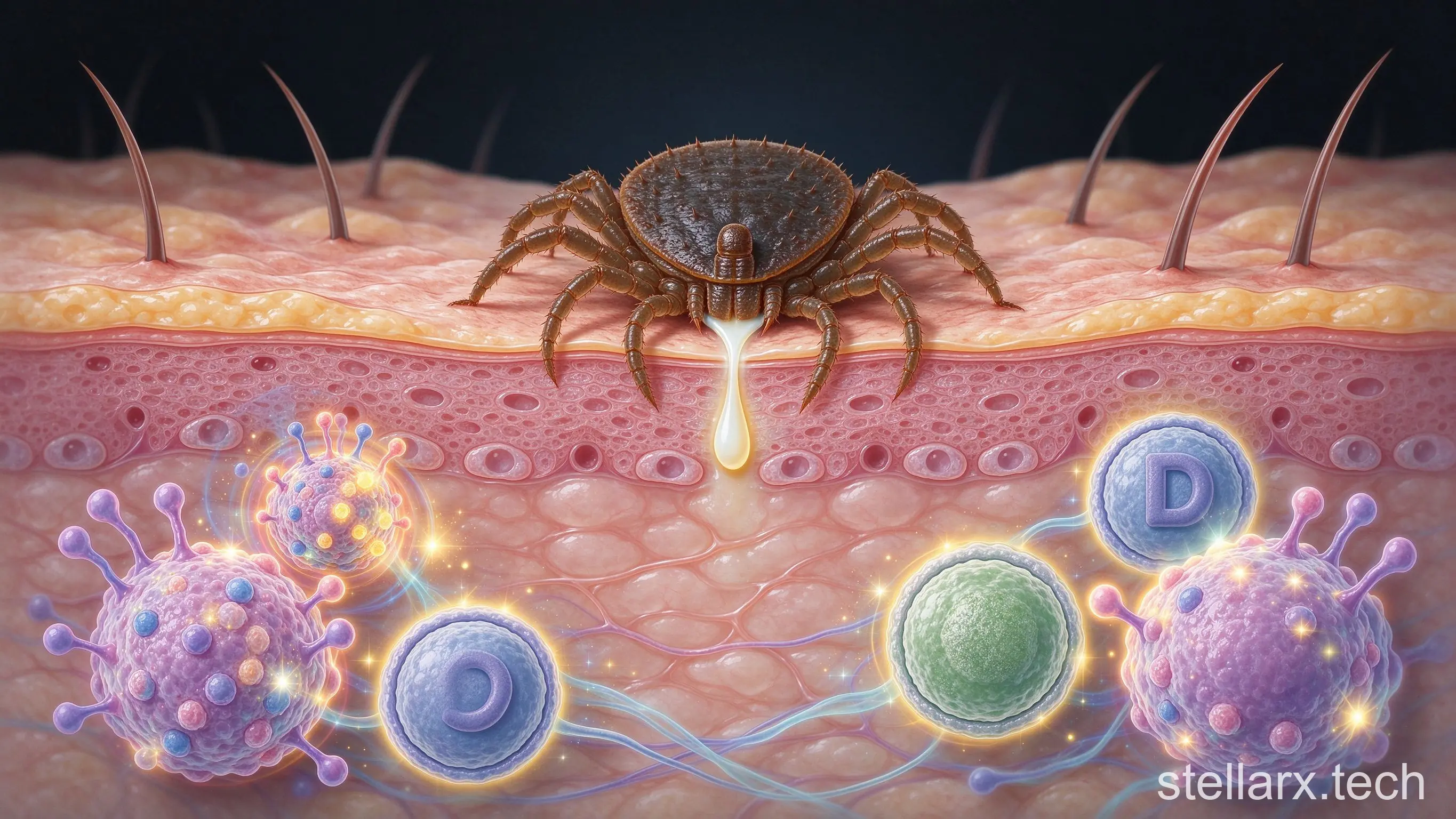
Why Skin, Not the Gut, Flips the Switch
Why can a bite on the skin stamp out an IgE response, when decades of eating did not? The answer: different parts of the body run different default programs. The gut runs tolerance — food antigens arriving through digestion are held down by regulatory T cells, producing IgG and IgA, antibodies that do not detonate mast cells. If the gut raised alarms for every foreign protein in a meal, nobody could eat.
The skin, by contrast, runs the anti-parasite program. IgE and mast cells evolved to fight parasites — including ticks themselves. Wilson and Platts-Mills (Allergy, 2024) point out that allergic cells and mediators are mobilized to tick bite sites, where they actually help resist the tick and its pathogens; the IgE against alpha-gal is a byproduct of this host-defense strategy.
A tick stays attached for days, pumping a steady stream of salivary proteins into the site — effectively holding the Th2 switch on for a long time. Its saliva also carries alpha-gal, so B cells that recognize the sugar get pulled into that assembly line. This is why a single bite is usually not enough: repeated exposure pushes the Th2 signal strong enough to rewrite antibody class.
Why the Reaction Takes Hours
Alpha-gal allergy is famous for arriving late. Peanut allergy strikes in minutes; alpha-gal often hits hours later — dinner is eaten, the person goes to sleep, and wakes up covered in hives. Emergency rooms know the trap: patients never suspect dinner, and doctors admit them as unexplained anaphylaxis.
The delay happens because what slips into the blood is not the alpha-gal stuck to meat protein — it is alpha-gal carried on lipids. Román-Carrasco and colleagues (Allergy, 2019) ran a clean experiment: they digested beef proteins and beef lipids separately, added each to the top of an intestinal epithelial layer, and watched what crossed. With protein, alpha-gal peptides were not detectable on the far side, and the few that crossed could not activate basophils from allergic patients. With lipids, alpha-gal came through — and those lipid-bound sugars activated the patients' basophils in a dose-dependent way.
Fat digestion is slow: emulsification, breakdown, repackaging into chylomicrons, lymphatic transport, conversion to lipoprotein particles. That road takes hours — which is why the symptoms do. The 2025 Platts-Mills review treats this as the leading hypothesis, not a nailed-down conclusion; the Caco-2 model is not a living gut, and human in-vivo evidence is still missing.
[I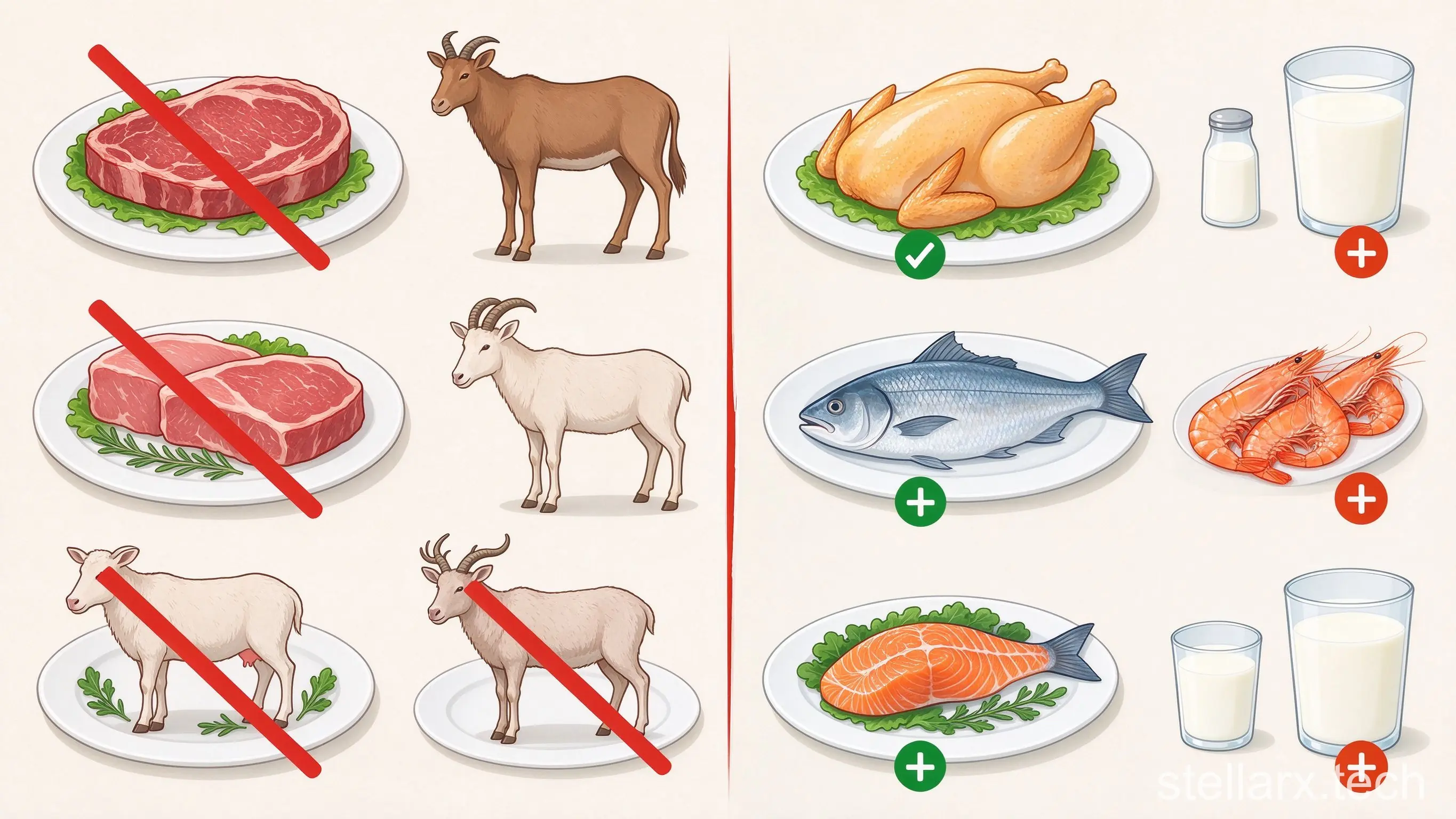
Peanuts Play the Same Rule Backward
If "the route of entry decides the antibody class" is a real rule, it should show up in reverse in another allergen. Peanuts do exactly that. The LEAP trial (New England Journal of Medicine, 2015) followed 640 high-risk infants — severe eczema, egg allergy, or both — randomized to early peanut exposure or avoidance. Among the 530 children with negative skin-prick tests at enrollment, peanut allergy by age 5 was 13.7% in the avoidance group versus 1.9% in the early-exposure group; among the 98 already prick-positive, it was 35.3% versus 10.6%. Peanut-specific IgG4 rose mainly in the eating group; high IgE titers clustered in the avoidance group.
Peanuts entering through the mouth early produced IgG4 and tolerance; skin exposure through broken eczema barriers produced IgE. Red meat is the mirror image: decades through the gut yielded only IgM, IgG, IgA — until a tick bite on the skin produced IgE.
How It Shows Up in the Clinic
Diagnosis has a signature pattern: blood tests show specific IgE to beef, pork, lamb, and milk, but not to chicken, turkey, or fish; skin-prick tests are usually negative while intradermal tests may be positive. Management is two things: avoid mammalian foods, and avoid more tick bites.
The mechanism has boundaries, though. Wilson et al. (JACI: In Practice, 2019) reviewed 261 children and adults evaluated for red-meat allergy: 245 had alpha-gal-specific IgE ≥ 0.35 IU/mL, and 81% developed symptoms more than two hours after eating mammalian meat — meaning nearly one in five was not delayed at all. Screening only by delay would miss a chunk of patients. Among these patients, hives appeared in 93%, anaphylaxis in 60%, gastrointestinal symptoms in 64%. IgE level did not correlate with delay or anaphylaxis; classic atopic background was irrelevant; children and adults behaved the same.
Also important: being bitten does not mean you will react. Detectable IgE is sensitization; symptoms after eating are disease. Only some bitten people cross that line, and why remains unclear — bite frequency and tick species have research support; genetics, blood type, and local reaction intensity are still speculation.

One easy-to-miss consequence: alpha-gal is not only in meat. Dairy, gelatin, and medicines made from non-primate mammals can carry it. Some patients cut out beef and lamb yet keep reacting — the trigger turns out to be a gelatin capsule or a milk-laden dessert.
And IgE is not a life sentence. The 2025 Platts-Mills review is blunt: the only thing that reliably lowers alpha-gal IgE is not getting bitten by ticks again. Dietary avoidance manages symptoms, not antibodies. So for a confirmed patient, tick prevention is closer to the cure than avoiding steak is — long sleeves, repellent, and a body check after being outdoors.
The immune system is not biased. It just runs different default programs in different parts of the body: the gut's default is to receive and register; a parasite-torn opening in the skin defaults to alarm. Alpha-gal unluckily came in through the alarm door once — and now every steak is processed as an alarm.
Want to see the fat cells at the heart of that delayed, hours-long journey — the ones that carry alpha-gal into the blood? WWAI includes a human adipose tissue specimen where fat cells and lipid droplets are clearly visible. Just search "WWAI" in your app store and download it today.

References:
[1] Platts-Mills TAE, et al. Alpha-gal syndrome. Immunol Rev 2025;332:e70035. https://doi.org/10.1111/imr.70035
[2] Wilson JM, et al. Allergy 2024;79:1440-1454. https://doi.org/10.1111/all.16003
[3] Román-Carrasco P, et al. Allergy 2019;74:1956-1968. https://doi.org/10.1111/all.13873
[4] Wilson JM, et al. J Allergy Clin Immunol Pract 2019;7:2348-2358. https://doi.org/10.1016/j.jaip.2019.03.031
[5] Du Toit G, et al. Randomized trial of peanut consumption in infants at risk for peanut allergy. N Engl J Med 2015;372:803-813. https://doi.org/10.1056/NEJMoa1414850
All illustrations are AI-generated.
Related reading

A 1 cm Thyroid Nodule Turned Out to Be Cancer While a Bigger…

Why Are Mysterious Round Holes Appearing on Parked Cars? The…

- Ancient Food Was Never Pure: Urine, Lye, and Fake Fish
- When Lockdown Laziness Grew Glowing Algae
- Why a Tick Bite Can Make You Allergic to Red Meat
- Who Has More Legs: House Centipede or Centipede?
- Vibrio vulnificus: Seafood Pricks That Can Turn Fatal
- This Dolphin Makes Fish Vomit to Steal Their Food
- Mercury in 'Baby Cod': A Toddler's Label Trap
- Male Lactation Is Real: Why Females Nurse
- Where the 1.6–2.2 g/kg Protein Rule Comes From
- Why Cockroaches Aren't as Tough as You Think

全部评论