Where the 1.6–2.2 g/kg Protein Rule Comes From
The fitness world treats "eat X grams of protein per kilogram of body weight" as scripture. It is repeated by every coach, every supplement label, every gym poster. But trace the number back to its source, and the story is surprisingly shaky.
The Official Endorsement First
China's official dietary guidelines recommend about 1.0 to 1.2 grams of protein per kilogram for ordinary adults (65 g/day for men, 55 g for women). But for athletes and gym-goers, the same official channels suddenly quote "1.2 to 2.0 g/kg, up to 1.6 to 2.2 for strength training."
Where did that come from? The guidelines' editorial committee — 27 people — included exactly one sports-nutrition specialist. Her core knowledge base comes from translating an Australian textbook, Clinical Sports Nutrition (Burke & Deakin). Search her published papers: more than thirty, mostly on exercise intervention in children with obesity, athlete dietary surveys, and endothelial protection. Not one measures Chinese athletes' protein requirements. A 2005 survey of elite Chinese athletes measured what they ate — not what they should eat. Those are different questions.
So the official "athlete" numbers in the guidelines were not produced by local research. They were copied.
The "1.6" Comes From One Meta-Analysis
Copied from where? First: a 2016 joint position statement by the American Dietetic Association, Dietitians of Canada, and the American College of Sports Medicine (1.2–2.0 g/kg for athletes). And second — the number gym-goers chant, 1.6–2.2 — comes from the 2017 ISSN position stand on protein and exercise.
Dig one layer deeper and the core evidence for 1.6 turns out to be a single 2018 meta-analysis by Morton et al. in the British Journal of Sports Medicine: 49 randomized controlled trials, 1,863 participants, conclusion that muscle gain stops increasing significantly beyond about 1.62 g/kg. Round it and you get 1.6.
Now look at who was actually in those 49 trials.
The average age was 35 ± 20 years — a huge spread — but the core was twenty-something young men. Fewer than 20% of participants were women. Most were beginners with under a year of training; people with years of real lifting experience made up under 10% of the sample. These are young American male novices, training for 6 to 12 weeks.

The confounding factors are too many to count: training plans, sleep, stress, total calories, carbs, absorption, muscle fiber type, testosterone — none of it strictly controlled. Just people training, and a muscle measurement at the end.
That measurement, mostly DXA, has an error of ±1 to 2 kg of muscle. The study's headline difference — 0.5 kg more muscle for the high-protein group — is smaller than the measurement error itself.
And the most basic data point, how much protein each participant actually ate? Measured three ways: 24-hour recall (asking people what they ate yesterday, from memory), food-frequency questionnaires (asking how often they ate beef or eggs over the past month), and weighed food records (accurate but rarely completed — used in fewer than a third of the trials). Most of the intake data in the meta-analysis was estimated from memory and questionnaires.
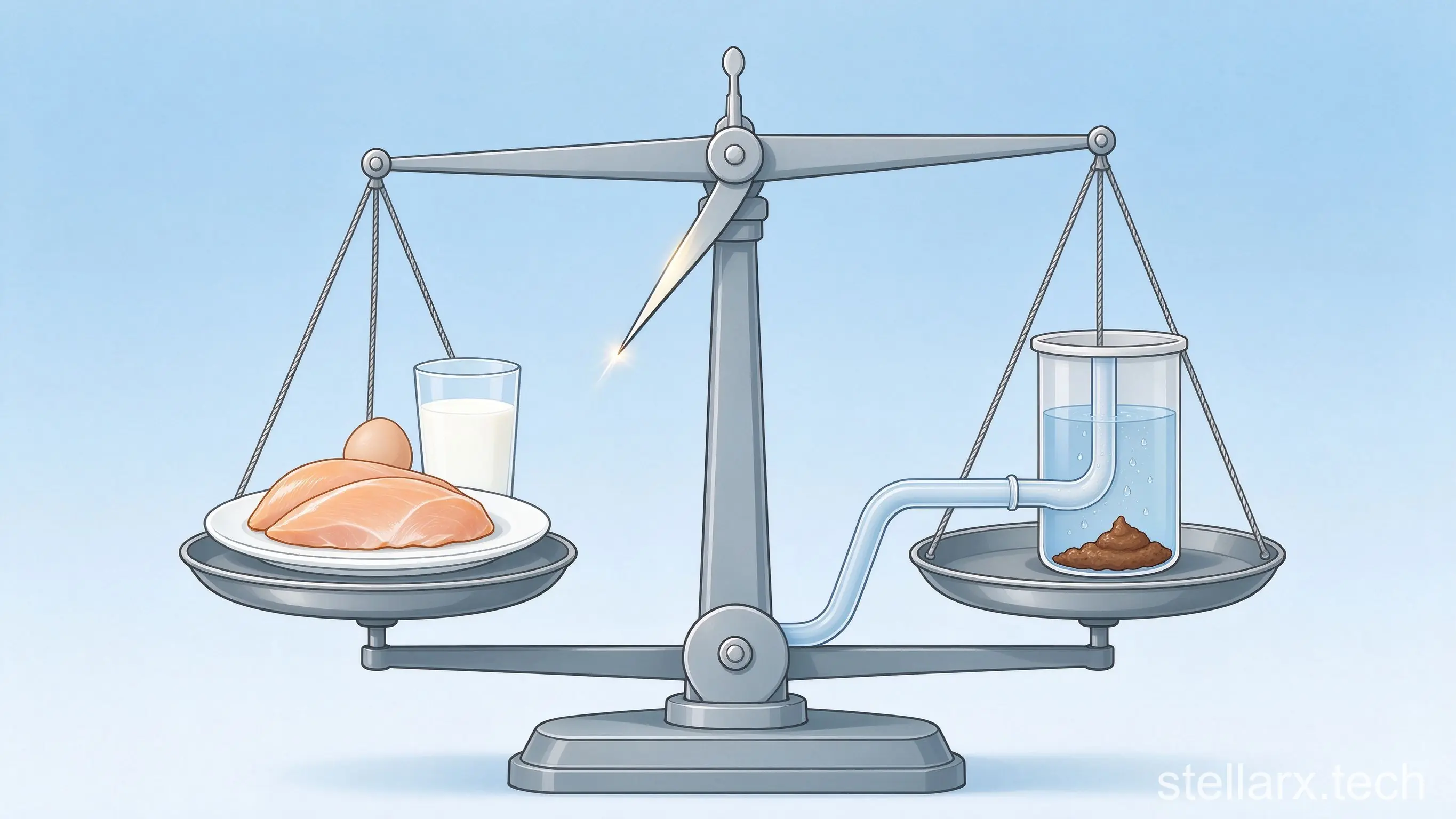
A conclusion built on that foundation — "1.62 g/kg is the ceiling" — rests on very soft ground.
The "2.2" Comes From Nitrogen Balance
The 2017 ISSN statement pushed the upper end to 2.2 g/kg. Its own basis, written in the paper: nitrogen balance assessment and amino-acid tracer studies.
Nitrogen balance works like a ledger. Weigh the nitrogen eaten (protein contains nitrogen) against the nitrogen excreted (urine and feces). If output is less than intake, the body is building protein. Find the intake where they balance, and that is "the requirement."
The method is crude, and even its users admit it. First, it measures whole-body nitrogen balance, not muscle — other organs also synthesize and break down protein. Second, the measurement window is days to two weeks, and balance swings wildly day to day. Third, it ignores protein quality, amino-acid composition, digestion and absorption, training stimulus, and hormone levels. Feed in X nitrogen, excrete Y nitrogen, get a recommendation — that simple.
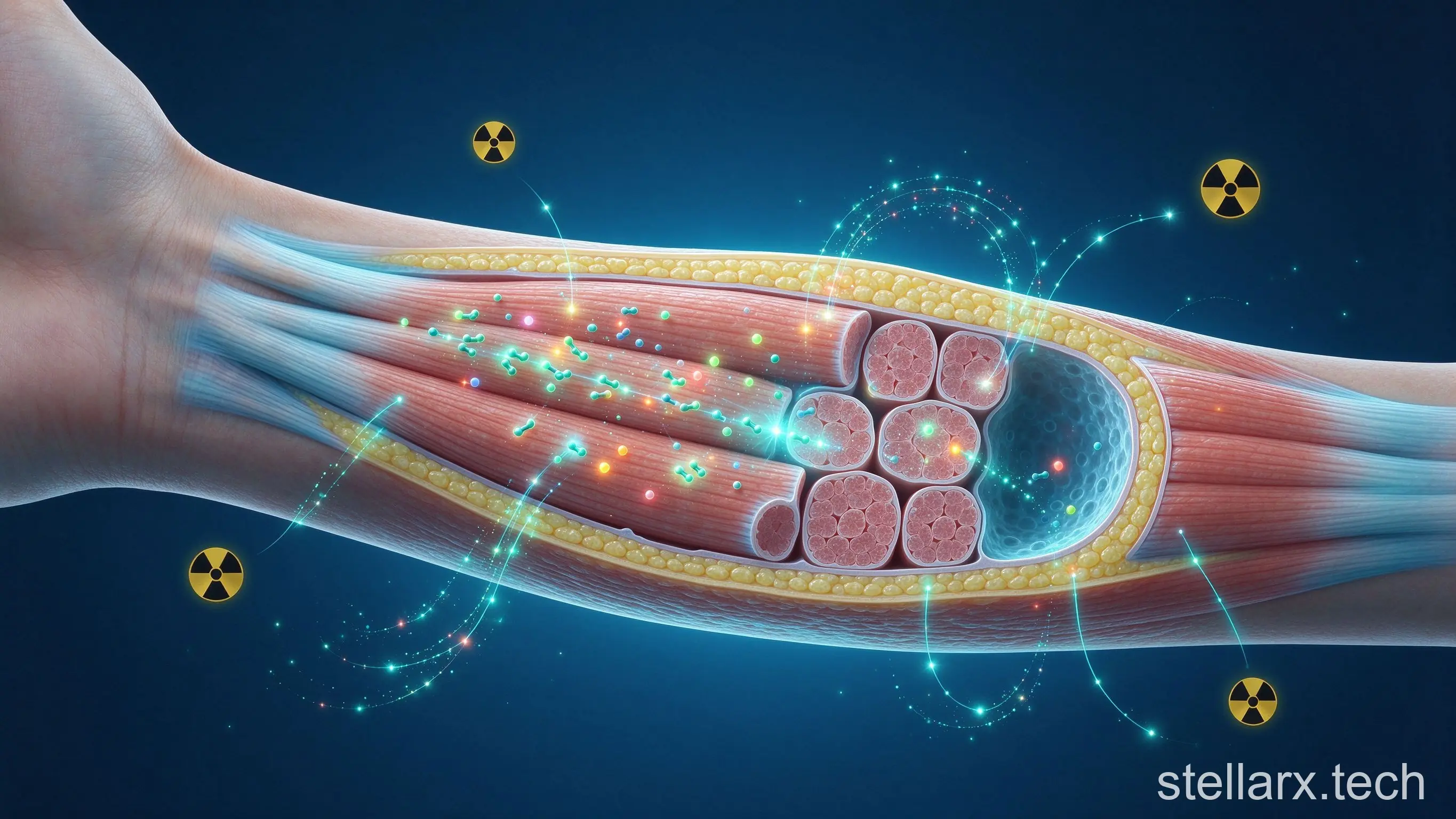
Amino-acid tracer studies are a step up: label amino acids with stable isotopes, inject them, and track where they go — how much reaches muscle, how much is broken down. But they measure muscle-protein synthesis over hours, not long-term growth; they run in a lab with subjects lying or doing standard motions, not real training; and sample sizes are tiny — often a dozen people, mostly young male beginners again.

The Scripture's Real Foundation
Whether 1.6 or 2.2, the evidence stack is: 49 small short-term RCTs, plus rougher nitrogen-balance studies and tinier tracer studies. The subjects: young American male beginners. The intake data: recalled and estimated. The muscle measurement: DXA with a ±1–2 kg error bar. That is the number official channels copy-pasted into national guidelines, and every gym-goer chants as gospel.
Every one of these studies asks the same narrow question: "How much protein grows the most muscle?" None looks at protein from the whole-body metabolic view — none considers protein turnover, autophagy, gut barrier, long-term effects of high-protein diets on metabolic pathways, or the cost of chronically activating the mTOR pathway. That whole dimension simply never enters.
And the uncomfortable part: the national guidelines contain not a single local study on protein metabolism in exercising populations — the number is a recycled import. Even the guideline revision was publicly sponsored by a direct-selling company, which funded the very process that ended by recommending people eat more protein.
So the next time someone tells you to hit 1.6–2.2 g/kg, you can ask a fair question: whose body was that number measured on? Yours — or a twenty-something American beginner in a short lab trial?
Want to see the human cells where protein is actually built — the machinery the guidelines never show you? WWAI includes a human oral epithelial cell specimen where epithelial cells with purple nuclei are clearly visible. Just search "WWAI" in your app store and download it today.

References:
[1] Morton RW, et al. A systematic review, meta-analysis and meta-regression of the effect of protein supplementation on resistance training-induced gains in muscle mass and strength in healthy adults. Br J Sports Med 2018. https://bjsm.bmj.com/content/52/6/376
[2] Jäger R, et al. International Society of Sports Nutrition Position Stand: protein and exercise. J Int Soc Sports Nutr 2017. https://doi.org/10.1186/s12970-017-0177-8
[3] Thomas DT, Erdman KA, Burke LM. Nutrition and Athletic Performance: Position of the Academy of Nutrition and Dietetics, Dietitians of Canada, and the American College of Sports Medicine. Med Sci Sports Exerc 2016. https://doi.org/10.1249/MSS.0000000000000852
[4] Is It Time to Reconsider the U.S. Recommendations for Dietary Protein and Amino Acid Intake? Nutrients 2023. https://pmc.ncbi.nlm.nih.gov/articles/PMC9963165/
[5] Tracing Metabolic Flux to Assess Optimal Dietary Protein and Amino Acid Consumption. Adv Nutr 2022. https://pmc.ncbi.nlm.nih.gov/articles/PMC9534933/
All illustrations are AI-generated.
Related reading

Textbook Diet: 7 Nutrition Rules From a 670K-View Thread — Whole Foods, Nutrient Density | stellarx

Why Big Cats Never Get Scurvy but Sailors Did | stellarx

Food Coma: Why Heavy Rice Meals Drain Your Energy | stellarx
- Ancient Food Was Never Pure: Urine, Lye, and Fake Fish
- When Lockdown Laziness Grew Glowing Algae
- Why a Tick Bite Can Make You Allergic to Red Meat
- Who Has More Legs: House Centipede or Centipede?
- Vibrio vulnificus: Seafood Pricks That Can Turn Fatal
- This Dolphin Makes Fish Vomit to Steal Their Food
- Mercury in 'Baby Cod': A Toddler's Label Trap
- Male Lactation Is Real: Why Females Nurse
- Where the 1.6–2.2 g/kg Protein Rule Comes From
- Why Cockroaches Aren't as Tough as You Think
全部评论