Ancient Food Was Never Pure: Urine, Lye, and Fake Fish
If you never watch food being made, the memoirist warned, you have no idea how dirty it is. In Fujian, rock sugar was made with pig fat. In Lanxi, jujubes were polished with beef tallow. In Fuyang, bamboo paper was cooked in urine because nothing else would soften the fibers. Shrimp from Huaidian, stored until discolored, were soaked back to a fresh red. Fish caught on the Yellow River, spoiled by road dust, were rinsed, steeped in urine, and came out firmer and better-tasting.
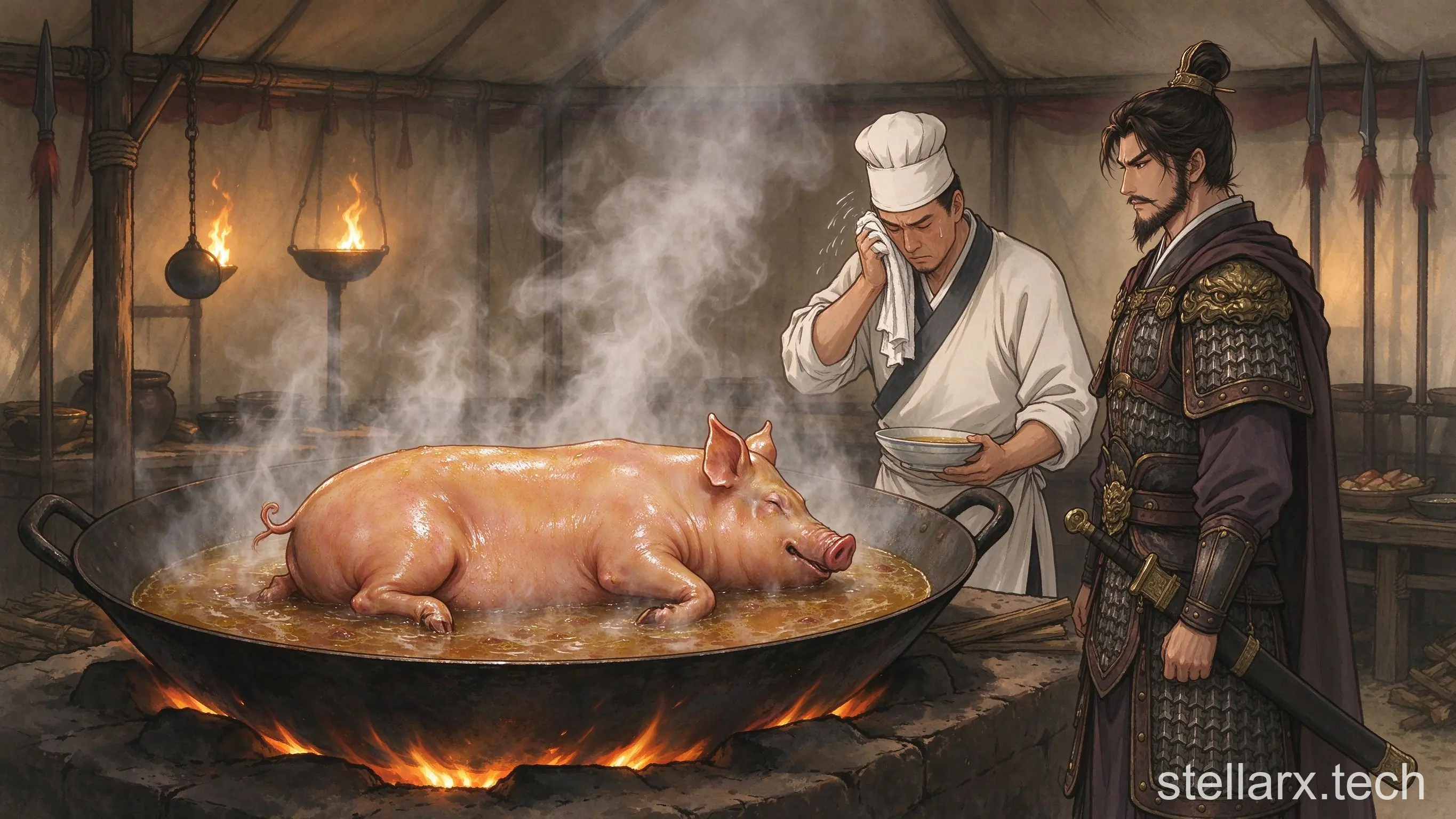
And the most famous of all: when a cook forgot his curing salt while boiling an entire pig for General Fukang'an, he climbed onto the stove and urinated into the pot. The general ate it, praised it as the best pork of the whole journey, and rewarded the man with a bolt of fine silk.
The record is a Qing-dynasty memoir. The story is a period piece. But every one of those "dirty tricks" has chemistry underneath it — and the chemistry explains why they worked.
Urine and Shrimp: A Pigment Set Free
Soaking shrimp in urine to restore their color sounds like pure superstition. It is actually a textbook pigment reaction. Shrimp shells get their blue-gray cast from a carotenoid called astaxanthin, locked inside a protein called crustacyanin. While the protein holds it, the complex absorbs light and appears grayish-blue. Break the protein — by heat, or by the alkaline ammonia in stale urine — and the astaxanthin is released, displaying its natural orange-red. The ammonia from urine raises pH, denatures the binding protein, and the shrimp turn "red as new," exactly as the memoir says.
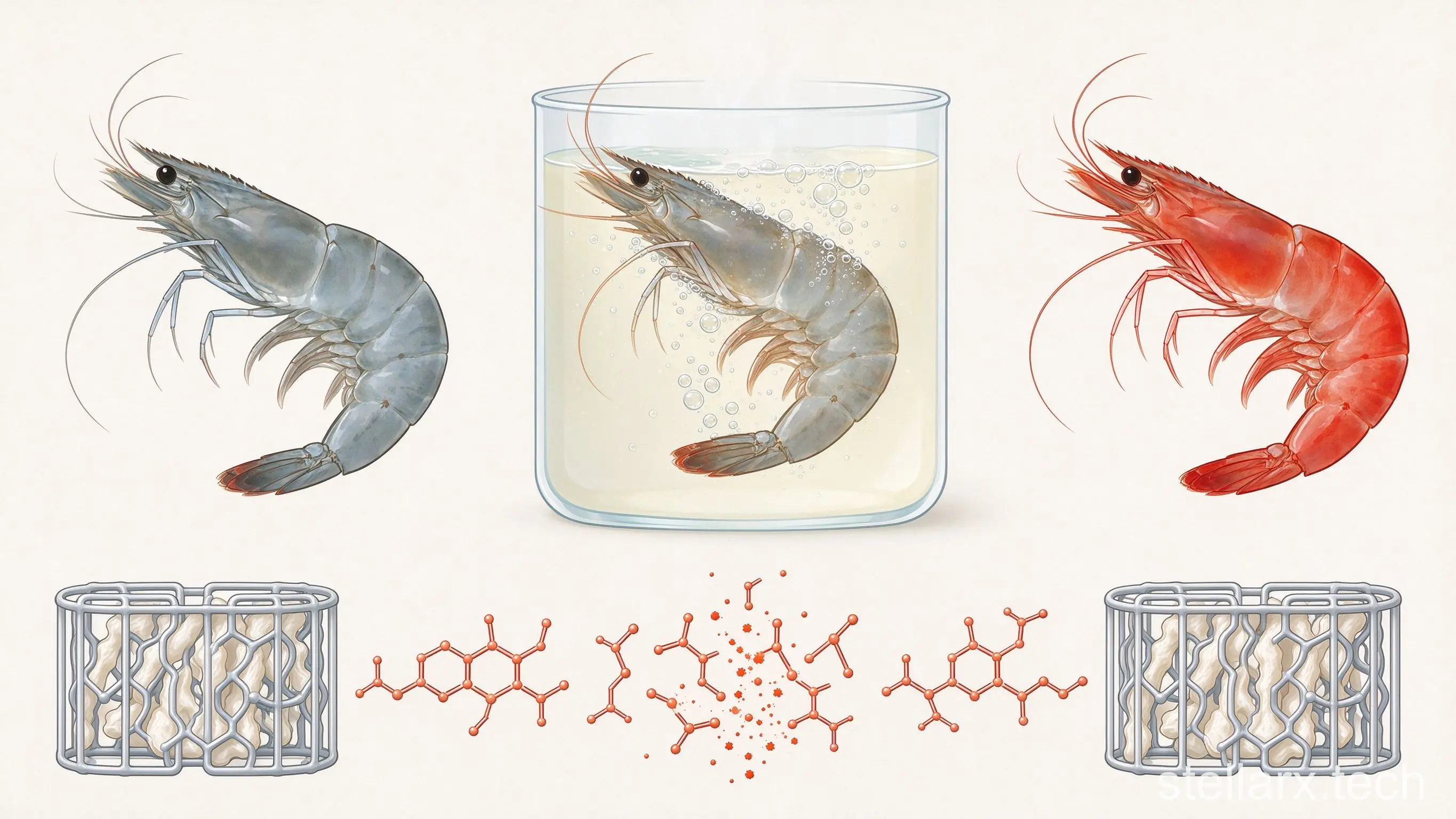
Modern cooks know the same effect from the pot: raw shrimp are gray, cooked shrimp are pink. The ancient fishmonger just found an alkaline bath where heat was not available.
Urine and Paper: Alkaline Cooking
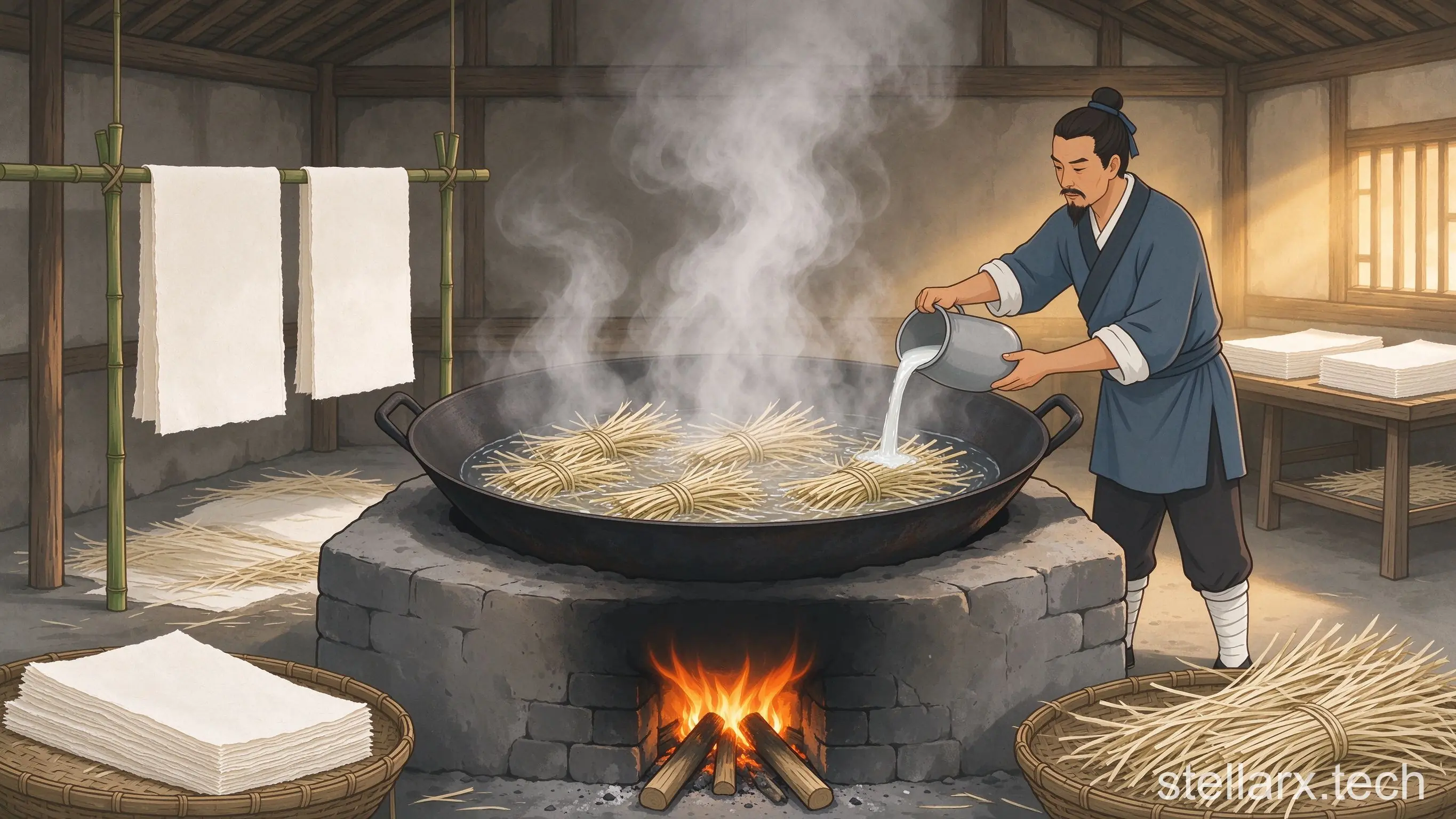
Fuyang bamboo paper was the finest in China, and its secret step was boiling bamboo strips in urine. This is not magic either. Papermaking starts with separating fibers from the woody binder — lignin — that glues them together. The standard industrial process, alkaline pulping, cooks plant material in a caustic alkali like sodium hydroxide, which dissolves lignin and frees the fibers. Modern bamboo-pulp production still uses strong alkali at high temperature. Urine is a source of ammonia and urea, which hydrolyze into a mild alkali; lime and wood-ash washes were the common peasant version of the same trick. The papermakers had reinvented alkaline pulping with whatever base chemistry their village could supply.
The Nitrate in the Pot: Why the General Liked It
The Fukang'an story is the punchline of the whole genre: the cook confesses he forgot the pi-xiao — literally "skin salt" — and substitutes urine. In classical meat processing, saltpeter-type salts do serious work. Nitrate and nitrite react with myoglobin, the red pigment of muscle, to form nitrosomyoglobin — the stable pink of cured ham and bacon — and they suppress Clostridium botulinum, the bacterium behind botulism. That is why curing salt is a safety tool, not just a colorant.
Urine, meanwhile, brings its own chemistry: salt, urea, and ammonia. Urea hydrolyzes under heat into ammonia, and the alkaline environment swells and partly loosens connective tissue — exactly the kind of change that makes a boiled pork shoulder more tender and, in the memoir's words, "firmer and better-tasting." The general was not imagining it. The cook had, without knowing, added a crude tenderizer and cure to the pot.
What the Memoirists Understood
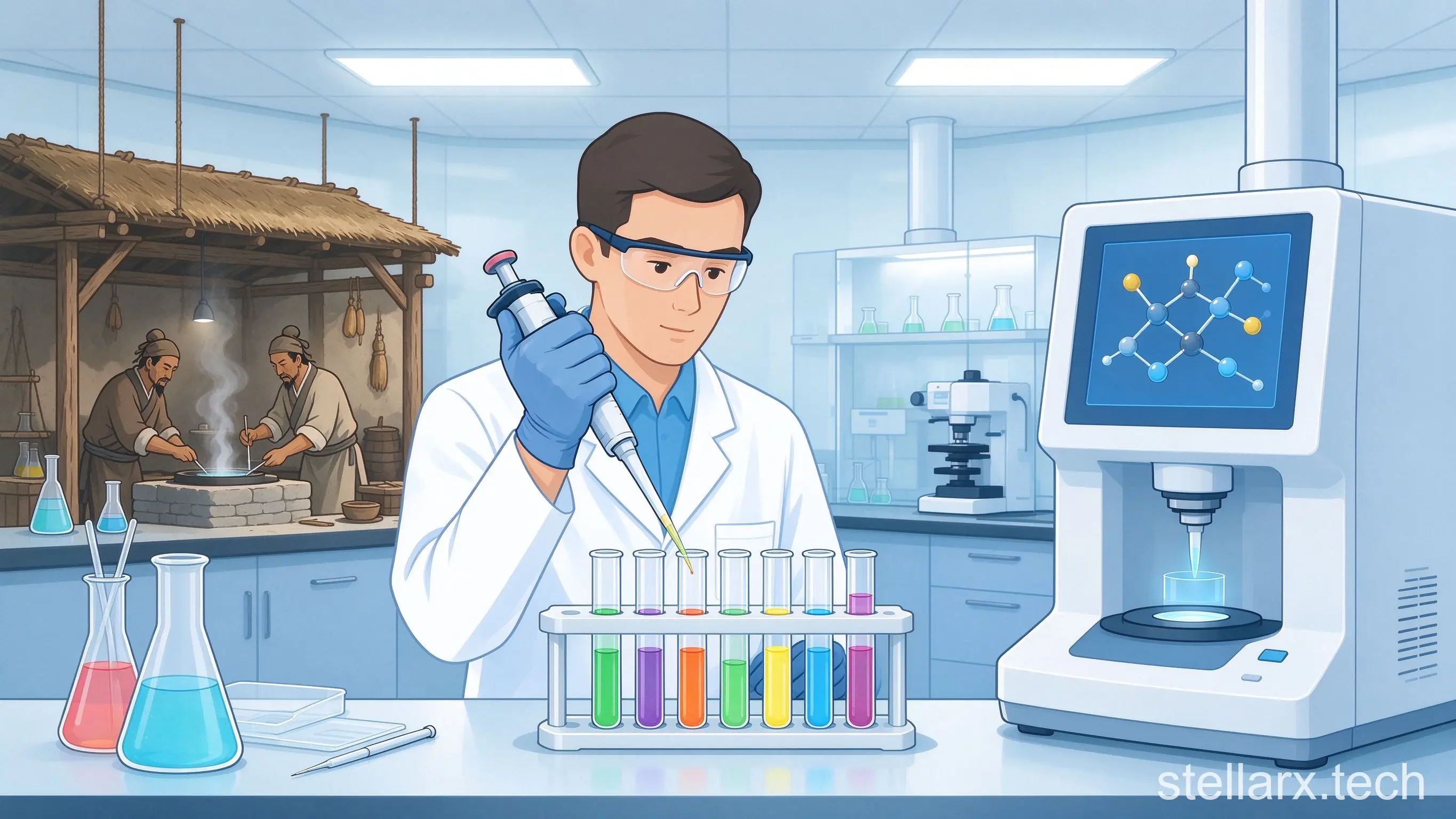
The Qing memoirist's point was hygiene and deception: sugar cut with fat, jujubes glazed with tallow, meat soaked in urine — all invisible to the buyer. The story even migrated into fiction; the novelist Eryue He used the same urinating-cook anecdote in his Qianlong novel cycle, complete with the apprentice hauled onto the stove top.
The science, though, is neither magic nor malice. Ammonia, alkali, nitrate, salt: these are the same agents modern food processing uses in regulated form. What changed is not the chemistry but the oversight — today, nitrite levels are capped, additives are labeled, and a product's "pure" claims are backed by inspection rather than by a wink.
The next time a food label says "natural," it is worth remembering: nature was never the guarantee. Supervision was.
Want to look inside the food itself — the cells that hold the sugar and nutrients behind all this processing? WWAI includes a pineapple fruit tissue specimen where fleshy cells holding sugars are clearly visible. Just search "WWAI" in your app store and download it today.
References:
[1] Mechanisms of colour adaptation in the prawn Penaeus monodon. J Exp Biol 2012;215:343. https://journals.biologists.com/jeb/article-pdf/215/2/343/1281280/343.pdf
[2] Clean Label Meat Technology: Pre-Converted Nitrite as a Natural Curing. Foods 2021. https://pmc.ncbi.nlm.nih.gov/articles/PMC8115001/
[3] Preparation of Filter Paper from Bamboo and Investigating the Effect of Additives. https://pmc.ncbi.nlm.nih.gov/articles/PMC11084598/
[4] Nitrates & Nitrites (Curing Salts): color fixation and botulism control. https://cuisinopedia.org/entry/nitrates-nitrites-curing-salts
All illustrations are AI-generated.
Related reading

Why a Batch of Black Sesame Paste Tested 27× the Mold Limit
Mercury in 'Baby Cod': A Toddler's Label Trap

Why Is West Lake Vinegar Fish Sweet and Sour? The Story Behi…
- Ancient Food Was Never Pure: Urine, Lye, and Fake Fish
- When Lockdown Laziness Grew Glowing Algae
- Why a Tick Bite Can Make You Allergic to Red Meat
- Who Has More Legs: House Centipede or Centipede?
- Vibrio vulnificus: Seafood Pricks That Can Turn Fatal
- This Dolphin Makes Fish Vomit to Steal Their Food
- Mercury in 'Baby Cod': A Toddler's Label Trap
- Male Lactation Is Real: Why Females Nurse
- Where the 1.6–2.2 g/kg Protein Rule Comes From
- Why Cockroaches Aren't as Tough as You Think
全部评论